
Having a crush is one of life’s weirdest free trials. Suddenly, one person smiles at you and your brain acts like it just won the lottery, joined a choir, and drank three iced coffees. A crush can feel thrilling, ridiculous, distracting, embarrassing, and strangely poetic all at once. It can make your phone seem louder, your mirror meaner, and your imagination far more employed than it needs to be.
But here is the important part: having a crush is not silly, and it is not always simple. Whether you are a teenager scribbling somebody’s name in the margins of your life or an adult wondering why your brain has decided to become a rom-com intern, crushes reveal a lot about attraction, fantasy, hope, insecurity, and emotional growth.
This article breaks down six honest truths about having a crush. Some are sweet. Some are awkward. Some are the emotional equivalent of finding out your favorite dessert has calories. Together, they explain why crushes feel so big, why they do not always mean what we think they mean, and how to handle them without turning your daily routine into a dramatic mini-series.
Truth #1: A crush feels real because your brain treats it like a big deal
When people talk about crushes, they often act like the experience is “just in your head.” Technically, yes. But that is not a small thing. Your head is running the whole show.
A crush can trigger a rush of excitement, focus, anticipation, and nervous energy. That is part of why attraction can feel so physical. Your stomach flips. Your chest goes theatrical. Your thoughts start circling like they have nowhere else to be. Even brief eye contact can feel like a full season finale.
Why the feelings hit so fast
Early attraction often happens quickly, and it can be tied to reward-related brain activity. In plain English, your brain notices someone, decides they are interesting, and basically stamps the moment with a bright emotional highlighter. That does not mean you are deeply in love. It means your system is paying attention.
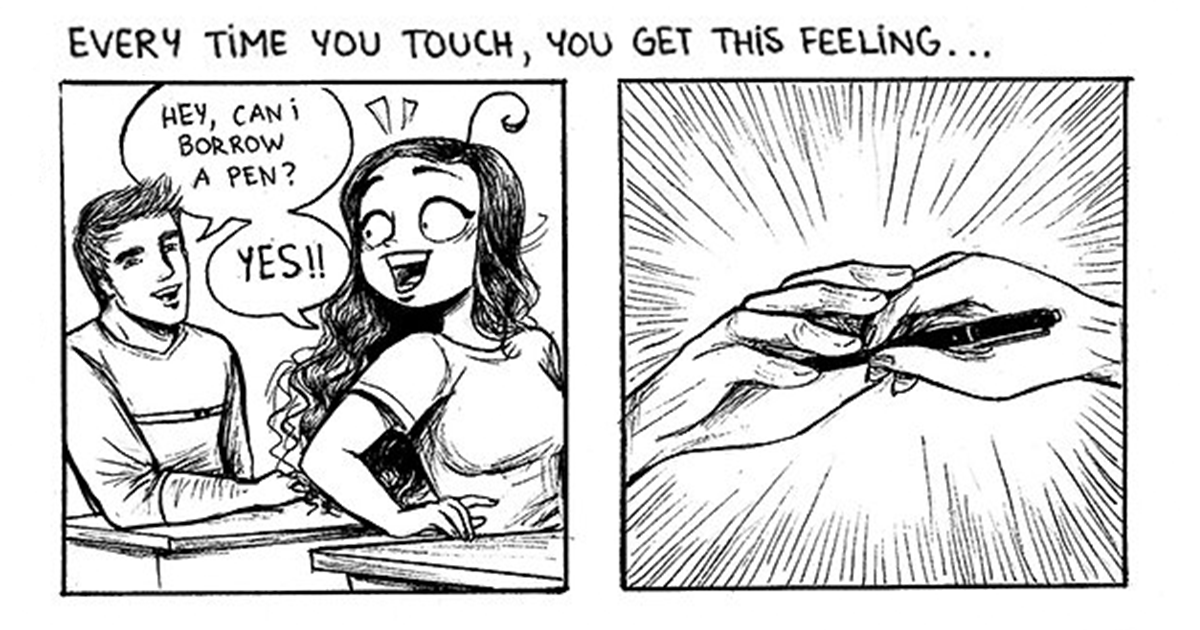
This is why crushes can feel intense even when very little has actually happened. Maybe you have only shared a few conversations. Maybe they borrowed your pen and now your nervous system is acting like destiny lives at Office Depot. That intensity is real, but it is not always a reliable measure of compatibility.
The first truth, then, is simple: a crush is not imaginary just because it is new. The feelings are real. The chemistry is real. The butterflies are real. They are just not the whole story.
Truth #2: A crush is often part reality and part projection
Here comes the sneaky part. Most crushes are not built only on who the other person actually is. They are built partly on who we imagine them to be.
That sounds harsh, but it is normal. When you do not know someone deeply, your mind fills in the blanks. You notice the laugh, the style, the confidence, the kindness, the mysterious way they say “see you later” like they are in an indie film. Then your imagination gets to work. It adds depth, meaning, charm, and a whole personality expansion pack.
The danger of filling in blank spaces with perfection
A crush often grows in the gap between information and fantasy. The less you know, the easier it is to idealize. That is why someone can seem perfect from across the room and surprisingly ordinary after three long group projects and one awkward lunch.
This does not mean the person is fake. It means your crush is partly a mirror. It reflects your desires, your values, your curiosity, and sometimes your unmet needs. You may be drawn to their confidence because you want more of it in yourself. You may admire their calm because your own life feels noisy. You may like what they represent as much as who they are.
One of the most useful questions you can ask yourself is this: Do I like this person, or do I like the story I have built around this person? The answer is often a little of both.
Truth #3: Having a crush does not automatically mean you should act on it
Modern culture loves a simple script: feel something, chase it immediately, and call that honesty. Real life is messier. A crush is information, not a command.
Sometimes a crush is worth exploring. Sometimes it is a passing spark. Sometimes it shows you what kind of person you are drawn to. Sometimes it arrives at the worst possible time, like when they are unavailable, you are emotionally exhausted, or your brain is clearly using this attraction as a very glamorous distraction from other things.
Feelings deserve respect, not automatic obedience
You do not owe every crush a confession, a grand gesture, or a late-night paragraph that begins with “This might sound crazy, but…” In fact, some of the healthiest choices happen quietly. You notice the feeling, you learn from it, and you decide not to feed it with fantasy, stalking, or dramatic over-interpretation of every emoji.
Acting on a crush makes sense when there is mutual respect, actual opportunity, and enough emotional clarity to handle whatever answer comes back. Acting on a crush makes less sense when the attraction depends mostly on imagination, secrecy, or the thrill of wanting what you cannot have.
In other words, not every spark needs fireworks. Sometimes the mature move is to let a feeling be a feeling instead of turning it into a project.
Truth #4: Crushes can teach you a lot about yourself
If you want to understand your emotional life, pay attention to your crushes. They are tiny detectives wearing dramatic outfits.
Who do you consistently fall for? The funny one? The brilliant one? The unavailable one? The person who seems kind but hard to read? The one who notices everyone else except you? Patterns matter. They can reveal your preferences, your attachment habits, your insecurities, and the kind of energy your heart mistakes for safety, excitement, or worth.
What your crush may actually be showing you
Sometimes a crush points to growth. You admire someone thoughtful because you want more emotional depth in your own relationships. Sometimes it points to longing. You are drawn to someone warm because you have been feeling unseen. Sometimes it points to fantasy. You keep liking impossible people because impossible people do not require real vulnerability.
This is especially true in adolescence and young adulthood, when social approval can feel enormous and peer relationships carry extra emotional weight. A crush during those years can feel like a referendum on your identity. If they notice you, you feel bigger. If they do not, everything suddenly seems personally offensive, including the weather.
But a crush is not just about being chosen. It can also help you choose more wisely. The better you understand your attractions, the less likely you are to confuse emotional intensity with emotional safety.
Truth #5: Social media can turn a normal crush into a full-time side job
Once upon a time, a crush meant hoping to run into someone in the hallway or at a party. Now it can mean checking stories, decoding playlists, studying likes, zooming in on group photos, and accidentally learning the name of their cousin’s dog. Technology did not invent crushes, but it absolutely gave them better equipment.
Social media can make a crush feel closer, bigger, and more constant than it really is. You may feel connected because you see pieces of their life every day, but exposure is not intimacy. Watching someone online is not the same as actually knowing them.
Why online access makes feelings louder
When a person is always available on a screen, your imagination gets more material to work with. Every post can feel like a clue. Every gap in communication can feel personal. Every random update can restart the emotional machine you were trying to shut down.
This matters even more for teens and young adults, because social media can shape self-worth, emotional regulation, and the way people compare themselves to peers. A crush that might have faded naturally can become an obsession if you keep feeding it with constant digital checking.
If your crush is starting to affect your sleep, your mood, your focus, or your self-respect, the answer is not to gather more evidence. The answer is usually more boundaries. Mute. Step back. Touch grass, literally if possible. Your heart may be dramatic, but your habits still matter.
Truth #6: Rejection hurts, but it is not a verdict on your value
This is the truth nobody frames nicely because rejection has the emotional elegance of stepping on a Lego. It stings. It can make you feel exposed, embarrassed, and suddenly convinced that every memory from the last six months needs to be re-edited by a mean narrator.
Still, rejection is not proof that you are unattractive, unlovable, boring, behind, or doomed to become a houseplant with Wi-Fi. It usually means one thing: the feeling was not mutual, or the timing and context did not line up.
Why rejection feels so personal
A crush often carries hope, fantasy, and identity in one emotional suitcase. So when it does not work out, it can feel as if all of those things got turned away at once. But another person’s response is not a final measurement of your worth. Attraction is personal, inconsistent, and influenced by timing, history, readiness, and countless invisible factors.
The healthiest response to rejection is not pretending you do not care. It is caring without collapsing. Feel disappointed. Talk to a trusted friend. Write the dramatic notes app paragraph and then, perhaps, do not send it. Let the experience teach you resilience instead of shame.
And remember: getting over a crush is rarely one noble moment of closure. It is usually a series of less cinematic decisions. You stop checking. You stop replaying. You stop building ten-story meaning out of one smile. Bit by bit, your mind finds other places to live.
Extra Section: Real Experiences Related to Having a Crush
Most people do not experience a crush as one clean emotion. It comes in waves, contradictions, and tiny scenes that somehow feel enormous. One person realizes they have a crush because they suddenly care way too much about what shirt they are wearing to class. Another figures it out when a completely ordinary text message somehow improves the entire day. Someone else notices the opposite: they become shy, clumsy, and weirdly fascinated by the ceiling whenever that person walks into the room.
There are also crushes that grow out of friendship. Those can be especially confusing because the feelings do not arrive with a marching band. They sneak in quietly. You already enjoy talking to the person. You already trust them. Then one day you catch yourself wondering whether they see you differently too, and now every conversation feels both comforting and dangerous. Friendship crushes can be beautiful, but they can also be frustrating because the risk feels higher. You are not only afraid of hearing “no.” You are afraid of losing the space that already matters to you.
Then there are long-distance crushes, work crushes, classmate crushes, and the classic crush on someone you barely know but have somehow built an emotional documentary around. These experiences differ, but they often share the same pattern: a small amount of contact mixed with a large amount of interpretation. That is why a crush can feel so powerful. It is not just about the person. It is about anticipation, possibility, and the story your mind keeps writing.
Some of the most honest crush experiences are not glamorous at all. They involve confusion. They involve realizing you liked the attention more than the person. They involve discovering that once you actually got to know them, the magic shrank and the human being appeared. And oddly enough, that is not failure. That is emotional clarity doing its job.
Many people also experience the humbling moment when a crush teaches them something unexpected about themselves. Maybe they learn they are drawn to kindness more than looks. Maybe they discover they keep chasing unavailable people because uncertainty feels exciting. Maybe they realize they want to be chosen so badly that they forgot to ask whether they actually feel calm, respected, and happy around the other person.
In the end, the experience of having a crush is rarely just about romance. It is about identity, timing, imagination, and emotional courage. It is about wanting connection and learning how to handle hope without losing perspective. Sometimes a crush becomes a relationship. Sometimes it becomes a funny memory. Sometimes it becomes a lesson you did not ask for but absolutely needed. Either way, it leaves a mark. Not because it proves who you belong with, but because it shows you how your heart pays attention.
Final Thoughts
Having a crush is one of the most human things you can do. It can make life feel sparkly, confusing, ridiculous, and unexpectedly meaningful. It can reveal what attracts you, what unsettles you, what you project, and what you still need to learn about closeness.
The healthiest way to approach a crush is not to mock it, worship it, or obey it blindly. It is to understand it. Enjoy the butterflies if they show up. Stay curious about your patterns. Keep your standards. Respect your reality. And never confuse intensity with destiny. Your heart may write dramatic headlines, but your judgment still gets editorial control.
Note: This article is for general informational purposes only. If feelings around a crush start causing intense anxiety, obsessive checking, or distress that disrupts daily life, it may help to talk with a trusted adult, school counselor, or licensed mental health professional.
SEO Tags