
Note: This article synthesizes reputable U.S.-based research and expert commentary on doodling, workplace creativity, attention, stress relief, micro-breaks, art-making, and office culture. Source links are not included per publishing requirements.
Every office has a secret art gallery. It is not hanging in the lobby. It is not framed beside the motivational quote about teamwork that looks like it was designed during the dial-up era. It lives in notebook margins, sticky notes, meeting agendas, coffee-stained printouts, and the suspiciously well-decorated corner of someone’s monthly budget spreadsheet. Welcome to the wonderful world of work doodles.
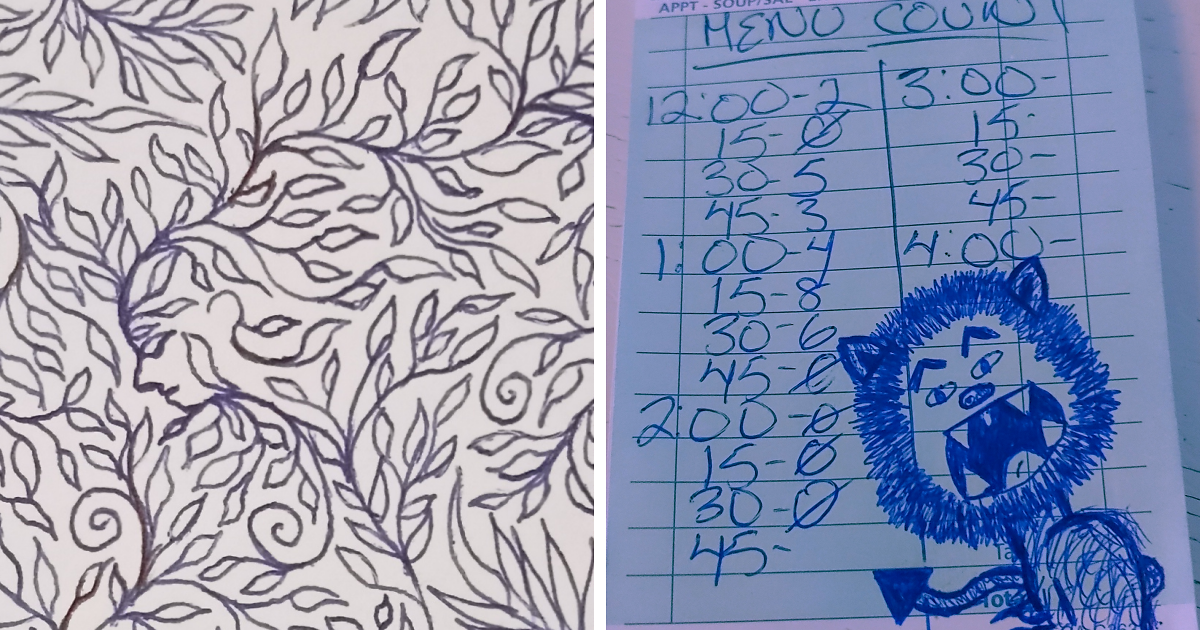
The title “Hey Pandas, Show Us What You Doodle At Work” sounds like a playful internet challenge, but it also points to something surprisingly universal. When people are trapped in a long meeting, waiting for a call to connect, processing a difficult idea, or trying not to stare into the glowing abyss of their inbox, many reach for a pen. Out come spirals, cubes, cartoon cats, tiny monsters, fancy arrows, floating eyeballs, geometric patterns, fake logos, dramatic flowers, and occasionally a very accurate portrait of the office printer as a villain.
Doodling at work is often treated like a guilty habit, as if drawing a tiny dragon during a status update means your career has left the building. But research and workplace psychology suggest the story is more interesting. Simple drawing can help some people stay engaged, regulate boredom, release tension, and unlock ideas. In other words, that tiny raccoon in a necktie might not be procrastination. It might be your brain politely keeping itself online.
What Counts as a Work Doodle?
A doodle is usually a spontaneous, low-pressure drawing made while your attention is partly somewhere else. It does not need to be beautiful, meaningful, or worthy of a museum wall. In fact, the best doodles often look like they were created by a bored wizard using a ballpoint pen and three percent battery life.
At work, doodles show up in dozens of forms. Some are abstract: loops, dots, boxes, waves, zigzags, grids, vines, stars, and repeated shapes. Others are representational: coffee cups, laptops, office chairs, plants, pets, faces, tiny houses, or miniature versions of coworkers who may or may not be aware they have become cartoons. Then there are emotional doodles: storm clouds beside deadlines, volcanoes beside budget meetings, and smiley faces that slowly become less smiley as the meeting enters its third “quick follow-up.”
The charm of doodling is that it has no entry fee. You do not need an art degree, a premium sketchbook, or a set of markers organized by emotional season. A pen and a scrap of paper are enough. That simplicity is exactly why doodling belongs in the workplace conversation. It is accessible, private, quiet, and flexible. It can happen in the margin without interrupting anyone, which is more than we can say for the person who reheats fish in the break room.
Why People Doodle During Work
People doodle at work for many reasons, and not all of them are about boredom. Boredom is certainly part of the story, especially during repetitive calls or information-heavy meetings. But doodling can also be a way to think visually, manage restlessness, stay alert, or process emotions that do not fit neatly into a bullet-point agenda.
For some people, doodling is a focusing tool. A small repetitive drawing task can give the restless part of the mind something to do, leaving more attention available for listening. For others, doodling acts as a pressure valve. When the day is packed with deadlines, messages, notifications, and tiny fires disguised as “quick questions,” sketching a few shapes can create a moment of control.
Work doodles also reveal how people experience their environment. A page full of arrows may come from someone mapping ideas. A cluster of cartoon faces may come from someone processing office personalities. A garden of flowers may simply mean the meeting room has no windows and the soul is requesting chlorophyll.
The Science Behind Doodling and Focus
One of the most-cited studies on doodling examined whether simple drawing helped or hurt attention during a dull listening task. Participants listened to a monotonous phone message and were asked to track certain details. Those assigned to doodle while listening performed better on later recall than those who did not doodle. The takeaway is not that every doodle automatically improves every task. It is that light, undemanding drawing may reduce mind-wandering during boring moments.
This makes sense if you have ever sat through a meeting where your brain tried to escape through the ceiling tiles. When a task is too dull, attention can drift into daydreaming. A simple doodle may provide just enough stimulation to prevent that drift without overwhelming the main task. The key word is simple. Drawing a few shapes while listening is different from illustrating a full fantasy map while your manager explains quarterly strategy.
Modern discussions of attention also recognize that focus is not a single rigid beam. People regulate attention differently. Some sit perfectly still. Some take notes. Some pace during calls. Some doodle tiny cubes until the page looks like an architect’s nervous breakdown. For certain workers, doodling may serve as a quiet form of self-regulation.
Doodling as a Creative Micro-Break
Workdays are often designed as if humans are machines that can process tasks continuously from 9 to 5 with only coffee as coolant. Unfortunately, the brain did not sign that contract. Cognitive fatigue builds up, and short breaks can help restore energy and reduce strain. Research on micro-breaks suggests that brief pauses during the workday can support well-being, especially when they give the mind a genuine shift from the main task.
Doodling fits beautifully into this category. It is short, low-cost, and easy to stop. A two-minute pattern in the corner of a notebook can act like a mental window opening. You are not abandoning work; you are changing gears. That shift can be especially helpful when you are stuck on a problem and staring harder at the screen has begun to feel like a hostage negotiation.
Creative breaks do not need to be grand. You do not have to paint a mural between emails. A quick doodle of a coffee cup with wings can refresh your mood. A silly chart labeled “Amount of Monday” can make a team laugh. A tiny maze may help your brain reset before returning to a complicated spreadsheet. Small creative acts can make the workday feel less like a conveyor belt and more like a place where human minds are allowed to exist.
Can Doodling Reduce Stress?
Art-making has been studied as a way to reduce stress, and research has found that even people without artistic experience can benefit from creative expression. In one well-known study, participants spent time making visual art, and many showed lower cortisol levels afterward. Cortisol is often associated with the body’s stress response, so the finding supports what many doodlers already know: making marks on paper can feel calming.
Doodling is not the same as formal art therapy, and it should not be presented as a medical treatment. However, it can be a healthy everyday coping tool. Drawing repetitive lines, shading shapes, creating patterns, or sketching goofy characters can slow the mental noise of a busy day. It gives your hands something gentle to do while your brain steps back from the emergency siren soundtrack.
There is also an emotional benefit to making something without needing it to be good. Much of work is measured, reviewed, edited, approved, tracked, and occasionally turned into a dashboard no one asked for. Doodling is refreshingly unoptimized. It does not need to convert, scale, integrate, or “circle back.” It can simply exist. That is rare, and honestly, kind of luxurious.
The Best Things People Doodle at Work
Work doodles tend to fall into recognizable categories. Each one says something about the person, the workday, or the meeting currently testing everyone’s will to live.
1. The Meeting Monster
This creature appears during long calls. It may have three eyes, twelve teeth, and a badge labeled “Action Items.” The meeting monster is the unofficial mascot of agenda creep.
2. The Infinite Pattern
Loops, waves, checkerboards, dots, vines, and spirals often appear when someone is listening but needs a rhythm. These doodles are calming because they are repetitive and predictable, unlike the client feedback arriving at 4:57 p.m.
3. The Desk Still Life
Coffee mug, keyboard, water bottle, mouse, snack wrapper, plant, phone charger: the classic workplace landscape. Future historians may study these doodles to understand how civilization ran on caffeine and tangled cables.
4. The Tiny Coworker Cartoon
Some doodlers capture personalities with shocking accuracy: the enthusiastic project manager, the silent IT genius, the person who says “just one more thing” and summons twenty more things.
5. The Panic Chart
This doodle looks like a graph but measures feelings instead of data. Common labels include “confidence,” “snack supply,” “emails ignored,” and “number of tabs open for reasons unknown.”
6. The Escape Portal
Mountains, beaches, forests, fantasy castles, UFOs, little boats, and cozy cottages all suggest one thing: the doodler is physically present but spiritually browsing vacation rentals.
How Doodles Help With Ideas
Doodling can also support visual thinking. Many workplace problems are not purely verbal. They involve relationships, sequences, systems, flows, priorities, and patterns. Sketching can help transform vague thoughts into visible structures.
For example, a product designer may doodle interface layouts while discussing user pain points. A teacher may sketch a classroom activity flow. A manager may draw circles to understand how teams overlap. A writer may doodle icons beside article sections. Even a random-looking page of arrows and boxes can become the first draft of a strategy.
This is why doodling should not be dismissed as childish. Children draw because drawing is a natural way to understand the world. Adults often stop because they become afraid of being judged. The workplace loses something when every idea has to arrive fully dressed in a slide deck. Sometimes the first version of a good idea looks like a wobbly square with three arrows and a question mark.
Doodling Etiquette at Work
Of course, doodling at work requires common sense. The goal is to support attention, not signal that you have mentally moved to a beachside hut. If doodling helps you listen, keep it low-key and respectful. If it distracts you from the task, save it for a break.
Avoid drawing anything that could embarrass, insult, or expose private information. Do not doodle unflattering portraits of coworkers on shared documents. Do not sketch confidential diagrams on paper you might leave in the conference room. Do not create a comic strip about the finance department unless you are prepared to explain why the budget is represented by a raccoon holding a calculator.
Digital doodling also deserves boundaries. Drawing on a tablet during a meeting can look like note-taking, but it can also look like you are designing your next tattoo while someone discusses compliance. When in doubt, pair doodles with written notes. That way your page clearly shows engagement, not just a beautiful collection of mushrooms wearing hats.
How to Turn Work Doodles Into a Fun Office Challenge
A “show us what you doodle at work” prompt can become a lighthearted team activity. It works especially well for remote teams, creative departments, classrooms, newsletters, or community websites. The key is to make it optional and judgment-free.
Invite people to share safe, non-confidential doodles from meetings, lunch breaks, brainstorming sessions, or quiet moments. Encourage captions. A simple doodle becomes funnier when paired with context: “Drawn during a 37-minute debate about the subject line,” or “This is my inbox as a haunted house.”
You can organize submissions by theme: funniest meeting doodle, best tiny animal, most dramatic coffee cup, weirdest abstract pattern, best accidental masterpiece, or most relatable Monday sketch. Keep the tone playful. Nobody should feel pressured to be “good at art.” The whole point is that doodles are imperfect, spontaneous, and personal.
This type of challenge can also humanize a workplace. People often know each other only through roles, deadlines, and message threads. Doodles reveal humor, imagination, and shared frustration. They remind teams that behind every calendar invite is a person with a pen, a brain, and possibly a recurring urge to draw frogs.
What Your Doodles Might Say About Your Workday
It is tempting to treat doodles like secret psychological codes. A spiral means stress! A cube means ambition! A flower means your soul wants brunch! But doodle interpretation should be handled carefully. A drawing does not provide a reliable personality diagnosis. Sometimes a triangle is just a triangle. Sometimes it is what happens when the pen works and the meeting does not.
Still, doodles can help you notice patterns in your own day. If you draw storms every Monday morning, maybe your schedule needs attention. If your notebook fills with boxes and arrows during planning calls, you may be a visual organizer. If your best ideas appear next to little cartoons, perhaps your brain likes a playful warm-up.
The value is not in decoding every mark. The value is in paying attention to your attention. Doodles can become a mirror for your energy, mood, and thought process. They can show when you are engaged, overwhelmed, bored, curious, or ready for lunch with the intensity of a medieval knight.
Simple Doodle Ideas to Try at Work
If you want to start doodling but your mind goes blank, begin with repeatable shapes. Draw a row of circles and turn each one into a different face. Fill a box with tiny leaves. Create a city skyline made of rectangles. Draw your coffee cup as a superhero. Sketch your to-do list as a mountain. Make a “meeting weather report” with clouds, lightning, sunshine, or fog.
Another easy approach is the one-line doodle. Put your pen on the page and draw without lifting it for thirty seconds. Then look at the shape and turn it into something. It might become a fish, a shoe, a sleeping dragon, or a map of your emotional state after reading “per my last email.”
You can also create a small work doodle ritual. Before starting a difficult task, draw one tiny icon in your notebook. After finishing, add another. Over time, the page becomes a visual record of effort. It is more charming than a productivity tracker and less likely to ask you to upgrade to premium.
Experiences Related to “Hey Pandas, Show Us What You Doodle At Work”
The best work doodles often come with stories. One employee may start drawing tiny birds during weekly meetings because the conference room is named “Eagle,” and within a month every agenda has a bird in a different mood. Monday’s bird is tired. Wednesday’s bird has coffee. Friday’s bird is wearing sunglasses and has clearly checked out emotionally. The doodle becomes a quiet team joke, a little symbol of survival that makes the meeting feel less mechanical.
Another common experience is the accidental masterpiece. Someone begins with a bored scribble beside a task list. A loop becomes a vine. The vine becomes a jungle. The jungle gains a tiger, a hammock, and a sign reading “Out of Office Mentally.” By the end of the meeting, the person has created a tiny vacation scene that is more emotionally honest than the entire quarterly report. No one planned it. That is the magic. Doodles arrive sideways.
There is also the problem-solving doodle. A worker stuck on a process may start drawing boxes simply to stay awake. Then the boxes become steps. The arrows become handoffs. The messy page suddenly reveals where the project keeps getting delayed. What began as a doodle turns into a workflow map. This happens more often than people admit. Visual thinking has a way of sneaking useful information out of the brain while the official part of the brain is busy pretending to be serious.
Remote work has created its own doodle culture. During video calls, people may keep a notebook beside the keyboard and sketch while listening. Some draw the shape of the conversation: loops for repeated points, stars beside good ideas, tiny alarm bells beside risks. Others draw little avatars of the meeting mood: a sleepy moon for slow updates, a rocket for exciting launches, a cactus for awkward silence. These doodles become private subtitles for the workday.
Then there are the doodles that capture office life better than any memo. A printer drawn as a dragon. A calendar drawn as a hungry monster. A laptop with steam coming out of it. A snack drawer labeled “Emergency Department.” A coffee mug drawn with angel wings. These tiny sketches are funny because they are true. They translate shared workplace feelings into images that make people laugh instead of groan.
Sharing work doodles can also build connection. When people post their margin sketches in a friendly thread, the responses often sound like recognition: “I draw the same spirals during budget calls,” or “That cat looks exactly like our project timeline.” The doodles do not need polish. Their power comes from relatability. They say, “Yes, work is strange. Yes, meetings are long. Yes, we are all doing our best with pens, coffee, and whatever focus remains.”
In that sense, “Hey Pandas, Show Us What You Doodle At Work” is more than a request for funny drawings. It is an invitation to notice the small creative behaviors people use to get through the day. Doodling makes work a little less sterile and a little more human. It gives boredom a costume, stress a side exit, and imagination a place to stretch its legs. Not bad for something that starts with a pen mark in the margin.
Conclusion: The Office Doodle Deserves Respect
Doodling at work is not automatically a sign of distraction. Used thoughtfully, it can be a focus aid, a creative warm-up, a stress-relief habit, and a playful record of office life. It helps people stay present during dull moments, process complex ideas visually, and find humor in the daily rituals of modern work.
The next time you catch yourself drawing stars beside a meeting note or turning a bullet point into a tiny robot, do not rush to hide the evidence. Your doodle may be silly, but silly can be useful. It may help you listen, think, reset, or simply survive another “quick sync” that somehow requires 48 minutes and a follow-up document.
So, hey pandas, show us what you doodle at work. Show the coffee dragons, the meeting monsters, the abstract spirals, the emotional charts, the tiny cats, the stressed-out calendars, and the heroic sticky-note cartoons. The workplace may run on deadlines, but it is made bearable by small human sparks of creativity. Sometimes those sparks look like a masterpiece. Sometimes they look like a potato with glasses. Both deserve applause.