
Every startup founder eventually meets the same villain: the spreadsheet that says growth will magically happen because a few more salespeople were hired, a bigger quota was typed into a cell, and everyone agreed to “go crush it.” The spreadsheet looks confident. It wears a tiny blazer. Unfortunately, it often has no idea what is happening in the real world.
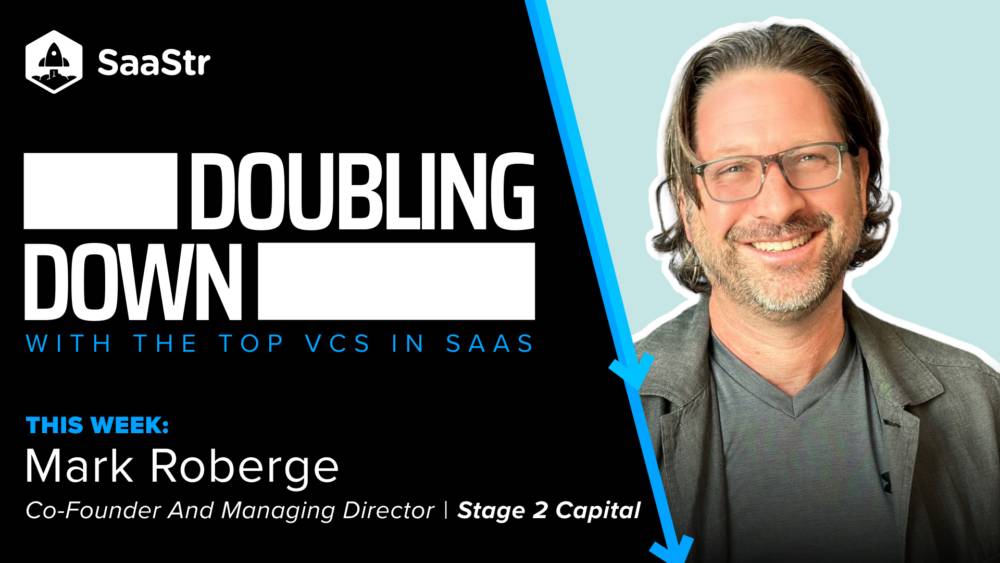
That is where Mark Roberge has built his reputation. As Co-Founder and Managing Director at Stage 2 Capital, former founding Chief Revenue Officer at HubSpot, senior lecturer at Harvard Business School, and author of The Sales Acceleration Formula, Roberge is one of the best-known voices in data-driven sales, go-to-market strategy, and startup scaling. His central message is refreshingly practical: growth should not be a motivational poster. It should be a system.
In the SaaS and B2B software world, “doubling down” often means pouring more money into sales and marketing. Roberge’s version is more disciplined. He argues that founders should double down only after they understand whether their company has product-market fit, go-to-market fit, and the right operating model to scale without turning cash into confetti.
Who Is Mark Roberge?
Mark Roberge is widely known for helping build HubSpot’s early sales engine. Before becoming a venture investor, he served as the founding CRO at HubSpot, where he helped scale annualized revenue from $0 to $100 million and expanded the sales organization from one person to hundreds of employees. That kind of growth does not happen because someone bought a motivational coffee mug. It happens because hiring, training, demand generation, sales process, and management are designed to work together.
Roberge later turned those lessons into The Sales Acceleration Formula, a book that reframed startup sales as an engineering problem. Instead of treating sales like an art performed by charismatic unicorns in quarter-zips, he broke it into repeatable pieces: who to hire, how to train them, how to manage them, and how to create predictable demand.
Today, he brings that same systems-thinking approach to Stage 2 Capital, a venture capital firm focused on early-stage B2B software and marketplace companies. He is also a senior lecturer at Harvard Business School, where he teaches entrepreneurial sales, marketing, and startup growth. In other words, he has spent years doing the thing, explaining the thing, investing in the thing, and politely warning founders not to skip the thing.
What Makes Stage 2 Capital Different?
Stage 2 Capital is not designed to be a traditional “money plus quarterly board deck” venture firm. Its model combines capital with hands-on go-to-market expertise. The firm was co-founded by Mark Roberge and Jay Po in 2018, and its investor network includes experienced revenue leaders, sales executives, marketing leaders, customer success operators, and other go-to-market professionals.
The idea is simple but powerful: many startups do not fail because the product is bad. They fail because they scale the wrong motion, hire the wrong sales profile, choose the wrong demand channel, misread customer readiness, or mistake early enthusiasm for repeatable revenue. Stage 2 Capital exists to help founders avoid those expensive mistakes before they become board-meeting horror stories.
In a SaaStr “Doubling Down” interview, Roberge described Stage 2 Capital’s sweet spot as B2B software companies around $1 million in annual recurring revenue, often between seed and Series A. The firm’s first checks have been described in the $4 million to $6 million range, and Fund III was announced at $150 million. More importantly, Stage 2 often begins relationships with founders when they are wrestling with go-to-market questions, not merely when they are raising capital.
The Big Idea: Product-Market Fit Is Not Enough
In startup mythology, product-market fit is the promised land. Once a company reaches it, the team celebrates, investors nod approvingly, and someone updates the LinkedIn banner. But Roberge argues that product-market fit is only one stage of the journey.
His scaling framework separates the startup journey into three major phases: product-market fit, go-to-market fit, and growth with moat. Product-market fit means the company can generate customer success consistently. Go-to-market fit means the company can acquire and retain customers consistently and scalably. Growth with moat means the company can expand while building defensibility.
This distinction matters because many founders mistake “customers like our product” for “we are ready to scale sales.” Those are related, but they are not the same. A founder-led sales motion can close early customers through trust, vision, and heroic effort. That does not prove a newly hired sales team can repeat the motion at scale with healthy unit economics.
Why Go-to-Market Fit Matters
Go-to-market fit is the missing middle between a promising product and a durable company. It asks practical questions: Can the business acquire customers profitably? Does the sales cycle support the price point? Are customers retaining? Is the market large enough? Can the company hire and ramp salespeople without depending on founder magic?
Roberge’s view is especially valuable for SaaS founders because it introduces discipline into a stage that often gets emotional. After raising a seed or Series A round, founders feel pressure to accelerate. Investors want growth. Teams want momentum. Competitors are making noise. The temptation is to hire a bigger sales team immediately. But if the go-to-market model is not ready, scaling simply multiplies inefficiency.
It is the startup equivalent of stepping on the gas while the wheels are still being attached. Dramatic? Yes. Efficient? Not even a little.
Roberge’s Data-Driven Sales Philosophy
Mark Roberge’s approach to sales is often described as scientific because he treats revenue growth as a measurable system. That does not mean removing the human side of sales. Buyers still have fears, politics, budgets, bad Mondays, and inboxes that look like digital junk drawers. But the process around those buyers can be studied and improved.
At HubSpot, Roberge became known for applying data to sales hiring and performance. Rather than hiring only for traditional enterprise sales experience, he studied which attributes predicted success in HubSpot’s specific environment. That led to a more customized hiring profile and a repeatable sales playbook.
The deeper lesson is that every company needs its own sales formula. A high-velocity SMB SaaS business should not copy the sales process of a complex enterprise cybersecurity platform. A founder selling to technical developers should not automatically hire the same type of seller as a company selling to HR departments. The buyer, price, urgency, implementation complexity, and market education burden all shape the right motion.
What Founders Can Learn From the “Doubling Down” Mindset
The title “Doubling Down” fits Roberge because his investment philosophy is not about cautious underinvestment. It is about knowing when to press harder. The difference is timing. Great founders should be ambitious, but ambition needs evidence.
Roberge has repeatedly emphasized that founders should challenge themselves with a clean-slate question: if they were starting the company today, knowing what they now know about customers, macro conditions, technical capabilities, and buyer behavior, what would they do differently? That question is uncomfortable, which is usually how you know it is useful.
For B2B software companies, the answer may involve narrowing the ideal customer profile, changing pricing, shifting from founder-led sales to a repeatable sales motion, investing in customer success earlier, or rebuilding demand generation around channels that actually convert. In the age of AI, it may also mean rethinking the product roadmap entirely because the market’s expectations are changing faster than a startup’s homepage copy.
Stage 2 Capital’s View of AI and the Current Venture Market
Roberge has noted that AI is creating both excitement and confusion in venture markets. This is not unusual. Every major platform shift brings a wave of early winners, noisy imitators, funding spikes, and eventual corrections. The internet had its first icons, and then the more durable giants emerged later. AI may follow a similar pattern.
For founders, the lesson is not to avoid AI. That would be like avoiding electricity because some light bulbs burned out. The better lesson is to ask whether the company has a real customer problem, a defensible insight, and a go-to-market strategy that can survive once the hype tax disappears.
In a frothy market, capital can hide weak fundamentals. In a tougher market, weak fundamentals start wearing neon signs. Roberge’s frameworks help founders focus on what endures: customer value, retention, unit economics, repeatable acquisition, and a sales motion that fits the buyer.
The Science of Scaling: When to Grow and How Fast
One of Roberge’s most important contributions is his focus on the timing and pace of scale. Many startups ask, “How do we grow faster?” He pushes them to ask, “Are we ready to grow faster, and what evidence proves it?”
In Stage 2 Capital’s Science of Scaling framework, premature scaling is a common cause of missed revenue targets. The warning signs include focusing on top-line revenue before consistent customer value, lacking a data-driven definition of product-market fit, misunderstanding the go-to-market capabilities needed before hiring salespeople, front-loading sales hires too aggressively, and confusing a temporary advantage with a durable moat.
This is the kind of thinking that can save a startup from a very expensive learning experience. If customer retention is weak, adding more customers may simply increase churn later. If the sales cycle is poorly understood, adding salespeople may increase burn without increasing predictable bookings. If the company does not know which demand channels work, marketing spend can become an extremely stylish bonfire.
Why Roberge’s Experience at HubSpot Still Matters
HubSpot’s rise remains relevant because it showed how inbound marketing, sales process, and customer education could work together. Roberge’s sales organization was not built in isolation. It connected to HubSpot’s broader philosophy: attract the right audience, educate them, help them solve real problems, and build trust before pushing for a transaction.
That lesson is even more important today. Buyers are more informed, more skeptical, and more allergic to generic outreach than ever. A sales team cannot simply “smile and dial” its way into durable growth. The best go-to-market motions combine content, product experience, sales conversations, customer success, and data feedback loops.
Roberge’s career sits at the intersection of those disciplines. He understands that revenue is not just a department. It is the output of a company-wide system.
Specific Examples of Roberge’s Principles in Action
Example 1: Hiring the Right First Salesperson
A technical founder may assume the first sales hire should be a senior enterprise seller from a famous software company. That can be a mistake. In an early-stage startup, the first salesperson often needs curiosity, adaptability, comfort with ambiguity, and the ability to turn messy customer conversations into market learning. A polished big-company seller may expect a complete playbook, brand recognition, and marketing support that do not yet exist.
Example 2: Scaling Only After Leading Indicators Improve
Suppose a SaaS company has ten enthusiastic customers but no clear retention data. Instead of hiring six account executives immediately, Roberge’s logic would push the company to examine leading indicators: activation, usage, repeat engagement, expansion potential, and customer success milestones. If those indicators are weak, the company should improve the product and onboarding before scaling acquisition.
Example 3: Matching Sales Motion to Price Point
A $99-per-month product cannot usually support a long enterprise sales process. A six-figure annual contract cannot usually rely on a self-serve checkout page alone. The economics must match the motion. This sounds obvious until a founder builds a plan that requires a low-price product, a high-touch sales team, and instant profitability. That plan is not a strategy; it is a magic trick without the magic.
Why Mark Roberge Resonates With Modern SaaS Founders
Roberge resonates because he gives founders language for problems they already feel. Many early-stage leaders know something is off when revenue is growing but the model feels fragile. They sense that sales are happening through founder hustle rather than repeatable process. They see promising pipeline numbers but worry about conversion quality. They hear investors ask for aggressive growth and wonder whether the machine is ready.
His frameworks do not eliminate risk, but they make risk visible. That is a major advantage. A founder can make better decisions when the company understands which metrics matter at each stage. Product-market fit requires evidence of customer success. Go-to-market fit requires evidence of scalable acquisition and retention. Growth requires evidence that the company can expand while building durable advantage.
Experiences and Practical Lessons Related to Mark Roberge’s Approach
One of the most useful ways to apply Roberge’s ideas is to imagine a founder preparing for the next board meeting. The company has raised seed capital, built a promising product, and reached roughly $1 million in annual recurring revenue. The founder wants to triple revenue next year. The board wants a plan. The sales team wants more leads. Marketing wants more budget. Customer success wants fewer surprises. Everyone wants growth, preferably the kind that comes with applause and not emergency hiring.
A Roberge-inspired approach would begin by slowing the conversation down just enough to define the stage. Does the company have product-market fit? Not in the vague “customers seem happy” sense, but in the measurable sense. Are customers activating? Are they using the product repeatedly? Are they renewing? Are they expanding? Do the best customers share a recognizable profile? If the answer is unclear, the company should not pretend that a bigger sales team will solve it.
Next, the founder would examine go-to-market fit. Which customer segment converts most efficiently? Which use case creates the fastest path to value? What is the payback period? How much pipeline is created by each channel? Are salespeople winning because the playbook works, or because one heroic rep is carrying the quarter on their back like a caffeinated superhero?
This experience is common in B2B SaaS. A company may have early customers from founder networks, friendly referrals, or a hot market trend. Those deals are valuable, but they can also create false confidence. When the company hires its first real sales team, the new reps cannot rely on the founder’s credibility or personal relationships. Suddenly, the sales cycle stretches, win rates fall, and the spreadsheet starts sweating.
The practical lesson is to build the revenue engine before flooring the accelerator. That means documenting the sales process, defining qualification criteria, building onboarding and training, aligning marketing with the ideal customer profile, and making customer success part of the growth strategy. It also means accepting that not all revenue is equal. Revenue from customers who churn quickly is not a victory lap; it is a warning label.
Another experience founders often face is deciding whether to pursue a broader market or double down on a narrower niche. Roberge’s thinking would favor evidence over ego. If one segment has stronger retention, faster activation, better willingness to pay, and more urgent pain, that segment deserves focus. Founders sometimes resist narrowing because it feels smaller. In reality, focus often creates the clarity needed to scale. A sharp spear usually performs better than a giant spoon.
For sales leaders, Roberge’s approach also changes how teams think about hiring. Instead of asking, “Who has the most impressive resume?” the better question is, “Who fits this sales motion right now?” Early-stage sales may require discovery skills, resilience, coachability, and comfort with iteration. Later-stage sales may require process discipline, territory management, and enterprise navigation. The right hire depends on the stage.
For investors, the lesson is equally clear. Capital alone is not enough. A founder who receives funding without go-to-market guidance may spend faster without learning faster. Stage 2 Capital’s model recognizes that experienced operators can help founders avoid common scaling traps. The best support is not generic advice. It is specific, stage-aware, and connected to the company’s actual sales motion.
Ultimately, the most valuable experience related to Roberge’s work is learning to respect sequence. Build customer value first. Prove repeatability next. Scale with discipline after that. Founders do not need to be timid. They need to be honest about what the data says. Doubling down is powerful when the system is ready. When it is not, doubling down simply doubles the mess.
Conclusion
Mark Roberge’s career offers a practical playbook for founders who want to grow without gambling the company on wishful thinking. From HubSpot to Harvard Business School to Stage 2 Capital, his work centers on a clear idea: revenue growth can be engineered, measured, and improved when leaders understand the stage they are in.
For SaaS founders, the message is both encouraging and challenging. You do not need mystical sales magic to build a great company. You need customer insight, a repeatable go-to-market motion, disciplined hiring, strong unit economics, and the humility to let data correct your assumptions. That may sound less glamorous than “move fast and break things,” but it is far more useful when payroll is due.
Doubling down with Mark Roberge does not mean spending more because the market is loud. It means investing more when the evidence says the machine is ready. That is how startups move from promising products to enduring companies.