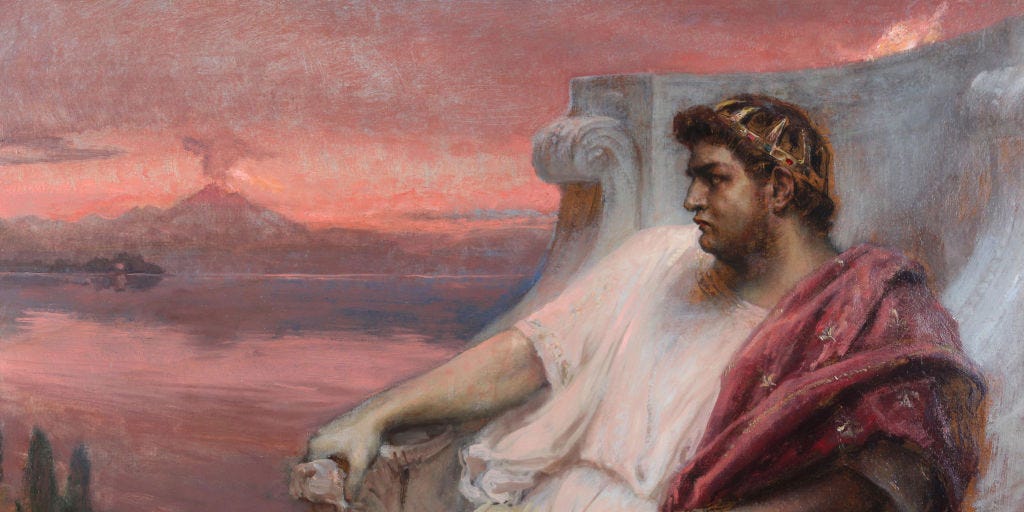

Rome has a funny habit of hiding world-class history under the most ordinary places. Dig a subway tunnel, find an ancient road. Repair a basement, discover a bathhouse. Prepare a luxury hotel garden for renovation, and suddenly the ghost of Emperor Nero walks in wearing a theatrical cape and asking whether the lighting is dramatic enough.
That, more or less, is what happened near the Vatican, where archaeologists uncovered remains believed to belong to the long-lost Theater of Nero. The discovery was made beneath the garden and courtyard area of Palazzo della Rovere, a Renaissance complex close to St. Peter’s Square. For centuries, ancient writers hinted that Nero had a private performance space somewhere in this part of Rome, but no one could point to it with confidence. Then the soil began talking.
The unearthed ruins include architectural remains, marble elements, gold-leaf decoration, and rooms that may have served practical theater functions. Even better, the excavation also revealed later medieval layers, including pottery and rare glass objects. In other words, archaeologists did not just find a Nero-era structure; they found a time sandwich, and Rome, naturally, made it extra.
What Exactly Did Archaeologists Find?
The central discovery is believed to be part of the Theater of Nero, sometimes referred to by scholars as the Theatrum Neronis. Ancient Roman sources mentioned such a theater, but until the excavation at Palazzo della Rovere, its physical location remained uncertain. The discovery matters because it gives material shape to a building that had long lived mostly in texts, speculation, and the imagination of classicists who probably have very strong opinions about marble fragments.
Archaeologists identified structural and decorative elements consistent with an elite Roman performance venue. Reports describe parts of a semicircular seating area, marble columns, fine plasterwork, and decoration that included traces of gold leaf. The site also contained spaces interpreted as storage rooms, possibly used for costumes, scenery, or theatrical equipment. If that interpretation is correct, the find offers a rare backstage pass to imperial entertainment culture.
The location is especially intriguing. The ruins were uncovered near the Vatican, in the Borgo area, not far from the Tiber River. In antiquity, this district was associated with imperial gardens and elite properties. Nero, who ruled from A.D. 54 to 68, inherited connections to this area through the Julio-Claudian family. A private theater in such a setting would fit what ancient writers tell us about his enthusiasm for performance, spectacle, and carefully staged self-presentation.
Why Nero Needed a Theater, Because Subtlety Was Not His Brand
Nero was not merely an emperor who enjoyed the arts. He wanted to be seen as an artist. He sang, played music, performed poetry, sponsored games, and reportedly took public performance very seriously. For most rulers, “running the empire” would be enough of a calendar event. Nero apparently looked at the job description and thought, “Yes, but where is my solo number?”
Ancient authors such as Pliny the Elder, Suetonius, and Tacitus help explain why the theater matters. Their writings preserve references to Nero’s private performances, gardens, and theatrical ambitions. These sources are complicated, often hostile, and sometimes more interested in moral drama than neutral reporting. Still, when texts and archaeology begin pointing in the same direction, historians pay attention.
The discovery near Palazzo della Rovere does not magically solve every debate about Nero. It does, however, support the idea that Nero’s artistic identity was not just propaganda or gossip. It was built into the city itself. A private theater allowed the emperor to rehearse, entertain select audiences, and create a controlled world in which imperial power and performance blended together.
The Theater Beneath a Renaissance Palace
One reason the discovery feels so cinematic is the setting. Palazzo della Rovere is a Renaissance building with frescoed interiors and a prestigious location along the route toward St. Peter’s Basilica. Renovation work connected to future hotel use opened the way for deep archaeological investigation. This is very Roman: one century wants boutique hospitality, another century interrupts with imperial masonry.
Excavations began years before the public announcement, giving archaeologists time to study the site carefully. Rome is layered like a giant historical lasagna, and careless digging can destroy as much as it reveals. At Palazzo della Rovere, the team uncovered material from multiple periods, including the Roman Empire, the medieval era, and the Renaissance. The result is not a single frozen moment but a long biography of place.
The theater remains appear to belong to the first century A.D., the period of Nero’s reign. Later, the area changed dramatically. Buildings were dismantled, materials were reused, pilgrims moved through the district, workshops operated nearby, and Renaissance elites reshaped the urban landscape. The theater disappeared not because it was unimportant, but because Rome constantly recycles itself. In this city, even emperors eventually become foundations.
Gold Leaf, Marble Columns, and the Smell of Imperial Drama
The decorative evidence is one of the most exciting parts of the discovery. Marble columns and gold-leaf plaster suggest that this was no humble neighborhood stage where someone’s uncle performed bad satire after dinner. The materials point to wealth, prestige, and visual impact. Nero’s Rome loved spectacle, and a private imperial theater would have been designed to impress.
Gold leaf is especially fitting. Nero’s most famous architectural project, the Domus Aurea, or Golden House, was known for extravagant decoration after the Great Fire of Rome in A.D. 64. While the Theater of Nero near the Vatican was not the Domus Aurea, the two sites belong to the same larger conversation about power, luxury, and performance. Nero understood architecture as theater, and theater as politics.
Roman theaters were not just entertainment venues. They were social machines. Seating arrangements reflected status. Decoration communicated wealth. Performances could flatter rulers, mock enemies, reinforce shared myths, and give the public a carefully managed emotional experience. In Nero’s case, the line between patron and performer became unusually thin. He did not simply sponsor the show; he wanted applause.
A Discovery That Goes Beyond Nero
Although the headline belongs to Nero, the excavation is important for more than imperial celebrity. Archaeologists also found medieval artifacts, including pottery and rare glass objects. Some reports noted that the number of glass chalices uncovered at the site was remarkable because so few comparable pieces from that period had previously been found in Rome.
That medieval layer reveals how the area evolved long after Nero’s death. The neighborhood near St. Peter’s became deeply connected to pilgrimage, religious activity, craft production, and urban life. Objects such as glassware, pottery, pilgrim items, and small crafted materials help researchers understand daily life in periods that are often less glamorous than imperial Rome but just as important.
This is one of archaeology’s best plot twists: you start by chasing an emperor and end up learning about ordinary people. Nero gets the spotlight, but the site also tells stories of artisans, pilgrims, cooks, builders, visitors, and residents who moved through the same ground over many centuries. The emperor had marble and gold. Later Romans had cups, tools, and practical lives. History needs both.
Why the Theater Was Lost for So Long
Ancient buildings disappear for many reasons. Some collapse. Some are intentionally demolished. Some are cannibalized for stone. Some are buried by later construction. In Rome, all of the above may happen before lunch.
The Theater of Nero likely suffered from the same fate as many Roman monuments: later generations reused its valuable materials and built over what remained. Marble was too useful to leave sitting around in a ruined theater. Columns, blocks, and decorative pieces could be repurposed in new buildings. Over time, the original structure faded from view while its memory survived in texts.
The site’s location also complicated the search. The Vatican area and the surrounding Borgo district have been continuously occupied, rebuilt, and politically important for centuries. Unlike a remote ruin in an open field, this was buried beneath living city fabric. Archaeologists could not simply peel back the neighborhood like a carpet. They had to wait for the right opportunity, the right permissions, and the right excavation conditions.
What This Discovery Tells Us About Nero
Nero’s reputation is one of the messiest in Roman history. He is remembered as cruel, vain, extravagant, theatrical, and possibly unhinged. He is also the subject of many stories shaped by hostile ancient writers and later legend. The famous phrase that he “fiddled while Rome burned” is historically misleading for the simple reason that the fiddle did not exist in his time. History, like social media, sometimes prefers a spicy caption to a careful footnote.
Modern historians are more cautious. Nero was certainly controversial, and his reign ended disastrously with revolt and suicide in A.D. 68. But some scholars argue that his image was darkened by elite writers who disliked his populist style, artistic ambitions, and attacks on senatorial dignity. The newly uncovered theater does not make Nero innocent or noble. It makes him more three-dimensional.
The ruins show an emperor who invested in performance as a serious part of rule. For Nero, art was not a hobby kept politely in the corner. It was central to how he imagined himself. The theater near the Vatican gives that ambition a physical address. It turns gossip into architecture.
The Connection to the Great Fire and the Golden House
No discussion of Nero can avoid the Great Fire of Rome in A.D. 64. The fire destroyed large sections of the city and became permanently attached to Nero’s name. Ancient sources differ, rumors spread, and later storytelling turned uncertainty into accusation. What is clearer is that Nero used the aftermath to reshape parts of Rome, most famously through the construction of the Domus Aurea.
The Domus Aurea was an enormous palace complex filled with gardens, water features, frescoes, marble, and gilded decoration. It represented both Roman engineering brilliance and imperial excess. After Nero’s death, later emperors tried to distance themselves from it. Parts were buried or built over, which ironically helped preserve some of the painted rooms underground.
The Theater of Nero belongs to this same world of spectacle. Whether used for private rehearsals, elite entertainment, or imperial self-display, it reflects a ruler who saw performance as power. The discovery near the Vatican helps connect literary descriptions of Nero’s artistic life with archaeological evidence. It is not just another ruin; it is a missing piece in the map of Neronian Rome.
Why Archaeologists Are Excited
Archaeologists are excited because the discovery checks several boxes at once. It is tied to a famous historical figure. It confirms or strengthens ancient textual traditions. It contains high-status architectural remains. It preserves evidence from multiple time periods. And it emerged in a location that helps refine our understanding of Rome’s urban development.
Finds like this are rare because they do not simply add another object to a museum case. They change the shape of a historical question. Before the excavation, the Theater of Nero was a known unknown: mentioned, debated, but unfound. After the excavation, scholars can study materials, layout, construction methods, decorative fragments, and later reuse patterns. The conversation moves from “Where was it?” to “How did it function?”
That shift matters. Archaeology is not treasure hunting with better shoes. It is the slow reconstruction of human behavior from physical evidence. A column fragment, a plaster surface, a storage room, or a broken cup may look quiet, but each one can answer questions that texts leave open.
How This Discovery Changes the Visitor’s Imagination of Rome
For travelers, the discovery adds another layer to an already crowded mental map of Rome. Most visitors know the Colosseum, the Roman Forum, the Pantheon, and St. Peter’s Basilica. The Theater of Nero reminds us that the ancient city extends far beyond the postcard route. Beneath churches, palaces, streets, hotels, and courtyards lies a second Rome, still waiting to interrupt renovation schedules.
It also changes how we imagine the Vatican area. Today, the district is strongly associated with Christianity, pilgrimage, and papal history. But in Nero’s time, this landscape was part of imperial Rome, with gardens, elite estates, entertainment spaces, and major routes along the Tiber. The same area later became central to Christian memory, especially through traditions associated with St. Peter. The ground itself bridges radically different worlds.
That is the magic of the find. It does not replace one story with another. It stacks them. Pagan imperial performance, medieval pilgrimage, Renaissance patronage, modern hospitality, and archaeological science all meet in one courtyard. Rome does not have a single past. It has a crowded elevator of pasts, and everyone is pressing a different floor.
Experiences Related to Nero’s Lost Ruins
Walking Through Rome With the Discovery in Mind
To understand why the unearthed ruins of Nero’s theater feel so powerful, imagine walking from St. Peter’s Square toward the Tiber River. Tourists are taking photos, scooters are buzzing, guides are waving little flags, and someone is definitely blocking the sidewalk while trying to decide whether gelato counts as lunch. On the surface, everything feels modern and busy. But beneath that movement sits an older city, one that still remembers emperors.
Knowing that Nero’s lost theater was found nearby changes the experience of the neighborhood. The Vatican area no longer feels only like a center of Christian history. It becomes a stage where imperial Rome, medieval pilgrimage, Renaissance politics, and modern tourism overlap. You can stand in a street filled with souvenir shops and suddenly picture an emperor rehearsing songs in a private theater, surrounded by marble, gold decoration, and nervous courtiers pretending his performance was excellent.
That mental shift is one of the best experiences archaeology can offer. It does not require touching the artifact or entering the excavation. The discovery changes how you see ordinary space. A wall becomes suspicious. A courtyard becomes mysterious. A hotel renovation becomes the opening scene of a documentary. Rome trains visitors to look twice, because the second glance is usually where the ancient world is hiding.
Visiting Nero’s Rome Today
Anyone interested in the Theater of Nero can build a broader Nero-themed experience in Rome. The Domus Aurea near the Colosseum is the most important stop. Walking through its preserved underground rooms gives a sense of the scale and ambition of Nero’s architectural imagination. The frescoes, vaulted spaces, and surviving decorative details help visitors understand why his building projects both amazed and offended Rome.
The Roman Forum also adds context. It was the political heart of the city Nero ruled, the place where power was displayed, negotiated, praised, and attacked. The Colosseum, built after Nero’s death on land associated with his palace complex, can be read as a political correction: a later dynasty turning private imperial extravagance into public entertainment. That is ancient urban planning with a side of public relations.
Near the Vatican, even if the newly discovered theater remains are not part of a standard public route, the surrounding district rewards slow walking. The closeness of the site to St. Peter’s Basilica highlights the dramatic transformation of Rome from imperial capital to Christian center. Few cities allow visitors to cross so many historical boundaries in a single afternoon without needing more than comfortable shoes and a tolerance for cobblestones.
What the Discovery Feels Like for History Lovers
For history lovers, the discovery is satisfying because it proves that ancient texts still have surprises to give. The Theater of Nero was not invented by modern marketing. It existed in literary memory, waiting for archaeology to catch up. When physical remains appear after centuries of uncertainty, it feels like a conversation across time finally getting a reply.
There is also something wonderfully human about the find. Nero, for all his power and controversy, wanted what many performers want: an audience. The theater reminds us that rulers are not only policy makers and military figures. They are also image builders. They worry about reputation, stagecraft, applause, and legacy. Nero’s version happened to involve more marble than most people can reasonably fit into a rehearsal room.
The excavation also encourages humility. For generations, people walked above the site without knowing what was below. That is a useful reminder that history is not finished just because textbooks sound confident. New evidence can still appear under gardens, parking lots, churches, and construction zones. The past is not gone. Sometimes it is merely waiting for someone with a permit and a trowel.
Conclusion: Nero’s Lost Ruins Are More Than an Archaeological Headline
The unearthed ruins believed to belong to Emperor Nero’s lost theater are more than a glamorous archaeological discovery near the Vatican. They are a rare bridge between ancient literature and physical evidence, between imperial ambition and urban memory, between the Rome of emperors and the Rome of pilgrims, palaces, and modern visitors.
The find helps us see Nero not only as the villain of familiar legend but as a ruler who used performance, architecture, and spectacle to shape his identity. Marble columns, gold-leaf decoration, theater rooms, medieval glassware, and centuries of layered occupation all combine to tell a richer story than any single ancient rumor could provide.
In the end, Rome has once again done what Rome does best: it has reminded the modern world that history is not buried quietly. It waits under courtyards, interrupts construction plans, and occasionally reappears with enough drama to make even Nero proud.
SEO Tags