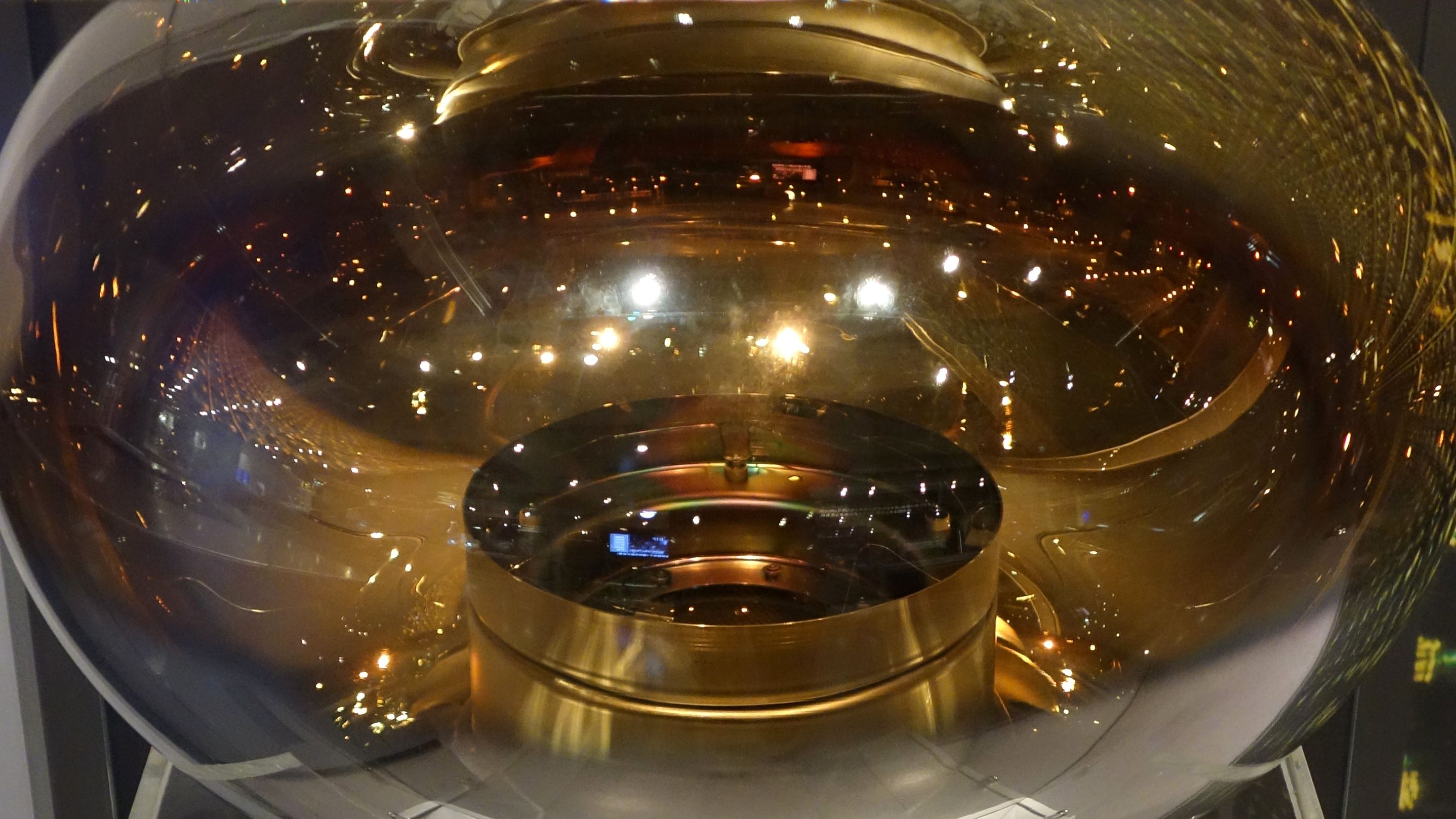

Some science stories begin with a dramatic boom, a blinding flash, or a villainous cloud of smoke. Neutrino science begins with particles that are so absurdly shy they can zip through planets, people, and probably your Monday mood without leaving much of a trace. That is exactly why the topic of Neutrino Hunters Hack Chat is so irresistible. It combines the cosmic scale of modern physics with the practical headaches of engineering, electronics, signal processing, and data analysis. In other words, it is not just about hunting ghost particles. It is about building machines smart enough to notice when the universe whispers.
The Hackaday event itself centered on Patrick Allison, a physicist and electronics expert whose work sits right at the intersection of neutrino detector design, radio detection methods, and system integration. That makes him an ideal guide for a conversation that is equal parts particle physics, field engineering, and “how on Earth do you keep all this hardware alive long enough to get meaningful data?” If you love the moment when big science stops looking like an abstract equation and starts looking like solder, cryogenics, timing systems, and relentless debugging, this is your kind of chat.
And yes, that is part of the appeal. A lot of public writing about neutrinos treats them like magical space confetti. But the real story is better. Neutrino hunting is one of the clearest examples of how modern science depends on people who can think like experimental physicists, electrical engineers, software architects, and patient mechanics all at once. The flashy headline may be about the universe. The actual work often starts with a sensor refusing to behave at 3:12 a.m.
What Is “Neutrino Hunters Hack Chat,” Really?
At the simplest level, Neutrino Hunters Hack Chat was a live Hackaday community conversation about the trade of neutrino hunting and the engineering required to keep data flowing. That framing matters. It suggests the discussion was not just about what neutrinos are, but about how scientists and engineers actually chase them in practice.
That means talking about detector design, instrumentation, timing precision, noise reduction, remote operation, and the uncomfortable truth that rare-event science is not glamorous every minute of the day. Sometimes it is a noble quest to understand the cosmos. Sometimes it is a heroic struggle against cable problems, thermal drift, software bottlenecks, and the suspicious behavior of electronics in extreme environments. Big Science, meet Big Coffee.
Hack Chat is a perfect setting for this topic because neutrino research rewards the same mindset that powers serious makers and hardware hackers: curiosity, systems thinking, tolerance for failure, and a deep respect for the sentence, “That should have worked.” In that sense, the title Neutrino Hunters Hack Chat is not just catchy. It is accurate. The field is full of people who have to outwit nature, background noise, and sometimes their own equipment.
Why Neutrinos Fascinate Scientists
Neutrinos are fundamental particles with no electric charge and an incredibly tiny mass. They come in three flavors: electron neutrinos, muon neutrinos, and tau neutrinos. For a long time, they were treated like elusive supporting characters in the larger drama of particle physics. Then they started stealing scenes.
One reason neutrinos matter so much is that they change flavor as they travel, a phenomenon called neutrino oscillation. That discovery helped confirm that neutrinos have mass, which pushed physics beyond an older version of the Standard Model. If you are the universe, this is a tidy way of saying, “Surprise, the rulebook needed editing.” If you are a physicist, it is the kind of result that justifies years of detector construction, calibration, analysis, and existential conversations with spreadsheets.
Neutrinos are also remarkable cosmic messengers. Unlike charged particles, they are not easily bent off course by magnetic fields, and unlike light, they can escape from dense environments that photons struggle to leave. That gives them unusual value in astronomy. They can carry information out of violent, hidden regions near black holes, exploding stars, and other extreme astrophysical environments. When scientists detect them, they are not just counting particles. They are reading messages sent from the roughest neighborhoods in the universe.
Why Catching One Is So Ridiculously Hard
Here is the central joke of neutrino physics: there are tons of neutrinos around, yet they remain maddeningly difficult to detect. Trillions pass through your body every second, but they interact with matter so rarely that a human-sized detector would wait an awfully long time for a meaningful hello. That is why neutrino experiments tend to be huge, strange, or buried in extreme locations. Sometimes all three, because apparently moderation is not a recognized neutrino strategy.
Scientists cannot detect neutrinos directly. Instead, they detect the charged particles produced when a neutrino finally interacts with matter. That interaction might create a flash of light, a particle track, or another measurable signature depending on the detector material and design. In plain English, neutrino experiments are glorified cosmic stakeouts. The neutrino is slippery. The evidence it leaves behind is the real witness.
This challenge explains why neutrino detectors come in so many forms. Some use enormous volumes of water or ice to capture faint flashes of Cherenkov light. Others rely on liquid argon time projection chambers to reconstruct interactions in detailed 3D. Still others use radio techniques to look for signatures from ultra-high-energy neutrinos in ice. Different detectors, same headache: separating a rare real signal from a world full of noise, background events, and false confidence.
How Neutrino Hunters Actually Hunt
IceCube: Turning Antarctic Ice into a Telescope
One of the most famous examples in neutrino astronomy is IceCube, the cubic-kilometer detector embedded in Antarctic ice near the South Pole. It uses the ice itself as a detection medium. When a neutrino interaction produces a charged particle moving through the ice faster than light travels in that medium, the particle emits Cherenkov radiation, which sensors can detect. Yes, it sounds like science fiction. No, the scientists do not get a villain lair. They get freezing logistics and magnificent data problems.
IceCube changed the field by helping establish high-energy neutrino astronomy as a real thing rather than an ambitious dream with excellent branding. It provided the first strong evidence for a flux of high-energy astrophysical neutrinos and later helped produce a neutrino-based image of the Milky Way. It also showed the value of real-time alerts, enabling telescopes around the world to follow up on interesting events. In a field where the particles themselves barely want to participate, speed matters.
Liquid Argon Detectors: Sharp Pictures from Rare Events
Another major path in neutrino detection uses liquid argon time projection chambers, often shortened to LArTPCs. These detectors are beloved because they can generate highly detailed 3D reconstructions of particle interactions. When a neutrino collides with an argon atom, it can ionize the argon, creating electrons that drift under high voltage toward wire planes or more advanced pixelated readout systems.
The result is stunningly rich event information. That matters because neutrino physics is often an exercise in reconstruction. You do not observe the neutrino directly; you infer what happened from the debris. Better imaging means better physics. It also means much more data, much more calibration, and many more opportunities for your electronics to make your life interesting in the worst possible way.
Projects such as MicroBooNE, ICARUS, and the future DUNE program have made liquid argon technology central to the field. ICARUS helped validate the power of the approach, while DUNE is pushing the scale, ambition, and technical sophistication much further. Berkeley Lab’s LArPix work adds another layer to that story by aiming for true 3D pixelated imaging, which sounds delightfully futuristic because it is.
Radio Detection: Listening for the Loudest Neutrinos
Then there is the radio side of neutrino hunting, closely aligned with Patrick Allison’s expertise. Ultra-high-energy neutrinos are so rare and so energetic that scientists look for clever ways to cover enormous effective volumes. One promising route is to search for radio signals produced when neutrino-induced particle cascades develop in ice. This approach is tied to the Askaryan effect and is especially appealing in places such as Antarctica or Greenland, where the environment itself can help serve as part of the detector.
This style of detection is not just about physics elegance. It is about engineering efficiency at scale. Radio systems, front ends, timing, triggering, classification, and rejection of background surface events all become crucial. Suddenly the neutrino hunt looks less like a textbook and more like a glorious collision between astrophysics and serious instrument design. Which, frankly, is catnip for anyone who loves hardware with a purpose.
Why the Engineering Side Deserves Top Billing
The phrase “what it takes to keep the data flowing” is almost more revealing than “neutrino hunting.” It points to a truth that researchers know very well: the science only works if the infrastructure works. Detector physics is inseparable from electronics, readout systems, synchronization, environmental controls, calibration routines, filtering pipelines, storage, computing, and analysis frameworks.
Take noise control. In a liquid argon detector, the ability to recover clean event signatures depends on ultra-low-noise electronics and careful treatment of every source of interference. Take timing. In high-energy neutrino observatories, rapid and accurate reconstruction can be the difference between a curiosity and a trigger for global follow-up observations. Take computing. Modern neutrino experiments generate data sets so rich and demanding that advanced simulation and high-performance computing are now part of the core scientific workflow, not an optional side dish.
This is where Neutrino Hunters Hack Chat becomes more than a catchy title. It captures a field in which engineering decisions shape scientific discovery. Want better reconstruction? Improve readout. Want faster alerts? Improve pipelines. Want fewer false positives? Improve classification and background rejection. Want to ask bigger physics questions? Build better systems and pray gently to the gods of uptime.
Big Experiments, Bigger Questions
Neutrino research is not an isolated niche. It touches some of the biggest open questions in physics and astronomy. Why does the universe appear to contain more matter than antimatter? What happens in the hidden cores of extreme astrophysical sources? How do particles behave at energies and conditions we cannot reproduce easily in the lab? Can neutrino measurements reveal new physics beyond the current framework? None of these are small questions. Neutrinos are tiny, but they clearly did not get the memo.
DUNE, for example, is designed to send neutrinos over a long baseline from Fermilab to giant detectors deep underground in South Dakota. That setup is meant to probe oscillations with extraordinary sensitivity while also opening doors to supernova neutrino studies and other fundamental searches. Meanwhile, IceCube and its future upgrades continue pushing neutrino astronomy outward, aiming to identify more sources and expand multimessenger science.
Put these efforts together and a pattern emerges. Neutrino hunting is no longer just about proving that these particles are weird. We already know they are weird. The new era is about using them as tools: tools for particle physics, tools for astronomy, tools for probing dense cosmic environments, and maybe one day tools for practical applications that still sound slightly outrageous today.
What Hackers, Makers, and Curious Readers Can Learn from This
One of the best things about this topic is how well it translates beyond academia. You do not need a Ph.D. to appreciate the design philosophy at work. Neutrino experiments reward modular thinking, robust instrumentation, redundancy, clean signal paths, low-noise design, careful calibration, and smart software. That is the same family of thinking that shows up in excellent labs, great garages, and wildly overqualified home projects with labels that say things like “temporary” for four straight years.
There is also a cultural lesson here. Good science is not powered only by genius insights. It is powered by patient systems work. It is powered by people who can build, test, revise, automate, monitor, and improve. The glamour shot may be the final plot in a paper. The real magic is the long chain of human effort that made the plot trustworthy.
That is why a conversation like Neutrino Hunters Hack Chat matters. It opens the door to the part of science that often gets cropped out of public storytelling: the instruments, the tradecraft, the practical judgment, and the problem-solving mindset that make discovery possible.
Experience Section: What It Feels Like to Orbit the World of Neutrino Hunting
Following the world of neutrino hunting can feel a little like hanging around a secret club where the members are trying to catch rumors from the universe before the rumors disappear. There is a peculiar emotional rhythm to it. On one hand, the science is grand and cinematic: Antarctic ice, underground caverns, giant detectors, particles from exploding stars, and messages from black holes. On the other hand, the daily experience is often grounded in details so stubbornly practical that they would make a seasoned field technician nod in respect. The romance and the troubleshooting live side by side.
For newcomers, the first surprise is how much waiting is involved. Neutrinos are abundant, but the important interactions are rare, especially when you care about the unusual ones. That means a lot of the experience is about building confidence before you get the dramatic payoff. You learn to appreciate calibration plots. You learn why detector stability is exciting. You learn that a reliable clock signal can feel like a tiny miracle. You also learn that people in this field can say things like “beautiful event reconstruction” with the sincerity other people reserve for sunsets.
There is also the strange joy of scale. A neutrino detector is never just a box with a sensor in it. It is a whole environment. It is infrastructure, logistics, software, cabling, monitoring, computing, and contingency planning woven together into one giant attempt to hear a whisper in a hurricane. Watching how researchers talk about these systems is deeply satisfying because they think in layers. Every component matters. Every noise source matters. Every false trigger matters. Nobody gets to be lazy when the signal is this hard to catch.
Then there is the emotional payoff when a result finally lands. A neutrino alert goes out. A source candidate emerges. A reconstruction sharpens. A detector milestone is reached. A new prototype sees its first events. From the outside, it can look like one clean news item. From the inside, or even from the enthusiastic sidelines, it feels like a thousand invisible victories stacked together. Someone solved a timing issue. Someone improved the firmware. Someone redesigned a readout path. Someone wrote code that ran faster. Someone noticed a pattern others missed. Discovery arrives wearing a team badge.
That team feeling may be the most compelling part of all. Neutrino hunting does not really work as a lone-genius fantasy. It works as a collaborative craft. Physicists, engineers, coders, technicians, cryogenics experts, data specialists, and instrument builders all contribute pieces of the puzzle. The result is a kind of modern scientific adventure that feels both intellectually serious and gloriously human. People argue about designs, celebrate detector performance, survive field conditions, and keep going because the questions are too good to ignore.
And maybe that is why Neutrino Hunters Hack Chat resonates. It is not only about particles. It is about a style of curiosity. It is about the people willing to chase nearly undetectable messengers across ice, argon, radio, and code. It is about a scientific culture that understands something important: the universe does not always shout. Sometimes it mutters. The trick is building tools, communities, and habits of mind that let us hear it anyway.
Conclusion
Neutrino Hunters Hack Chat is a perfect title for a topic that sits at the crossroads of physics, astronomy, and hardcore engineering. It reminds us that modern neutrino research is not just a quest for exotic particles. It is a hands-on, data-heavy, system-dependent practice that rewards clever design and relentless persistence. From Antarctic ice to liquid argon chambers to radio arrays in frozen landscapes, neutrino hunters are building some of the most inventive scientific instruments on Earth.
If the public image of physics sometimes feels too polished, this story offers a welcome correction. Real discovery is messy, technical, collaborative, and often funny in the “well, that sensor should not be doing that” sense of the word. That is exactly what makes it compelling. Neutrino hunters are not just studying the universe. They are inventing better ways to listen to it, one almost-impossible signal at a time.