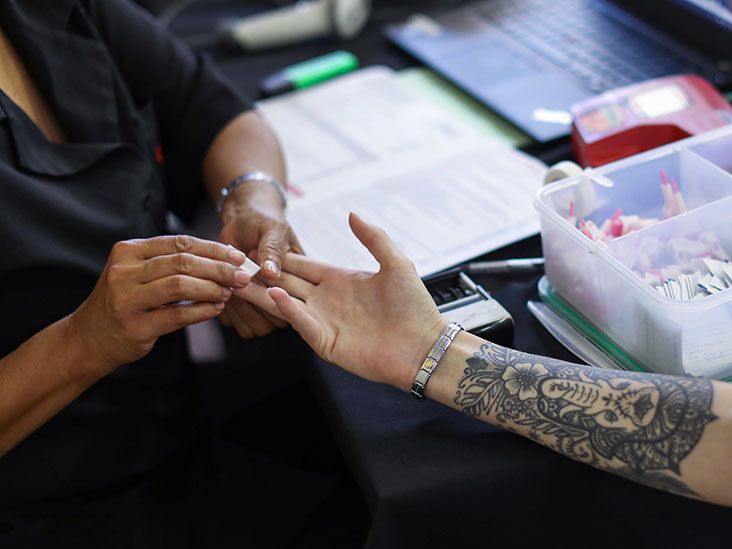

Getting a tattoo does not automatically remove you from the blood-donor club. Your dragon sleeve, tiny ankle star, or regrettably permanent tribute to a band you stopped listening to in college is usually not a problem. What matters is when, where, and how the tattoo was appliedand whether the skin has healed properly.
In the United States, many people can donate blood after getting tattooed at a regulated facility that uses sterile needles and single-use ink. When the tattoo was applied in an unregulated setting, or the blood center cannot confirm that appropriate safety standards were followed, a temporary waiting period commonly applies.
Can You Donate Blood if You Have a Tattoo?
Yes, people with tattoos can usually donate blood. Having tattoo ink in your skin is not, by itself, a reason for disqualification. The eligibility question focuses on whether the tattooing process could have exposed you to a bloodborne infection.
Under common U.S. blood-center policies, a tattoo may cause no additional deferral when all of the following are true:
- The tattoo was applied by a state-regulated or appropriately licensed establishment.
- The artist used sterile, single-use needles.
- The ink was not reused between customers.
- The tattooed skin has healed and shows no signs of infection.
- You meet all other blood-donation eligibility requirements.
The American Red Cross, OneBlood, Versiti, Vitalant, and other U.S. collection organizations generally accept donors with tattoos completed under regulated, hygienic conditions. Some organizations specifically require the area to be completely healed before donation.
How Long After a Tattoo Can You Donate Blood?
The timeline typically falls into one of three categories: no tattoo-specific waiting period, a three-month deferral, or a longer delay because of illness or another eligibility issue.
| Situation | Typical Timeline | What to Do |
|---|---|---|
| Tattoo from a regulated facility using sterile, single-use equipment | Often no tattoo-specific deferral, although the area may need to be healed | Contact the blood center and answer the screening questions honestly |
| Tattoo from an unregulated, unlicensed, informal, or uncertain setting | Commonly three months from the tattoo date | Record the date and ask the center when you become eligible |
| Tattoo obtained outside the United States | Often three months, depending on the collection organization | Tell the center where and when it was done |
| Tattoo is infected, still bleeding, or not fully healed | Wait until the condition has resolved and you feel well | Seek medical care for possible infection and contact the donor center later |
When There May Be No Tattoo-Specific Wait
Many centers allow an otherwise eligible person to donate without a special tattoo deferral when the work was performed by a regulated entity using sterile needles and single-use ink. In practice, some collectors still want the tattoo to be healed, with the bandage removed and no scabs, open wounds, or active bleeding.
That does not mean you should leave the tattoo chair at noon and roll directly into a blood drive at 12:15. A fresh tattoo is essentially a controlled skin injury, and your body is already busy repairing it. Waiting for the area to settle also prevents a bandage, swollen skin, or possible infection from complicating your health screening.
When You Usually Need to Wait Three Months
A three-month waiting period commonly applies when a tattoo was received in a location that does not regulate tattoo facilities, at an unlicensed establishment, in a private home, in jail or prison, or under circumstances where sterile single-use equipment cannot be confirmed. The same deferral may be used when the tattoo was obtained abroad, depending on the blood center’s policy.
The exact list of jurisdictions treated as regulated or unregulated is not identical across every blood organization. Blood collectors follow FDA requirements and guidance, professional standards, and their own medical policies; a center may impose stricter criteria when its medical director considers that appropriate.
That variation explains why two friends tattooed on the same weekend might receive slightly different instructions from different collection organizations. It is not blood-bank chaos. It is more like airport baggage policy: the basic idea is similar, but checking before arrival can prevent an unpleasant surprise.
Why Do Blood Centers Ask About Tattoos?
The concern is not that tattoo ink will somehow leak into the collection bag and turn donated plasma into watercolor paint. The concern is potential exposure to another person’s blood through contaminated needles, reused ink, or inadequately sterilized equipment.
Hepatitis C can spread through tattooing or body piercing performed with nonsterile tools or in unlicensed and informal settings. Hepatitis B and other bloodborne pathogens are also potential concerns when infection-control procedures are inadequate. Properly regulated studios reduce these risks through single-use supplies, sterilization procedures, surface disinfection, protective barriers, and safe handling of needles and other sharp objects.
Blood donations are tested for infectious diseases, including markers associated with HIV and hepatitis viruses. However, laboratory screening does not make the donor questionnaire optional. Screening questions and temporary deferrals provide an additional layer of protection, particularly because a newly acquired infection may not immediately produce detectable markers.
Does the Tattoo Need to Be Completely Healed?
Some blood centers explicitly require a tattoo to be healed before you donate, even when it was applied at a licensed studio. A healed tattoo should not have active bleeding, exposed tissue, drainage, significant swelling, or an attached medical-style bandage. Light peeling and mild itching can occur during ordinary healing, but the center makes the final eligibility decision.
Do not donate while you feel sick or while the tattoo appears infected. Warning signs can include worsening pain, spreading redness, increasing swelling, pus, red streaks, fever, or swollen lymph nodes. Tattoo infections may result from contaminated ink, poorly sterilized equipment, or inadequate aftercare and should be evaluated by a healthcare professional.
What Counts as a Regulated Tattoo Facility?
A regulated tattoo facility generally operates under applicable state or local licensing, sanitation, inspection, and infection-control rules. Requirements differ by jurisdiction, so a shiny sign, an impressive social-media account, or a lobby containing twelve succulents does not prove that a shop is licensed.
Before getting tattooed, ask whether the facility and artist hold the required licenses. Look for needles opened from sealed packages, fresh gloves, single-use ink caps, proper disposal containers, clean work surfaces, and written aftercare instructions. Never assume that a home tattoo is safe merely because the artist is a friend or owns an expensive machine.
Keep the studio’s name, address, tattoo date, and receipt. Blood-center staff may ask where the procedure occurred. A receipt is not always required, but accurate details make the eligibility interview easier and reduce the chance that your appointment becomes a lively guessing game.
What Happens During the Blood-Donation Screening?
Before donating, you will complete a confidential health-history questionnaire. Staff may ask about recent tattoos, piercings, travel, medications, medical procedures, infections, and other possible exposures. You will also receive a brief health assessment that commonly includes pulse, blood pressure, temperature, and hemoglobin testing.
A “yes” answer about a recent tattoo does not automatically mean rejection. It gives the staff enough information to determine whether you can donate that day or need a temporary deferral. Answer honestly, even when you are certain the tattoo shop was clean. Blood-donor screening is not the ideal setting for creative storytelling.
After collection, blood samples are sent for testing and blood typing. The Red Cross reports that approximately a dozen tests are performed during processing. Donations with reactive results are not used for transfusion, and the donor is notified according to the organization’s procedures.
Other Requirements Still Apply
Being cleared under the tattoo rule does not guarantee eligibility. You must also satisfy the center’s requirements concerning age, weight, general health, hemoglobin, medications, travel, pregnancy, medical treatments, and donation frequency.
Many U.S. centers accept donors beginning at age 17, with some allowing 16-year-olds to participate with parental consent. A minimum weight of approximately 110 pounds is common, although additional height-and-weight standards can apply to younger donors and certain collection types. Requirements differ, so review the rules of the center you plan to visit.
You should generally feel healthy on donation day. A cold, fever, active infection, current antibiotic treatment for an infection, recent surgery, low hemoglobin, or certain medications may cause a temporary deferral. A donor representative can review your circumstances without requiring you to diagnose your own eligibility through an internet scavenger hunt.
How to Prepare for Donating Blood After a Tattoo
Confirm Your Eligibility Before Traveling
Call or check the blood center’s current eligibility information. Be ready to provide the tattoo date, the state or country where it was applied, whether the studio was licensed, and whether sterile single-use equipment was used.
Let the Tattoo Heal
Follow the artist’s aftercare instructions and avoid picking at scabs. Postpone donation if the tattoo is still bleeding, draining, unusually painful, or increasingly red. Protecting the artwork and protecting the blood supply happen to be excellent roommates.
Eat and Hydrate
Do not fast before donating. Eat a balanced meal, include iron-rich foods, and avoid a very fatty meal immediately beforehand. The Red Cross recommends drinking an extra 16 ounces of water or another nonalcoholic beverage before the appointment. Getting adequate sleep can also make the experience more comfortable.
Bring Identification and Tattoo Details
Bring the identification required by your collection center. You usually do not need to display the tattoo unless staff need to evaluate whether it has healed, but you should be prepared to explain where and when it was completed.
Frequently Asked Questions
Can You Donate Blood With an Old Tattoo?
Yes. A fully healed tattoo from months or years ago generally has no effect on donation eligibility. The screening questions focus mainly on recent procedures and possible infectious exposure.
Can You Donate if You Have Many Tattoos?
Yes. The number of tattoos does not usually matter. Someone with a full sleeve may be just as eligible as someone with one dot behind an ear. The timing and safety conditions of the most recent tattoo are more important.
Do Cover-Ups and Touch-Ups Count as New Tattoos?
Yes. A cover-up, color refresh, or touch-up breaks the skin with tattoo needles, so report it as a recent tattoo. The relevant date is the date of the latest work, not the date of the original design.
Does Microblading Count as a Tattoo?
Blood centers commonly evaluate microblading and permanent makeup under tattoo-related rules. Procedures performed in licensed establishments using sterile needles and single-use pigment may be acceptable without a tattoo-specific deferral, while unregulated procedures may require a three-month wait.
What About Body Piercings?
Piercings performed with disposable, single-use equipment may be accepted once healed. A three-month deferral may apply when reusable instruments were used or when you cannot confirm how the equipment was handled.
Can You Donate After Tattoo Removal?
Tattoo removal is different from getting new ink, but it can still injure the skin and occasionally cause infection or scarring. Wait until the treated area has healed, and disclose recent procedures during screening. The blood center will decide whether an additional deferral is necessary.
Experiences: What Donating Blood After a Tattoo Can Look Like
The following are illustrative composite experiences based on common donor situations. They are not quotations from identifiable individuals and should not replace guidance from a blood center or healthcare professional.
Experience One: The Licensed-Studio Tattoo
Jordan received a small forearm tattoo at a licensed studio. The artist opened a sealed needle package, poured ink into disposable caps, changed gloves during the session, and provided written aftercare instructions. Two weeks later, the tattoo was dry, comfortable, and free of scabs or redness.
Before attending a community blood drive, Jordan called the collection organization and explained exactly where the tattoo had been applied. Because the studio was regulated and the tattoo had healed, the center said there was no tattoo-specific deferral under its policy. Jordan still completed the normal health questionnaire and hemoglobin check. The tattoo earned one compliment from a staff member and caused zero dramatic alarms.
Experience Two: The Informal Tattoo
Marcus received a tattoo from an acquaintance in a private apartment. The needle appeared new, but he could not confirm whether the ink container or other supplies had previously been used. He felt healthy and the tattoo healed normally, but the blood center could not verify that the procedure met regulated-facility standards.
Marcus was asked to wait three months from the tattoo date. The temporary deferral was not an accusation that he had an infection. It was a precaution based on an uncertain exposure. He saved the date in his phone, returned after the deferral ended, passed the standard screening, and donated successfully.
Experience Three: The Vacation Tattoo
Elena got a beautiful floral tattoo while traveling outside the United States. The studio looked professional, but she did not know the local licensing requirements and had not kept the receipt. When she contacted her usual blood center, staff explained that its policy required a three-month delay for tattoos obtained abroad.
Although disappointed, Elena appreciated having a clear timeline. She did not attempt to book with another center while withholding the travel details. Instead, she waited, kept the tattoo healthy, and donated after the center confirmed that the deferral had ended. The flowers remained permanent; the delay did not.
Experience Four: When Healing Does Not Go as Planned
Alex planned to donate several weeks after getting a shoulder tattoo. A few days before the appointment, the skin became increasingly painful and warm, and redness began spreading beyond the design. Rather than hoping the symptoms would politely disappear, Alex canceled the donation and contacted a healthcare professional.
After receiving appropriate treatment and recovering fully, Alex checked with the blood center again. Staff reviewed the infection, medication, healing status, and tattoo date before approving a later appointment. Postponing the donation protected Alex’s health and allowed the collection team to follow its safety requirements.
What These Experiences Have in Common
The successful donors did not rely solely on how clean the tattoo looked or how healthy they felt. They provided accurate dates and details, followed the blood center’s instructions, and treated a temporary deferral as a delay rather than a lifetime ban.
Calling in advance can save time, especially when the tattoo was completed in another state, another country, a private studio, or any setting with unclear licensing. Staff members answer tattoo questions regularly. Your situation is unlikely to be the strangest story they hear that week.
Conclusion
Having a tattoo usually does not prevent you from donating blood. In many parts of the United States, an otherwise eligible donor can give once a tattoo from a regulated facility has healed, provided sterile needles and single-use ink were used. A three-month waiting period commonly applies when the procedure occurred in an unregulated, unlicensed, informal, foreign, or uncertain setting.
The safest approach is simple: record the tattoo date, use a licensed studio, follow aftercare instructions, wait until the skin is healthy, and contact the blood center before your appointment. Policies can change and differ among organizations, so the collection centernot a tattoo artist, friend, or confidently incorrect social-media commenthas the final word.