
In the summer of 2022, the Federal Reserve did something that made Wall Street analysts, homebuyers, small-business owners, and anyone carrying a credit card suddenly pay very close attention: it raised interest rates by another massive 75 basis points. That was not a casual monetary-policy nudge. It was the economic equivalent of the Fed walking into the room, turning on every light, and saying, “Alright, inflation, we need to talk.”
The July 27, 2022 decision marked the Fed’s second consecutive “super-sized” rate hike, following another 75-basis-point increase in June. The move lifted the federal funds target range to 2.25%–2.50%, the highest level since 2018 at the time. The goal was straightforward but painful: slow demand, cool borrowing, tame inflation, and convince the public that the central bank was serious about restoring price stability.
For American households, this was not just a headline in the financial press. It affected mortgages, credit cards, auto loans, business financing, savings rates, stock valuations, and the mood of the economy. Inflation had become the unwanted houseguest of 2022eating the snacks, raising the utility bill, and refusing to leave.
Why the Fed Delivered Another Super-Sized Rate Hike
The Fed’s aggressive move came after inflation reached levels not seen in roughly four decades. In June 2022, the Consumer Price Index rose 9.1% from a year earlier, the largest annual increase since the early 1980s. Energy prices surged, food costs climbed, rents kept rising, and everyday purchases began to feel like luxury goods wearing fake mustaches.
At first, inflation had been widely described as “transitory,” linked to pandemic disruptions, supply-chain chaos, shipping bottlenecks, and reopening demand. But by mid-2022, the inflation problem had spread far beyond used cars and container ships. It was showing up in grocery aisles, gas stations, restaurants, housing costs, and wages. The Fed could no longer treat it as a temporary inconvenience.
The Fed’s Main Problem: Inflation Expectations
Central banks do not only fight today’s inflation; they also fight tomorrow’s expectations. If businesses believe prices will keep rising, they may raise prices preemptively. If workers believe the cost of living will keep jumping, they may demand higher wages. If consumers expect inflation to continue, they may rush purchases now, adding more pressure to demand.
That is the spiral the Fed wanted to avoid. A second 75-basis-point hike was meant to send a loud message: the central bank would not let high inflation become normal. The Fed’s long-term inflation target remained 2%, and in July 2022, the economy was nowhere near that comfort zone.
What a 75-Basis-Point Rate Hike Actually Means
A basis point is one one-hundredth of a percentage point. So a 75-basis-point hike equals 0.75 percentage points. That may sound tiny until you remember that modern economies are built on credit. When the Fed raises its benchmark rate, it influences the cost of borrowing throughout the financial system.
The federal funds rate is the rate banks charge each other for overnight lending. Consumers do not borrow directly at that rate, but it acts like the economy’s master dimmer switch. Turn it up, and financial conditions tighten. Credit cards become more expensive. Mortgage rates usually rise. Business loans cost more. Investors rethink how much they are willing to pay for future corporate earnings.
Why “Super-Sized” Became the Perfect Nickname
In normal times, the Fed often moves in 25-basis-point increments. A 50-basis-point move is considered large. A 75-basis-point hike is the monetary-policy version of ordering the biggest coffee on the menu and then asking if it comes with a fire extinguisher.
The Fed had already raised rates by 75 basis points in June 2022, its biggest hike since 1994. By repeating that move in July, policymakers made clear that fighting inflation had become the central mission, even if slower growth or market turbulence followed.
The Economic Backdrop: Hot Inflation, Slowing Growth
The July 2022 hike arrived at a complicated moment. Inflation was extremely high, but growth was already showing signs of weakness. The U.S. economy had contracted at an annual rate of 1.6% in the first quarter of 2022 and then declined again by 0.9% in the advance estimate for the second quarter. That created a loud public debate over whether the country was already in a recession.
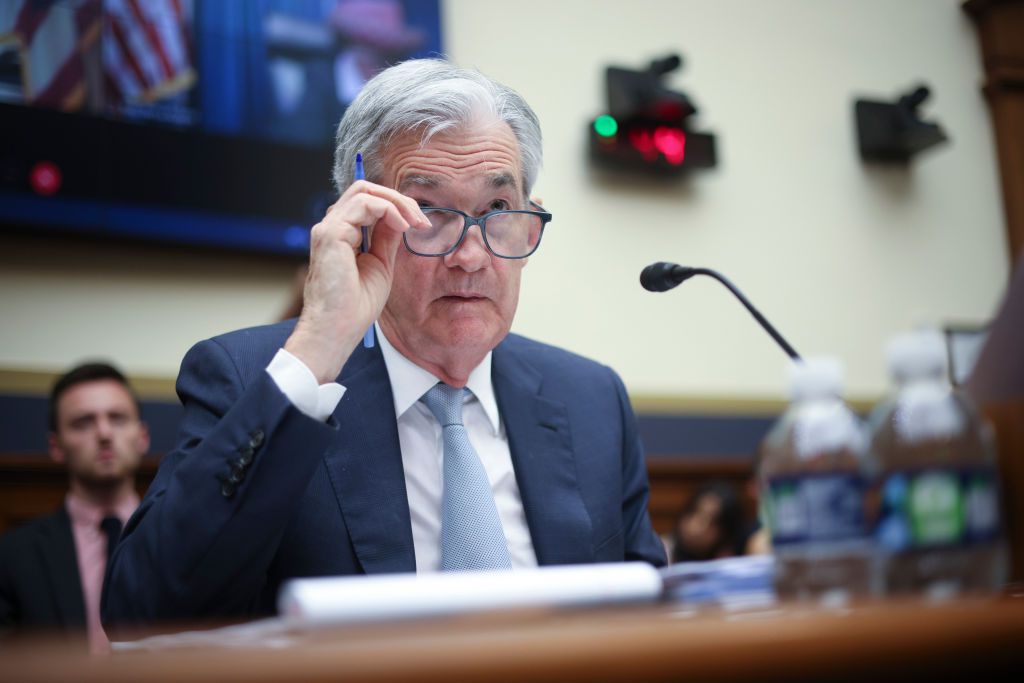
However, the labor market was still strong. Job gains remained solid, and unemployment was low. This gave the Fed room to keep tightening. Chair Jerome Powell and other officials emphasized that restoring price stability was essential for a healthy labor market over the long run. In plain English: letting inflation run wild would eventually hurt workers even more.
The Fed’s Delicate Balancing Act
The Fed was trying to engineer one of the hardest maneuvers in economics: reduce inflation without crushing the economy. That is often called a “soft landing.” Imagine trying to land a plane smoothly while the runway is moving, the weather report is late, and half the passengers are live-streaming your every move. That was the Fed’s 2022 challenge.
Raise rates too little, and inflation could stay high. Raise them too much, and the economy could slide into a deeper downturn. The second super-sized hike showed that the Fed believed the bigger danger was doing too little.
How the Rate Hike Hit Consumers
For consumers, the Fed’s rate hike affected financial life in several direct and indirect ways. The most noticeable impact was on borrowing. Credit card rates typically adjust quickly when benchmark rates rise. Adjustable-rate loans can also become more expensive. Auto financing becomes less generous. Personal loans may carry higher monthly payments.
Mortgage rates had already risen sharply in 2022, making home affordability worse for many buyers. A family that could afford a certain monthly payment when mortgage rates were near historic lows suddenly found that the same home cost hundreds of dollars more per month. The house did not get bigger. The backyard did not come with a gold-plated grill. The financing simply became more expensive.
Renters Felt the Pressure Too
Higher rates also affected renters indirectly. When buying a home becomes less affordable, more people stay in the rental market, increasing demand. At the same time, higher financing costs can make new construction more expensive, limiting future housing supply. The result: renters did not escape inflation simply because they did not have a mortgage.
Food and energy prices were another major concern. Rate hikes cannot pump more oil, harvest more wheat, or fix global supply disruptions overnight. But by slowing demand across the economy, the Fed hoped to reduce broad price pressures and prevent inflation from spreading further.
How Businesses Responded
Businesses faced a new reality after the Fed’s second super-sized hike. Cheap money had fueled expansion, hiring, acquisitions, and speculative growth for years. As borrowing costs rose, companies had to rethink budgets, investment plans, and hiring strategies.
Large corporations with strong balance sheets could usually absorb higher rates more easily. Smaller businesses had a tougher time. A restaurant planning to expand, a contractor financing equipment, or a startup relying on investor funding all had to reconsider the math. Higher rates do not simply change spreadsheets; they change decisions.
Growth Stocks Took a Hard Look in the Mirror
The stock market also had to adjust. When interest rates rise, future earnings are discounted more heavily. This tends to hurt high-growth companies whose valuations depend on profits expected far into the future. In 2022, many technology and speculative stocks struggled as investors shifted toward profitability, cash flow, and defensive sectors.
That said, markets often react not only to what the Fed does, but to what investors expected the Fed to do. After the July hike, stocks rallied because some investors interpreted Powell’s comments as a sign that future hikes might eventually slow. Wall Street, as usual, managed to be both nervous and optimistic before lunch.
Why the Fed Could Not Fix Everything Alone
The Fed has powerful tools, but they are not magic wands. Monetary policy works mostly through demand: it makes borrowing more expensive, cools spending, and slows investment. But much of the inflation in 2022 also came from supply-side shocks, including pandemic disruptions, Russia’s invasion of Ukraine, energy-market stress, and global logistics problems.
That meant the Fed was fighting inflation with an imperfect weapon. Higher rates could reduce demand for cars, homes, and discretionary goods. But they could not instantly unload ships, produce semiconductors, lower global oil prices, or make fertilizer cheaper. The central bank could influence the temperature of the economy, but it could not personally repair every broken pipe in the global supply chain.
Still, Doing Nothing Was Not an Option
Even if the Fed could not solve every cause of inflation, it had to prevent inflation from becoming entrenched. The longer high inflation persists, the more painful it becomes to control. History had already taught central bankers that delayed action can require even harsher tightening later.
That is why the July 2022 rate hike mattered. It was not only about the immediate increase. It was about credibility. The Fed wanted households, businesses, and markets to believe that it would keep going until inflation moved back toward target.
The Winners and Losers of Higher Rates
Rate hikes create trade-offs. Borrowers usually lose first. Anyone carrying variable-rate debt feels the squeeze as monthly costs rise. Homebuyers face reduced affordability. Businesses that depend heavily on financing may delay growth. Investors in riskier assets may see valuations fall.
But there are also some winners. Savers may finally earn better returns on savings accounts, certificates of deposit, money market funds, and short-term Treasury securities. Banks can sometimes benefit from wider lending margins. Conservative investors who spent years earning nearly nothing on cash suddenly had options that did not feel like financial punishment.
The Household Budget Became the Front Line
For many families, the most important question was not whether the federal funds rate was 2.25% or 2.50%. It was whether the grocery bill would calm down, whether rent would stop climbing, and whether wages could keep up. Inflation is personal. It turns ordinary errands into budget negotiations.
The Fed’s hope was that higher rates would gradually reduce demand enough to slow price increases without causing widespread job losses. But the adjustment was never going to feel painless. Inflation hurts, and fighting inflation also hurts. The policy debate was about which pain was more dangerous in the long run.
What the Second Super-Sized Hike Signaled About the Fed’s Strategy
The July 2022 decision showed that the Fed had shifted from patience to urgency. Earlier in the pandemic recovery, policymakers emphasized support for employment and economic healing. By mid-2022, the priority had changed. Inflation was no longer viewed as a temporary storm that would pass on its own. It had become the central threat.
Chair Powell’s message was clear: another unusually large increase could be appropriate, depending on incoming data. At the same time, he suggested that as rates moved higher, it would eventually make sense to slow the pace of increases and assess the impact. That careful phrasing mattered because monetary policy works with a lag. The Fed can raise rates today, but the full effect may take months to show up in spending, hiring, housing, and inflation data.
Data Became the Main Character
After the second super-sized hike, every major economic report became a market event. CPI, jobs numbers, wage growth, consumer spending, and housing data were watched like season finales. Investors wanted to know whether inflation was cooling fast enough for the Fed to ease up. Households wanted relief. Businesses wanted clarity. The Fed wanted evidence.
This created a highly sensitive environment. A single inflation report could shift expectations for the next meeting. A strong jobs report could suggest the Fed had more room to tighten. A weak growth reading could raise fears that policy was becoming too restrictive.
Lessons From the 2022 Inflation Fight
The Fed’s second super-sized rate hike offers several lasting lessons. First, inflation can spread faster than policymakers expect. What begins in a few pandemic-sensitive categories can become a broad economic problem if demand stays strong and supply remains constrained.
Second, credibility matters. Central banks depend heavily on public trust. If people believe inflation will return to normal, price pressures may be easier to contain. If they lose confidence, the central bank may need to act more aggressively.
Third, low interest rates can encourage risk-taking. Years of easy money made borrowing cheap and boosted asset prices. When the rate environment changed, businesses and investors had to adjust quickly. The transition was uncomfortable because many decisions had been built around the assumption that money would stay cheap.
Inflation Is Not Just an Economic Statistic
One of the biggest lessons is that inflation is emotional. It changes how people feel about the economy, even when they still have jobs. A low unemployment rate does not fully comfort a family watching grocery costs climb every week. Strong corporate earnings do not mean much to a commuter paying more at the pump.
That is why the Fed’s inflation fight became such a major public issue. It touched daily life. It shaped politics. It influenced financial markets. It forced Americans to relearn a lesson that had faded during years of low inflation: price stability is not boring. It is the quiet foundation that lets households plan, businesses invest, and markets function without constant anxiety.
Experiences and Practical Reflections on the Fed’s Super-Sized Rate Hike
Looking back at the Fed’s second super-sized rate hike, one practical experience stands out: people often feel monetary policy long before they understand it. A consumer may not follow FOMC statements, but they notice when a credit card balance becomes more expensive. A first-time homebuyer may not care about basis points, but they definitely care when the mortgage payment jumps enough to knock a house off the wish list.
For households, the 2022 rate-hike cycle was a reminder that personal finance needs flexibility. Families with emergency savings had more room to absorb higher prices. Those with variable-rate debt felt exposed. People who had locked in low fixed-rate mortgages before the hikes suddenly looked like financial geniuses, even if their main strategy had simply been good timing and a little luck.
For business owners, the experience was equally educational. When money is cheap, expansion can look easy. New locations, bigger inventory, more employees, and upgraded equipment all seem manageable when financing costs are low. But when rates rise quickly, every plan needs a second look. The businesses that handled 2022 best were often those that kept debt under control, preserved cash, and focused on pricing power rather than growth at any cost.
Investors also learned a valuable lesson: the Fed matters. During low-rate periods, markets can become comfortable with high valuations and speculative stories. But when interest rates rise, discipline returns fast. Cash flow, earnings quality, balance sheets, and realistic growth assumptions become fashionable again. In that sense, the Fed’s super-sized hike acted like a financial reality check. It did not end risk-taking, but it made investors ask better questions.
Another experience from that period was the importance of not overreacting to every headline. In 2022, each inflation report, Fed speech, and market swing seemed capable of changing the entire economic story. One day, investors feared runaway inflation. The next, they hoped the Fed would pivot. Then another hot data release would restart the anxiety machine. For ordinary readers, the healthier approach was to understand the big trend rather than panic over every daily update.
The Fed’s second super-sized rate hike also showed that economic policy is full of trade-offs. High inflation punishes consumers, especially lower- and middle-income households. But higher interest rates can slow growth, reduce affordability, and increase recession risk. There was no perfect button to press. The Fed had to choose the policy path it believed would cause less long-term damage.
For anyone managing money, the experience offers a simple takeaway: build resilience before the storm. Keep high-interest debt limited, maintain savings where possible, understand whether loans have fixed or variable rates, and avoid assuming that today’s financial conditions will last forever. Interest rates move in cycles. Inflation moves in cycles. Confidence moves in cycles. A strong financial plan should survive more than one weather pattern.
In the end, the July 2022 rate hike was more than a technical central-bank decision. It was a turning point in America’s post-pandemic economy. The Fed moved from supporting recovery to restraining inflation. Consumers moved from cheap-money optimism to budget caution. Businesses moved from easy expansion to careful planning. Markets moved from “growth at any price” to “please show us actual profits.”
The second super-sized hike may not have been popular, but it was historic. It showed how quickly economic priorities can change when inflation gets out of control. And it reminded everyonefrom policymakers to shoppers staring suspiciously at egg pricesthat stable prices are not just a central-bank slogan. They are part of everyday peace of mind.
Conclusion
The Fed’s second super-sized rate hike in July 2022 was a defining moment in the battle against inflation. By raising rates another 75 basis points, the central bank showed it was willing to move aggressively to restore price stability, even as recession fears grew and financial conditions tightened.
The decision affected nearly every corner of the economy: mortgages, credit cards, business loans, stock valuations, savings yields, housing affordability, and consumer confidence. It also highlighted the limits of monetary policy. The Fed could slow demand, but it could not instantly repair supply chains, end geopolitical shocks, or lower global energy prices by decree.
Still, the message was unmistakable. Inflation had become too high, too broad, and too persistent to ignore. The Fed chose forceful action because the alternativeallowing inflation expectations to drift upwardcould have created even greater pain later. For households, businesses, and investors, the episode remains a powerful lesson in preparation, flexibility, and the real-world impact of central-bank decisions.
Note: This article is based on synthesized public information from reputable U.S. economic, financial, and government sources, including Federal Reserve communications, inflation data, GDP reports, and major financial news coverage. It has been fully rewritten for original web publication.