
Some kitchens whisper, “Let’s reheat leftovers.” A Downton Abbey-worthy kitchen announces, with excellent posture, “The roast is resting, the silver is polished, and someone has misplaced the pudding spoon again.” It is not merely a place to cook. It is a hardworking, layered, deeply atmospheric room where practicality wears a tailored waistcoat.
Inspired by the world of English country houses, Edwardian service spaces, butler’s pantries, sculleries, copper cookware, stone floors, and generous worktables, this kitchen style blends historical romance with modern function. The goal is not to recreate a museum or require a staff of twelve. The goal is to design a kitchen that feels timeless, useful, elegant, and just dramatic enough to make Tuesday soup feel like a scene worth filming.
Whether you live in a suburban home, a city apartment, a farmhouse, or a perfectly normal house where nobody rings a bell for dinner, you can borrow the best ideas from grand manor kitchens. Think durable materials, open storage, purposeful zones, warm lighting, hardworking surfaces, and a sense of quiet abundance. In other words, fewer gimmicks, more gravitas.
What Makes a Kitchen “Downton Abbey-Worthy”?
A Downton-inspired kitchen is not defined by one cabinet color or one expensive appliance. It is defined by atmosphere and function. The original great-house kitchens of the late Victorian and Edwardian periods were designed for serious work. Meals were planned, prepared, staged, carried, cleaned up, and repeated with military precision. The beauty came from usefulness: copper pots within reach, stone or wood surfaces that could take a beating, storage rooms placed logically, and a large central table where many tasks could happen at once.
Modern homeowners love this look because it feels authentic. It resists the sterile showroom effect. A Downton Abbey-style kitchen should look as if bread might be kneaded on the table, flowers might be trimmed near the sink, and somebody’s grandmother might know exactly where the good jam jars are hidden. It is polished, yes, but never plastic. Elegant, yes, but not allergic to flour.
The Historical Heart: Service, Order, and Serious Cooking
Grand English homes separated public rooms from working rooms. The kitchen belonged “below stairs,” away from formal drawing rooms and dining spaces. That separation shaped the layout: food preparation happened in the main kitchen, washing and messier work happened in the scullery, serving pieces were stored in the butler’s pantry, and dry goods lived in the larder or pantry.
That old arrangement is surprisingly relevant today. Modern open kitchens are beautiful until the sink fills with pans, the blender screams during conversation, and the baking tray performs a public tragedy on the island. This is why sculleries, butler’s pantries, prep kitchens, and appliance garages are making a comeback. They give the kitchen what historic houses understood long ago: a little backstage area makes the front stage look calmer.
Start With the Layout: Zones Before Decoration
Before choosing brass knobs or hanging copper pans, plan the kitchen like a working room. A Downton Abbey-worthy kitchen needs rhythm. The cooking zone, prep zone, cleaning zone, storage zone, and serving zone should each have a purpose.
The Main Worktable or Island
The emotional center of this kitchen is often a large table or island. In a traditional country-house kitchen, the central table was not a cocktail perch with two decorative lemons. It was a true work surface. Today, that might mean a large wood-topped island, a freestanding butcher-block table, or a furniture-style island with drawers, shelves, and room for mixing bowls.
For the Downton effect, avoid anything too slick. A table with turned legs, a thick wood top, or an aged finish creates character. Add storage baskets below, a marble pastry slab on top, or a row of stools that look sturdy enough to survive both breakfast and gossip.
The Range as the Command Center
The range should feel important. In period kitchens, the cooking hearth or range dominated the room because it was the engine of the household. In a modern version, a substantial range, statement hood, or alcove-style cooking area can create the same visual anchor.
A plaster hood, paneled hood, black range, or classic stainless range framed by stone or tile can all work. The key is proportion. The cooking zone should look grounded, not like an appliance accidentally dropped into cabinetry. If the range is the captain, give it a proper bridge.
Materials That Feel Old-Soul and Built to Last
The most convincing Downton Abbey kitchen design relies on materials that improve with age. That means stone, wood, metal, ceramic, linen, and glass. Shiny perfection is less important than depth, texture, and durability.
Countertops: Marble, Soapstone, Butcher Block, and Quartzite
Marble has a natural elegance that suits this style beautifully, especially for baking areas. It is cool, classic, and slightly high-maintenance, much like a titled aunt with strong opinions. Soapstone adds a darker, more utilitarian mood and develops a lived-in patina over time. Quartzite offers natural stone drama with strong performance, while butcher block brings warmth and practicality.
A mix of materials often works best. Try stone near the range and sink, wood on the island, and a small marble insert for pastry or baking. That layered approach feels collected rather than purchased in one hurried afternoon.
Cabinetry: Inset Doors, Glass Fronts, and Furniture Details
Cabinetry should feel architectural. Inset doors, Shaker profiles, beadboard backs, glass-front cabinets, latches, and visible hinges all support the historic mood. Painted cabinets in cream, warm white, sage green, mushroom, deep blue, or charcoal can look wonderfully appropriate.
Furniture-style pieces also matter. A tall pantry cupboard, hutch, dresser, or plate rack adds the sense that the room evolved over time. A Downton-worthy kitchen should not look like every cabinet marched in from the same catalog wearing identical shoes.
Floors: Stone, Wood, Brick, or Classic Tile
The floor should look ready for a century of footsteps. Limestone, slate, brick, terracotta, checkerboard tile, and wide-plank wood all fit the mood. If real stone is outside the budget, porcelain tile with a natural stone look can still create the effect. The goal is a grounded surface that makes the kitchen feel established, not temporary.
The Butler’s Pantry: The Secret Weapon of Elegant Homes
A butler’s pantry is one of the most powerful ways to make a kitchen feel Downton Abbey-worthy. Historically, it served as a transition space between kitchen and dining room, often used for storing china, glassware, silver, linens, and serving pieces. In modern homes, it can be a beverage station, coffee bar, prep counter, entertaining zone, or storage corridor.
Even a small butler’s pantry can transform how a kitchen works. Add lower cabinets, upper glass-front storage, a countertop for staging platters, and lighting that makes glassware sparkle. If space allows, include a wine fridge, sink, or dishwasher drawer. If space does not allow, a single wall of built-in storage near the dining area can still deliver the same idea.
The Scullery: Where the Mess Goes to Behave
The scullery was traditionally the place for washing dishes, cleaning pots, and handling the less glamorous chores of household life. Today, the scullery has returned under many names: prep kitchen, back kitchen, messy kitchen, cleanup room, or hidden pantry. Whatever you call it, its purpose is clear. It keeps chaos from taking center stage.
A modern scullery might include a second sink, dishwasher, extra counter space, open shelves, cleaning storage, and small appliances. This is where the mixer, toaster, coffee grinder, and air fryer can live without turning the main kitchen into an appliance convention. It is practical luxury, which is the best kind because it still works after the guests leave.
Open Storage, Copper Pots, and Everyday Drama
One of the most recognizable details in period-style kitchens is visible cookware. Copper pots, iron pans, ceramic bowls, wood boards, rolling pins, and glass jars bring life to the room. Open storage works especially well when the objects are genuinely useful.
A pot rail above the range, a ceiling rack over the island, or open shelves near the prep area can add instant character. The trick is restraint. Display beautiful tools, not every gadget that has ever entered your home. A copper saucepan looks romantic. A tangled pile of plastic measuring spoons looks like the kitchen lost a small battle.
Lighting: Warm, Layered, and Slightly Theatrical
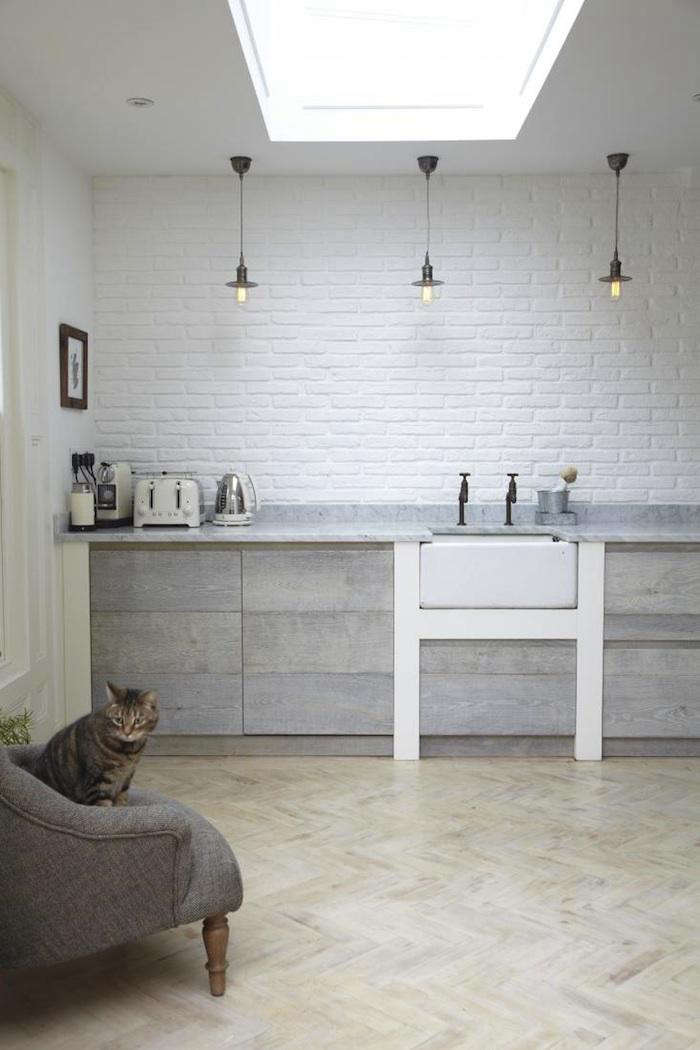
Lighting can make or break this style. A Downton Abbey-worthy kitchen should never feel like a dentist’s office. Use layered lighting: pendants over the island, sconces near shelves, under-cabinet lighting for tasks, and perhaps a small lamp on a counter or pantry surface.
Choose finishes like aged brass, bronze, blackened metal, polished nickel, or milk glass. Lantern-style pendants, shaded sconces, and schoolhouse fixtures all fit the historic mood. Warm bulbs help the room feel inviting, especially in the evening when the kitchen should glow like something delicious is about to happen.
Color Palettes Fit for an English Country House
The best colors for this kitchen style are rich but not loud. Think cream, ivory, putty, taupe, sage, olive, deep green, navy, oxblood, charcoal, warm gray, and soft blue. These shades feel rooted in history and pair beautifully with wood, stone, brass, copper, and ceramic.
For a lighter approach, use warm white walls with darker base cabinets and wood accents. For more drama, paint the cabinets deep green or charcoal and pair them with marble, unlacquered brass, and open shelving. Wallpaper can also work in a pantry or breakfast nook, especially with botanical, stripe, or small-scale heritage patterns.
Appliances: Hide What You Can, Celebrate What You Must
Modern appliances are necessary. Even the most devoted period-design fan probably does not want to churn butter by hand before school pickup. The secret is visual balance. Panel-ready refrigerators and dishwashers can disappear into cabinetry. Small appliances can live behind pocket doors or in the scullery. A beautiful range, however, can be celebrated as part of the design.
Choose appliances with simple lines and classic finishes. Stainless steel works when balanced with warmer materials. Black, white, or colored ranges can look especially charming in a heritage-inspired kitchen. Avoid letting technology dominate the room. The kitchen should feel like it has Wi-Fi, not like Wi-Fi designed the kitchen.
Details That Make the Room Feel Collected
The difference between “nice kitchen” and “Downton Abbey-worthy kitchen” lives in the details. Add aged brass cabinet latches, ceramic knobs, a farmhouse sink, linen café curtains, a wall clock, framed botanical prints, vintage scales, enamel canisters, a plate rack, or an antique runner.
Use real materials when possible. Linen towels soften the room. Wood cutting boards add warmth. Ironstone pitchers, glass storage jars, and ceramic crocks make practical items look intentional. A small herb pot near the window is both useful and charming, especially if it survives longer than three days, which is always a noble achievement.
How to Create the Look on a Real-Life Budget
You do not need a castle budget to create an elegant kitchen. Focus on high-impact changes. Replace shiny modern hardware with aged brass or polished nickel. Add a pot rail. Paint cabinets a historic color. Install open shelves. Use a vintage hutch for storage. Swap harsh lighting for warm pendants or sconces. Add a washable runner and linen textiles.
If remodeling, invest in layout first. A better pantry, deeper drawers, stronger lighting, and durable counters will do more for the room than decorative flourishes alone. If decorating, choose pieces that look useful: bowls, boards, jars, baskets, and cookware. In a Downton-inspired kitchen, function is the decoration.
Common Mistakes to Avoid
Making Everything Too Perfect
A kitchen inspired by old houses should not feel shrink-wrapped. Too many matching finishes can flatten the charm. Mix wood tones carefully, include a few aged metals, and allow natural materials to show variation.
Confusing Clutter With Character
Open shelves and visible cookware are wonderful when edited. If every surface is covered, the room stops feeling grand and starts feeling like a yard sale with plumbing.
Ignoring Modern Workflow
Historical inspiration should not sabotage daily life. Keep trash near prep areas, dishes near the dishwasher, spices near the range, and coffee supplies near mugs. Mrs. Patmore may approve of tradition, but she would absolutely want the spoons where the spoons belong.
Real-Life Experience: Living With a Downton Abbey-Worthy Kitchen
The best thing about a Downton Abbey-worthy kitchen is that it changes how the room feels during ordinary routines. Morning coffee becomes a small ritual when mugs are stored in a glass-front cabinet, spoons sit in a ceramic crock, and warm light falls across a wood counter. The room encourages slower, more intentional habits without demanding that you suddenly become a professional pastry chef. Though, naturally, it will make you believe scones are within your destiny.
In practical experience, the most successful version of this style begins with storage. A beautiful kitchen quickly loses its charm if every pan, towel, cereal box, and small appliance has nowhere to go. A pantry cabinet, butler’s pantry wall, or even a well-organized freestanding cupboard can make the room feel calm. When storage is thoughtful, open shelves can remain attractive instead of becoming emergency overflow for mismatched travel mugs.
Another important lesson is that texture matters more than perfection. A wood island with small marks feels welcoming. A stone counter with natural veining feels alive. Brass that darkens slightly over time adds depth. These details make the kitchen feel collected and personal. Many modern kitchens look impressive on day one but become stressful because every fingerprint feels like a crime. A Downton-inspired kitchen is kinder. It understands that cooking is messy, families are busy, and tomato sauce has ambitions.
Lighting also makes a dramatic difference. Replacing cool, harsh bulbs with warmer lighting can instantly shift the mood. A pendant over the island, a shaded lamp in the pantry, or sconces beside open shelving makes the kitchen feel layered. In the evening, this style shines. Copper, glass, stone, and wood all respond beautifully to warm light, creating a room that feels calm and generous.
Entertaining is where the layout truly proves itself. A butler’s pantry or serving counter keeps drinks, desserts, plates, and serving pieces out of the main cooking traffic. Guests can help themselves without standing directly in front of the oven, which is safer and better for everyone’s dignity. Even without a separate pantry, a designated staging area near the dining space makes hosting smoother.
Daily cooking also benefits from the old-house mindset. Keeping frequently used tools visible saves time. A pot rail, knife block, utensil crock, or open shelf near the stove can be genuinely efficient. The danger is over-displaying. The solution is to display the useful and beautiful items, then hide the rest. Not every object deserves a starring role. Some spatulas are strictly supporting cast.
Finally, this kitchen style works best when it reflects real life. A family kitchen may need homework space, pet bowls, lunch-packing drawers, or charging stations. A small apartment kitchen may need vertical storage and compact furniture. A serious baker may prioritize marble and drawer space for flour. A frequent host may prefer beverage storage and a dramatic serving pantry. The Downton Abbey-worthy kitchen is not about copying a television set exactly. It is about borrowing the spirit: order, warmth, craftsmanship, and a little everyday theater.
Conclusion: Grandeur With Good Sense
A Downton Abbey-worthy kitchen is not about pretending to live in a castle. It is about designing a kitchen with history, purpose, and soul. The look comes from durable materials, smart zones, hardworking storage, warm lighting, and details that feel collected over time. It honors the elegance of English country-house kitchens while meeting the needs of modern life.
Build around function first, then add beauty through texture, color, lighting, and useful objects. Give the range presence. Let the island work hard. Make room for a pantry or scullery if possible. Choose finishes that age gracefully. Above all, create a kitchen that welcomes cooking, conversation, and the occasional dramatic announcement that dinner is ready.
Because the true magic of a Downton Abbey-worthy kitchen is not just how it looks. It is how it makes everyday life feel: a little warmer, a little richer, and perhaps just formal enough to make you consider labeling the biscuit tin.