
Editorial note: This publication-ready article synthesizes verified archaeology reporting, museum scholarship, and historical context without embedded source links, so it can be copied cleanly into a website CMS.
Gold has always had a flair for drama. It does not rust, it does not politely fade into the background, and in ancient Egypt it practically wore a crown and demanded a temple procession. So when archaeologists revealed a 3,000-year-old Egyptian gold mine near Jabal Sukari in the Eastern Desert, the discovery was not just another dusty hole in the ground. It was a window into a whole working world: miners, administrators, workshops, furnaces, temples, bathhouses, pottery notes, coins, figurines, and enough ancient industrial organization to make a modern project manager reach for a clipboard.
The site, located near the modern Sukari Gold Mine southwest of Marsa Alam in Egypt’s Red Sea Governorate, shows that ancient Egyptian gold mining was far more sophisticated than the cartoon version of people whacking rocks with enthusiasm and hoping for sparkle. Archaeologists found evidence of a complete gold-processing complex, including crushing and grinding stations, filtration and sedimentation basins, and clay furnaces used to smelt gold extracted from quartz veins. In simple terms: this was not a hobby. This was a desert-based industrial operation with serious planning behind it.
Even better, the discovery did not stop at tools and ruins. Around the mine, researchers identified traces of a residential and administrative district where workers lived, worshipped, processed ore, and managed daily life. The ancient Egyptian gold mine was part factory, part town, part spiritual landscape, and part logistical miracle. After all, running a mining settlement in a harsh desert is not exactly the ancient equivalent of opening a lemonade stand.
Where Was the 3,000-Year-Old Egyptian Gold Mine Found?
The newly revealed mining complex sits in the Sukari Mountain area, also known as Jabal Sukari, in Egypt’s Eastern Desert. This region lies between the Nile Valley and the Red Sea, a rugged mineral-rich zone that has attracted prospectors for thousands of years. Today, the area is also home to the modern Sukari Gold Mine, one of Egypt’s most important contemporary gold operations.
That overlap between ancient and modern mining is exactly why the discovery matters. The same geology that attracts modern companies also drew ancient Egyptians into the desert. They knew where to look, how to read the landscape, and how to transform stubborn quartz veins into glittering royal wealth. They did not have satellite imagery, metal detectors, or YouTube tutorials titled “Gold Mining Hacks the Pharaohs Don’t Want You to Know,” but they had sharp eyes, practical knowledge, and organized labor.
Because the ancient site was found close to active mining operations, Egyptian authorities documented, restored, and relocated architectural remains to a safer area roughly three kilometers away. That decision reflects a modern challenge in archaeology: how do you preserve ancient heritage while economic development continues around it? In Sukari’s case, the answer was not to leave the ruins in danger, but to move and reconstruct the complex as part of a heritage project that allows the site’s story to survive.
What Archaeologists Found at the Sukari Gold Mine Complex
The most exciting part of the discovery is its scale. Archaeologists uncovered more than a mining pit. They found evidence of a complete gold-processing system. The ancient workers crushed, ground, filtered, settled, and smelted gold-bearing quartz. Each step required planning, tools, space, fuel, water management, and skilled labor. That is a lot of moving parts for a desert operation 3,000 years old.
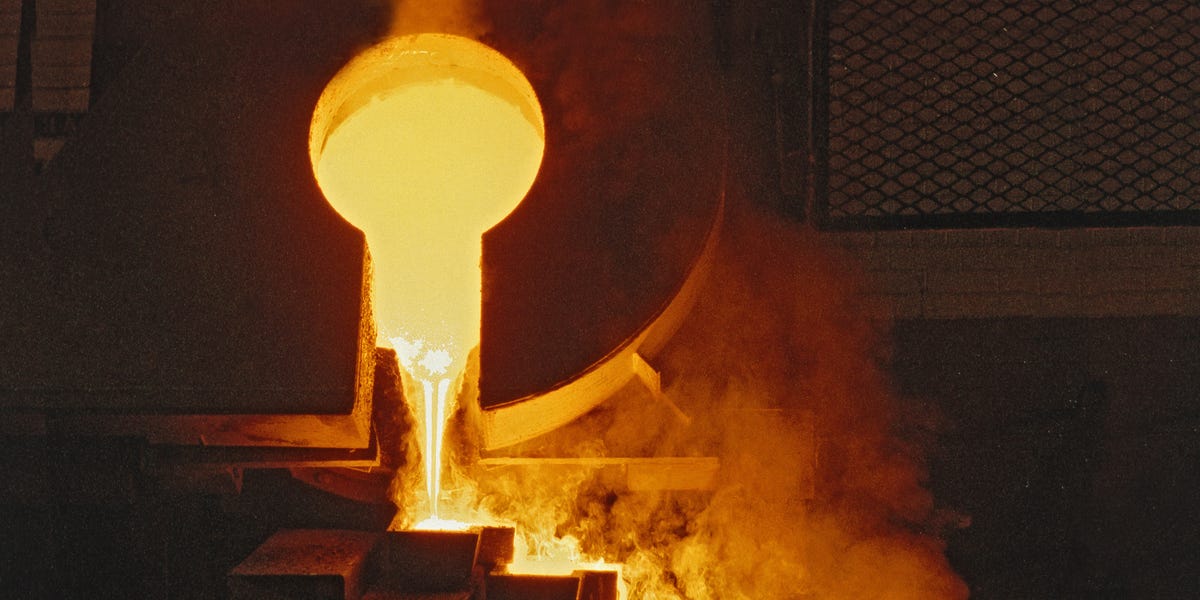
The presence of crushing and grinding stations suggests that workers broke quartz ore into smaller pieces to release gold particles. Filtration and sedimentation basins point to wet-processing methods used to separate valuable material from waste. Clay furnaces show the final stage: heating and smelting to produce purer gold. It was ancient metallurgy with sweat, smoke, and probably a fair amount of arguing over who forgot to bring more water.
Beyond the industrial features, archaeologists found houses, workshops, temples, administrative buildings, and Ptolemaic-era bathhouses. Architectural remains from Roman and Islamic periods also suggest that the region remained important long after the original 3,000-year-old mining phase. In other words, Sukari was not a one-season wonder. It was a long-lived mining landscape repeatedly reused by different cultures and governments.
Artifacts That Bring the Gold Mine to Life
Artifacts from the site make the ancient mining town feel surprisingly human. Researchers reported 628 ostraca, which are broken pieces of pottery or stone used as writing surfaces. These were inscribed in hieroglyphic, demotic, and Greek scripts. That mix of languages hints at a long and layered history, with different administrations, workers, and communities leaving their marks over time.
Other finds included Ptolemaic bronze coins, terracotta figurines of humans and animals, stone statues of deities such as Bastet and Harpocrates, pottery vessels, beads made from semi-precious stones, shell ornaments, and offering tables. These objects are not just decorative footnotes. They tell us that the mine was a place of commerce, belief, medicine, personal grooming, administration, and daily routine.
Think about that for a moment. The same site that produced gold for elite power also contained small personal objects used by ordinary people. The miners were not background characters in a pharaoh’s treasure story. They had homes, habits, hopes, gods, meals, aches, tools, and probably strong opinions about the desert heat.
Why Gold Mattered So Much in Ancient Egypt
To understand why ancient Egyptians built a serious mining operation at Sukari, we need to understand what gold meant to them. Gold was not merely “expensive metal.” It was associated with divine power, permanence, kingship, and the eternal world of the gods. Its bright surface and resistance to tarnish made it a natural symbol of immortality. Basically, gold was the ancient Egyptian version of “forever,” only shinier.
The pharaohs used gold to communicate authority. Temples received gold objects for ritual use. Royal tombs included gold jewelry, masks, coffins, amulets, sandals, vessels, and decorative elements intended to serve the dead in the afterlife. The famous treasures of Tutankhamun are only the most dramatic example. They show how deeply gold was woven into Egyptian ideas about death, rebirth, and divine legitimacy.
Yet gold was not limited to kings. Museum collections show that non-royal Egyptians also owned gold jewelry, especially among elite and well-connected groups. Goldsmiths developed impressive techniques, including hammering, soldering, inlay work, granulation, and the shaping of thin gold sheet. Every glittering object began somewhere before it reached a workshop or tomb. Discoveries like the Sukari gold mine help trace that journey back to the desert source.
The Eastern Desert: Egypt’s Ancient Treasure Corridor
Egypt’s Eastern Desert was one of the great mineral landscapes of the ancient world. Stretching between the Nile and the Red Sea, it contained gold deposits, stone quarries, desert roads, wells, work camps, forts, and religious markers. It was harsh, dry, and inconvenient, which is exactly the sort of place where valuable resources like to hide, because apparently geology has a sense of humor.
Ancient Egyptians exploited gold from the Eastern Desert and Nubia for thousands of years. Their miners followed quartz veins, searched for mineral stains, and established routes through wadis, or dry valleys. Expeditions into this region required more than muscle. They required food supplies, water points, guards, scribes, overseers, tools, donkeys, and a state system capable of organizing people far from the Nile’s comfort zone.
The famous Turin Papyrus Map, dating to around 1150 BCE, shows how advanced ancient Egyptian geographic thinking could be. It depicts a stretch of Wadi Hammamat with roads, hills, quarry areas, and a gold mine. Often described as one of the oldest surviving topographical and geological maps, it proves that ancient Egyptians were not wandering around the desert saying, “Let’s try this rock because it looks fancy.” They mapped, labeled, and understood the terrain.
What This Discovery Reveals About Ancient Technology
The 3,000-year-old Egyptian gold mine at Sukari reveals an impressive chain of technical knowledge. First, miners had to identify gold-bearing quartz. Then they had to extract it from the rock. Next came crushing and grinding, which required tools and labor. After that, workers separated gold particles from waste material using basins and water-based techniques. Finally, the material was heated in clay furnaces to refine the metal.
This sequence shows that ancient Egyptian mining was systematic. The workers understood that gold was not always visible as dramatic nuggets. Often, it was locked in quartz, demanding multiple processing stages before it became usable metal. The site’s infrastructure suggests that this knowledge was not experimental guesswork. It was a practiced industrial tradition.
That matters because popular culture often treats ancient achievements as mysterious. But the real story is better: people observed, tested, organized, improved, and passed down knowledge. No aliens required. Just geology, engineering, labor, bureaucracy, and possibly one very tired foreman yelling, “Who moved the grinding stone?”
A Mining Town, Not Just a Mine
One of the most important lessons from the Sukari discovery is that mining was social. Gold extraction did not happen in isolation. The mine was surrounded by living quarters, workshops, sacred spaces, administrative buildings, and later bathhouses. This means that workers were not simply sent into the desert and forgotten. They lived in a managed environment with systems for production, recordkeeping, worship, and daily survival.
The temples and offering tables show that religion traveled with labor. The desert was dangerous, and mining involved uncertainty. Prayers, rituals, and protective deities would have offered meaning and comfort. The administrative structures suggest supervision, accounting, and perhaps the tracking of production. The ostraca may have recorded tasks, names, deliveries, or notes that helped the settlement function.
In this sense, the gold mine was a miniature city of work. Its residents were part of Egypt’s economy and ideology, even if they lived far from royal courts. Their labor fed the glittering machine of temples, palaces, diplomacy, and funerary culture. Every gold object in a tomb had an upstream story, and that story often began with dust, stone, heat, and human endurance.
Why the Discovery Is Important Today
The Sukari gold mine discovery is important because it connects three histories at once: ancient technology, social life, and modern heritage preservation. It shows how ancient Egyptians extracted gold from quartz, how mining communities formed in the desert, and how modern archaeologists must protect fragile remains near active industrial sites.
It also corrects a common misunderstanding. Ancient Egypt’s golden treasures did not appear magically in royal tombs. They came from supply chains. Someone found the ore. Someone cut it loose. Someone carried it. Someone crushed it. Someone washed it. Someone smelted it. Someone recorded it. Someone transported it. Someone shaped it into objects powerful enough to survive in the human imagination for millennia.
That chain of work makes the discovery feel refreshingly real. We tend to remember pharaohs by name, while workers disappear into the background. Sites like Sukari pull those workers closer to the spotlight. They remind us that ancient civilization was built not only by kings but also by miners, potters, scribes, furnace operators, craftspeople, water carriers, cooks, guards, and everyone else who kept the desert machine running.
Experience Section: Imagining the World Around the Ancient Egyptian Gold Mine
To really appreciate this discovery, imagine approaching the Sukari Mountains at sunrise. The desert is not empty; it is enormous. The rocks turn warm shades of red, brown, and gold as the light climbs over the ridges. The air feels dry enough to make your water bottle seem like a sacred object. Somewhere in that landscape, 3,000 years ago, workers were already moving.
A day at the ancient mine would not have started with a cheerful alarm tone and coffee in a paper cup. It likely began with heat, routine, and orders. Some workers would head toward extraction areas, where quartz-bearing rock had to be broken loose. Others would move ore to crushing stations. Scribes or overseers may have tracked supplies and output. In the settlement, people prepared food, repaired tools, carried water, shaped pottery, tended fires, and maintained the basic rhythm of life.
The soundscape would have been intense. Stone striking stone. Grinding. Voices. Animals. Furnace fires. Wind moving through the wadi. The smell of smoke and dust would cling to everything. Gold may be glamorous in a museum case, but at the mine it began as hard physical work. The sparkle came later. First came sweat.
There is also a deeply human feeling in the small objects found at the site. A bead, a shell ornament, a pottery vessel for medicine or incense, a figurine, a written shardeach one suggests a person trying to make life manageable in a difficult place. These were not anonymous “ancients.” They were individuals who dealt with fatigue, weather, skill, fear, faith, and probably the timeless workplace problem of somebody not putting tools back where they belonged.
For modern visitors or readers, the experience of this discovery is partly intellectual and partly emotional. Intellectually, it shows how advanced ancient Egyptian mining and metallurgy were. Emotionally, it makes the past feel close. A 3,000-year-old gold mine is not just about treasure. It is about people organizing a community in one of the least forgiving environments on earth because their society valued a metal that symbolized eternity.
Standing near such a landscape today, one might feel a strange contrast. On one side is modern mining, with heavy machinery, global markets, safety systems, and industrial technology. On the other is ancient mining, with clay furnaces, stone tools, handwritten ostraca, and workers who knew the desert by experience rather than GPS. The two worlds are separated by thousands of years, yet they are linked by the same geological promise: hidden gold inside stubborn rock.
That is what makes the Sukari discovery so compelling. It is not a simple “treasure found” story. It is a story of continuity. The same mountains that mattered to ancient Egyptians still matter now. The same desert routes that once challenged miners still shape archaeology today. The same desire to extract value from the earth continues, although modern society must also ask harder questions about preservation, sustainability, and respect for cultural heritage.
The best experience this discovery offers is a change in perspective. The next time we see an Egyptian gold mask, necklace, statue, or ritual object, we should not only admire its beauty. We should imagine the mine behind it. We should see the workers, the furnaces, the basins, the scribes, the temples, the homes, and the desert sunrise. Gold may catch the eye, but the human story behind it is what keeps shining.
Conclusion: More Than a Gold Mine, a Desert World Recovered
The discovery of a 3,000-year-old Egyptian gold mine at Jabal Sukari gives us far more than another headline about ancient treasure. It reveals an organized industrial settlement where miners extracted gold from quartz veins, processed ore through multiple stages, lived in a desert community, worshipped, traded, recorded information, and contributed to one of history’s most dazzling civilizations.
The site helps explain how Egypt’s golden image was madenot just in palaces and tombs, but in remote desert camps where practical skill met royal ambition. It also reminds us that archaeology is not only about finding beautiful objects. Sometimes its greatest power is showing the systems, workers, and everyday lives behind those objects.
Ancient Egyptian gold still dazzles the modern world, but the Sukari discovery adds something even richer: context. Behind every shining artifact was a chain of human effort. Behind every royal treasure was a desert operation. And behind this 3,000-year-old Egyptian gold mine was an entire world, buried long enough to keep its secrets, but not forever.