Artist Will Replace Your Exes in Photos With Celebrities So You Wouldn’t Have to Get Rid of Them

Breaking up creates several annoying problems. You have to untangle shared subscriptions, explain the situation to curious relatives, and decide who keeps the suspiciously expensive air fryer. Then comes the digital dilemma: What should you do with all those otherwise excellent photographs featuring someone you would prefer not to see before breakfast?
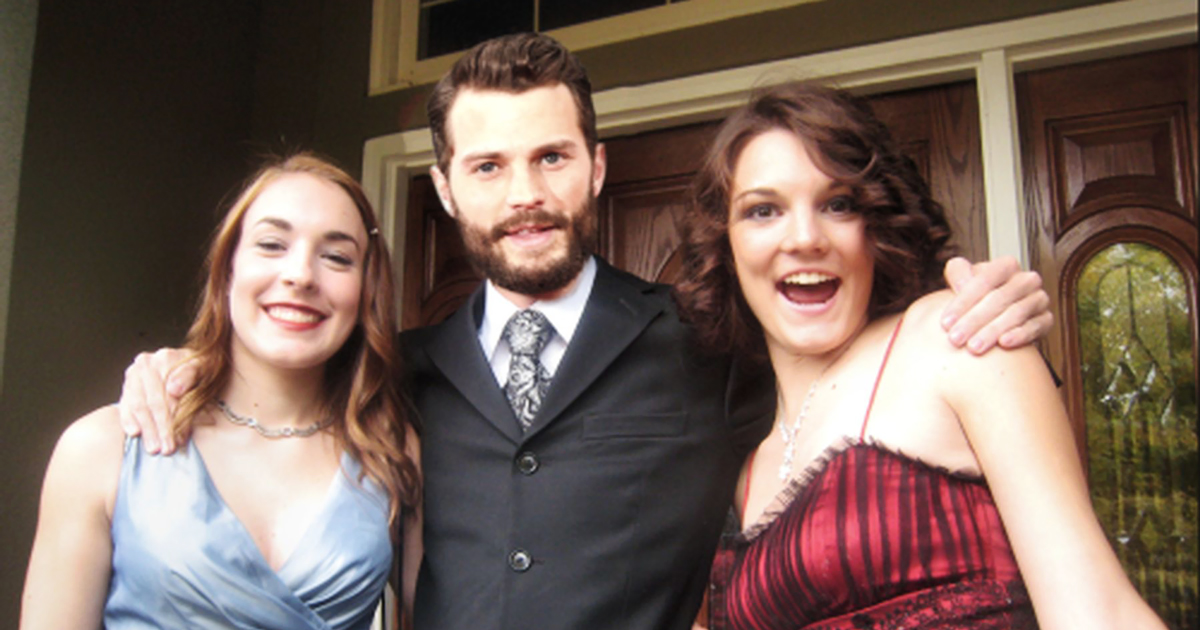
Photographer and photo editor Kaitlin Kelly found a wonderfully absurd solution. Instead of deleting her favorite pictures or cropping them so aggressively that everyone appeared to be standing at the edge of a cliff, she replaced her former partners with celebrities. Suddenly, an uncomfortable high-school memory became an evening with Jamie Dornan. A forgotten selfie turned into drinks with Megan Fox. An old vacation photograph received a Hollywood upgrade that no relationship-status update could compete with.
The concept was funny, technically clever, and surprisingly relatable. It preserved the places, outfits, friendships, and experiences contained in the original photographs while removing the one element that made looking at them difficult. In other words, Kelly did not erase her past. She gave it better casting.
How the Celebrity Photo-Replacement Idea Began
Kelly, a Los Angeles-based photographer, television writer, editor, and retoucher, reportedly developed the idea while looking through old hard drives with a friend. Many of the photographs brought back happy memories from high school, but they also included a former boyfriend from a relationship she no longer wanted to revisit visually.
Her friend pointed out the obvious advantage of having professional editing skills: Kelly could simply replace the unwanted person with someone more entertaining. She accepted the challenge and began searching for celebrity photographs that could be blended naturally into the original scenes. The resulting images were deliberately ridiculous, but they were polished enough to make the joke work.
Once the edits appeared online in 2015, people began contacting Kelly with their own stories and photographs. According to her interview with Bustle, she received dozens of messages from people who wanted similar transformations or simply wished to describe what their old relationship pictures meant to them. The project had accidentally turned a photo editor into something resembling a digital breakup bartenderexcept the house special was a carefully blended Andrew Garfield.
What the Celebrity Replacements Looked Like
Kelly’s transformations did more than paste a famous head onto an unfamiliar body. She selected celebrity photographs with suitable poses, expressions, lighting, and camera angles so that the new guest appeared to belong in the scene.
In one edit, Jamie Dornan became the person standing beside her during a night out. Other images placed her with entrepreneur Richard Branson, model Tyson Beckford, actor Cobie Smulders, musician Lenny Kravitz, actor Sam Heughan, and a snow-covered Andrew Garfield. Megan Fox replaced a former girlfriend in an edit that required particularly careful matching because of the original facial pose.
The humor comes from the contrast between an ordinary personal snapshot and an extremely recognizable replacement. A slightly blurry party photograph already feels like evidence of a questionable decision. Add a perfectly positioned movie star, and it becomes evidence of a questionable decision with an impressive publicist.
Why People Connected With the Project
It preserves the good parts of a photograph
A relationship picture rarely documents only the relationship. It may also contain a beautiful landscape, a graduation ceremony, a once-in-a-lifetime trip, a beloved pet, or friends who have since moved away. Deleting the entire photograph can feel like surrendering memories that still matter simply because one person in the frame no longer does.
Celebrity replacement offers a playful third option between keeping an upsetting image unchanged and destroying it completely. The location remains. The clothes remain. The embarrassing 2009 haircut remains, because no technology should be allowed to remove all consequences. Only the emotional obstacle receives a new face.
It turns discomfort into comedy
Humor cannot solve every emotional problem, but it can change the atmosphere surrounding one. An old photograph that once triggered irritation may become difficult to view seriously when the former partner has been replaced by Lenny Kravitz wearing an expression suggesting he has no idea how he arrived at a family barbecue.
The edit changes the story attached to the image. Instead of representing a failed relationship, the photograph becomes evidence of creativity, friendship, technical skill, and the ability to laugh at an awkward chapter.
It gives the owner control over a digital memory
Modern photo libraries preserve enormous amounts of personal history. Cloud backups, automatic anniversary reminders, tagged albums, and social-media archives can bring old relationships back onto a screen without warning. Research has associated repeated online monitoring of former partners with greater breakup distress, longing, and difficulty moving forward. Mental-health organizations generally recommend creating healthy distance, processing emotions, and choosing boundaries that support recovery.
Kelly’s project approached that digital problem creatively. Rather than allowing an old archive to dictate how she felt, she altered the archive’s presentation. It was not an attempt to claim that the original relationship never existed. It was a visual joke that allowed the photograph to serve a different purpose.
More Than a Simple Photoshop Prank
Artists have often manipulated personal photographs to examine memory, identity, love, and loss. Photographer Matthew Swarts, for example, altered pictures of a former partner so that her image gradually faded beneath layers of patterns. His work treated digital editing as a way to explore absence and reclaim a complicated photographic archive.
Artist Silin Liu used a different approach, inserting herself into historical photographs beside figures such as Marilyn Monroe and Andy Warhol. Her carefully constructed images demonstrated how digital tools can create an alternative identity that feels strangely convincing, even when the situation is impossible.
Kelly’s celebrity replacements belonged to the lighter end of this artistic tradition. The images were designed to make people laugh, but beneath the joke was a serious question: Who controls the meaning of a personal photograph after the relationship shown in it has ended?
The answer is not always the photographer, the subject, or the person who uploaded it. Meaning can change as circumstances change. A romantic photograph can become an uncomfortable artifact, then a comic artwork, then a story someone shares years later without feeling the original sting.
Why a Convincing Celebrity Replacement Takes Skill
Replacing someone in a photograph sounds easy until the new person appears to be six inches above the floor and illuminated by a completely different sun. A successful composite requires more than selecting a famous face and pressing “paste.”
Matching the angle and pose
The celebrity’s head and body must face roughly the same direction as the person being removed. A front-facing publicity portrait will not blend naturally into a photograph where the original subject is leaning sideways, hugging someone, or attempting an ambitious dance move.
Recreating light and color
Indoor snapshots often contain warm bulbs, camera flash, shadows, and uneven skin tones. Outdoor images may have strong sunlight coming from one side. The inserted celebrity needs similar brightness, contrast, color temperature, and shadow direction. Otherwise, the person looks less like a surprise guest and more like a cardboard display from a movie theater lobby.
Working with layers and masks
Professional photo composites usually rely on separate layers, detailed masks, color adjustments, and selective retouching. Hair, fingers, glasses, jewelry, and overlapping arms require careful edge work. Adding subtle blur, noise, or grain can help a sharp promotional image match an older or lower-resolution personal photograph.
Modern editing applications offer increasingly sophisticated object-removal and compositing tools, but believable results still depend on visual judgment. Software can generate pixels; it cannot always recognize that Keanu Reeves should not be three times larger than the sofa.
The Idea Became Part of a Larger Internet Joke
The concept of replacing an ex with a celebrity continued appearing online after Kelly’s project attracted attention. In 2017, a teenager named Gabi Dunn edited Ryan Reynolds over her former boyfriend in prom photographs. Reynolds noticed the post and joined the joke by suggesting that his image should replace the ex in a yearbook photo as well.
The exchange spread widely and inspired other users to share similar celebrity substitutions. It demonstrated why the format works so well online: everyone understands the setup immediately. There is an old romantic picture, the relationship has ended, and a celebrity has arrived for an extremely late reshoot.
Should You Replace an Ex in Your Own Photos?
There is no universal rule for handling photographs after a breakup. Some people keep everything untouched because the pictures document an important period of life. Others archive them in a private folder, remove them from social media, delete them, or ask a friend to store them until the emotions become less intense.
A humorous celebrity edit can be useful when the goal is to preserve a favorite moment without repeatedly confronting an unwanted reminder. However, it works best when treated as creative entertainment rather than a magical cure for heartbreak. Breakup recovery may involve grief, changing routines, rebuilding an independent identity, reconnecting with supportive people, and allowing time for emotions to settle. Studies have found that relationship dissolution can temporarily affect psychological well-being and life satisfaction, although reflection and personal growth may emerge as people adjust.
It is also wise to distinguish between private amusement and public humiliation. Editing a personal copy for your own enjoyment is different from sharing an altered photograph to mock, harass, or misrepresent someone. Keep the original file, label edited versions clearly when necessary, and remember that the most satisfying breakup project rarely involves starting a new argument in the comments section.
The Experience of Turning an Ex Photo Into a Celebrity Memory
The experience usually begins with a photograph that is too good to delete and too uncomfortable to display. Perhaps the background contains a spectacular sunset. Maybe everyone else at the party looks fantastic for the only time in recorded history. Unfortunately, your former partner occupies the center of the frame like a human watermark.
Step 1: Choosing the right photograph
The best candidate is an image you genuinely want to keep for reasons unrelated to the relationship. A graduation picture may represent years of work. A travel photograph may capture a destination you will never visit again. A family celebration may include relatives who are no longer alive.
Starting with a meaningful photograph makes the edit feel less like revenge and more like restoration. The goal is not to rewrite every day of the relationship. It is to recover one image that still contains something valuable.
Step 2: Selecting the replacement celebrity
This is where the experience becomes entertaining. Some people choose a longtime celebrity crush. Others select the most absurd person possible. A formal wedding photograph might receive Dwayne Johnson. A camping trip could be improved by Martha Stewart. A poorly lit nightclub picture practically demands Nicolas Cage.
The funniest selection is often someone whose presence changes the entire mood. Replacing an ex with a glamorous movie star creates fantasy. Replacing an ex with a respected documentary narrator creates questions. Both are valid artistic directions.
Step 3: Finding a pose that fits
The available space usually determines whether the edit succeeds. If the original partner had an arm around your shoulder, the celebrity needs a photograph with a compatible posture. If the person was sitting, the replacement cannot be photographed sprinting unless the desired result is intentionally chaotic.
This stage can involve searching through dozens of publicity photographs. It also produces a strange appreciation for celebrity posing habits. You may discover that one actor has spent an astonishing percentage of their career standing with a hand in one pocket.
Step 4: Watching the memory change
The first finished version often causes an immediate laugh because the viewer recognizes both the original scene and the impossibility of the new one. That moment is central to the project’s appeal. The photograph is familiar, but its emotional script has been interrupted.
For some people, the edited version makes the original easier to tolerate. For others, it becomes a temporary image they enjoy during the most difficult part of a breakup. Still others simply appreciate the edit as a personalized meme. There is no requirement that it produce a profound emotional breakthrough. Sometimes making your friends laugh in a group chat is a perfectly respectable achievement.
Step 5: Deciding what to do with the original
A sensible approach is to preserve the untouched file in a private archive. Feelings change, and a photograph that seems unbearable today may feel historically neutral several years from now. Keeping the original also prevents the altered version from becoming the only surviving record of the event.
The edited copy can then serve as a display image, social post, printed gift, or private joke. This creates distance without forcing an irreversible decision. It acknowledges that the relationship occurred while giving the owner control over which version deserves everyday attention.
Step 6: Sharing the joke carefully
Friends are usually the ideal audience because they understand the context and can appreciate the transformation without mistaking it for reality. Public sharing requires more thought, particularly when other private individuals appear in the image.
A clear caption identifying the picture as an edit prevents confusion. It also keeps the focus on creativity rather than deception. The objective is to produce a new, funny memorynot to convince the internet that Idris Elba attended your junior prom and somehow escaped every other camera.
Conclusion: Keep the Memory, Improve the Cast
Kaitlin Kelly’s celebrity photo replacements became popular because they addressed a genuinely modern problem with imagination and humor. People accumulate thousands of photographs, and relationships can end long before the digital evidence disappears. Deleting every shared image may remove meaningful experiences along with the painful reminder, while leaving everything unchanged can make an old archive difficult to revisit.
By replacing former partners with celebrities, Kelly demonstrated that photographs do not have to remain emotionally frozen. They can be edited, reinterpreted, archived, laughed at, or transformed into something entirely new. Her work preserved the memory while changing its leading character.
The project also proved that a breakup does not always require a dramatic bonfire, a ceremonial deletion spree, or a haircut performed under questionable emotional conditions. Sometimes all you need is a skilled photo editor, a compatible publicity shot, and the firm belief that Andrew Garfield would have looked excellent on that snow-covered vacation.
Note: The experience section above describes a realistic creative workflow and common reactions rather than claiming to document individual clients. This article synthesizes original reporting, the artist’s portfolio information, photo-editing resources, cultural coverage, and U.S.-hosted research and guidance concerning digital memories and relationship breakups.