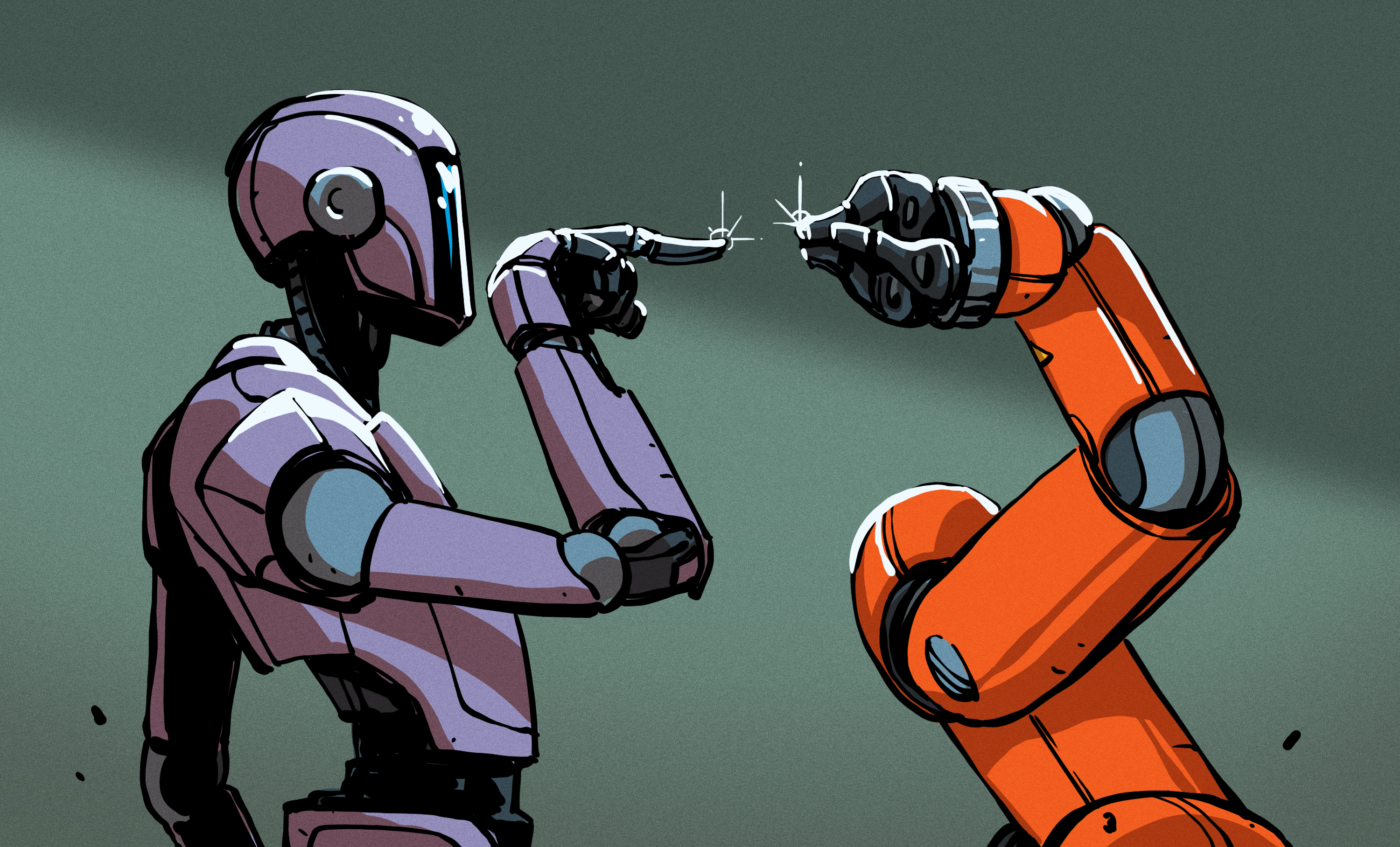

Humanoid robots have officially escaped the science-fiction department and walkedsometimes confidently, sometimes like a toddler carrying a tray of soupinto factories, warehouses, labs, investor decks, and YouTube demos. They are no longer just shiny props for tech conferences. Companies such as Boston Dynamics, Tesla, Figure AI, Agility Robotics, Apptronik, Sanctuary AI, 1X Technologies, and NVIDIA are now treating humanoid robots as a serious next chapter in automation.
But the big question remains: what is the deal with humanoid robots? Are they the future of work, the next awkward gadget wave, or a very expensive way to do what a conveyor belt already does better? The answer is both exciting and humbling. Humanoid robots are fascinating because the world was built for human bodies. Doors, stairs, ladders, shelves, handles, tools, and workstations all assume a creature with two arms, two legs, eyes up front, and an unreasonable confidence around coffee machines. A robot shaped like a person can theoretically enter those spaces without forcing businesses to rebuild everything around it.
That is the dream. The engineering reality is more complicated. Humanoid robots must balance, see, grasp, understand, plan, avoid humans, recover from mistakes, obey safety rules, resist hacking, and do useful work long enough to justify their price. In other words, they need to be part athlete, part forklift, part intern, part cybersecurity endpoint, and part extremely patient appliance.
Why Build Robots That Look Like Us?
The strongest argument for humanoid robots is not that humans are perfect machines. We are not. We trip over rugs, lose 10 mm sockets, and occasionally push doors marked “pull.” The argument is that the human form is a universal adapter for human environments.
Factories, warehouses, hospitals, restaurants, homes, and retail spaces are full of infrastructure designed around people. A robot with wheels can be wonderfully efficient on flat, clean floors. A robotic arm can be unbeatable at repeating a precise motion inside a controlled cell. But once the job involves stairs, mixed objects, changing layouts, awkward bins, rolling carts, or human tools, the traditional automation playbook starts sweating into its hard hat.
A humanoid robot promises flexibility. It can walk where people walk, reach where people reach, and use tools already designed for human hands. In theory, one robot could unload boxes in the morning, move totes in the afternoon, inspect parts before dinner, and fold towels at night. In practice, today’s humanoids are still much closer to “promising trainee” than “robotic coworker who deserves a LinkedIn recommendation.”
The Hackaday Skepticism: A Healthy Dose Of Reality
The Hackaday-style skepticism around humanoid robots is valuable because it asks the question engineers should always ask: why this shape? A humanoid form is not automatically better. It is often more difficult, more expensive, and less stable than purpose-built machinery.
Two legs are impressive, but wheels are simpler. Hands are versatile, but grippers are cheaper. A human-shaped robot can climb stairs, but a warehouse does not usually need a stair-climbing philosopher in a carbon-fiber torso. It needs boxes moved safely, predictably, and at a cost that does not make the finance department quietly unplug the robot at night.
This is why many roboticists argue that humanoids should be judged by job performance, not stage presence. A robot doing a backflip is fun. A robot moving materials for eight hours without requiring three engineers, a laptop, and emotional support is useful.
Where Humanoid Robots Are Actually Being Tested
Factories And Automotive Plants
Manufacturing is currently one of the most serious testing grounds for humanoid robots. Figure AI has tested humanoid robots in BMW environments, focusing on repetitive production tasks such as handling sheet metal parts and supporting assembly workflows. Boston Dynamics has moved Atlas toward industrial applications, especially material handling and automotive work. Apptronik’s Apollo is also aimed at logistics and manufacturing jobs such as case picking, downstacking, palletizing, machine tending, and trailer loading.
The reason factories are attractive is simple: they are structured enough to make robot deployment possible, but variable enough to expose the limits of traditional automation. A humanoid robot does not need to solve every possible task on Earth. It only needs to solve a few expensive, repetitive, ergonomically difficult jobs better than current alternatives.
Warehouses And Logistics
Warehouses are another natural habitat for humanoid robot experiments. Agility Robotics’ Digit has been tested for tote movement and logistics work, including pilots with major warehouse operators. GXO and other logistics companies have explored humanoid systems because their facilities contain many human-oriented tasks that are repetitive but not always easy to automate with fixed equipment.
The warehouse case is compelling because labor shortages, high turnover, repetitive lifting, and injury risk are all real problems. However, the robot has to survive the warehouse jungle: changing aisles, impatient carts, oddly shaped packages, barcode chaos, and the occasional pallet that looks like it was stacked by a raccoon with a deadline.
Home Robots
Home humanoid robots are the dream that makes headlines. Companies such as 1X Technologies are developing humanoids like NEO for household assistance. The idea is easy to love: a robot that folds laundry, carries groceries, tidies rooms, and maybe listens politely while you complain about your Wi-Fi router.
But homes are brutally difficult robot environments. A factory may be repetitive; a home is a museum of weird decisions. Shoes are under chairs. Cables are everywhere. Pets move unpredictably. Children create new object categories every 11 minutes. The kitchen contains heat, knives, liquids, glass, and emotional stakes. For humanoid robots, the home is not the beginner level. It is the boss fight.
The AI Breakthrough: Why Humanoids Are Suddenly Hot Again
Humanoid robots are not new. Researchers have been building bipedal machines for decades. What changed is the arrival of more capable AI models, simulation tools, cheaper sensors, better batteries, improved actuators, and massive investment in “physical AI.”
NVIDIA’s Isaac GR00T platform is a major example of this shift. The goal is to help developers train robot foundation models, generate synthetic data, and transfer learned behaviors into real machines. Instead of programming every movement by hand, robotics companies want robots to learn skills from demonstration, simulation, video, and experience.
This matters because humanoid robots do not fail only because their hardware is hard. They fail because the world is messy. The robot must understand context. Is that object a tool, trash, or someone’s lunch? Should it lift, slide, rotate, avoid, or ask for help? A humanoid without intelligence is basically an expensive mannequin with joint pain.
The Hardware Problem: Hands, Feet, Batteries, And Balance
To appreciate humanoid robots, look at your own hands. They are absurdly good. Human fingers can thread a needle, carry a suitcase, peel a sticker, type a password, crack an egg, and fish a screw from behind a workbench. Robotic hands are improving quickly, but dexterity remains one of the hardest parts of humanoid design.
Then there is locomotion. Walking on two legs requires constant adjustment. A humanoid has to manage center of mass, foot placement, ground friction, payload shifts, collisions, slopes, and surprise obstacles. Add a box in its arms and the math becomes spicy.
Battery life is another constraint. A useful humanoid robot must operate long enough to matter. If a machine needs a recharge after every short task, it becomes less of a worker and more of a very dramatic cordless vacuum.
Are Humanoid Robots Better Than Specialized Robots?
Usually, no. At least not for narrow tasks. A robotic arm inside a factory cell will outperform a humanoid at repetitive precision work. A conveyor belt moves packages more cheaply than a walking robot. A wheeled autonomous mobile robot is usually more energy-efficient on smooth floors.
The case for humanoids is not maximum efficiency at one task. It is adaptability across many tasks in environments already designed for people. The bet is that a general-purpose robot may be less efficient than a specialized machine at any single job, but more valuable because it can be redeployed without rebuilding the workplace.
That is a big bet. It depends on hardware costs falling, software improving, safety certification maturing, and customers finding enough real tasks to justify adoption. A humanoid robot that can do 20 jobs poorly is a novelty. A humanoid robot that can do five boring jobs reliably could become a business.
The Economics: Hype Meets The Purchase Order
Market forecasts for humanoid robots are enormous, with some projections imagining a multitrillion-dollar future by mid-century. Those forecasts may prove too optimistic, but they reveal why investors are paying attention. If humanoids become practical, the addressable market is not just “robots.” It is labor in manufacturing, logistics, elder care, retail support, facility maintenance, and eventually domestic assistance.
Still, businesses do not buy robots because the demo video has dramatic lighting. They buy robots when the math works. The robot must reduce costs, improve throughput, increase safety, fill labor gaps, or unlock work that is otherwise difficult to staff. It must also be maintainable. A humanoid fleet that needs constant expert babysitting will struggle outside pilot programs.
For early adopters, the first useful humanoid jobs will likely be repetitive, semi-structured, physically tiring, and relatively low-risk. Think moving totes, feeding parts into machines, carrying components, sorting bins, inspecting predictable areas, or assisting with warehouse flow. Do not expect a robot plumber to arrive tomorrow, diagnose your mysterious bathroom noise, and judge your grout choices.
Safety And Cybersecurity: The Robot Must Not Become The Problem
Humanoid robots raise safety questions that traditional robots do not always face. A fixed industrial arm can be caged, fenced, slowed, or isolated. A humanoid is designed to move through human spaces. That creates risks: falls, collisions, pinching, unexpected arm motion, object drops, battery failures, and software mistakes.
Industrial robot safety standards such as ISO 10218 and collaborative robot guidance have shaped automation for years, but humanoids add new complexity because they are mobile, dynamically balanced, and often designed to work near people. Emerging safety work is increasingly focused on robots with actively controlled stability, including bipedal and self-balancing systems.
Cybersecurity is just as important. A humanoid robot is a networked machine with cameras, microphones, motors, sensors, cloud connections, and software updates. That makes it a physical endpoint. If a laptop gets hacked, you may lose data. If a humanoid robot gets hacked, it might also swing an arm, block a doorway, leak private video, or become the world’s creepiest Bluetooth problem.
Jobs: Replacement, Assistance, Or Something In Between?
The job question is unavoidable. Humanoid robots are being marketed partly as a response to labor shortages, repetitive work, and physically demanding tasks. In manufacturing and logistics, that may mean robots take over jobs that are hard to hire for, dangerous, or ergonomically punishing.
But automation rarely has only one effect. It can replace some tasks, create maintenance and supervision roles, change job descriptions, and increase output. The real impact will depend on deployment choices. A robot introduced as a tool can reduce injuries and support workers. A robot introduced only as a headcount weapon will understandably be greeted with the warmth people usually reserve for printer jams and surprise meetings.
The best near-term humanoid deployments will likely be collaborative. Humans handle judgment, exceptions, communication, and complex dexterity. Robots handle repetitive carrying, simple manipulation, and dull workflows. That division is less cinematic than “the robots are taking over,” but much more realistic.
Why The Human Shape Still Matters
Despite the skepticism, humanoid robots keep attracting serious attention because the human form solves a deployment problem. If a robot can work in spaces designed for people, companies do not have to redesign every facility from scratch. That is the central promise.
Humanoids also have social and operational advantages. People intuitively understand a body with arms, hands, and a head-like sensor package. A robot that reaches for an object communicates intent more naturally than a box on wheels with a mystery appendage. In shared spaces, readable motion matters.
However, looking human is not the same as being useful. The winning humanoids may not be the most human-looking ones. They may be the ones that are boring, safe, repairable, and good at a narrow group of tasks. In robotics, boring is beautiful. Boring means it works.
What To Watch Over The Next Few Years
The humanoid robot race will not be decided by viral demos. It will be decided by uptime, task success rates, safety records, cost per hour, maintenance cycles, battery performance, and how quickly robots learn new work without engineers rewriting half the universe.
Watch for commercial pilots that turn into repeat orders. Watch for robots that stay deployed after the press event ends. Watch for evidence that one model can perform multiple practical jobs in the same facility. Watch for software platforms that let non-roboticists train and manage fleets. And watch for standards, insurance requirements, and cybersecurity practices, because those unglamorous details often determine whether a technology scales.
Also watch the difference between teleoperation and autonomy. Some robots can perform impressive tasks with remote human assistance. That is not fake, but it is not full autonomy either. Teleoperation can be useful for training, safety, and exception handling, but a truly scalable humanoid robot must eventually do more on its own.
Experience Section: Living With The Humanoid Robot Question
The most useful way to think about humanoid robots is not as a single invention, but as a collision of many engineering problems. Anyone who has built even a small robot knows how quickly simple ideas become complicated. A wheeled robot that follows a line can turn into a weekend of sensor noise, motor calibration, battery sag, loose wires, and a mysterious bug that disappears whenever someone else looks at the code. Now scale that up to a human-sized machine with balance, arms, hands, vision, language, planning, and safety requirements. Suddenly, “make it pick up a box” sounds less like a task and more like a lifestyle.
From a maker’s perspective, humanoid robots are inspiring because they force every discipline to show up at once. Mechanical design matters because weak joints, sloppy tolerances, and poor weight distribution ruin everything. Electronics matter because sensors and actuators need reliable power and communication. Software matters because the robot must interpret a changing world. AI matters because hard-coded behavior breaks the moment the environment changes. Safety matters because a 100-pound robot is not a desktop toy; it is a moving machine with consequences.
The experience of following humanoid robotics also teaches patience. Demo videos compress progress into a few dazzling seconds. Real deployment stretches that progress across months of tuning, testing, failures, and quiet improvements. A humanoid robot may look amazing when it walks across a stage, but the real test is whether it can repeat useful work on a Tuesday afternoon when the floor is dusty, the lighting is bad, the object is slightly crooked, and nobody from marketing is filming.
There is also a psychological experience to humanoids. People react differently to a machine that resembles a person. A robotic arm feels like equipment. A humanoid feels like a presence. That can make interaction easier, but it can also raise expectations too high. When a robot has a face-like sensor cluster and human-shaped hands, people expect intelligence, manners, and common sense. The robot, meanwhile, may still be struggling to decide whether a crumpled towel is an object, an obstacle, or an existential crisis.
The best mindset is cautious curiosity. Humanoid robots are not useless hype, and they are not magical workers ready to replace everyone next quarter. They are early general-purpose machines trying to enter a world built for bodies like ours. Some will fail. Some will become specialized industrial tools. Some may eventually become common helpers. The exciting part is that the field is finally moving from “can we make a humanoid robot walk?” to “can we make one useful?” That is a much harder questionand a much better one.
Conclusion: So, What’s The Deal?
The deal with humanoid robots is that they sit at the crossroads of ambition and practicality. They are exciting because they could operate in human environments without massive redesign. They are difficult because the human body is a ridiculously capable machine to imitate. They are overhyped when presented as instant replacements for workers, but underrated when viewed as long-term platforms for flexible automation.
The near future of humanoid robots will probably be less “robot butler making pancakes” and more “robot coworker moving totes, loading machines, and learning dull tasks humans would rather avoid.” That may not sound like science fiction, but it is how real technology usually arrives: not with a dramatic orchestra, but with a maintenance schedule, a safety checklist, and someone asking whether the robot can work the second shift.
Note: This publication-ready article synthesizes information from reputable robotics, technology, business, market research, and safety-standard sources, including official company materials and current industry reporting, without adding source-link clutter to the article body.