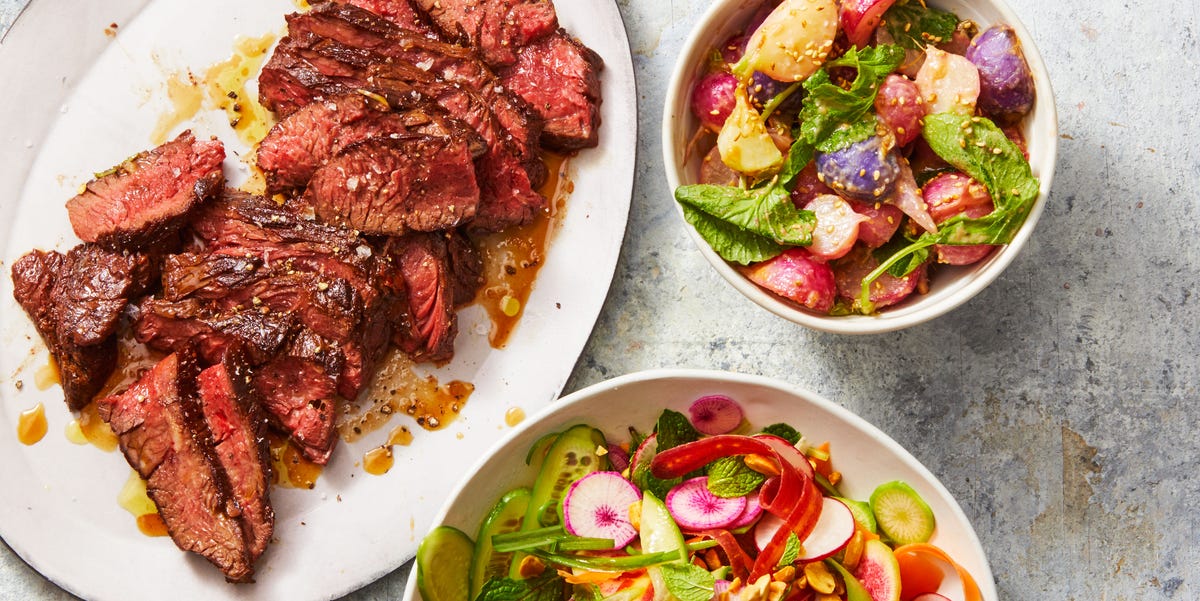
Best Spicy Radish Salad with Seared Steak Recipe – How to Make Spicy Radish Salad with Seared Steak

Some salads politely accompany dinner. This spicy radish salad with seared steak marches onto the table, claims the largest plate, and asks why dinner is running late. Juicy beef, peppery radishes, crisp cucumber, sweet carrot ribbons, fresh mint, and a bright chile-laced dressing create a meal that feels light without leaving anyone hunting for snacks an hour later.
The secret is contrast. The steak is savory and deeply browned, while the vegetables remain cool and crunchy. Brown sugar softens the salty intensity of fish sauce, rice vinegar supplies clean acidity, and roasted peanuts add one final layer of texture. Better still, the entire steak salad can be ready in about 35 minutes.
Why This Spicy Radish Steak Salad Works
Radishes have a naturally peppery bite, but they need supporting flavors to become the star of a main-course salad. Rice vinegar sharpens their flavor, brown sugar rounds off their more aggressive edges, and chile adds a warmer kind of heat. It is spice meeting spice, but everyone remains surprisingly civilized.
Hanger steak and skirt steak are particularly suitable because they offer rich beef flavor and cook quickly. Thinly slicing the rested steak against its visible muscle fibers makes these relatively coarse-grained cuts much easier to chew.
The salad also uses vegetables in several shapes. Radishes are sliced into crisp coins, carrots and cucumber become flexible ribbons, and scallions are cut into matchsticks. That variety is not merely decorative. It ensures each forkful carries a useful mixture of crunch, freshness, dressing, and beef.
Spicy Radish Salad with Seared Steak Recipe
- Yield: 4 servings
- Preparation time: 20 minutes
- Cooking time: 15 minutes
- Total time: Approximately 35 minutes
- Difficulty: Easy to moderate
Ingredients
- 2 tablespoons fish sauce
- 1 tablespoon packed light brown sugar
- 1 teaspoon neutral cooking oil or olive oil
- 1 1/4 pounds hanger steak or skirt steak
- 1/2 teaspoon kosher salt, plus more to taste
- 1/2 teaspoon freshly ground black pepper
- 1/4 cup unseasoned rice vinegar
- 1 small red chile, very thinly sliced
- 1 pound carrots, peeled into ribbons
- 1 pound firm radishes, trimmed and thinly sliced
- 1 Persian cucumber, peeled into ribbons
- 2 scallions, cut into thin matchsticks
- 2 tablespoons fresh mint leaves, torn if large
- 3 tablespoons roasted unsalted peanuts, coarsely crushed
Useful Equipment
- Large cast-iron or heavy stainless-steel skillet
- Large mixing bowl
- Small bowl
- Vegetable peeler
- Sharp chef’s knife or mandoline
- Cutting board
- Instant-read meat thermometer
How to Make Spicy Radish Salad with Seared Steak
Step 1: Prepare the Sweet-Savory Sauce
Stir the fish sauce and brown sugar together in a small bowl until most of the sugar dissolves. Transfer one tablespoon of this clean mixture to a large salad bowl. Keep it separate before the remaining sauce comes near the raw beef.
The reserved portion will become the foundation of the dressing. The rest will be brushed over the steak as it cooks, creating a glossy, caramelized exterior.
Step 2: Dry and Season the Steak
Pat the steak thoroughly dry with paper towels. Surface moisture creates steam, and steam is the sworn enemy of a handsome brown crust. If using skirt steak, cut it crosswise into four manageable sections.
Season the meat on both sides with kosher salt and black pepper. For advance preparation, salt the steak at least 40 minutes before cooking or refrigerate it uncovered overnight. Otherwise, season immediately before it enters the skillet.
Step 3: Sear and Glaze
Heat the oil in a large heavy skillet over medium-high heat. When the oil shimmers, add the steak without crowding the pan. Work in batches if necessary so the beef sears instead of simmering in its own juices.
Cook the steak, turning periodically, until well browned. During the final few minutes, brush it lightly with the remaining fish sauce mixture. Apply thin layers so the sugar caramelizes without scorching. Depending on the cut and thickness, cooking will usually take 8 to 12 minutes.
Use an instant-read thermometer in the thickest section rather than relying exclusively on color or timing. Official U.S. food-safety guidance recommends cooking whole beef steaks to at least 145°F, followed by a minimum three-minute rest.
Step 4: Rest the Beef
Move the steak to a clean cutting board and rest it for 5 to 10 minutes. Cutting immediately allows flavorful juices to escape onto the board, where they help nobody except perhaps the family dog.
Step 5: Build the Spicy Dressing
Add the rice vinegar, sliced chile, and a small pinch of salt to the large bowl containing the reserved fish sauce mixture. Whisk until combined, then taste carefully.
The dressing should be tangy, lightly sweet, savory, and pleasantly hot. Add another pinch of brown sugar if the vinegar seems too sharp. For more heat, include some chile seeds; for less, remove the seeds before slicing.
Step 6: Dress the Vegetables
Add the carrot ribbons, sliced radishes, and cucumber ribbons to the bowl. Toss until every piece is lightly coated. Let the vegetables stand for about five minutes so they absorb flavor while retaining their crunch.
Fold in the scallions and mint immediately before serving. Adding the herbs late preserves their fragrance and prevents them from becoming bruised or limp.
Step 7: Slice and Serve
Examine the steak to identify the direction of the muscle fibers. Slice thinly across those fibers, holding the knife at a slight angle for wider pieces. Cutting against the grain shortens the fibers and produces a more tender bite.
Arrange the spicy radish salad on a platter and place the warm steak slices alongside or over the vegetables. Spoon any resting juices over the beef, then finish with crushed roasted peanuts and a few additional mint leaves.
Choosing the Best Steak
Hanger Steak
Hanger steak has a pronounced beefy flavor and enough marbling to remain juicy during high-heat cooking. It may contain a tough central membrane, so ask the butcher to trim it or remove the membrane before cooking. Its irregular thickness can produce slices with slightly different levels of doneness, which is useful when diners have different preferences.
Skirt Steak
Skirt steak is thinner and has a highly visible grain. It develops a great crust quickly, but it can pass from tender to overcooked with impressive speed. Use a hot pan, monitor its temperature closely, and always slice it thinly against the grain.
Other Suitable Cuts
Flank steak is a lean substitute with a clean beef flavor, although it should be sliced especially thin. Flat iron steak is more tender and forgiving. Sirloin offers broad availability and moderate cost, while boneless ribeye creates a richer, more indulgent version of the salad.
How to Select and Prepare Radishes
Choose radishes that feel firm, heavy, and smooth, without deep cracks or spongy spots. If the greens remain attached, they should look fresh rather than wilted. Smaller red radishes are often juicy and crisp, while neglected or heat-stressed roots may become woody or excessively pungent.
Remove the greens before storing because they draw moisture from the roots. Wash the radishes under cool running water, trim both ends, and dry them well. A mandoline produces uniform slices, but use its hand guard; a steak salad does not need an unexpected fingertip garnish.
Red globe, French breakfast, watermelon, and Easter egg radishes all work. Daikon is typically milder and may be cut into matchsticks rather than coins. Mixing several varieties provides attractive color and a broader range of peppery flavors.
Flavor Adjustments and Easy Variations
Control the Heat
For a mild salad, seed the chile or replace it with thinly sliced Fresno pepper. For medium heat, use the entire fresh chile. Add serrano, jalapeño, red pepper flakes, or a small spoonful of chile-garlic sauce when a hotter dressing is desired.
Replace the Fish Sauce
Fish sauce supplies concentrated saltiness and umami. For a fish-free version, use low-sodium soy sauce or tamari with a small squeeze of lime. Coconut aminos provide a sweeter result, so reduce the brown sugar accordingly. Check individual labels when preparing the meal for someone who must avoid gluten.
Make It Peanut-Free
Replace peanuts with toasted sunflower seeds, pumpkin seeds, or sesame seeds. Crispy fried shallots are another delicious topping, although they contribute a different kind of crunch.
Add More Greens or Grains
Serve the steak and radish mixture over arugula, watercress, shredded cabbage, or butter lettuce. For a more substantial dinner, add steamed jasmine rice, brown rice, quinoa, or chilled rice noodles. The dressing is assertive enough to season these additions without disappearing.
Try Another Protein
Boneless chicken thighs, pork tenderloin, seared shrimp, or firm tofu can replace the beef. Cooking times and safe internal temperatures will differ, so check the chosen protein with a reliable thermometer.
Common Mistakes to Avoid
Putting Wet Steak in the Pan
A damp surface must lose water before it can brown. Dry the meat carefully and preheat the skillet before cooking. If the steak turns gray and releases a puddle, the pan is probably too cool or overcrowded.
Burning the Glaze
Brown sugar can scorch during a long sear. Brown the steak first, then brush on thin layers of the fish sauce glaze toward the end. Lower the heat slightly if the skillet begins smoking aggressively.
Slicing in the Wrong Direction
Skirt, hanger, and flank steaks have long fibers. Cutting parallel to them produces chewy strips regardless of how accurately the meat was cooked. Find the grain before cooking, then rotate the rested steak and slice perpendicular to it.
Dressing the Salad Too Early
Acid and salt gradually pull water from vegetables. Toss the radishes, carrots, and cucumber shortly before serving, and add the mint last. Otherwise, the crunchy salad may become a small, colorful swimming pool.
Serving, Storage, and Make-Ahead Tips
This seared steak salad is satisfying on its own, but steamed rice, crusty bread, or rice noodles can absorb the extra dressing and beef juices. For drinks, try sparkling water with lime, a crisp lager, or a fruity red wine that can stand up to the chile and fish sauce.
The dressing can be mixed one day ahead and refrigerated in a sealed container. Carrots and radishes can be sliced several hours in advance and kept chilled separately. Prepare cucumber and mint closer to serving because both lose quality more quickly.
Store leftover steak and undressed vegetables in separate airtight containers. Refrigerate cooked beef within two hours and use it within three to four days. Dressed salad is best eaten the same day because the vegetables soften as they sit. Cold leftover steak is excellent in lettuce wraps, sandwiches, or rice bowls.
Frequently Asked Questions
Is spicy radish salad with seared steak gluten-free?
The basic recipe contains no wheat-based ingredients, but manufacturing practices vary. Check the labels on fish sauce and any substituted condiments if gluten avoidance is medically necessary.
Can I make the recipe without a cast-iron skillet?
Yes. A heavy stainless-steel skillet works very well. Avoid a delicate nonstick pan over extremely high heat, and use a skillet large enough to prevent crowding.
Why are my radishes extremely hot?
Radish pungency varies by variety and growing conditions. Thin slicing, salting, and dressing with vinegar and sugar can moderate an intense bite. Mild cucumber and sweet carrots also balance hotter radishes.
Can I grill the steak instead?
Absolutely. Grill it over medium-high to high heat, turning as needed for even browning. Brush on the sugary glaze near the end, confirm doneness with a thermometer, and rest the meat before slicing.
What can replace fresh mint?
Cilantro, Thai basil, or a mixture of soft herbs works well. Regular basil can also be used, although it changes the salad’s aromatic profile.
Conclusion
The best spicy radish salad with seared steak succeeds because every component has a job. Beef delivers richness, radishes and cucumber provide crunch, carrots contribute sweetness, vinegar adds brightness, chile supplies heat, and peanuts make the final bite more interesting. Properly drying, searing, resting, and slicing the steak transforms a short ingredient list into a polished dinner.
Keep the original balance for your first attempt, then adjust the chile, herbs, vegetables, or protein to suit the table. Once the basic technique is familiar, this becomes the kind of adaptable weeknight recipe that looks planned even when dinner was very much a 5:30 p.m. emergency.
Practical Experience: What to Expect When Making This Steak Salad
The most noticeable lesson from preparing this style of salad is that organization matters more than culinary theatrics. The steak cooks quickly, and the fresh vegetables do not benefit from waiting around in dressing. Slice every radish, peel every ribbon, crush the peanuts, and mix the dressing before heating the skillet. Once the pan is hot, the recipe moves like a tiny dinner-service rush.
Carrot ribbons can initially appear excessive. A full pound produces a lively orange mountain that may inspire questions about whether the recipe accidentally became a craft project. After tossing, however, the ribbons soften slightly and settle around the radish slices. Long cucumber ribbons are more fragile, so wide, steady strokes with a vegetable peeler work better than forceful ones. Stop when the watery seed core is exposed because that portion can dilute the dressing.
Radish thickness makes a larger difference than expected. Paper-thin slices quickly absorb the acidic dressing and lose some of their raw sharpness. Slightly thicker slices remain louder and crunchier. A practical compromise is approximately 1/8 inch. Uniformity matters more than microscopic precision; nobody is arriving with a ruler unless dinner guests are unusually difficult.
The fish sauce mixture smells assertive in the bowl, but its character changes when brushed onto hot beef. Sugar caramelizes, the sauce becomes rounder, and the steak develops a savory crust. More glaze is not necessarily better. Heavy brushing early in the cooking process encourages burnt sugar before the center reaches temperature. Several thin applications near the end produce better color and a cleaner flavor.
Another important experience is learning to trust a thermometer over the clock. A thin skirt steak may finish several minutes earlier than a thick hanger steak. Pan material, burner strength, and starting temperature also affect cooking time. Checking the center prevents guesswork and is much less tragic than slicing open the steak repeatedly to conduct visual committee meetings.
Resting feels inconvenient when the salad is ready and everyone can smell dinner, but those few minutes noticeably improve the result. The juices redistribute, and the steak becomes easier to cut neatly. Use that waiting time to fold mint and scallions into the vegetables, wipe the serving platter, and remind anyone hovering in the kitchen that the crushed peanuts are a topping, not an unlimited appetizer.
Slicing against the grain is the final make-or-break moment. On skirt steak, the fibers are easy to see. Hanger steak can be more irregular, so divide it into smaller sections and rotate each one as necessary. Thin slices create tender bites that mingle naturally with the vegetables. Thick pieces dominate the fork and can make a beautifully cooked steak seem tougher than it is.
The salad is at its best immediately after assembly. The contrast between warm steak and cool vegetables is part of its personality. After 20 to 30 minutes, the flavor remains good, but the radishes and cucumber begin releasing water. For a dinner party, place the undressed vegetables in the refrigerator, cook and rest the beef, and toss the salad just before bringing everything to the table.
Finally, tasting the dressing before adding all the vegetables is worth the few seconds it takes. Radishes vary in pungency, chiles vary dramatically in heat, and fish sauces differ in saltiness. A small adjustment of sugar, vinegar, or chile can make the difference between a merely spicy salad and a balanced one that keeps people returning to the platter. That flexibility is ultimately the recipe’s best feature: it offers steakhouse satisfaction with the bright, energetic crunch of a vegetable-forward dinner.