
Let’s settle this indoor gardening debate before another basil plant starts writing its will: yes, LED lights can grow plants. In fact, modern LEDs are one of the most practical ways to grow seedlings, herbs, leafy greens, and many houseplants indoors. But here’s the catchand it’s a big one wearing a tiny gardening hatnot all LED lights work equally well.
A regular LED bulb from the hardware store can sometimes keep plants alive and even help them grow. A true LED grow light, however, is built specifically for plant needs: usable spectrum, stronger intensity, better coverage, and more efficient delivery of light to leaves instead of your wall, your cat, or that one random corner of the room.
So, can regular LED lights grow plants? Sometimes, yes. Are they the best choice for serious growth, flowering, fruiting, or fast seedlings? Usually not. This guide breaks down the difference between regular LED lights vs. grow lights, when each one makes sense, and how to avoid the classic indoor gardening mistake of lovingly illuminating a plant with the brightness of a moody restaurant.
What Plants Actually Need From Light
Plants do not care whether a bulb looks trendy on social media. They care about results. For indoor growing, three things matter most:
1. Light quality
This means the wavelengths or colors of light a fixture produces. Plants use light in the photosynthetically active range, often called PAR. Blue wavelengths tend to support leafy, compact growth, while red wavelengths play a bigger role in flowering and other developmental responses. Balanced white light can also work well for many plants because it includes a broader mix of wavelengths.
2. Light intensity
This is how much usable light reaches the leaves. A bulb might look bright to your eyes and still be underwhelming to a tomato plant. Human brightness ratings like lumens are useful for people. Plants respond better to horticultural measurements such as PPF, PPFD, and DLI. Translation: your fern is running a different math program than your living room.
3. Light duration
Plants also need enough light over enough time. Even a decent bulb may disappoint if it only runs for a few hours a day. Indoors, many gardeners use roughly 12 to 16 hours of light daily, depending on the crop and whether the fixture is a supplement or the main light source.
That is why the question is not just “Can LEDs grow plants?” The better question is, “Can this specific LED provide the right amount of usable light for this specific plant?”
Can Regular LED Lights Grow Plants?
Yes, regular LED lights can grow plantsbut with limits.
If you place a bright white LED bulb close to a pothos, spider plant, lettuce seedling, or kitchen herb and run it long enough, the plant may do perfectly fine. Many low-light and medium-light plants are more flexible than indoor gardeners think. White household LEDs can support photosynthesis because they still emit wavelengths plants can use.
That said, ordinary LEDs are often a compromise. They are designed for human spaces, not crop performance. They may lack enough intensity, spread light unevenly, or lose effectiveness quickly as the bulb sits farther from the leaves. A plant directly under the bulb may be happy, while the leaves around the edges are basically attending a poorly lit concert.
Regular LED lights are most likely to work when:
- You are growing low-light or moderate-light houseplants.
- You are starting seeds for a short period.
- You are growing herbs or leafy greens in a small setup.
- You can keep the light close to the plant.
- You run the light long enough each day.
Regular LEDs are less likely to impress when:
- You want flowers or fruit, such as peppers, tomatoes, or strawberries.
- You are growing many plants at once.
- You need strong, uniform coverage over a larger shelf or tray.
- You want compact, vigorous growth instead of stretched, leggy stems.
What Makes a Grow Light Different?
A grow light is an artificial light designed to support plant growth more intentionally than a standard household bulb. Some grow lights use red-blue heavy output, while many newer models are full-spectrum white fixtures that look more natural to people but still deliver strong plant-friendly performance.
Compared with regular LEDs, grow lights typically offer:
Better spectrum targeting
Grow lights are built with plant development in mind. Some emphasize blue light for vegetative growth, others add more red for flowering, and many full-spectrum LEDs aim for a balanced output suitable for a wide range of crops.
Higher usable intensity
Dedicated fixtures are more likely to provide enough PPFD for real growth rather than mere survival. This matters a lot for seedlings, compact herbs, and sun-loving crops.
Better coverage
A grow light fixture is often designed to spread light more evenly across trays, shelves, or grow tents. That means fewer sad edge plants leaning dramatically toward the center like they are in a reality show alliance.
Lower wasted energy
Many LED grow lights are engineered to deliver useful light efficiently while producing less heat than older technologies. Less excess heat also makes placement easier in compact indoor spaces.
Regular LED Lights vs. Grow Lights: The Real Comparison
| Feature | Regular LED Lights | LED Grow Lights |
|---|---|---|
| Primary purpose | Human lighting | Plant growth |
| Spectrum design | General white light | Tailored for plant use, often full-spectrum or red/blue balanced |
| Intensity for plants | Often limited | Usually stronger and more usable |
| Coverage | Narrow or inconsistent | More even across plant area |
| Best for | Low-light plants, small herb setups, seed starting in a pinch | Seedlings, herbs, leafy greens, flowering plants, fruiting crops |
| Convenience | Cheap and easy to find | Better performance but more specialized |
| Results | Can work | Usually works better |
When Regular LEDs Are Good Enough
There are plenty of situations where a regular LED bulb is a reasonable choice.
For low-light houseplants
Plants like pothos, philodendron, snake plant, ZZ plant, and some ferns do not need stadium lighting. If your room is dim, a bright household LED can provide helpful supplemental light, especially in winter.
For seed starting on a budget
Many gardeners begin seedlings under ordinary fixtures, especially when using bright shop-style LEDs or strong white bulbs placed close to the tray. This can work surprisingly well for a short seed-starting cycle.
For herbs in very small spaces
Basil, mint, parsley, and chives may do acceptably under regular LEDs if the bulbs are bright, close, and on for a long daily schedule. The key word is may. Indoor basil is talented at being dramatic.
When You Really Want a Grow Light
There is also a point where saving money on the bulb becomes expensive in plant disappointment.
For flowering and fruiting plants
If you want tomatoes, peppers, cucumbers, or blooming ornamentals indoors, dedicated grow lights are a far better bet. These plants need more intensity and often benefit from better spectrum management.
For stronger seedlings
Weak light leads to leggy seedlingstall, thin, floppy growth that looks eager but not exactly promising. A real grow light helps produce sturdier, more compact transplants.
For shelves, racks, and larger plant collections
Once you are lighting more than one or two pots, coverage matters. Grow light bars, panels, and purpose-built fixtures make the setup more consistent and easier to manage.
For year-round indoor growing
If plants are relying on artificial light as a major or primary source rather than a little winter backup, a grow light is usually the smarter long-term choice.
How to Use LED Lights for Plants Successfully
Whether you choose a regular LED or a grow light, good setup matters just as much as the fixture itself.
Keep the light close
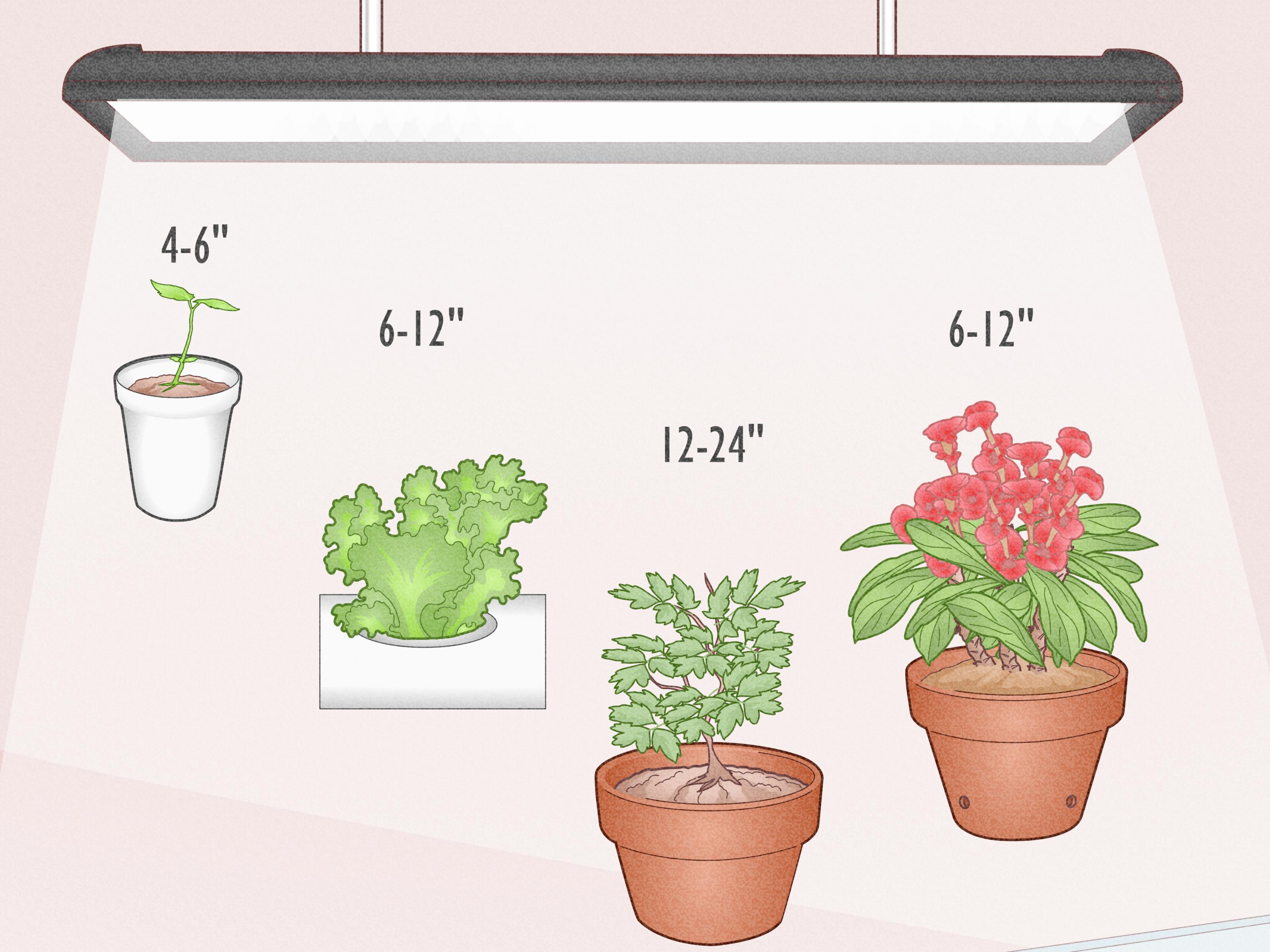
Distance is a huge deal. Light intensity drops fast as the fixture moves farther from the leaves. If a bulb is too far away, the plant may stretch and lean. Many indoor setups perform best when the light is fairly close, though exact distance depends on fixture strength and heat output.
Run the light long enough
Plants need a meaningful daily light period. If your light is the main source, 12 to 16 hours per day is a common starting point for many indoor plants and seedlings. Use a timer so you do not have to remember it every day like some kind of horticultural alarm clock.
Match the light to the crop
Leafy greens and many herbs are easier under indoor light than fruiting crops. Houseplants that tolerate lower light are easier than full-sun plants. Choose your battles wisely.
Watch the plant’s behavior
Plants are excellent complainers. Leggy growth, pale leaves, slow growth, and leaning often mean not enough light. Bleaching, leaf scorch, or crispy spots may mean too much intensity or too little distance.
Do not obsess over wattage alone
Wattage tells you energy use, not necessarily plant performance. A well-designed lower-watt LED grow light can beat a random higher-watt bulb if it delivers light more effectively to the canopy.
Best Types of Plants for Regular LEDs
If you want the most realistic success with standard LEDs, start with forgiving plants:
- Pothos
- Philodendron
- Spider plant
- Snake plant
- Mint
- Parsley
- Lettuce seedlings
- Basil in a bright, close setup
If you want to push your luck with regular bulbs and a tomato plant in a dark corner, well, that is less “indoor garden strategy” and more “botanical optimism.”
Best Types of Plants for Grow Lights
Grow lights shineliterally and figurativelywhen the plant asks for more:
- Tomatoes
- Peppers
- Strawberries
- Microgreens in dense trays
- Seedlings for spring transplanting
- Flowering houseplants
- Succulents that need stronger indoor light
- Large herb collections
Common Mistakes People Make
Assuming any bright bulb is enough
Bright to people does not always mean productive for plants.
Ignoring placement
A good light in the wrong place can perform like a bad light.
Using the wrong plant for the setup
Trying to fruit peppers under a weak bulb is like training for a marathon in flip-flops. Technically possible? Maybe. Ideal? Absolutely not.
Leaving the light on 24/7
More is not always better. Plants also benefit from a dark period. A timer creates a more stable routine and saves energy.
So, Which One Should You Buy?
Choose regular LED lights if you want the cheapest entry point, are supplementing light for a few easy plants, and do not mind slower or less dramatic results.
Choose LED grow lights if you want reliable indoor gardening performance, stronger seedlings, faster vegetative growth, better flowering potential, and less trial-and-error.
In plain English: regular LEDs can work, but grow lights are built to work better.
Real-World Experiences: What Actually Happens When People Try This
One of the most common experiences with indoor plant lighting starts with a regular desk lamp and a lot of optimism. Someone notices their pothos is getting floppy in a dark apartment, screws in a bright white LED bulb, points it at the plant, and waits. A few weeks later, the pothos looks better. It is not winning any botanical beauty contests, but it is perkier, greener, and no longer reaching across the room like it is trying to escape. That is the “regular LED success story,” and it happens all the time with flexible houseplants.
Then there is the herb gardener experience. Many people place basil, mint, or parsley under a standard LED kitchen light and get mixed results. Mint usually acts unbothered. Parsley hangs in there. Basil, however, often turns into a diva. Under weak or distant lighting, it may survive but become thin, stretched, and less productive. Once that same gardener swaps in a small full-spectrum grow light, the change can be obvious: tighter growth, fuller leaves, and less of that “I have seen things” look in the stems.
Seed starting is where the difference between regular LEDs and grow lights becomes especially memorable. Gardeners often begin with whatever is available: shop lights, bright garage fixtures, or household LED bulbs clipped above trays. Sometimes this works just fine, especially when the lights are close and run long enough. But when the fixture is too weak or too far away, seedlings become leggy fast. Tomatoes and peppers stretch upward, flop sideways, and look like tiny green noodles with ambition. That experience teaches a lesson indoor gardeners rarely forget: light intensity matters more than good intentions.
People who switch to dedicated grow lights often describe the upgrade in very practical terms. Their seedlings stop leaning. Their herbs look denser. Their lettuce grows faster. Their shelves become easier to manage because the coverage is more even. Instead of rotating pots every other day like a plant stage manager, they can let the fixture do its job. The grow light does not perform magic, but it reduces frustration. And in indoor gardening, reducing frustration is practically a luxury product.
Another common experience involves winter houseplants. When daylight drops and windows become less effective, many plant owners notice yellowing leaves, slow growth, or a general “I am alive but not thrilled about it” attitude from their plants. Adding even a simple LED setup can help, but the results depend on the plant. A snake plant may barely react. A pothos may push fresh growth. A flowering African violet, on the other hand, is much more likely to reward a better grow light setup than a basic bulb from the hallway fixture aisle.
What surprises many beginners is that the best setup is often not the most expensive one. A modest grow light placed correctly on a timer can outperform a stronger-looking bulb used poorly. Meanwhile, a regular LED can still be useful when expectations are realistic. If the goal is keeping a peace lily or pothos happy through winter, a normal LED may be enough. If the goal is harvesting indoor peppers in a dim apartment, that same bulb may be little more than motivational lighting.
The most successful growers tend to have one thing in common: they observe and adjust. They lower the light if seedlings stretch. They raise it if leaves bleach. They extend the photoperiod if growth stalls. They accept that plants are not furniture, even though many of them would look excellent next to a mid-century bookshelf. In real life, that flexibility matters more than chasing perfect specs on day one.
So yes, people absolutely grow plants under regular LED lights. They also discover, often through trial and error, that dedicated grow lights make the process easier, more predictable, and a whole lot less dramatic. Indoor gardening under LEDs is not about perfection. It is about matching the tool to the plant, watching what happens, and learning quickly before your basil files a complaint.
Conclusion
So, can LED lights grow plants? Absolutely. The better question is which LED lights, for which plants, and under what conditions. Regular LED lights can be enough for low-light houseplants, some herbs, and short-term seedlings when used correctly. Grow lights, though, are the better choice for gardeners who want stronger growth, better coverage, and more dependable resultsespecially for seedlings, flowering plants, and edible crops.
If your goal is casual plant support, regular LEDs may do the trick. If your goal is serious indoor growing, skip the guesswork and invest in a real grow light. Your plants may not send a thank-you note, but they will absolutely show you.
SEO Tags