Cave Paintings Suggest Ancient Humans Understood the Stars Much Better Than We Thought

For a long time, ancient cave paintings were treated like humanity’s first sketchbook: beautiful, mysterious, and probably full of bison because, well, there were a lot of bison around. But a growing body of research has complicated that simple picture. Some archaeologists and historians now argue that certain cave paintings may do more than show animals, hunts, or rituals. They may also hint at something skyward: careful observation of stars, lunar cycles, seasonal timing, and perhaps even early attempts to map cosmic patterns.
That does not mean Ice Age artists were secretly running a prehistoric planetarium or handing out cave lecture notes on astrophysics. It does mean we may have underestimated how closely ancient humans watched the heavens. And once you think about it, that makes perfect sense. If you lived without clocks, electric light, calendars, weather apps, or a handy “remind me tomorrow” notification, the sky wasn’t decoration. It was information.
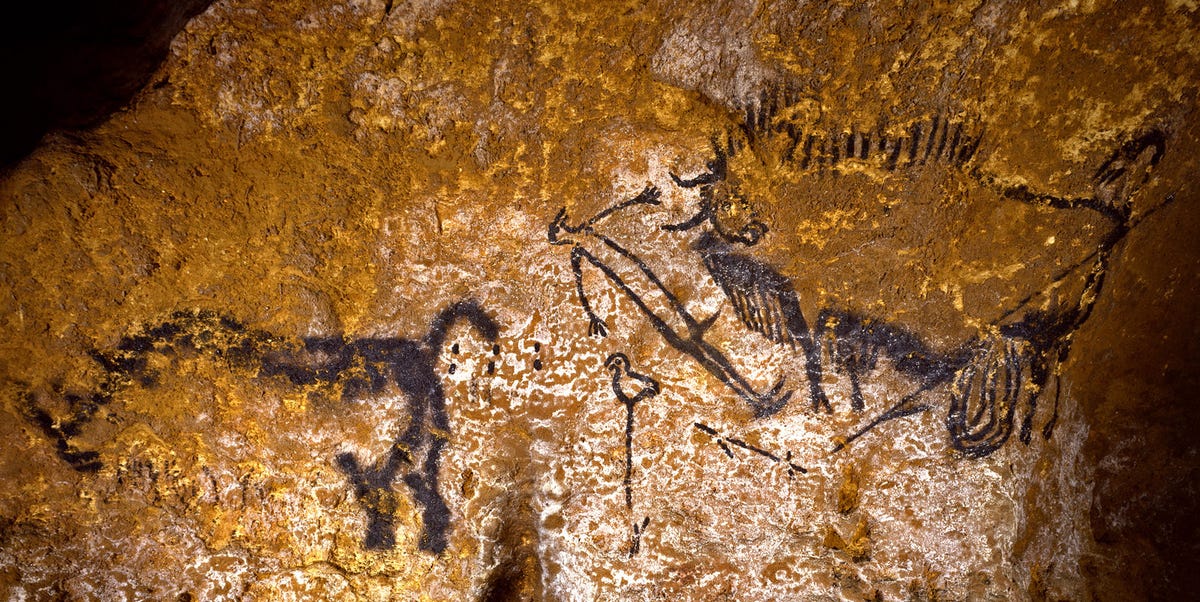
The most intriguing clue comes from famous painted caves such as Lascaux in France, where animal figures dominate the walls but certain dots, signs, and compositions have inspired researchers to ask a bolder question: were these images also celestial references? The answer is still debated, but the debate itself reveals something important. Ancient humans were not passive cave doodlers. They were sharp observers, symbolic thinkers, and likely much more astronomically aware than older stereotypes allowed.
Why the Stars Mattered So Much to Ancient Humans
Before astronomy became a science, it was survival. The night sky helped humans orient themselves in space, recognize seasonal change, anticipate animal migrations, and track time across weeks and months. A bright cluster such as the Pleiades, for example, would have been impossible to ignore under dark prehistoric skies. Unlike us, Ice Age people did not have city glow, phone screens, or neighbors who leave their porch lights on like they’re auditioning for a lighthouse.
Hunter-gatherers lived in close relationship with repeating natural cycles. The movement of the moon affected visibility at night. Seasonal star risings could coincide with weather shifts, plant cycles, or the behavior of prey animals. Over generations, watching the sky would not have been some niche hobby for the one tribe member who wore the metaphorical “space nerd” badge. It would have been woven into daily life.
This is why the idea of prehistoric sky knowledge is not far-fetched. What remains controversial is not whether ancient humans observed the heavens, but how much of that knowledge was encoded in cave imagery and how confidently modern researchers can decode it today.
The Lascaux Mystery: Bulls, Dots, and a Possible Star Pattern
Lascaux is one of the most famous cave art sites in the world, known for its breathtaking paintings of bulls, horses, deer, and other animals. The images are technically sophisticated, visually dynamic, and clearly intentional. In one much-discussed area, a bull appears alongside a cluster of dots. Some scholars have suggested these dots may correspond to the Pleiades star cluster, with the bull itself linked to the constellation Taurus.
This interpretation is part of what makes Lascaux so fascinating. At first glance, it looks like animal art. At second glance, it starts to look like animal art that might also be doing something else. The possibility is exciting because it suggests that cave painters may have associated specific animals with recognizable formations in the sky, much as later cultures did with constellations.
Still, caution matters. A group of dots is not automatically a star map. Archaeology is not a magic trick where every mysterious mark turns into Orion if you squint hard enough. The safest conclusion is that some cave images may have layered meanings: practical, symbolic, ritual, seasonal, and possibly celestial all at once.
The Bold Theory That Changed the Conversation
Interest in prehistoric astronomy surged when a 2018 analysis argued that animal symbols in Paleolithic cave art may represent constellations and even encode dates through knowledge of precession, the slow change in Earth’s axial orientation over long spans of time. That is the kind of claim that makes headlines, raises eyebrows, and causes at least one archaeologist somewhere to reach for a very strong cup of coffee.
The theory linked imagery from sites such as Lascaux, Chauvet, and others to a kind of ancient zodiac. If true, it would mean prehistoric humans were doing something far more sophisticated than merely drawing impressive wildlife. They would have been using symbolic art to track celestial patterns over immense periods of time.
Here is the important part: this interpretation remains highly controversial. Many specialists do not accept the strongest version of the claim, especially the leap from symbolic animals to a fully developed celestial code. But even critics often agree on a smaller, still significant point: Paleolithic people were absolutely capable of symbolic thinking, pattern recognition, and repeated sky observation. In other words, the theory may overreach in places, but it did force researchers and the public to take prehistoric intelligence more seriously.
Ancient Humans Were Already Mastering Timekeeping
Even if the most dramatic constellation claims remain unsettled, there is broader support for the idea that ancient humans tracked time using the sky. Research on notched bones, engraved objects, and cave imagery has revived arguments that lunar phases were being observed and recorded tens of thousands of years ago. Some scholars describe these systems as early “paleo-almanacs,” combining environmental awareness with recurring celestial markers.
That matters because once a culture reliably watches the moon and notices consistent seasonal star appearances, it is already doing a form of astronomy. Not modern astronomy, of course. No one in the Upper Paleolithic was publishing peer-reviewed telescope data. But observational astronomy begins with careful looking, memory, repetition, and shared meaning. Ancient humans appear to have had all four.
So when cave paintings include recurring animals, repeated signs, geometric marks, and carefully chosen placement, it becomes harder to dismiss them as random decoration. They may reflect systems of meaning tied to when animals bred, when weather shifted, when landscapes changed, and when particular heavenly bodies appeared.
Symbolism, Storytelling, and the Cognitive Leap
Another reason the star theory feels plausible is that cave art increasingly looks like evidence of advanced cognition. Researchers have connected prehistoric art to symbolic thought, language-related mental processes, and even storytelling. Some cave images were placed in acoustically resonant parts of caves, leading to the idea that sound, memory, ritual, and image may have worked together.
Recent discoveries outside Europe have made that picture even richer. Indonesian cave paintings dated to more than 51,000 years ago have been described as the oldest known visual storytelling. That pushes complex narrative art astonishingly far back in time. If humans were already capable of turning scenes into stories, then using animal imagery to represent events, seasons, or sky knowledge becomes a lot less difficult to imagine.
In other words, ancient humans did not suddenly wake up one day in the Bronze Age and decide to become symbolic thinkers. The groundwork had been laid deep in prehistory. Cave walls were not merely surfaces. They were memory devices, teaching tools, ritual spaces, and perhaps cosmic notebooks.
Why Modern People Keep Underestimating Ancient Minds
There is a recurring habit in popular culture of treating prehistoric humans as if they were intellectually modern only on alternate Tuesdays. We admire cave paintings, then quietly act shocked that the people who made them may also have noticed patterns in the sky. But why wouldn’t they?
These were people who survived changing climates, tracked animals across large landscapes, developed tools, used pigments, created complex images, and passed knowledge across generations without books, servers, or cloud storage. If anything, their observational skills may have exceeded ours in many practical ways. Most modern people can identify exactly three celestial objects: the moon, the sun, and that one bright “star” that is actually Venus.
Ancient communities likely depended on collective memory and shared observation more than we do. The sky would have been discussed, remembered, and interpreted communally. Whether they thought in terms we would call constellations is less important than the larger truth: they were paying attention, probably with astonishing consistency.
What the Evidence Really Supports
So, what can we say without drifting into wishful thinking wrapped in a mammoth-hide blanket?
1. Ancient humans were sophisticated observers of the natural world.
The level of detail in cave art, along with growing evidence for symbolic systems, shows remarkable cognitive and artistic ability.
2. They almost certainly watched the sky for practical reasons.
The moon, stars, and seasonal cycles would have been vital sources of information in everyday life.
3. Some cave paintings may preserve celestial ideas.
Interpretations involving the Pleiades, Taurus, or seasonal star signals are plausible in some cases, especially when paired with recurring signs and environmental timing.
4. The strongest archaeoastronomy claims are still debated.
That means responsible writing should separate “suggestive” from “proven.” The evidence points toward significant sky awareness, but not every painted animal is automatically a constellation with an attached spreadsheet.
Cave Paintings and the Night Sky: A Smarter View of the Past
The most compelling takeaway is not that cave paintings have been fully decoded into an Ice Age astronomy manual. It is that ancient humans were intellectually richer, symbolically deeper, and observationally sharper than older narratives once admitted. The walls of caves such as Lascaux do not simply preserve art. They preserve attention.
That attention may have included stars, lunar cycles, and seasonal sky patterns. It may have helped communities time hunts, remember stories, reinforce rituals, and teach younger generations how the world worked. Some interpretations will prove too ambitious. Others may be confirmed with better dating methods, new comparisons, and more careful analysis. Science, thankfully, is allowed to revise itself without having to repaint the cave.
Either way, the old stereotype of prehistoric people as artistically gifted but cosmically clueless is fading fast. Cave paintings suggest that ancient humans were not just looking at animals on Earth. They may also have been looking through them, using familiar forms to think about a larger universe overhead.
And honestly, that feels less like a surprise than a reunion. Humans have always looked up. The cave walls simply remind us that we started doing it with imagination a very, very long time ago.
Experiences That Bring the Theory to Life
One of the most powerful ways to understand this topic is to stop thinking about cave paintings as museum pieces and start imagining the experience around them. Picture a small group entering a cave with flickering light, carrying pigment, memory, and stories. Outside, the sky is almost unimaginably dark by modern standards. The Milky Way is not a faint decoration. It is a bright river overhead. The Pleiades rise crisp and sharp. Orion appears with dramatic clarity. Every seasonal return means something.
Now imagine that those same people are paying close attention to animals on the ground. They know when herds move, when weather turns, when the cold deepens, when plants return, and when certain stars appear before dawn. In that world, separating the sky from survival would be almost impossible. The heavens are not “up there” in an abstract sense. They are woven into migration, hunting, planning, memory, and meaning.
Modern visitors often describe cave art sites with a kind of stunned quiet. Even replicas can create that feeling. The scale of the bulls, the motion in the horses, the strange signs, the placement of images in twisting chambersit all makes the art feel deliberate in a way that is hard to shrug off. You do not stand in front of those compositions and think, “Ah yes, casual doodling.” You think, “Someone knew exactly what they were doing, and I wish I could ask twelve follow-up questions.”
Stargazing can create a similar emotional bridge. Go somewhere dark enough to see a truly crowded sky, and the ancient part of your brain wakes up fast. You notice patterns without trying. You start assigning shapes. You feel time stretching. Suddenly, the gap between a modern observer and an Ice Age one seems smaller. The tools have changed. The wonder has not.
There is also a humbling side to this experience. We often think of progress as a straight line with us standing triumphantly at the end, holding smartphones and forgetting our passwords. But prehistoric people may have had kinds of knowledge we are losing: the ability to read a landscape at a glance, to detect seasonal shifts without charts, to memorize recurring sky events, and to attach that knowledge to story and symbol so it could survive across generations.
That is why this topic resonates so strongly. It is not only about whether one set of dots in one cave equals one star cluster. It is about recognizing ancient humans as fully human: observant, imaginative, curious, and capable of linking the world above with the world around them. The caves preserve more than images. They preserve an experience of being alive under the open sky, wondering what the lights overhead meant and deciding those meanings were important enough to paint. Once you feel that, the title of this article stops sounding exaggerated and starts sounding overdue.