
For many people, the word “coronavirus” seemed to arrive out of nowhere in 2020, roughly five minutes before everyone began arguing about toilet paper. In reality, coronaviruses had been studied for decades, had circulated in animals for far longer, and had already caused two major international health emergencies before COVID-19 appeared.
So, how did coronavirus start? The most accurate answer depends on what you mean. The coronavirus family did not begin in Wuhan in 2019. It is a large group of RNA viruses found in humans and animals. What began in late 2019 was the recognized outbreak of a new human diseaseCOVID-19caused by a newly identified coronavirus called SARS-CoV-2.
Sources:
What Is a Coronavirus?
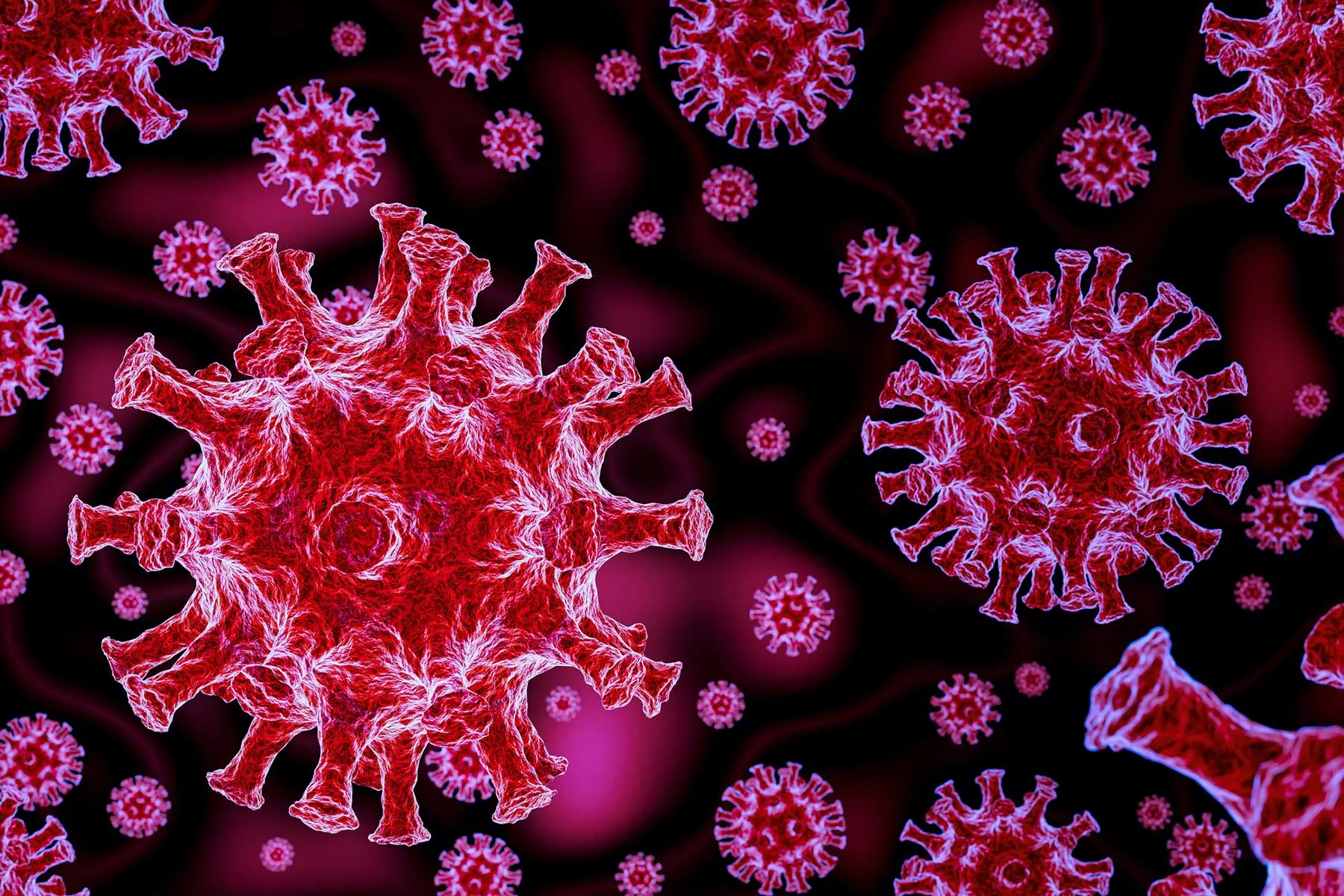
Coronaviruses are enveloped RNA viruses. Their surfaces are covered with spike proteins that can look like points on a crown under an electron microscope. “Corona” is Latin for crown, which is how the family received its memorable name. The spikes are not decorative accessories; they help the virus attach to receptors on host cells and enter them.
Scientists divide coronaviruses into several broad groups, including alpha, beta, gamma, and delta coronaviruses. The human coronaviruses known today belong mainly to the alpha and beta groups. Some usually cause mild respiratory illness. Others can infect the lower respiratory tract and cause severe disease.
Coronavirus Is a Family Name, Not One Single Virus
Seven coronaviruses are known to circulate in people. Four229E, NL63, OC43, and HKU1typically cause mild to moderate upper-respiratory infections, including ordinary colds. Three have produced far more serious outbreaks: SARS-CoV, MERS-CoV, and SARS-CoV-2.
This distinction matters because saying “the coronavirus” is a little like saying “the dog.” A Chihuahua, a Labrador, and a Great Dane belong to the same general family, but they are not interchangeable. Likewise, a seasonal human coronavirus is not the same virus as SARS-CoV-2, even though they share a family tree.
Sources:
The Early History of Coronavirus Research
The coronavirus story began well before COVID-19. In the 1930s, researchers identified a coronavirus that caused infectious bronchitis in chickens. Animal coronaviruses were later found in mice, pigs, cattle, cats, dogs, and other species. These discoveries showed that the virus family was both widespread and adaptable.
Human coronavirus research took off in the 1960s. Scientists studying people with common-cold symptoms isolated viruses that did not fit neatly into the categories already known. Early strains included B814, 229E, and OC43. Their crown-like appearance under electron microscopy helped establish the coronavirus name.
For years, human coronaviruses were regarded mainly as cold-causing nuisances. They mattered, especially to infants, older adults, and people with weakened immune systems, but they were not generally treated as top-tier pandemic threats. That assumption changed dramatically in the twenty-first century.
Sources:
SARS: The First Major Coronavirus Warning
In November 2002, cases of an unusual severe pneumonia appeared in Guangdong Province, China. The illness became known as severe acute respiratory syndrome, or SARS. By early 2003, international travel had carried the disease to multiple countries.
Scientists identified a new coronavirus, later called SARS-CoV, as the cause. Evidence linked the outbreak to animal-to-human transmission. Bats are considered the natural reservoir for many SARS-related coronaviruses, while palm civets and other mammals involved in wildlife trade may have helped bridge transmission to people.
SARS spread mainly when infected people were already noticeably ill, which made case isolation, contact tracing, travel screening, and hospital infection control unusually effective. The global outbreak was contained, and no naturally acquired SARS cases have been reported since 2004. Still, SARS delivered a very loud warning: animal coronaviruses could cross into people and cause dangerous international outbreaks.
Sources:
MERS: A Second Warning From the Coronavirus Family
In 2012, another severe coronavirus disease appeared, this time in Saudi Arabia. It was named Middle East respiratory syndrome, or MERS, and its cause was identified as MERS-CoV.
Dromedary camels are the primary animal source of human MERS infections, although the virus has deeper evolutionary links to bat coronaviruses. MERS can spread between people, particularly in households and healthcare settings, but it has not developed the sustained, efficient worldwide transmission seen with SARS-CoV-2.
MERS reinforced the same uncomfortable lesson as SARS: spillover is not a one-time fluke. When viruses circulate in animals, opportunities can arise for them to infect people. Each infection is a biological experiment, and evolution does not need a laboratory coat to run it.
Sources:
How Did COVID-19 Start?
In December 2019, doctors in Wuhan, China, encountered patients with an unexplained pneumonia. On December 31, Chinese authorities reported a cluster of pneumonia cases to the World Health Organization. Early investigations connected many cases to the Huanan Seafood Wholesale Market, where seafood, meat, and live mammals had been sold.
Researchers soon identified a novel coronavirus. Its genetic sequence was released in early January 2020, allowing laboratories around the world to begin designing diagnostic tests and studying the virus. The virus was eventually named severe acute respiratory syndrome coronavirus 2, or SARS-CoV-2. The disease it causes was named COVID-19, short for coronavirus disease 2019.
The virus spread rapidly through Wuhan and beyond. The first known U.S. case was confirmed in January 2020. On March 11, 2020, the World Health Organization characterized COVID-19 as a pandemic. By then, the virus was circulating across continents, while public-health agencies were trying to build the airplane, write the instruction manual, and find the runway at the same time.
Sources:
Why Did SARS-CoV-2 Spread So Efficiently?
Several characteristics gave SARS-CoV-2 a head start. People could transmit it before symptoms appeared, while experiencing mild symptoms, or without recognizing that they were infected. The virus also spread through respiratory particles, especially in crowded, poorly ventilated indoor spaces.
That made COVID-19 harder to contain than SARS. With SARS, obvious illness often signaled when a person was most infectious. With COVID-19, someone could feel well enough to attend work, travel, eat with friends, or sing enthusiastically in a choir while unknowingly spreading the virus. Modern air travel and dense urban networks then turned local transmission into a global crisis.
Did SARS-CoV-2 Come From Animals?
The exact chain of events that introduced SARS-CoV-2 into humans has not been conclusively reconstructed. However, the weight of available scientific evidence supports a zoonotic spillover, meaning the virus passed from animals into people, either directly from bats or through an intermediate animal host.
Several findings support this explanation. The closest known relatives of SARS-CoV-2 have been identified in bats. Many of the earliest recognized COVID-19 cases were geographically centered around the Huanan market. Environmental samples from the market tested positive for SARS-CoV-2, and susceptible live mammals had been sold there. Genetic analyses also identified two early viral lineages, which some researchers interpret as evidence of more than one animal-to-human introduction.
Yet major gaps remain. Scientists have not identified a single infected market animal that can be proved to have started the outbreak. Important early patient records, animal-trade data, genetic sequences, and laboratory information have not all been made available for independent review.
Sources:
What About the Laboratory-Incident Hypothesis?
A laboratory accident has also been proposed. Under this hypothesis, a naturally occurring virus being collected or studied could have infected a worker and escaped unnoticed. Publicly available evidence has not established that this occurred, and no verified laboratory record has shown that a direct SARS-CoV-2 precursor was present in a Wuhan laboratory before the outbreak.
At the same time, the hypothesis cannot be evaluated completely without fuller access to laboratory records, biosafety information, health data, and early viral sequences. In June 2025, the World Health Organization’s scientific advisory group stated that the weight of available evidence favors zoonotic spillover, while also concluding that all major hypotheses must remain open because critical information is missing.
The responsible answer, therefore, is neither “case closed” nor “anything goes.” Natural spillover currently has the strongest published scientific support, but the exact route, animal host, location, and date of the first human infection remain unresolved.
Sources:
How Animal Viruses Become Human Threats
Most animal viruses cannot infect people. To cross the species barrier, a virus must encounter human cells, bind to the right receptors, replicate, and sometimes acquire changes that make human-to-human transmission possible. That is a difficult obstacle coursebut nature buys an enormous number of tickets.
Spillover risk increases where humans, wildlife, and domestic animals interact closely. Wildlife trade, live-animal markets, intensive farming, deforestation, habitat fragmentation, and movement into previously undisturbed ecosystems can create more opportunities for contact. Climate and ecological changes may also alter where animals live and how species mix.
A spillover does not automatically create a pandemic. Many animal-to-human infections end with one person. A pandemic begins only when a pathogen can spread efficiently from person to person and reaches populations with little or no immunity. SARS-CoV-2 succeeded at both, which is not a compliment anyone wanted to give it.
Sources:
Why Vaccines Arrived Faster Than Many People Expected
The speed of COVID-19 vaccine development sometimes created the impression that scientists had skipped steps. In fact, the apparent sprint rested on a long runway. Researchers had spent years studying coronaviruses, the spike protein, vaccine platforms, and immune responses after SARS and MERS.
Messenger RNA technology had also been researched for decades. Once scientists had the genetic sequence of SARS-CoV-2, they could rapidly design vaccine candidates that instructed cells to produce a harmless version of the spike protein. Large investments, overlapping administrative processes, rapid enrollment, and high infection rates accelerated trials without eliminating the major phases used to evaluate safety and effectiveness.
The lesson is broader than any one vaccine: preparedness can make a response look miraculously fast. Usually, the “overnight breakthrough” has been awake for years drinking laboratory coffee.
Sources:
What Coronavirus History Teaches Us
Coronavirus history is not a single straight line from a bat to a market to a pandemic. It is a web of animal ecology, viral evolution, human behavior, trade, travel, healthcare systems, and political decisions. The virus provided the spark, but social conditions helped determine how far and how fast the fire spread.
SARS showed that aggressive case finding and isolation could stop a dangerous coronavirus. MERS showed that repeated animal-to-human transmission could continue for years. COVID-19 showed how difficult containment becomes when a respiratory virus spreads before symptoms, moves efficiently indoors, and reaches a globally connected population.
The most useful question is not only “Where did this virus come from?” It is also “What conditions allowed it to become a worldwide disaster?” Better wildlife surveillance, safer animal trade, transparent outbreak reporting, strong laboratories, ventilation, healthcare capacity, and international data sharing are all part of preventing the next emergency.
Experiences From Living Through Coronavirus History
The following accounts are composite examples based on widely shared pandemic experiences; they are not presented as one person’s literal diary.
The Week Ordinary Life Became Historical
At first, the outbreak felt distant to many Americans. News reports showed crowded hospitals overseas, but daily routines continued. Then, within days in March 2020, offices closed, schools sent students home, sports seasons stopped, flights emptied, and kitchen tables became classrooms, conference rooms, cafeterias, and occasionally places where someone quietly stared into a mug.
People remember the strange details: store shelves without disinfectant, homemade masks with cheerful fabric, arrows taped to grocery-store floors, and the awkward social choreography of trying to pass someone in a narrow aisle. A cough in public could clear more space than a fire alarm. Humor became a pressure valve, but underneath it sat genuine fearespecially for older relatives, healthcare workers, and anyone with a medical condition that increased the risk of severe disease.
Healthcare Workers at the Center
For clinicians, the early pandemic was history experienced at close range. Guidance changed as evidence developed. Hospitals created isolation areas, conserved protective equipment, expanded intensive-care capacity, and learned how COVID-19 affected not only the lungs but also the heart, blood vessels, kidneys, nervous system, and other organs.
Many healthcare workers described the emotional strain of becoming a patient’s link to family members who could not visit. Phones and tablets carried final conversations. Staff members celebrated recoveries, grieved deaths, and returned for the next shift. The scientific story of coronavirus is built from genomes and case curves, but its human history also lives in those rooms.
Families, Work, and Unequal Risk
The pandemic did not affect everyone equally. Some workers could stay home and complain about video meetings. Others delivered food, staffed warehouses, cleaned hospitals, taught children, operated public transportation, or cared for older adults in person. Exposure risk often followed job type, housing conditions, access to healthcare, and longstanding social inequities.
Parents juggled employment with remote schooling. Students missed graduations, friendships, sports, and ordinary milestones. Small-business owners watched years of work become vulnerable overnight. People living alone faced isolation, while crowded households discovered that “personal space” had become a myth from an earlier civilization.
The Vaccine Moment
When the first vaccines became available, appointments felt like scarce concert tickets, except the dress code involved rolling up a sleeve. For many people, vaccination brought relief and the possibility of hugging family members again. For others, it triggered questions about speed, side effects, trust, and changing recommendations.
The experience demonstrated that facts alone do not build public confidence. People also need clear explanations, honest discussion of uncertainty, accessible care, and trusted local messengers. Communication failures can travel almost as efficiently as viruses, and misinformation rarely needs to complete a clinical trial before going viral.
What People Carried Forward
By the time businesses reopened and masks became less common, many people wanted to declare the whole chapter finished. Yet millions continued to grieve deaths, manage long COVID, recover financially, or cope with disrupted education and mental health. History did not end when the emergency phase ended.
The shared experience left practical lessons. Ventilation matters. Staying home when sick protects others. Rapid testing and paid sick leave are public-health tools, not luxuries. Scientific guidance changes when evidence changes; that can be frustrating, but refusing to update advice would be worse. Most of all, preparedness must happen before a crisis. Fire departments are not built after the smoke appears, and pandemic defenses should not be either.
Conclusion
Coronavirus did not suddenly begin in 2019. Coronaviruses have circulated in animals for ages and have been recognized in humans since the 1960s. SARS and MERS revealed their ability to cross species and cause severe disease. SARS-CoV-2 was the newestand most globally disruptivechapter.
The best-supported scientific explanation is that SARS-CoV-2 emerged through zoonotic spillover, probably involving a bat coronavirus directly or through another animal. However, the precise sequence of events remains unproven, and missing data prevent every hypothesis from being fully assessed. That uncertainty should encourage better investigation, not louder certainty.
Understanding coronavirus history is ultimately about prevention. The next pandemic threat may already be circulating quietly in animals. Whether it becomes another global catastrophe will depend not only on viral biology but also on surveillance, transparency, preparedness, and how quickly people act when the first warning lights begin to blink.
Note: Scientific understanding of the origin of SARS-CoV-2 continues to evolve. This article reflects the strongest publicly available evidence and clearly distinguishes established findings from unresolved questions.