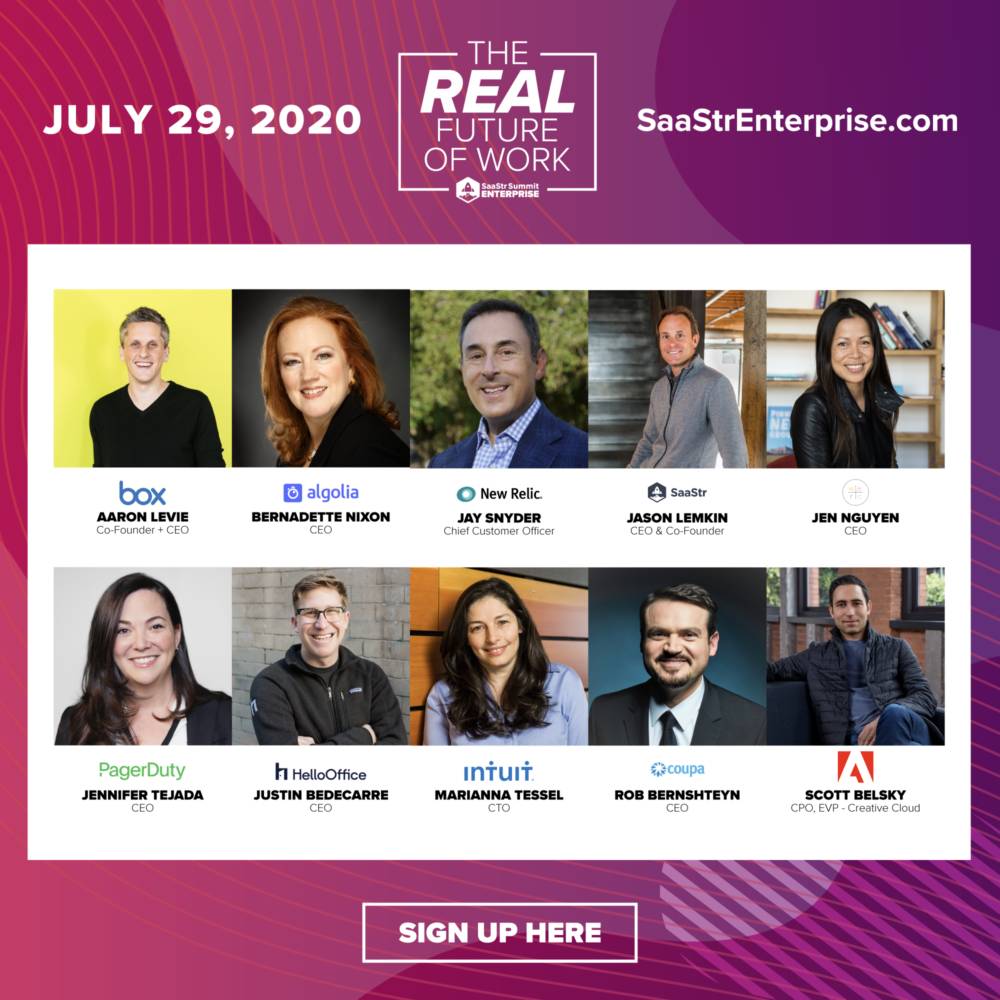

Where enterprise SaaS leaders trade polished slide decks for real conversations, practical playbooks, and the kind of networking that does not require pretending to enjoy awkward virtual small talk.
Why CXO Roundtables at SaaStr Enterprise Matter
CXO Roundtables at SaaStr Enterprise on July 29 were designed for a very specific crowd: senior SaaS and cloud leaders who already know the buzzwords and would rather discuss what actually works. The event brought together CEOs, CIOs, CTOs, CDOs, CMOs, CFOs, customer leaders, product executives, venture capitalists, and enterprise operators for a focused day of learning, networking, and high-value peer conversations.
In the SaaS world, the phrase “executive networking” can sometimes mean a crowded chat window, a calendar link, and someone trying to sell you a dashboard before they have learned your name. SaaStr Enterprise took a different route. The event emphasized structured CXO roundtables, one-on-one meetings, small-group conversations, and practical sessions led by executives from major cloud and SaaS companies. In other words, less “Let’s circle back” theater and more “Here is what happened when we tried to sell to the Fortune 500 and our procurement cycle grew a beard.”
The July 29 SaaStr Enterprise event was promoted as a one-day, multi-track digital gathering focused on the future of work, digital transformation, enterprise SaaS growth, and leadership in cloud software. Main sessions were free to attend, while VIP networking offered additional access to curated connections, roundtables, and peer conversations. For founders and executives building or scaling B2B software companies, this format hit a sweet spot: high-quality content, senior decision-makers, and the ability to meet people beyond the usual comment-thread chaos.
What Made SaaStr Enterprise on July 29 Different?
SaaStr has long been known as one of the most influential communities in B2B SaaS, especially for founders, revenue leaders, product executives, customer success teams, and investors. SaaStr Enterprise built on that reputation by narrowing the focus to enterprise cloud leadership. Instead of offering a generic conference experience, it centered on the hard questions that appear when software companies move upmarket.
A Serious Enterprise Audience
The event drew thousands of SaaS founders, cloud executives, CXOs, investors, and enterprise leaders. Its networking program highlighted more than 200 invite-only CIOs, CTOs, CXOs, CDOs, and technology leaders from large organizations, including Global 2000 and Fortune 500 environments. That matters because enterprise SaaS is not just “SMB SaaS, but with bigger logos.” It involves security reviews, procurement teams, legal scrutiny, integration concerns, compliance demands, long buying committees, and customers who expect you to answer emails with something more reassuring than “Our roadmap is vibes.”
100+ Roundtables Built for Real Discussion
One of the key attractions was the promise of 100+ roundtables. These were not massive webinar rooms where everyone listens silently while one person reads bullet points from a deck. The roundtables were designed as smaller, informal discussions where executives could host or join conversations around the future of work, digital transformation, enterprise adoption, and cloud growth. Smaller rooms create a different kind of honesty. A CTO can admit that integration debt is eating the roadmap. A CMO can explain why enterprise messaging needs to sound less like a robot swallowed a Gartner glossary. A CFO can politely remind everyone that “strategic investment” still has to survive budget season.
1:1 and Small-Group Networking
The VIP networking experience included two main formats: Braindate Roundtables and Brella Meet-ups. Braindate supported small-group and one-on-one roundtable conversations, typically lasting up to 30 minutes. Brella focused on one-on-one 15-minute meetings, closer to virtual coffee chats. Together, these formats gave attendees different ways to connect: deeper peer discussions for strategy and shorter meetings for introductions, partnerships, hiring conversations, investor outreach, or simply finding someone else who understands the mysterious pain of enterprise onboarding.
The Main Themes: Future of Work, Digital Transformation, and Enterprise SaaS
The strongest CXO roundtables work because they are not random. They give senior leaders a shared problem set. At SaaStr Enterprise, the big themes included the future of work, digital transformation, cloud adoption, enterprise sales, customer success, product-led growth, security, AI-readiness, and operational scale.
The Future of Work Is No Longer a Side Topic
The future of work has become a board-level issue. Remote collaboration, hybrid operating models, AI-assisted workflows, employee productivity, and distributed team management all affect how enterprise software gets purchased and used. For SaaS leaders, that means the product must fit into how teams actually work, not how a product manager imagined they work after three coffees and a whiteboard session.
Roundtables around the future of work likely appealed to leaders trying to answer practical questions: How do we make cloud tools easier to adopt across departments? How do we prove productivity gains? How do we support security and compliance without turning every user into a part-time policy analyst? And how do we help customers change behavior, not merely buy another subscription that collects digital dust?
Digital Transformation Has Grown Up
Digital transformation used to sound like a phrase that lived mainly in consulting decks. Today, it is operational reality. Enterprises are modernizing legacy systems, connecting fragmented data, evaluating AI agents, upgrading security architecture, and looking for software that produces measurable business outcomes. That shift changes the SaaS buyer conversation. Executives are less impressed by feature checklists and more interested in whether the product reduces cost, increases speed, improves customer experience, or makes teams less likely to scream quietly into spreadsheets.
For SaaS founders and operators, this is where CXO roundtables become valuable. A sales team can guess what enterprise buyers care about. A product team can study usage analytics. But direct conversations with CIOs, CTOs, CDOs, and business executives reveal the real buying criteria: integration fit, risk reduction, vendor trust, implementation complexity, executive sponsorship, and proof that the solution can scale beyond a pilot.
Enterprise SaaS Requires Cross-Functional Alignment
Selling into the enterprise is a team sport. Product, sales, customer success, security, finance, marketing, and executive leadership all play a role. A brilliant salesperson cannot compensate forever for weak onboarding. A beautiful product cannot overcome a security posture that makes procurement nervous. A strong marketing campaign cannot rescue a pricing model that confuses buyers before the first demo.
CXO Roundtables at SaaStr Enterprise gave leaders the chance to compare notes across functions. A CRO could hear how a CIO thinks about vendor risk. A CPO could learn why feature depth matters less than deployment confidence. A CCO could discuss retention and expansion with peers navigating the same post-sale complexity. That kind of cross-functional perspective is often the difference between “We have enterprise interest” and “We are actually enterprise-ready.”
Who Would Benefit Most from CXO Roundtables?
CXO Roundtables at SaaStr Enterprise were especially relevant for leaders who operate at the intersection of software, strategy, and growth. The value was not limited to one job title. In fact, the strongest conversations likely came from mixing roles that normally see the same problem from different angles.
CEOs and Founders
For CEOs and founders, roundtables offer pattern recognition. When multiple enterprise leaders mention the same friction point, it becomes harder to dismiss it as “just one customer.” Founders can use these conversations to sharpen positioning, validate upmarket strategy, and understand how large buyers evaluate emerging vendors. They can also meet investors and potential partners in a setting that feels more useful than shouting into the networking void.
CIOs, CTOs, and CDOs
Technology executives benefit from comparing how peers are approaching cloud infrastructure, AI adoption, data governance, cybersecurity, vendor consolidation, and modernization. The best executive discussions are not about showing off perfect systems. They are about sharing practical trade-offs: what to centralize, what to decentralize, what to automate, and what to leave alone until next quarter because everyone is tired.
Revenue Leaders
CROs, CMOs, and sales executives can use roundtables to understand how enterprise buying behavior is changing. The modern enterprise buyer is cautious, informed, and surrounded by stakeholders. Deals are rarely won by charisma alone. They require business cases, technical validation, customer proof, and credible implementation plans. A roundtable can reveal where messaging is too vague, where pricing causes hesitation, and where a sales motion needs more executive alignment.
Customer Success and Customer Experience Leaders
Customer success leaders are increasingly tied to revenue through renewals, expansion, adoption, and retention. In enterprise SaaS, post-sale execution is where promises meet reality. Roundtables help CCOs and customer experience executives discuss onboarding models, executive business reviews, success planning, AI-assisted support, customer health scoring, and expansion strategies. It is also a safe place to admit that no one has ever loved a 47-slide QBR deck as much as the person who made it.
Why Roundtables Beat Passive Conference Watching
Traditional conference sessions are useful, especially when the speakers are experienced operators. But roundtables solve a different problem. They allow participants to ask specific questions, challenge assumptions, and learn from the messy middle of other companies’ journeys.
A keynote might explain how a company scaled from $10 million to $100 million in ARR. A roundtable can dig into the details: What broke first? How did the team restructure customer success? When did procurement become a major sales blocker? How did pricing evolve? What did the company stop doing? These are the questions that rarely fit neatly on a main-stage slide but matter deeply to operators.
Roundtables also create accountability. When leaders speak with peers instead of a passive audience, vague claims do not survive long. Someone will ask, “How did you measure that?” or “What happened after the pilot?” or “Did legal approve that, or did they simply stop replying?” That level of peer pressure can make the conversation sharper, more honest, and more useful.
How to Prepare for a CXO Roundtable at SaaStr Enterprise
The best roundtable experience does not happen by accident. Senior leaders should arrive with a short list of goals, a clear point of view, and enough curiosity to listen more than they pitch. Here is a practical preparation framework.
1. Define Your Main Question
Before joining a roundtable, identify the question you want answered. For example: “How are enterprise buyers evaluating AI features?” “What does a strong security review process look like for mid-market vendors moving upmarket?” “How should customer success teams handle expansion without becoming aggressive sales machines?” A precise question leads to a better conversation.
2. Bring One Real Example
Executives respond well to specifics. Instead of saying, “We are struggling with enterprise sales,” explain the actual situation: “Our average deal size doubled, but sales cycles increased from 60 to 140 days, and security review now delays 40% of late-stage opportunities.” That gives the room something useful to discuss.
3. Avoid the Pitch Trap
Nothing drains energy from a roundtable faster than a participant turning it into a product demo wearing a fake mustache. The goal is to exchange insight, not ambush peers. If people find your perspective useful, they will ask what you do. That is the elegant version. The clumsy version involves saying “synergy” too early and watching everyone suddenly check their calendars.
4. Follow Up Quickly
Roundtable value compounds after the event. Send thoughtful follow-ups, reference the actual conversation, and suggest a clear next step. A short message that says, “I liked your point about enterprise onboarding metrics; would be great to compare notes next week,” is far better than a generic “Great connecting!” message that could have been written by a polite toaster.
Examples of Roundtable Topics That Fit the SaaStr Enterprise Audience
While each roundtable may vary by host and participant interest, several topics naturally fit the SaaStr Enterprise audience:
- Enterprise AI adoption: How to move from experimentation to governed, measurable deployment.
- Cloud security and compliance: How SaaS vendors can build trust with large buyers.
- Digital transformation ROI: How to connect software adoption to business outcomes.
- Customer success at scale: How to support enterprise accounts without over-customizing everything.
- Upmarket sales motion: How startups can adapt pricing, packaging, procurement, and executive selling.
- Product-led growth in enterprise SaaS: How self-serve adoption and enterprise buying committees can coexist.
- Executive alignment: How CEOs, CIOs, CROs, CPOs, and CCOs can work from one operating model.
These topics are valuable because they sit where strategy meets execution. Everyone can say “enterprise-ready.” Fewer teams can prove it during implementation, renewal, security review, and expansion.
The Bigger Lesson: Enterprise SaaS Is a Trust Business
The deeper lesson from CXO Roundtables at SaaStr Enterprise is that enterprise SaaS is built on trust. Buyers need to trust the product, the team, the roadmap, the data model, the security posture, the implementation process, and the vendor’s long-term stability. That trust is not created by a landing page alone. It is created through conversations, proof, customer references, technical competence, and executive credibility.
Roundtables accelerate trust because they put leaders in direct conversation. A founder can hear objections without the filter of a sales call. A CIO can evaluate how other leaders think. A customer success executive can learn what peers are measuring. An investor can spot operators who understand the market beyond vanity metrics. In a world overloaded with content, live peer discussion still has a rare advantage: it is hard to fake depth when smart people are asking follow-up questions.
That is why the CXO Roundtables at SaaStr Enterprise on July 29 were more than a networking feature. They represented the direction modern B2B events are moving: smaller, sharper, more curated, and more useful. Big stages still matter. But the room where five executives compare what is actually working may be where the real gold is buried.
Experience Notes: What It Feels Like to Join CXO Roundtables at SaaStr Enterprise
Imagine logging into a SaaStr Enterprise roundtable with a fresh coffee, a slightly overstuffed calendar, and the quiet hope that this will not become another meeting where everyone says “alignment” until the word loses structural integrity. Then something different happens. The group is small enough that people actually introduce themselves properly. A CIO mentions that AI adoption is moving faster than governance. A founder explains that enterprise pilots are easy to start but hard to convert. A customer success leader says the biggest retention risk is not product usage but executive disengagement after implementation. Suddenly, the conversation has texture.
That is the strongest experience a CXO roundtable can deliver: the feeling that you are inside the operating room of SaaS strategy, not watching a highlight reel. You hear the things that rarely make it into public case studies. Someone talks about how a buyer loved the product but delayed the contract because procurement needed three additional reviews. Someone else explains how a new onboarding motion reduced confusion but required more upfront work from solutions engineers. Another leader admits that their company added AI features quickly, only to discover that customers cared less about the label and more about whether the feature saved time in a measurable way.
For attendees, the best approach is to treat the roundtable like a working session. Bring a real challenge. Share a useful lesson. Ask one sharp question. Listen for patterns. If three executives from different industries mention data governance, that is not background noise; that is a signal. If multiple revenue leaders say buying committees have expanded, your sales process may need stronger executive education. If customer success leaders keep returning to adoption metrics, your product team may need clearer activation signals and better in-app guidance.
The networking experience can also be surprisingly human. A 15-minute Brella-style coffee chat is short, but it is long enough to discover shared priorities. A 30-minute Braindate conversation is long enough to test ideas, compare frameworks, and decide whether a deeper follow-up is worth scheduling. The magic is not in collecting the most meetings. The magic is in finding the few conversations that change how you think.
A practical attendee might leave SaaStr Enterprise with a simple post-event plan: update the enterprise sales checklist, refine the buyer persona map, revisit onboarding milestones, schedule follow-ups with two potential partners, and share three insights with the leadership team. That may not sound glamorous, but real SaaS growth is often built from exactly those unglamorous improvements. Conferences inspire. Roundtables operationalize.
And yes, there is still a chance of awkwardness. Someone may talk too long. Someone may try to pitch. Someone may use the phrase “single source of truth” with the confidence of a person who has never met a messy CRM. But when the format works, it creates a rare executive environment: candid, specific, and useful. For SaaS leaders navigating enterprise growth, that is worth far more than another generic webinar replay sitting unwatched in an inbox.
Conclusion
CXO Roundtables at SaaStr Enterprise on July 29 offered a focused look at what enterprise SaaS leadership increasingly requires: better conversations, tighter peer networks, stronger executive alignment, and practical insight into how cloud companies scale with large customers. The event combined free main sessions, VIP networking, small-group roundtables, one-on-one meetings, and participation from senior leaders across SaaS, cloud, venture capital, and enterprise technology.
For founders, the roundtables offered a window into how enterprise buyers think. For CIOs and CTOs, they created space to compare digital transformation priorities. For revenue and customer success leaders, they revealed what it takes to build trust before and after the sale. Most importantly, the format reminded everyone that SaaS growth is not powered by slogans. It is powered by clear strategy, credible execution, customer outcomes, and the occasional brave executive willing to ask, “Wait, are we solving the real problem?”
Note: This article is based on publicly available SaaStr Enterprise event information and broader SaaS leadership best practices. Source links are intentionally omitted for clean web publishing.