Dad Questions Wife’s ‘Feminist’ Values After She Gives Horrifying Dating Advice To Their Teen Daughter

Teen dating advice can be sweet, awkward, funny, and occasionally so bad it deserves its own warning label. In one viral family debate, a dad found himself questioning his wife’s so-called “feminist” values after she encouraged their teenage daughter to expect her boyfriend to pay for everything. Not just dinner. Not just the occasional movie ticket. Everything.
The father’s concern was not that a boyfriend paid for a date. Plenty of people still enjoy old-fashioned gestures, and treating someone can be kind when it comes from generosity rather than pressure. His problem was the lesson underneath the advice: if a boy really likes you, he should finance you. That is not romance. That is not empowerment. That is a tiny relationship tax office wearing lip gloss.
The situation struck a nerve because it touches several modern parenting questions at once: What should teenagers learn about dating? Is splitting expenses always necessary? Can traditional dating customs coexist with feminist values? And how should parents respond when one parent’s advice sounds less like confidence-building and more like emotional blackmail with a gift card?
What Happened in the Viral Family Conflict?
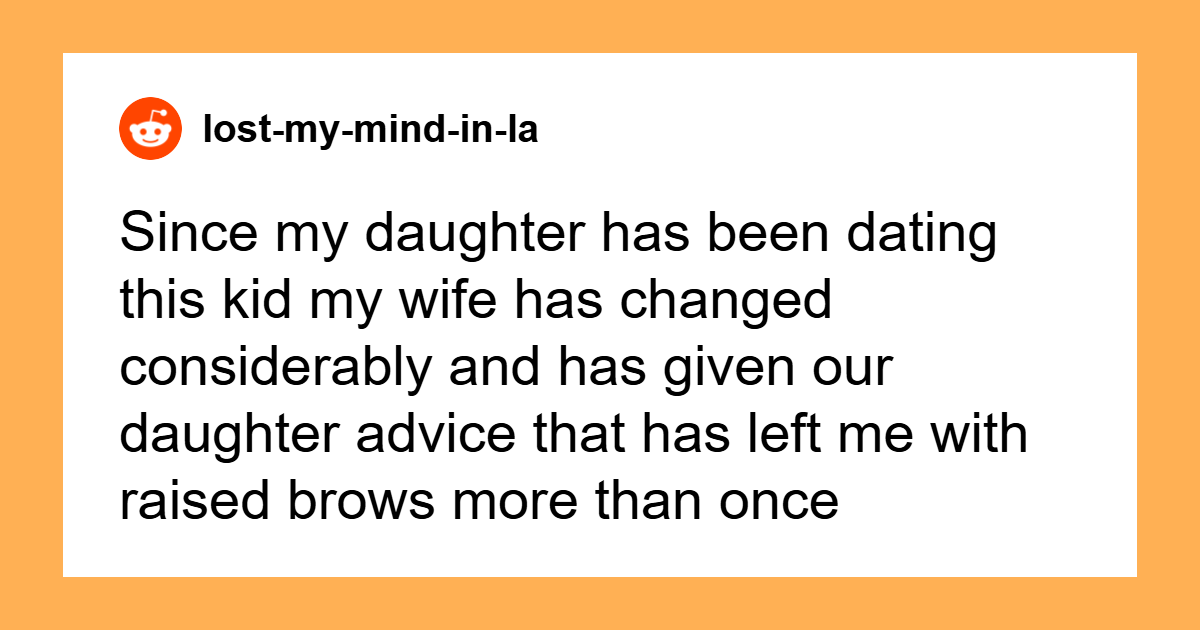
The story centers on a married couple with a 16-year-old daughter who recently began dating a shy, respectful teenage boy. According to the dad, the couple had always tried to raise their daughter to be independent, capable, and fair-minded. He described his wife as someone who generally believed in feminism and equality. Then their daughter got her first boyfriend, and the advice at home took a sharp turn.
The mother reportedly told the teen that boys paying for everything was “cute,” especially in a first relationship. She suggested that if the boyfriend really liked her, he would pay for her. The father tried to balance that message by explaining that dating should be a partnership. His rule of thumb was simple: if someone invites you out in a way that clearly means “my treat,” it is reasonable for them to pay. If two people casually decide to grab food together, splitting the bill is often fair.
That is actually a pretty useful teen-friendly explanation. It is simple, practical, and far less likely to create a high school finance scandal over chicken tenders.
The dad became more concerned when his daughter started talking as if her boyfriend’s money was available on demand. She allegedly mentioned asking him to pay for things and using her mother’s advice as proof that payment equaled affection. That is where the issue shifted from etiquette to values. A parent can teach a teen to appreciate generosity without teaching her to test someone’s love by opening their wallet.
Why the Advice Felt So Wrong
At first glance, the argument may look like a basic “who pays on a date?” debate. But the deeper concern is about manipulation, entitlement, and what teenagers learn to accept as normal in relationships.
Healthy relationships are built on respect, communication, honesty, trust, equality, individuality, and safety. Those ideas show up again and again in teen relationship education because adolescence is when many people start forming their first romantic patterns. A teen’s first relationship may not last forever, but the lessons often linger. If the lesson is “use affection as leverage,” that is not cute. That is a red flag wearing a friendship bracelet.
Paying Can Be Kind; Demanding Payment Is Different
There is nothing inherently wrong with one person paying for a date. Sometimes one partner has more money. Sometimes one person invited the other and wants to treat. Sometimes it is a birthday, a celebration, or simply a sweet gesture. Generosity is healthy when it is freely offered and warmly appreciated.
The problem begins when payment becomes proof of love. “If you cared, you would pay” is not a romantic standard. It is a pressure tactic. It teaches a teen to measure affection through spending and teaches the other teen that boundaries can be punished with guilt. That dynamic can become especially damaging when the person being pressured is shy, inexperienced, or eager to prove themselves.
Teenagers Need Relationship Skills, Not Scripts From 1954
Many adults grew up with dating scripts that placed boys in the provider role and girls in the pursued role. The boy asks, plans, drives, pays, and performs confidence. The girl waits, accepts, evaluates, and maybe offers a polite “thank you.” Some people still enjoy parts of that tradition, and that is fine when both people choose it freely.
But teenagers today also need to learn mutual decision-making. They need to know how to talk about plans, budgets, consent, comfort levels, and expectations. A good dating lesson should prepare a teen to say, “I can pay for myself,” “Thanks for treating me,” “Let’s do something free,” or “I don’t want you to feel pressured.” Those sentences are not less romantic. In many cases, they are the beginning of actual maturity.
Is This Really About Feminism?
The word “feminist” is doing a lot of heavy lifting in this debate, and probably sweating through its blazer.
Feminism, at its core, is about equal dignity, equal opportunity, personal autonomy, and freedom from rigid gender roles. It does not mean women must split every bill forever. It also does not mean men must pay for everything to prove they are worthy. A feminist approach to dating should make room for choice, fairness, respect, and honest communication.
The mother’s advice, as described, sounds less like feminism and more like a repackaged traditional gender role: boys provide, girls receive. The twist is that the daughter is being told this arrangement is empowering. But dependence is not automatically empowerment just because the person benefiting from it is female.
Equality Does Not Kill Romance
Some people worry that fairness makes dating feel cold or transactional. That is not true. Equality does not mean every date requires a spreadsheet named “Love Budget Final FINAL Version 3.” It simply means both people matter.
A teen can enjoy being treated without becoming entitled. A boyfriend can buy flowers without becoming an ATM. A girlfriend can pay for coffee without destroying romance for the entire Western world. The healthiest lesson is not “always split” or “always let him pay.” It is “talk honestly, respect each other, and do not use money as a weapon.”
What Parents Should Teach Teenagers About Dating and Money
Money is one of the earliest ways teenagers learn boundaries in dating. Even small purchases can carry emotional meaning. A movie ticket, a snack, a birthday gift, or a ride-share can quickly become tangled with expectations. Parents should help teens understand that spending money does not buy control, affection, access, or loyalty.
1. Teach the Difference Between a Gift and an Obligation
A gift is freely given. An obligation is demanded. If a boyfriend offers to buy dinner and genuinely wants to, the kind response is gratitude. If a girlfriend expects him to buy things because “that is what boys do,” the relationship starts leaning toward entitlement.
Teens should also learn that accepting gifts does not mean they owe affection, physical intimacy, constant attention, or continued dating. On the flip side, giving gifts does not entitle someone to control. This lesson protects both teenagers.
2. Encourage Budget-Friendly Dates
Teen dating does not need to involve expensive dinners, elaborate gifts, or the financial planning of a small wedding. Walking in a park, going to a school event, studying together, making snacks at home with supervision, playing board games, or grabbing inexpensive ice cream can be just as meaningful.
When teens learn that connection does not require constant spending, they become less vulnerable to pressure and less likely to pressure someone else. Also, let’s be honest: most teenagers do not have steakhouse money. They have “I found six dollars in my hoodie” money.
3. Make “No” a Complete Sentence
A teen should be able to say no to paying, no to being paid for, no to a date plan, no to a gift, or no to any expectation that feels uncomfortable. Healthy relationships allow both people to set boundaries without fear of punishment, guilt trips, or silent treatment.
This applies to money, time, texting, physical affection, social media, and privacy. If a teen learns that boundaries are normal early on, they are better prepared for adult relationships later.
4. Talk About Manipulation in Everyday Language
Parents do not need a lecture hall to teach this. Use practical examples. “If someone says, ‘If you loved me, you would buy this,’ that is pressure.” “If someone keeps asking after you said no, that is not respect.” “If someone makes you feel guilty for having a budget, that is not romance.”
Teenagers understand fairness. They may roll their eyes so hard you briefly worry about their vision, but they understand more than adults sometimes think.
Where the Dad Was Right
The father’s strongest point was that relationships should not be framed as one person serving the other. He did not say his daughter could never be treated. He did not shame her for dating. He did not ban the boyfriend from buying popcorn. His concern was the growing belief that the boyfriend’s role was to pay whenever she wanted something.
That is a valid parenting concern. Teens are still developing empathy, judgment, and self-awareness. If a parent sees a child becoming comfortable with taking advantage of someone, it is appropriate to step in. The goal is not to embarrass the teen. The goal is to redirect her before a bad habit becomes a personality feature.
Where the Mom May Have Been Coming From
It is also worth reading the mother’s behavior with some nuance. She may have wanted her daughter to feel valued. Many women were raised with the idea that a man who invests effort and money is showing seriousness. Some mothers also worry that their daughters will settle for low-effort partners, accept crumbs, or over-function in relationships.
That concern is understandable. Girls should not be taught to accept disrespect, laziness, or one-sided effort. But the solution is not to swing from “expect nothing” to “make him pay for everything.” A healthier message is: choose someone who respects you, makes effort, keeps promises, listens, and treats your boundaries seriously. Money can be one expression of effort, but it is not the only one, and it should never become the whole scoreboard.
How Parents Can Fix Conflicting Dating Advice
When parents disagree about dating values, the worst move is to turn the teen into a courtroom judge. Mom gives one rule, Dad gives another, and suddenly the daughter is collecting conflicting arguments like evidence. That creates confusion and gives the teen room to choose whichever advice benefits her in the moment.
The better approach is for parents to talk privately first. They can ask: What do we want our daughter to believe about herself? What do we want her to believe about partners? What does fairness look like? What dating habits would make us proud of her five years from now?
Once the parents agree on the core message, they can talk to the teen together. The message might sound like this: “It is okay to appreciate being treated, and it is okay to treat someone else. But it is not okay to pressure someone to spend money to prove they like you. In a healthy relationship, both people show care in ways that are respectful and fair.”
A Better Script for Teen Dating Advice
Instead of telling a teen daughter that a boyfriend should pay for everything, parents can offer advice that builds confidence without creating entitlement.
- Bring your own money. Even if someone offers to pay, you should never feel trapped because you cannot cover yourself.
- Accept generosity with gratitude, not expectation. A thank-you goes a long way.
- Offer sometimes. Buying coffee, snacks, or a small treat shows that care goes both ways.
- Choose dates that fit both budgets. A relationship should not require financial stress.
- Do not test love with money. If you need reassurance, ask for communication, not receipts.
- Watch how someone handles boundaries. Respect matters more than who grabs the check.
This kind of advice teaches independence and kindness at the same time. That is the sweet spot.
What This Story Says About Modern Parenting
Modern parents are raising teens in a dating world that is both more open and more complicated than before. Teenagers see relationship advice on TikTok, reality shows, group chats, podcasts, and comment sections where confidence and selfishness are often wearing the same outfit. Some online advice tells girls never to settle. Some tells boys they must prove value through spending. Some tells everyone to treat dating like a marketplace and then wonders why nobody feels emotionally safe.
Parents have to cut through that noise. The best advice is not the loudest, trendiest, or sassiest. It is the advice that helps a teen become a decent partner and choose decent partners.
That means teaching daughters not only to demand respect but also to give it. It means teaching sons not only to be generous but also to have boundaries. It means teaching every teen that equality is not a slogan you pull out when it benefits you and hide when it requires responsibility.
Experiences and Practical Takeaways Related to This Topic
Many parents have seen a smaller version of this situation play out long before a serious relationship begins. A daughter comes home from a first date thrilled because someone bought her a smoothie. A son proudly says he paid for movie tickets. A parent smiles because the gesture sounds sweet. Then, slowly, the conversation becomes less about kindness and more about expectation. That is the moment parents need to gently step in.
One useful experience many families share is the “bring your own money anyway” rule. Even when a teen is going out with someone who said, “I’ve got it,” parents often encourage their child to carry enough money to pay for themselves or get home safely. This is not about rejecting generosity. It is about independence. A teenager who can cover their own meal has more freedom to say no, leave early, or avoid feeling indebted. That tiny bit of preparation can turn an awkward date into a manageable one.
Another practical experience is teaching teens to plan dates around reality, not fantasy. A 16-year-old relationship does not need luxury dinners, expensive gifts, or dramatic romantic tests. It needs kindness, patience, and maybe a parent willing to drive while pretending not to hear the nervous conversation in the back seat. Low-cost dates help teens focus on the actual person instead of the performance. If two teens can laugh over cheap pizza, walk around a bookstore, or attend a school game together, they are learning connection without financial pressure.
Parents also learn that tone matters. If a dad storms in and says, “You’re acting spoiled,” the teen may become defensive and miss the point. A better approach is curiosity: “How do you think he feels when you ask him to pay?” or “What would you think if someone expected you to buy things to prove you liked them?” Questions help teenagers practice empathy. Lectures often make them practice staring at the wall.
Couples parenting together also need to check their own mixed messages. A mother might tell her daughter to be independent but then praise a boy only when he spends money. A father might tell his son to respect women but also joke that dating means going broke. Teens notice contradictions. They may not clean their rooms, but they can detect hypocrisy with the precision of a laser-guided missile.
The most helpful family conversations usually focus on character. Is your partner kind when disappointed? Do they respect your answer when it is no? Can you talk about money without embarrassment? Do you appreciate what people do for you? Are you also willing to give, plan, apologize, and compromise? These questions matter more than whether one person paid for nachos on Friday night.
This viral dad’s discomfort makes sense because he recognized a pattern forming. He saw his daughter learning to connect affection with spending and decided that was not the kind of confidence he wanted for her. The better goal is not to raise a daughter who expects less. It is to raise one who understands her worth so deeply that she does not need to extract proof from someone else’s wallet.
Conclusion
The debate over this dad, his wife, and their teen daughter is not really about one dinner bill. It is about the values parents pass down when teenagers are just beginning to understand romance. Teaching a daughter to expect respect is healthy. Teaching her to treat a boyfriend like a payment plan is not.
Feminist values and healthy dating advice can absolutely work together. In fact, they should. Real empowerment means a teen knows she can pay her own way, accept kindness gracefully, set boundaries clearly, and offer respect in return. It means she does not confuse generosity with obligation or affection with financial access.
The father’s concern hit a nerve because many people recognize the danger of dressing up entitlement as tradition. Dating should not turn teenagers into accountants, but it should teach them fairness. A boyfriend is not an ATM. A girlfriend is not a prize to purchase. A healthy relationship is two people learning how to care for each other without pressure, manipulation, or a running tab.
Note: This article is written for publication as an original analysis of a viral family relationship debate, supported by widely recognized guidance on teen dating, healthy relationships, boundaries, communication, and equality.