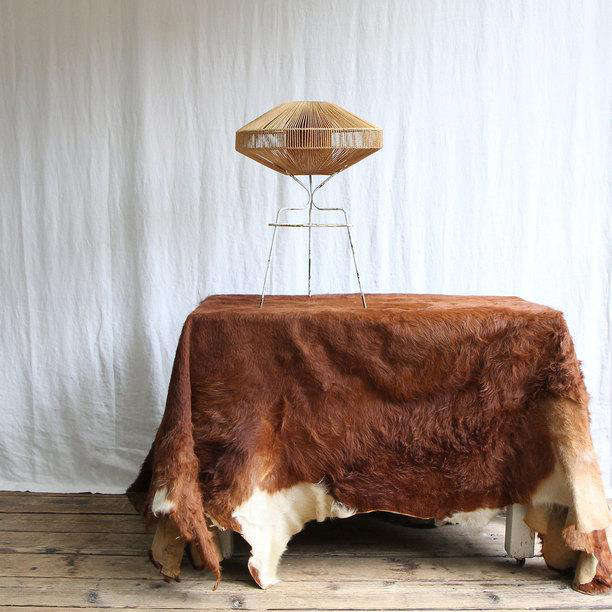

If your table has been through ithomework, takeout, hot mugs, craft glue, and that one friend who uses a fork like it’s a tiny jackhammercowhide might be the rugged-yet-glam “table jacket” you didn’t know you needed. Using cowhide as a table covering is equal parts functional and “Wait… why does this look like it belongs in a designer magazine?” It adds texture, protects the surface, and turns an everyday table into a conversation piece that basically says, I have taste and I also have boundaries for my furniture.
This guide walks you through choosing the right cowhide, prepping your table, cutting and securing the hide, finishing edges, and keeping it cleanwithout turning your dining room into a leatherworking reality show.
Why Cowhide Works as a Table Covering
Cowhide (the hair-on kind often sold as rugs) is naturally tough, flexible, and forgiving. It’s designed by nature to take a beatingthen look interesting while doing it. As a tabletop covering, it brings a few advantages:
- Instant protection: Helps guard against scratches, minor dings, and daily wear.
- Grippy texture: Hair-on hides tend to stay put better than slick fabric runners.
- Pattern that hides life: Natural variation helps camouflage crumbs, tiny scuffs, and “Oops.”
- Style versatility: Works with modern, rustic, farmhouse, boho, Western, and eclectic spaces.
- Easy routine care: Regular shaking/vacuuming and quick blotting for spills go a long way.
The biggest “gotcha” is moisture. Cowhide isn’t a waterproof raincoat for your tableit’s more like a handsome leather jacket: durable, but it expects you to treat it with some respect.
Pick the Right Cowhide (So You Don’t End Up Fighting It)
Not all cowhides behave the same. For table coverings, you generally want a tanned, hair-on cowhide (often marketed as a cowhide rug). Here’s what to look for:
1) Size and shape: plan for your table’s “footprint”
Decide whether you want a full-table cover (covers the entire top) or a runner-style look (center strip with table edges showing). Full coverage is bolder and more protective; a runner feels lighter and plays well with place settings.
- Full cover: Aim for 2–6 inches of overhang on each side if you like a draped look.
- Trimmed-to-fit: Cut to exact dimensions for a tailored, upholstered vibe.
- Runner: 14–24 inches wide is common, depending on table size and decor.
2) Backing matters (a lot)
Flip the hide over. The underside (leather side) should feel reasonably smooth and not powdery, flaky, or cracking. A well-tanned hide lays flatter and is less likely to curl at the edges.
3) Hair length and texture
Shorter hair tends to be easier for dining tables (less crumb-trapping drama). Longer hair looks lush but can be fussier if you host spaghetti night like it’s a competitive sport.
4) Ethical and practical alternatives
Some people love the natural-material authenticity; others prefer to skip animal products entirely. If that’s you, a faux cowhide can still deliver the look with easier cleaning in some cases. Either way: choose what aligns with your home, your values, and your tolerance for maintenance.
Before You Start: Decide Your “Commitment Level”
There are four main ways to use cowhide as a tabletop covering. Choose based on how permanent you want this to be:
- Zero-commitment drape (no cutting, no adhesives)
- Non-slip setup (rug pad/gripper + neat positioning)
- Semi-permanent fastening (tacks/staples underneath a wood top, or discreet tabs)
- Permanent bond (contact cement / adhesive approachvery secure, not easily reversible)
If you rent, love switching decor often, or fear commitment in any form (including paint swatches), start with options 1 or 2.
Tools and Materials
The good news: you don’t need a medieval tanning workshop. You need a clean surface, sharp cutting tools, and a plan you can follow without improvising halfway through like it’s a cooking show.
Must-haves
- Measuring tape
- Kraft paper or butcher paper (for templates)
- Painter’s tape or masking tape
- Sharp utility knife (new blade matters more than your confidence)
- Steel ruler / straightedge
- Self-healing cutting mat (or thick cardboard as a backup)
- Soft brush or vacuum with appropriate attachment
Optional (depending on method)
- Non-slip rug pad or shelf liner (thin and grippy)
- Upholstery tacks or staple gun (for underside fastening)
- Contact cement or leather-appropriate adhesive (for permanent bond)
- Felt pads (to protect table edges/underside from friction)
- Edge finishing supplies (see “Edge Finishing” section)
Step 1: Prep the Table (Because Dirt Is Not a Design Feature)
- Clear and clean: Remove everything. Wipe the tabletop and edges thoroughly.
- Dry completely: Moisture trapped under a hide is a recipe for odor and warping.
- Check the finish: If your table has a delicate finish (soft lacquer, antique shellac), avoid aggressive adhesives.
- Plan for heat: If you regularly place hot dishes directly on the table, keep using trivets. Cowhide is not a cast-iron pan’s soulmate.
Step 2: Flatten and “Relax” the Hide
Cowhide can arrive with wrinkles or mild curling. Lay it flat hair-side up in a dry room for 24–72 hours. If the corners still curl, gently weigh them down with books (clean onesyour cookbooks may be emotionally scarred, but at least they’re heavy).
Avoid heat blasts, direct sunlight, or soaking. This is leather. It prefers calm, not chaos.
Method A: The No-Cut Drape (Fast, Easy, and Surprisingly Chic)
This is the easiest entry point: you place the hide on the table and let the natural shape do its thing. Great for coffee tables, console tables, and casual dining setups.
How to do it
- Center the hide on the table.
- Rotate it until the pattern and shape look balanced from your main viewing angles.
- If it slides, add a thin non-slip rug pad underneath.
- Style with a tray, vase, or runner layer if you want a more “intentional” look.
Pro tip: If your hide has a dramatic “point” (many do), aim it toward the least-trafficked side of the table so people aren’t constantly snagging it with knees, bags, or ambitious belt buckles.
Method B: The Non-Slip Upgrade (Still Reversible, Much More Stable)
If you want the draped look but hate readjusting it every time someone breathes near the table, this is your method.
How to do it
- Cut a thin non-slip rug pad or gripper slightly smaller than your tabletop.
- Place it on the table (centered).
- Lay the hide on top, adjust, and smooth it out.
This reduces sliding without bonding anything to your table. It’s the “I want stability, not a lifelong contract” approach.
Method C: Tailored-to-Fit (Clean Edges, Custom Look)
Want your cowhide to look like it was made for the table? This is where templates and careful cutting shine. You can do a perfect rectangle, a soft rounded rectangle, or keep one organic edge for a “designed-but-not-trying-too-hard” vibe.
Make a template first (trust me)
- Tape kraft paper onto the tabletop.
- Trace the perimeter (or measure and mark exact dimensions).
- Cut out the paper template and place it back on the table to confirm fit.
- Adjust until it’s exactly what you want.
Transfer and cut
- Flip the hide leather-side up on a large protected surface.
- Place your template and secure it with small pieces of painter’s tape.
- Mark the cut line lightly (chalk or a very light pencil; avoid heavy ink marks).
- Cut with a sharp utility knife using a steel ruler for straight lines.
- Cut in multiple light passes instead of one heroic shove. Cleaner edges, less stretching.
Method D: Permanent Bond (For a True Upholstered Tabletop Look)
This is the “I’m serious” method. It’s best for a dedicated project table, a desk topper, or a table you’re confident you won’t want to “undo” next month after discovering a new aesthetic on the internet.
Important: Adhesives can be messy, can affect table finishes, and may be difficult to remove. Work in a well-ventilated space and follow the product’s safety directions.
Basic contact-cement approach (overview)
- Dry-fit first: Position the hide exactly where you want it and mark alignment reference points with painter’s tape.
- Surface prep: Ensure both surfaces are clean and dry. Some products recommend roughening smooth/non-porous surfaces.
- Apply cement evenly: Typically to both surfaces, then allow it to become tacky.
- Join carefully: Contact cement bonds fast. Alignment matters. Start from one edge and smooth outward to avoid bubbles.
- Press firmly: Use a roller or firm pressure across the surface for a strong bond.
If you’re doing a full-table bond, consider using dowels or thin strips to keep surfaces separated while positioning, then remove them gradually as you press downthis helps prevent accidental misalignment.
Edge Finishing Options (From Wild and Free to Neat and Tidy)
Option 1: Keep the natural edge
This looks organic, modern, and “collected.” It also hides minor cutting imperfections because… you didn’t cut it. The downside is it can catch on bags or chair arms if it overhangs.
Option 2: Trim and leave raw
Hair-on cowhide edges can look fine trimmed, especially if you cut cleanly. If you see excessive shedding at the edge, you may want a finish method below.
Option 3: Fold-under and tack/staple (wood tables only)
If your tabletop is solid wood and you can access the underside, you can wrap the hide over the edge and secure it underneath. This creates a clean top edge and keeps the hide from shifting.
Option 4: Binding or stitched trim
For a polished look, you can add binding (like a fabric edge tape) or do a simple whip-stitch around the perimeter with heavy thread. It’s more work, but it looks intentional and reduces edge shedding.
Care and Cleaning: Keep It Looking Great (Without Panicking)
Cowhide is fairly low maintenance with the right habits. The keys are regular dust removal and fast spill response.
Routine care
- Shake or brush: If it’s removable, take it outside and shake it gently.
- Vacuum smart: Use suction and a suitable attachment; avoid aggressive beater bars. Vacuum in the direction of the hair.
- Rotate periodically: If it’s on a high-use table, rotating can even out wear and sun exposure.
Spills (the moment of truth)
- Blot immediately: Press with a clean cloth or paper toweldon’t rub.
- Work with the hair: Wipe gently in the direction of hair growth.
- Use minimal moisture: A lightly damp cloth is often enough. Avoid soaking.
- Air dry: Let it dry naturally away from heat vents and harsh sun.
Grease or oily spots
For greasy stains, an absorbent powder (like cornstarch) can help pull oil outsprinkle, let sit, then vacuum away gently. Again: patience beats scrubbing.
Smart Styling Ideas (So It Looks Like You Meant It)
Cowhide can read “Western,” but it doesn’t have to. The styling around it does the heavy lifting:
- Modern: Pair with sleek black metal, minimal ceramics, and a simple centerpiece.
- Farmhouse: Add warm wood tones, linen napkins, and a big bowl of something seasonal.
- Eclectic: Use colorful glassware and layered texturescowhide becomes the grounding neutral.
- Runner look: Cut a strip and center it like a table runner for subtle impact.
- Top it with glass (optional): If you want maximum protection and easy wipe-downs, add a glass top over the hide.
Common Questions (Because Your Brain Will Ask Them at 11:47 PM)
Will cowhide scratch my table?
Generally, it protects more than it harms, but grit trapped underneath can cause micro-scratches. Clean the table and consider a thin non-slip layer underneath to prevent friction and dust migration.
Will it smell “barn-ish”?
Some hides have a mild leather odor at first. Air it out flat in a dry room. Avoid perfumes or sprays that can stain or alter the finish.
Is it okay for a dining table?
Yesif you’re realistic. Use coasters and trivets, clean spills quickly, and consider the runner approach if you host messy eaters. (No judgment. Some of us are messy eaters.)
What if I spill wine?
Blot immediately, use minimal moisture, and avoid scrubbing. If it’s stubborn, treat gently and let it dry fully before deciding it’s a “permanent feature.” Sometimes stains look dramatic for a day and fade as the hide dries.
Conclusion
DIY cowhide as a table covering is one of those rare projects that’s both high-impact and flexible: you can drape it casually, tailor it precisely, or commit fully for an upholstered tabletop look. The secret is choosing a quality hide, keeping moisture under control, and using the right method for your lifestyle. Done well, it’s protective, practical, and effortlessly coollike your table just got a makeover and a little self-esteem boost.
Experience Notes: 10 Real-World Lessons From Living With a Cowhide Table Covering
Okay, let’s talk about what happens after the DIY glow wears off and you’re just trying to eat dinner like a normal person. Because cowhide on a table is beautifuluntil life shows up with a spaghetti spoon in one hand and a toddler in the other.
1) The first week is the “fidget phase”
You will straighten it. You will rotate it. You will stare at it from three different angles like you’re judging a sculpture competition. This is normal. After a week, your brain decides, “Sure, that’s where it goes,” and you stop fussing.
2) A thin gripper layer is the unsung hero
If your hide slides even a little, you’ll notice it every single day. Add a thin non-slip pad or gripper and suddenly you’re living in peace. It’s like noise-canceling headphones, but for furniture annoyance.
3) Crumbs are sneaky, but not unbeatable
On a hair-on surface, crumbs don’t always fall off the edge like they do on bare wood. They can cling. The solution isn’t scrubbingit’s a quick vacuum (gentle, no aggressive roller) in the direction of the hair, or a soft brush. Once you make it part of your routine, it’s no big deal.
4) Coasters become non-negotiable (and you’ll suddenly care about them)
Without coasters, condensation rings can happen and you’ll end up blotting a circle of doom while whispering, “Why didn’t I spend $12 on coasters?” The good news: cowhide makes even cheap coasters look intentional. It elevates the whole scene.
5) Wine spills are a personality test
The first time someone spills red wine, you’ll learn who you are. The calm blotter? The frantic scrubber? The person who pretends they didn’t see it? Here’s what actually helps: blot fast, dab gently with minimal moisture, let it dry, and reassess. Cowhide often looks worse when wet and improves as it dries.
6) The hide will “train” to your table over time
If you leave it in place, it can gradually relax and conform a bit more to the tabletopespecially if it started slightly wavy. Mild weight at curled edges (books, flat trays) helps. Avoid blasting it with heat to “force it flat.” Leather holds grudges.
7) Pets may file a complaint (because the table is now “soft”)
If you have a cat, your new cowhide table cover might be interpreted as an upscale lounging platform. A dog might sniff it, decide it’s suspicious, then accept it like it pays rent. If pets are a factor, consider a runner cut (less surface area = fewer invitations) or a glass topper for the “no, this is not a bed” boundary.
8) Sunlight is subtle but real
In bright rooms, rotating or shifting the hide occasionally helps prevent uneven fading. You may not notice it week to week, but months later you’ll be glad you took 30 seconds to rotate it like a responsible adult.
9) Hosting gets easier once you accept it’s a living material
The best part is the vibe: guests notice it, touch it, and ask about it. The tricky part is worrying about it. Once you accept that it’s meant to be used (not preserved in a museum), you relax. You use trays for messy foods, trivets for hot dishes, and you move on with your life. It’s furniture protectionnot a sacred relic.
10) The biggest win is how “finished” the room feels
A cowhide table covering does something that’s hard to measure: it makes the space look styled, even if everything else is normal. Like, your room could still have a laundry basket in the corner and somehow the cowhide makes it feel like a choice. That’s a rare talent. Respect.