
Note: This article is written for web publishing and synthesizes real information from reputable technology, design, repairability, and laptop-industry sources including Hackaday, Framework, IBM, Lenovo, Computer History Museum, MoMA, Tom’s Hardware, PC Perspective, Lifewire, Wired, The Verge, Ars Technica, Engadget, Laptop Mag, and iFixit-style repair culture coverage.
Some laptops are tools. Some are status symbols. And then there is the IBM ThinkPad 701C, a compact black rectangle from 1995 that still makes modern laptop enthusiasts stop mid-scroll and whisper, “Wait… the keyboard does what?”
The 701C is famous for its “butterfly” keyboard, officially known as the TrackWrite keyboard. Open the lid, and the keyboard splits, slides, and expands outward like a tiny mechanical magic trick. Close it, and the whole thing tucks neatly back into the chassis. It was absurdly clever, deeply practical for its time, and exactly the kind of engineering stunt that makes today’s ultra-thin laptops look a little too serious for their own good.
But there was always one problem: the original ThinkPad 701C had a brain from the mid-1990s. Charming? Absolutely. Fast enough for modern work? Only if your idea of productivity is waiting politely while a 486-era machine thinks about opening a file. That is why the modern Framework-mainboard “brain transplant” project feels so satisfying. It takes one of the most beloved laptop bodies ever made and gives it modern computing power, modern display potential, USB-C, wireless connectivity, and the kind of repairable spirit ThinkPad fans have been begging laptop companies to remember.
Why the ThinkPad 701C Still Lives Rent-Free in Laptop Nerd Brains
The ThinkPad brand has always had a special place in computing culture. From its black, squared-off design language to its red TrackPoint nub, ThinkPads became known for durability, excellent keyboards, business reliability, and a certain “I write code in airport lounges” energy. The 701C, however, stands apart even among ThinkPads.
Released in 1995, the ThinkPad 701C arrived when portable computers were caught in an awkward design problem. Users wanted smaller laptops, but they also wanted full-size keyboards. Screens were small, chassis were narrow, and nobody wanted to type a report on keys that felt like chiclets hiding from responsibility. IBM’s answer was beautifully mechanical: make the keyboard larger only when the laptop is open.
The result was the TrackWrite keyboard, a split keyboard mechanism that expanded beyond the sides of the laptop body when the lid opened. It gave users a more comfortable typing layout while keeping the machine compact for travel. The design was so memorable that the ThinkPad 701 entered museum collections and became one of the most recognizable examples of mobile-computing design from the 1990s.
The Problem: Iconic Design, Ancient Performance
As a collectible, the ThinkPad 701C is wonderful. As a daily driver in the modern world, it is a brave little fossil.
The original machine was built around Intel 486-era hardware. That was respectable in 1995, but modern computing has moved into a completely different universe. Today’s web browsers alone can humble machines that are decades newer than the 701C. Video calls, cloud apps, encrypted messaging, modern Linux distributions, high-resolution displays, and dozens of browser tabs are not exactly friendly to vintage hardware.
That is what makes the Framework-powered 701C concept so appealing. Instead of treating the old ThinkPad as a glass-case artifact, the project treats it as a chassis worth saving. The body, keyboard, and personality remain. The weak old internals get replaced by a far more capable modern mainboard.
In plain English: it is like putting a modern electric drivetrain into a classic car, except the car is a tiny black laptop with a keyboard that performs origami.
The Modern Brain: Why a Framework Mainboard Makes Sense
Framework has earned attention for building laptops around repairability, modular parts, and upgradeable mainboards. Unlike many modern notebooks, which are designed like sealed sandwiches of glue, solder, and quiet despair, Framework laptops are built so users can replace parts, upgrade processors, swap ports, and keep hardware useful for longer.
That philosophy makes the Framework mainboard especially interesting for retro-mod projects. A mainboard from a Framework Laptop can operate outside its original chassis, which opens the door for creative reuse. Hobbyists have turned these boards into small desktops, custom machines, and, in this case, the beating heart of a resurrected ThinkPad 701C.
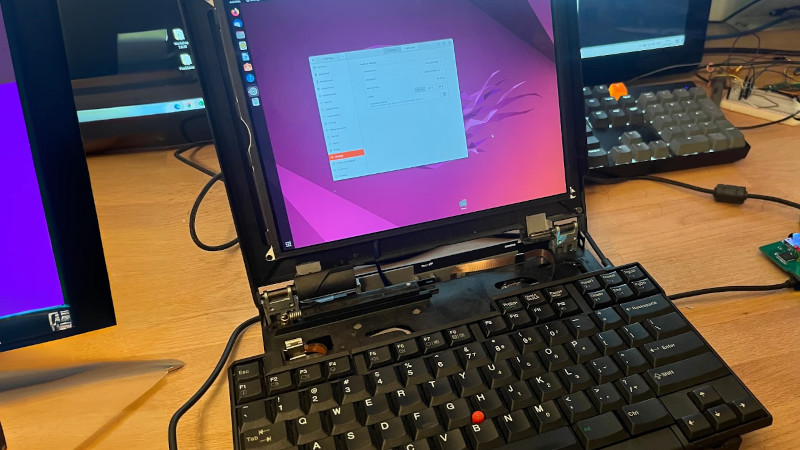
Karl Buchka’s ThinkPad 701C Framework project became popular because it connects two powerful ideas: classic laptop design and modern modular computing. The original 701C gets to keep its soul, while the Framework board supplies the speed and connectivity that a 1990s machine could never dream of.
What Had to Change Inside the ThinkPad 701C?
This was not a simple “drop in a new motherboard and call it Tuesday” job. The ThinkPad 701C was never designed to hold modern components, and the Framework board was never designed specifically for the 701C shell. That means the project required custom engineering, adaptation, and a willingness to stare at small connectors until they reveal their secrets.
A New Lower Case
One of the biggest challenges was fitting the Framework mainboard into the old ThinkPad body. The project involved designing a new lower case that could hold the modern board while preserving the signature 701C form. This matters because the case is not just a container. It determines port placement, cooling, structural support, and how the keyboard mechanism interacts with the rest of the laptop.
A Modern Display
The original ThinkPad display was a product of its era. Functional, yes. Gorgeous by current standards? Let’s be kind and say it had “historical texture.” The modernized build uses a newer panel approach, including an iPad display panel adapted for the Framework board. That gives the revived laptop a much sharper and more usable screen than the original machine could offer.
Keyboard Control With a Teensy
The butterfly keyboard is the star of the show, but making it work with modern hardware is no small task. A microcontroller such as a Teensy can translate the vintage keyboard’s behavior into something the new system understands. This is where the project becomes more than a cosmetic mod. The keyboard is not merely decorative. It remains functional, which is the entire point.
Ports and Connectivity
Modern users expect USB-C, wireless networking, external display support, and convenient expansion. The original 701C belonged to a world of proprietary ports, external floppy drives, and accessories that now feel like archaeological discoveries. The Framework mainboard changes that equation, but port layout is still tricky because the 701C’s case was never shaped around today’s connectors. Custom port routing and external port-replicator ideas help bridge the gap.
Why This Project Feels Bigger Than One Cool Laptop
The ThinkPad 701C Framework build is not just a neat one-off project for collectors. It says something important about laptop design: people still care about personality, repairability, and long-term ownership.
Modern laptops are often technically impressive but emotionally forgettable. They are thin, fast, and efficient, but many look like slightly different slabs of aluminum attending the same corporate meeting. The 701C, by contrast, has a clear identity. It solves a physical design problem with a mechanical flourish. It is weird in the best possible way.
At the same time, the Framework angle shows that upgradeability is not nostalgia. It is practical. When a mainboard can be replaced or reused, the life of a device expands. Instead of discarding an entire laptop because the processor is outdated, users can upgrade the core components or repurpose the old board. That approach reduces waste and gives technically curious users more control over their machines.
The ThinkPad Keyboard Legacy Still Matters
Ask longtime ThinkPad fans why they remain loyal, and the keyboard usually appears before the second cup of coffee. ThinkPad keyboards have a reputation for comfortable travel, sensible layouts, and a typing feel that makes long work sessions less painful. The TrackPoint is another signature feature: a red pointing stick that lets users move the cursor without taking their hands off the home row.
The 701C took that keyboard obsession to its most dramatic conclusion. It did not merely offer a good keyboard. It transformed itself to create one. That is why the butterfly design still captures attention decades later. It represents an era when laptop makers were willing to solve problems with bold mechanical ideas, not just thinner bezels and another marketing word for “AI.”
Ironically, some newer ThinkPad designs have moved away from traditional elements such as physical TrackPoint buttons or even the TrackPoint itself on select models. That makes projects like the modernized 701C feel even more meaningful. They remind us that heritage is not just a logo. It is the experience of using the machine.
Could Lenovo Make a New Butterfly ThinkPad?
Technically, yes. Practically, it would be complicated.
A modern butterfly-style ThinkPad would need to meet today’s expectations for thinness, durability, battery life, repairability, display quality, wireless performance, and manufacturing cost. The original mechanism was clever because laptops were small and keyboards needed more width. Today, screen sizes and chassis proportions usually allow full-width keyboards without mechanical expansion.
Still, a limited-edition modern ThinkPad 701C revival would probably make enthusiasts lose their collective minds in the best way. Imagine a compact chassis, a modern low-power processor, a high-resolution 3:2 display, user-replaceable storage and memory, USB-C charging, Wi-Fi 7, and a real butterfly keyboard with a proper TrackPoint. It would not need to be the thinnest laptop in the world. In fact, it should not be. The whole appeal would be thoughtful engineering, not runway-model dieting.
The challenge is that mainstream laptop buyers often reward safe design. Companies build what sells at scale. A butterfly keyboard revival would appeal strongly to enthusiasts, collectors, writers, developers, and design nerds, but it might be too niche for mass production. That is exactly why DIY projects matter. They prove demand, spark imagination, and keep great ideas from disappearing into old product brochures.
What This Means for Laptop Buyers Today
Most people will never build a Framework-powered ThinkPad 701C. That is okay. The project still offers useful lessons for anyone shopping for a laptop today.
Repairability Should Matter
A laptop is not just a sealed purchase. It is a device you may depend on for years. Machines with replaceable batteries, standard storage, accessible screws, and available parts can last longer and cost less over time. Even if you never open the chassis yourself, repairability gives independent repair shops a better chance of helping you.
Good Input Devices Are Worth Protecting
Performance gets headlines, but keyboards, trackpads, pointing sticks, and screen ergonomics shape daily use. A fast laptop with a bad keyboard is like a sports car with a folding chair for a driver’s seat. You can technically use it, but you will complain creatively.
Design Personality Still Counts
The ThinkPad 701C remains famous because it had an idea. It was not just a spec sheet. Modern laptops could learn from that. A great computer should feel like it was designed by people who thought deeply about how humans actually work.
The Experience: What It Would Feel Like to Use This Dream ThinkPad
Using a modernized ThinkPad 701C would likely feel like stepping into a time machine that has been secretly upgraded by someone with a soldering iron, excellent taste, and questionable sleep habits. The first moment would be pure theater: you lift the lid, the butterfly keyboard spreads into position, and suddenly the laptop has already won the room before the operating system even wakes up.
The typing experience would be the emotional center of the machine. Modern laptops often chase shallow key travel in the name of thinness, but the 701C design reminds you that typing is physical. Keys move. Fingers settle into rhythm. The keyboard is not an afterthought; it is the handshake between user and computer. For writers, programmers, students, and anyone who lives in documents all day, that matters more than another millimeter shaved from the chassis.
Then comes the pleasant contradiction: the machine looks vintage, but it behaves modern. Open a browser, connect to Wi-Fi, plug in USB-C power, run a current Linux desktop, edit documents, manage code, stream video, or connect modern peripherals. The outside says “1995 business traveler.” The inside says “I can handle your tabs, your terminal, and your bad habit of opening six productivity apps at once.”
There would be quirks, of course. A custom retro-mod is not the same as a factory laptop. Cooling, battery packaging, port access, serviceability, and long-term durability would all depend on the quality of the build. You would not toss it casually into a backpack with gym shoes and a loose water bottle unless you enjoy emotional damage. This is a machine you would carry with awareness. Not fear, exactlymore like respect.
The best part would be the conversation it starts. Use a normal laptop in a café and nobody cares. Open a butterfly ThinkPad with a modern brain and people will look. Some will ask if it is new. Some will ask if it is old. The correct answer is “yes.” It is both: old enough to have character, modern enough to be useful.
That blend is rare. Many vintage computers are beautiful but impractical. Many modern computers are practical but forgettable. A Framework-powered ThinkPad 701C sits in the sweet spot between museum piece and daily tool. It is not merely nostalgia. It is proof that old industrial design can still be relevant when paired with thoughtful modern hardware.
For ThinkPad fans, this is the laptop fantasy: the classic black shell, the iconic red pointer, the mechanical butterfly drama, and a processor that does not wheeze when asked to load a modern webpage. It is the ThinkPad you wish Lenovo would build, the Framework project you wish came as a kit, and the kind of computer that reminds everyone why laptops used to be exciting objects rather than anonymous rectangles with webcam notches.
Conclusion
The ThinkPad 701C remains one of the most beloved laptop designs ever made because it solved a real problem with imagination. Its butterfly keyboard was not a gimmick slapped onto a boring machine. It was the machine’s identity. Decades later, the Framework-mainboard transplant gives that identity a second life, pairing classic ThinkPad charm with modern computing power.
Will most people own one? Probably not. But that is not the point. The project matters because it shows what laptops can be when repairability, creativity, and design heritage meet. It reminds us that computers do not have to be disposable slabs. They can be personal, clever, durable, and even a little theatrical.
The ThinkPad you all wish you had is not just an old laptop with new parts. It is a love letter to better keyboards, smarter repair, and machines with actual personality. In a world full of sealed silver rectangles, that feels refreshingly alive.