
Note: This article uses “near-death experience” in the public, non-clinical sense: a life-threatening event that may reshape a person’s public message, priorities, and political identity. It is not a medical diagnosis or a claim about private spiritual experience.
Few moments in modern American politics have been replayed, debated, interpreted, and mythologized as intensely as Donald Trump’s survival of the July 13, 2024, assassination attempt in Butler, Pennsylvania. One instant, he was speaking at an outdoor campaign rally. The next, the event became a defining image of the 2024 election: a former president wounded, Secret Service agents rushing in, supporters stunned, and a country already exhausted by political conflict forced to stare directly at the danger of real-world violence.
For Trump’s supporters, the moment became proof of resilience, providence, and fighting spirit. For critics, it raised complicated questions about political rhetoric, public safety, and whether a near-death event could truly soften one of the most combative figures in American life. For historians, it placed Trump in a grim American tradition alongside leaders and candidates whose lives were threatened in public view. For everyone else, it was another reminder that democracy is not just built in courtrooms, ballot boxes, and televised debates. Sometimes, it is tested in seconds.
The question behind this article is not whether the event changed the news cycle. Obviously, it did. The deeper question is whether Donald Trump’s near-death experience represented a possible turning point: a journey toward transformation, a temporary rhetorical adjustment, or a dramatic chapter that strengthened the same political identity he already had.
The Butler Rally: The Moment That Reframed the Campaign
On July 13, 2024, Trump was speaking at a campaign rally near Butler, Pennsylvania, when a gunman opened fire from outside the immediate rally area. Trump was wounded in the ear, one rally attendee, Corey Comperatore, was killed, and two other attendees were seriously injured. The shooter was killed by law enforcement. Federal authorities investigated the attack as an assassination attempt and as a potential act of domestic terrorism.
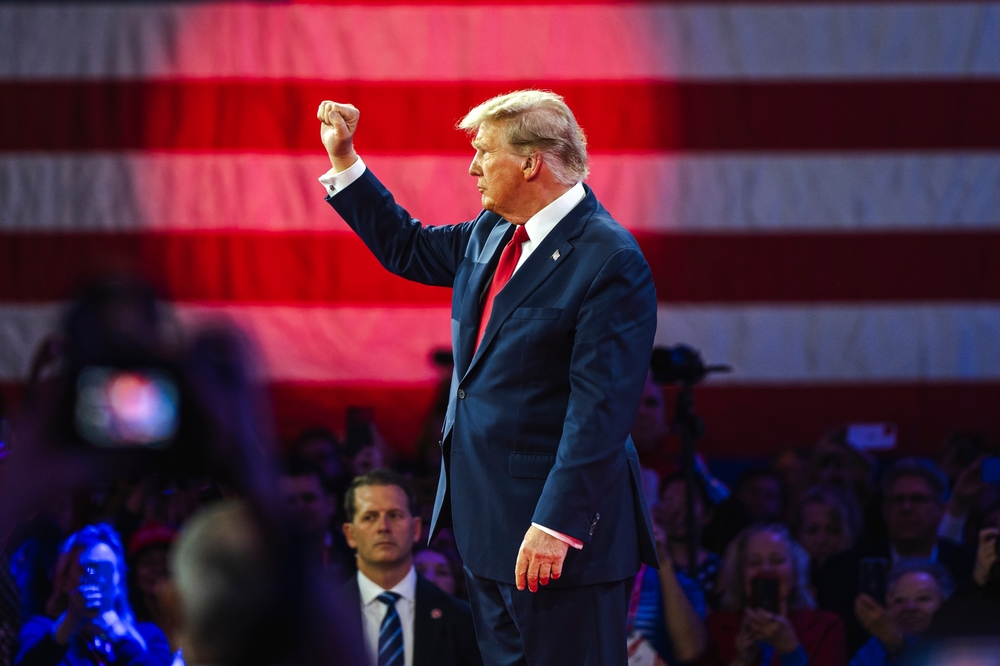
The facts were shocking enough on their own. But politics is not only about facts; it is also about symbols. Within minutes, the event produced an image that traveled around the world: Trump, surrounded by agents, raising his fist as he was escorted away. Whether viewed as courage, instinct, performance, defiance, or all of the above, the image became instantly recognizable. In campaign terms, it was not just a photograph. It was a political emblem.
That is the strange gravity of a near-death political moment. It compresses personality, danger, fear, loyalty, anger, and hope into one scene. A candidate does not get to choose such a moment, but he can shape what it means afterward. Trump, a lifelong master of television timing and branding, understood that the aftermath would matter almost as much as the event itself.
From Survival to Story: How Trump Framed the Experience
In the days after the shooting, Trump repeatedly connected his survival to faith, fate, and national purpose. At the Republican National Convention, he described the attempt on his life and suggested that a higher power had protected him. Later, during the campaign and after his election victory, he returned to the idea that his life had been spared for a reason.
This framing mattered because it did more than express gratitude. It placed the event inside a larger story: Trump as survivor, Trump as chosen, Trump as a man with unfinished work. For many supporters, especially religious conservatives, that message resonated deeply. It transformed a violent attack into a narrative of mission. In politics, a mission is stronger than a message. A message can be revised by consultants. A mission feels personal, emotional, and almost impossible to fact-check at the dinner table without ruining dessert.
Still, the idea of transformation requires more than surviving danger. Many public figures have experienced life-threatening events and later changed tone, priorities, or leadership style. Some become more reflective. Some become more conciliatory. Some grow more determined, not necessarily softer. Trump’s case is complicated because his political brand has always been built around combat: fighting elites, fighting media, fighting prosecutors, fighting political rivals, and fighting what he describes as a broken establishment.
Did the Near-Death Experience Change Trump’s Tone?
Immediately after the Butler attack, there were signs that Trump might lean into a more unifying message. He spoke about national unity and thanked Americans for their support. His Republican National Convention speech began with a solemn tone and a personal account of what happened. For a brief moment, commentators across the political spectrum wondered whether the country was seeing a different Trump: calmer, more reflective, perhaps even more disciplined.
But as the speech continued, familiar Trump themes returned. He criticized opponents, attacked the current administration, and painted America as a nation in urgent decline. That shift did not surprise people who had followed his political career closely. Trump has always mixed personal drama with political aggression. The near-death experience may have added emotional weight to his message, but it did not erase the instincts that made him a dominant force in Republican politics.
So, did Trump transform? The honest answer is: partially, rhetorically, and unevenly. The event appeared to deepen his sense of purpose and gave his campaign a powerful symbol of survival. But it did not turn him into a conventional unity candidate. If anything, it intensified the central Trump narrative: he is under attack, he survives, and he returns stronger.
Why Near-Death Experiences Often Become Political Myths
Near-death moments in politics rarely remain private. They become public property almost immediately. Supporters interpret them as signs of destiny. Opponents examine them for political consequences. Media outlets replay them, analyze them, slow them down, zoom in, and occasionally discuss them with the seriousness of historians and the energy of sports commentators after a controversial referee call.
That is because survival stories have ancient power. They are simple, emotional, and easy to retell. A leader faces danger. A leader survives. A leader returns. It is the structure of a campaign ad, a movie trailer, and half the motivational posters in airport bookstores.
For Trump, the Butler shooting became a new layer in an already dramatic biography. Before politics, he was a real estate celebrity. Then he became a reality television figure. Then a president. Then a defeated incumbent who refused to leave the national stage. Then a criminal defendant and comeback candidate. After Butler, he became something else to many supporters: a survivor of political violence.
The Second Security Shock: Florida and the Feeling of Constant Threat
Two months after Butler, Trump faced another serious security incident at his golf club in West Palm Beach, Florida. Federal authorities charged Ryan Wesley Routh in connection with an alleged attempt to kill Trump. The case further reinforced the sense that the 2024 campaign was taking place under extraordinary danger.
For Trump’s supporters, the Florida case confirmed that threats against him were not abstract. For critics of America’s political climate, it was another alarm bell. Political violence was no longer a distant historical topic or something that happened “elsewhere.” It had become part of the atmosphere surrounding a presidential election.
Security reviews after Butler also found serious failures in planning, communication, and coordination among agencies responsible for protecting Trump and the rally site. Congressional and federal reviews focused on how such a breach could happen and how future failures could be prevented. These investigations mattered because the issue was bigger than Trump alone. In a democracy, candidates must be able to campaign without becoming targets in a national pressure cooker.
A Potential Transformationor a Reinforced Identity?
The phrase “journey of potential transformation” is useful because it leaves room for uncertainty. It does not assume Trump became a different person overnight. It asks whether the event created the possibility of change.
There are several ways to understand what may have changed. First, Trump’s language about destiny grew stronger. He frequently connected his survival to a larger mission for the country. Second, his supporters’ emotional connection to him intensified. Surviving an assassination attempt can create a bond that ordinary campaign speeches cannot. Third, his campaign gained a dramatic image of toughness at a time when questions of strength, age, and leadership dominated the election.
But some things did not change. Trump remained confrontational. He continued to use sharp language against opponents. He continued to frame politics as a battle between patriots and destructive forces. His near-death experience did not produce a long-term retreat from conflict-based messaging. Instead, it gave that messaging a new emotional foundation.
In other words, the event may not have transformed Trump into a new political figure. It may have transformed how his existing figure was understood. The fighter became the survivor. The survivor became the man with a mission. And the mission became central to his return to power.
The Human Side: Fear, Family, and Mortality
Political analysis often turns people into symbols so quickly that the human part gets pushed to the side. But near-death moments are not only campaign events. They are personal shocks. They affect families, staff members, security agents, witnesses, and communities.
Melania Trump’s statement after the Butler attack emphasized the human cost and called for compassion. The family of Corey Comperatore, the rally attendee who was killed, became part of the national story as Americans learned about his life, service, and final moments protecting his loved ones. The two injured attendees also reminded the country that political violence spreads harm far beyond its intended target.
For Trump personally, the experience forced a confrontation with mortality in the most public way imaginable. Most people encounter mortality in hospitals, car accidents, late-night phone calls, or quiet family emergencies. Trump encountered it on a stage, in front of cameras, supporters, agents, reporters, and the entire machinery of American politics. That is not exactly a peaceful setting for reflection. It is more like being handed a life lesson by a thunderstorm while standing on a metal ladder.
What Transformation Could Look Like in Public Leadership
If a near-death experience were to transform a political leader, what would we expect to see? Not perfection. Not instant sainthood. Not a sudden desire to spend afternoons writing bipartisan poetry in a rocking chair. Real transformation is usually more practical.
It might look like more careful language about opponents. It might involve greater attention to national healing. It could show up as a clearer rejection of political violence from all sides, including from supporters who use threatening rhetoric. It might also appear in policy priorities: stronger protection for candidates, better coordination between federal and local law enforcement, and a more serious national conversation about radicalization.
Trump has at times called for unity and condemned violence. Yet the test of transformation is consistency. A single speech can be moving; a pattern of leadership is more convincing. The same standard applies to every public figure. In a polarized age, America does not merely need dramatic moments of unity. It needs habits of restraint, and habits are much less glamorous than convention speeches. Sadly, “consistent civic responsibility” does not fit as neatly on a red hat.
How the Event Changed the 2024 Political Atmosphere
The Butler shooting reshaped the emotional atmosphere of the 2024 campaign. It energized Trump’s base, increased attention on candidate security, and forced President Joe Biden and other political leaders to publicly condemn violence. The attempt also placed the Secret Service under intense scrutiny, eventually leading to leadership changes and new protective measures for outdoor rallies.
For voters, the event became one more lens through which to view the election. Some saw Trump as brave and divinely protected. Others worried that the event would deepen polarization by adding martyr-like symbolism to an already heated campaign. Still others simply felt sadness that American politics had reached a point where a campaign rally could become a crime scene.
The event also revealed the speed at which misinformation spreads. False claims, conspiracy theories, and partisan speculation appeared almost immediately. In moments of national shock, people often rush to explain what they do not yet understand. The internet, being the internet, then adds fireworks, a fog machine, and someone’s cousin’s “inside source.” Responsible public discussion requires patience, verified facts, and the humility to say, “We do not know yet.”
Experience Extension: What a Near-Death Moment Teaches a Nation
Beyond Donald Trump himself, the Butler assassination attempt offers a broader lesson about what near-death experiences can do to individuals, communities, and nations. A brush with death often divides life into “before” and “after.” Even when the person survives physically, the meaning of the event can continue to unfold for years. People may become more grateful, more fearful, more focused, more spiritual, more guarded, or more committed to the mission they already believed they had.
In Trump’s case, the experience seemed to strengthen a preexisting belief that his political life is part of a larger national struggle. That does not mean every American must accept his interpretation. Public meaning is contested. Supporters may see providence. Critics may see political theater layered onto tragedy. Independent voters may see a man who survived danger but still must be judged by actions, policies, temperament, and respect for democratic norms.
The most important experience related to this topic may not belong to Trump alone. It belongs to the people who attended the rally, the families affected, the security professionals who had to live with the consequences of failure, and the citizens watching from home who felt the temperature of the country rise another few degrees. Political violence does not only threaten its target. It threatens the public’s confidence that disagreements can be settled peacefully.
For ordinary readers, the lesson is surprisingly personal. Most people will never stand on a presidential campaign stage, but many will face moments that shake their sense of safety: a medical scare, a family emergency, an accident, a sudden loss, or a crisis that makes everyday complaints look tiny. These moments can either harden people or open them. They can make someone more compassionate, or they can deepen suspicion. The experience itself does not guarantee wisdom. The response does.
That is why the “journey of potential transformation” remains a question, not a conclusion. A near-death experience can be a doorway, but no one is automatically carried through it by dramatic music and a spotlight. Transformation requires reflection, discipline, and repeated choices. For a public leader, it also requires recognizing that words can calm a nation or inflame it. In that sense, Trump’s survival was not only a personal turning point. It was an invitation for the entire political culture to reconsider how close it has drifted toward the edge.
The real transformation America needs may be larger than any one man. It would mean rejecting the fantasy that political opponents are enemies to be destroyed. It would mean treating security failures as urgent civic problems rather than partisan weapons. It would mean remembering the victims and families whose lives were permanently changed. And it would mean understanding that democracy, like a human life, can be more fragile than it looks from a distance.
Conclusion: Survival, Symbolism, and the Unfinished Question
Donald Trump’s near-death experience in Butler became one of the most consequential moments of the 2024 election. It gave his supporters a powerful image of resilience, pushed security failures into the national spotlight, and allowed Trump to frame his survival as part of a larger mission. It also forced Americans to confront the reality of political violence in a deeply divided era.
Was it a journey of transformation? The answer depends on what kind of transformation we mean. Trump’s core political style did not disappear. His combative instincts remained. Yet the event changed the emotional architecture around him. It strengthened the survivor narrative, deepened religious and patriotic symbolism among supporters, and made his campaign feel, to many, like a comeback story touched by fate.
Perhaps the most honest conclusion is this: Trump’s near-death experience did not end the old Trump story. It added a powerful new chapter. Whether that chapter leads to lasting transformationof Trump, his movement, or American politicsremains an open question. And like most open questions in American politics, it will probably be answered loudly, repeatedly, and with at least three people interrupting each other on cable news.