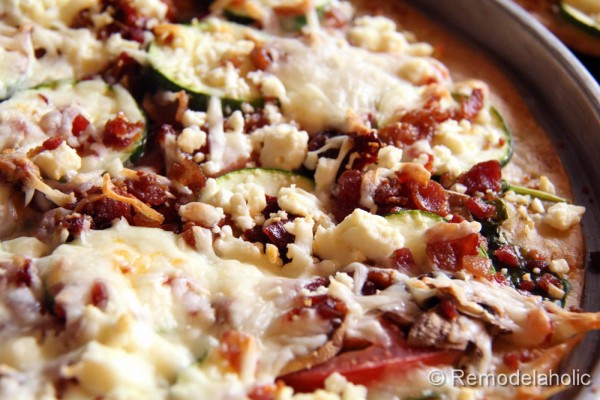

Homemade pizza sounds wonderfully wholesome until you imagine flour floating through the kitchen, dough stuck to the ceiling, and dinner arriving sometime around midnight. Fortunately, this easy bacon and veggie pizza skips the culinary drama. It uses prepared pizza dough, a simple seasoned sauce, crisp bacon, colorful vegetables, and plenty of bubbling cheese to create a satisfying meal without requiring professional pizza-tossing credentials.
The combination works because every ingredient has a job. Bacon brings smoky, salty richness. Bell peppers and red onion add sweetness and crunch. Mushrooms contribute savory depth, while mozzarella melts everything into one glorious, sliceable package. The result feels indulgent but still contains enough vegetables to let you announce, with a reasonably straight face, that you made a balanced dinner.
Even better, this bacon vegetable pizza is endlessly flexible. Use the vegetables already waiting in your refrigerator, swap cheeses, add heat, or turn the recipe into smaller personal pizzas. It is an easy weeknight dinner, a crowd-friendly game-day option, and an excellent answer to the timeless question, “What can I make before everyone starts eating cereal?”
Why This Easy Bacon and Veggie Pizza Works
A dependable homemade pizza is less about fancy ingredients and more about managing heat, moisture, and topping quantity. Bringing prepared dough closer to room temperature makes it easier to stretch, while thoroughly preheating the oven helps the crust cook quickly and develop better color. Using a hot baking surface, such as a preheated sheet pan, pizza stone, or steel, can improve browning even further.
This recipe also keeps the topping list focused. It may be tempting to unload the entire produce drawer onto one crust, but an overloaded pizza often becomes soft in the middle. A modest layer of sauce, evenly scattered vegetables, and a sensible amount of cheese give heat and steam somewhere to go.
Smoky Bacon Balances the Vegetables
Bacon is powerful enough to season the entire pizza, so six slices are usually plenty for a standard 12-inch pie. Cooking it before adding it to the dough ensures that the pieces become crisp and prevents raw bacon fat from flooding the crust. Food-safety and professional pizza guidance consistently recommend cooking or rendering raw bacon before it is used as a quick-baking pizza topping.
Colorful Vegetables Add Flavor and Texture
Bell pepper, onion, and mushrooms are used here because they cook quickly and complement bacon without overwhelming it. Thin slicing is important. Thick vegetables may remain nearly raw while the cheese and crust race toward completion.
Mushrooms and other high-moisture vegetables should be lightly sautéed before topping the pizza. This step concentrates their flavor and reduces the water they release in the oven. Similar moisture-control techniques are especially helpful with zucchini, spinach, tomatoes, and other watery produce.
Low-Moisture Mozzarella Keeps Things Melty, Not Soupy
Pre-shredded or block-style low-moisture mozzarella is a practical choice for an easy pizza recipe. It melts evenly, develops attractive golden spots, and releases less water than very fresh mozzarella. A little Parmesan adds sharper, nuttier flavor without requiring a mountain of cheese. Many homemade pizza methods combine a mild melting cheese with a smaller amount of aged cheese for better flavor and texture.
Ingredients for Easy Bacon and Veggie Pizza
This recipe makes one 12-inch pizza, which generally provides four generous servings or six lighter slices. Hungry teenagers may interpret those numbers as creative fiction.
For the Pizza
- 1 pound prepared pizza dough, preferably at room temperature
- 6 slices bacon
- 1 teaspoon olive oil, plus more for the crust
- 4 ounces cremini or white mushrooms, thinly sliced
- 1/2 medium red bell pepper, thinly sliced
- 1/3 small red onion, thinly sliced
- 3/4 cup pizza sauce or thick marinara sauce
- 1 1/2 cups shredded low-moisture mozzarella cheese
- 1/4 cup finely grated Parmesan cheese
- 1/2 teaspoon dried Italian seasoning
- 1/4 teaspoon garlic powder
- Freshly ground black pepper, to taste
- Crushed red pepper flakes, optional
- Fresh basil or chopped parsley, optional
Useful Equipment
- Large skillet
- Rimmed baking sheet, pizza pan, pizza stone, or baking steel
- Parchment paper, if desired
- Rolling pin or clean hands for shaping the dough
- Pizza cutter or large chef’s knife
How to Make Bacon and Veggie Pizza
Step 1: Warm the Dough and Preheat the Oven
Remove the pizza dough from the refrigerator 30 to 60 minutes before shaping it. Keep it covered so the surface does not dry out.
Place an oven rack in the lower third of the oven and preheat to 475°F. When using a pizza stone or steel, place it in the oven before preheating. Give the oven at least 30 minutes to become thoroughly hot. A fully heated oven produces a better crust than an oven that has merely beeped and declared itself emotionally ready.
Step 2: Cook the Bacon
Place the bacon in a large skillet over medium heat. Cook until the fat has rendered and the bacon is crisp but not burned, about 7 to 10 minutes, depending on thickness.
Transfer the bacon to a paper towel-lined plate. Once it is cool enough to handle, chop or crumble it into bite-size pieces. Carefully pour the excess bacon fat into a heat-safe container rather than sending it down the drain.
Step 3: Sauté the Mushrooms
Wipe out most of the remaining grease from the skillet. Add 1 teaspoon of olive oil and heat the pan over medium-high heat. Add the sliced mushrooms and cook for 3 to 5 minutes, stirring occasionally, until they have released their moisture and begun to brown.
Season the mushrooms with a small pinch of black pepper. Additional salt is usually unnecessary because the bacon, sauce, and cheeses already provide plenty.
Step 4: Shape the Pizza Crust
Lightly flour the work surface and your hands. Press the dough into a flat disk, then gently stretch it outward from the center. Rotate the dough as you work until it forms a roughly 12-inch circle.
Do not panic if the circle looks slightly rustic. Pizza does not need to resemble a geometry textbook to taste excellent. When the dough repeatedly shrinks back, cover it and let it rest for 10 minutes before continuing. Resting allows the gluten to relax, making the crust easier to shape.
Transfer the dough to parchment paper, a lightly oiled pizza pan, or a flour-dusted pizza peel. Brush the outer edge with a thin layer of olive oil.
Step 5: Add the Sauce, Cheese, Bacon, and Vegetables
Spread the pizza sauce over the dough, leaving a 1/2-inch border around the edge. Sprinkle the sauce with garlic powder and Italian seasoning.
Add about two-thirds of the mozzarella. Distribute the sautéed mushrooms, bell pepper, red onion, and bacon evenly across the pizza. Finish with the remaining mozzarella and all the Parmesan.
Avoid creating dense piles of toppings. Every slice should contain a little of everything, but the crust should still be visible in a few places. Restraint is the difference between a crisp pizza and a vegetable casserole wearing a dough hat.
Step 6: Bake Until Crisp and Bubbling
Bake for 11 to 15 minutes, rotating the pizza once if your oven browns unevenly. The pizza is ready when the crust is golden, the cheese is bubbling, and the vegetables have softened around the edges.
Exact baking time depends on the thickness of the dough, the amount of toppings, and the baking surface. A pizza baked on a preheated stone or steel may cook more quickly than one baked on a room-temperature sheet pan.
Step 7: Rest, Finish, and Slice
Let the pizza rest for 3 to 5 minutes before slicing. This brief pause allows the cheese to settle so it stays on the pizza instead of following the cutter across the kitchen.
Finish with fresh basil, parsley, black pepper, or crushed red pepper flakes. For extra brightness, add a very light drizzle of olive oil or a few drops of balsamic glaze.
Tips for the Best Homemade Bacon Pizza
Use a Thick Pizza Sauce
A watery pasta sauce can soften the crust. Choose a thick pizza sauce or simmer thin marinara for several minutes before using it. About 3/4 cup is enough for a 12-inch pizza. More sauce does not automatically mean more flavor; sometimes it simply means your slice needs a life jacket.
Cut Every Topping into Small Pieces
Small bacon pieces distribute smoky flavor more evenly. Thin pepper and onion slices soften during the short baking time, while sliced mushrooms brown more effectively than large chunks.
Do Not Use Raw Bacon
Pizza spends a relatively short time in the oven. Even when raw bacon eventually cooks through, it may remain chewy and release too much grease. Crisping it first creates better flavor, texture, and control.
Keep Wet Ingredients Under Control
Pat washed vegetables dry before slicing. Sauté mushrooms, drain thawed spinach, and remove excess liquid from canned vegetables. When using fresh tomato, scoop out some seeds and watery pulp or add the tomato after baking.
Let the Finished Pizza Rest
Cutting immediately can pull the cheese and toppings off the crust. A few minutes of rest improves slice structure without allowing the pizza to become cold.
Easy Variations
Spicy Bacon and Veggie Pizza
Add sliced jalapeño, crushed red pepper, or a drizzle of hot honey. Pickled jalapeños are especially useful because their acidity cuts through the richness of the bacon and cheese.
White Bacon Vegetable Pizza
Replace the tomato sauce with a thin layer of garlic-infused olive oil or seasoned ricotta. Use spinach, mushrooms, bacon, mozzarella, and Parmesan for a creamy white pizza.
Garden Vegetable Pizza
Add zucchini, spinach, broccoli, corn, or cherry tomatoes. Precook or drain watery vegetables before using them. Hearty vegetables such as broccoli should be briefly blanched or roasted so they become tender during the final bake.
Breakfast-Inspired Pizza
Use bacon, onion, bell pepper, mozzarella, and cheddar. Crack one or two eggs over the toppings during the final several minutes of baking, cooking until the whites are set.
BBQ Bacon Pizza
Replace the tomato sauce with barbecue sauce and use red onion, bell pepper, bacon, mozzarella, and smoked cheddar. Finish with sliced scallions after baking.
What to Serve with Bacon and Veggie Pizza
This pizza is filling enough to stand alone, but a fresh side dish creates a more complete meal. A simple green salad with vinaigrette provides acidity and crunch. Roasted broccoli, tomato-cucumber salad, coleslaw, or fresh fruit also work well.
For casual gatherings, serve the pizza with garlic knots, vegetable sticks, marinara dipping sauce, or oven-roasted wings. Cut the pizza into smaller squares for parties so guests can sample it without committing to a full slice before discovering the dessert table.
Storage and Reheating
Cool leftover pizza briefly, then refrigerate it in an airtight container or wrap individual slices. USDA food-safety guidance recommends using most cooked leftovers within three to four days. Pizza should not remain at room temperature for extended periods simply because someone plans to “circle back” for another slice later.
For the best reheated texture, place slices in a covered skillet over medium-low heat. Heat for 3 to 5 minutes, then add a few drops of water to the empty side of the pan and cover for another minute. The steam remelts the cheese while the skillet crisps the bottom.
An air fryer also works well at 350°F for approximately 3 to 5 minutes. In a conventional oven, place slices on a baking sheet and heat at 375°F for 7 to 10 minutes. The microwave is fastest, although the crust will be softer. It is still pizza, so nobody needs to file a formal complaint.
Common Questions About Bacon and Veggie Pizza
Can I Use a Premade Pizza Crust?
Yes. A refrigerated crust, frozen crust, flatbread, naan, or prebaked pizza shell can make the recipe even faster. Follow the package instructions and reduce the baking time when the crust is already cooked.
Can I Prepare the Toppings in Advance?
Yes. Cook and crumble the bacon, sauté the mushrooms, and slice the vegetables up to two days ahead. Refrigerate each component in a separate airtight container. Assemble the pizza shortly before baking so the dough does not become damp.
Which Vegetables Taste Best with Bacon?
Mushrooms, bell peppers, onions, spinach, broccoli, corn, asparagus, and jalapeños all pair well with bacon. Choose two or three rather than using every option at once.
Can I Freeze the Pizza?
Baked slices can be frozen for approximately one to two months for the best texture. Wrap each cooled slice tightly and place it in a freezer-safe container. Reheat from frozen in a 375°F oven until hot and crisp.
How Do I Prevent a Soggy Center?
Use less sauce, drain or precook wet vegetables, avoid excessive cheese, thoroughly preheat the oven, and spread toppings evenly. A preheated baking stone, steel, or inverted sheet pan can also help the bottom crust set quickly.
A Realistic Weeknight Experience with Easy Bacon and Veggie Pizza
The most useful lesson from making bacon and veggie pizza at home is that preparation matters more than perfection. The evening usually begins with excellent intentions: cook a wholesome dinner, use the vegetables before they become a science project, and avoid ordering delivery again. Then someone gets hungry early, the dough is still cold, and the mushrooms appear to have multiplied since the refrigerator door was last opened.
Cold dough is often the first challenge. It feels tight, snaps back after every stretch, and behaves as though it has signed a contract never to become circular. Letting it sit at room temperature changes the entire experience. After 30 to 60 minutes, it becomes softer and more cooperative. It may still produce an oval, a rectangle, or a shape resembling a slightly damaged continent, but it stretches without a wrestling match.
The second lesson arrives when cooking the bacon. It is tempting to leave the pieces slightly soft because they will bake again on the pizza. That is reasonable, but the bacon should still render most of its fat in the skillet. When undercooked bacon goes onto the dough, the finished pizza can develop greasy puddles. Crisp bacon stays distinct, spreads flavor evenly, and gives each bite a satisfying contrast to the softer vegetables and cheese.
Mushrooms create another memorable moment. Raw slices may look harmless, but they release surprising amounts of water as they cook. A pizza topped with too many raw mushrooms can emerge with a pale, damp center. Sautéing them first takes only a few minutes and dramatically improves the result. The mushrooms shrink, brown, and develop deeper flavor before they ever meet the crust.
Assembly is where enthusiasm must be supervised. Once the sauce goes down, there is a powerful urge to add more of everything. More cheese seems festive. More bacon seems logical. More vegetables seem responsible. Unfortunately, adding all three at once produces a heavy pizza that bakes unevenly. The better experience comes from scattering toppings in a thin, deliberate layer. Every bite still gets plenty of flavor, and the crust remains capable of supporting its responsibilities.
The first peek through the oven door is usually encouraging. The crust begins to rise, the cheese melts around the bacon, and the peppers brighten. The kitchen smells smoky, garlicky, and far more impressive than the amount of work involved. During the final minutes, the cheese develops golden patches and the onions curl at the edges. That is generally a better signal than relying only on a timer.
Waiting before slicing may be the hardest step. Fresh pizza looks ready for immediate action, but cutting it too soon sends molten cheese sliding toward the edge. A three-minute rest makes cleaner slices and prevents the first bite from removing several layers of skin from the roof of the mouth.
The finished pizza feels both familiar and homemade. The bacon provides enough richness that nobody complains about the vegetables, while the peppers, onions, and mushrooms keep the pizza from tasting excessively heavy. Leftovers reheat well, although a household with more than two hungry people may never obtain scientific evidence of that claim.
Perhaps the best part of the experience is discovering how forgiving the recipe can be. An imperfect crust still tastes good. Slightly uneven toppings become “rustic.” A darker edge is “artisan.” Once the basic principles are understoodwarm dough, controlled moisture, precooked bacon, moderate toppings, and high heatthe recipe becomes a dependable framework rather than a rigid set of rules. That flexibility is what turns easy bacon and veggie pizza from a one-time dinner into a regular weeknight favorite.
Conclusion
Easy bacon and veggie pizza delivers the comfort of a cheesy homemade pie without turning dinner into an all-evening construction project. Prepared dough saves time, crisp bacon supplies smoky flavor, and colorful vegetables make every slice more interesting. By precooking moist toppings, using a restrained amount of sauce, and baking in a thoroughly heated oven, you can achieve a crisp crust and evenly melted cheese with ordinary kitchen equipment.
Follow the recipe once, then make it your own. Change the vegetables with the seasons, experiment with different cheeses, or add a spicy finishing drizzle. Homemade pizza is at its best when it feels relaxed, customizable, and just impressive enough to make everyone believe you had a master plan.
Note: Oven temperatures, crust thicknesses, and prepared dough brands vary. Begin checking the pizza a few minutes before the suggested baking time, and always cook raw bacon fully before storing or serving it.