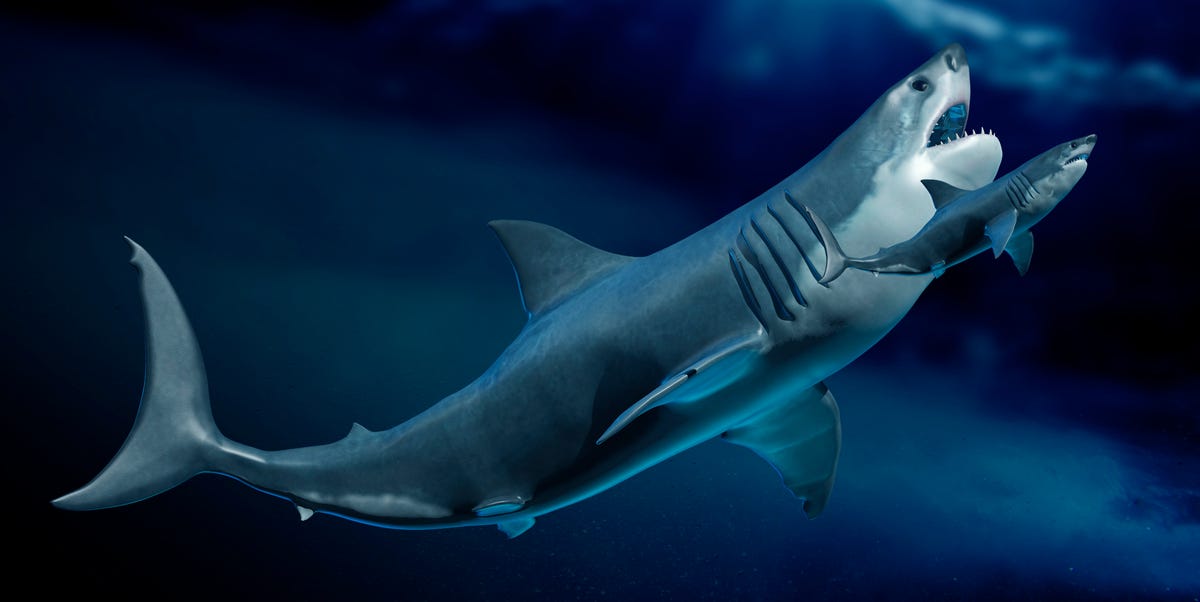

Few prehistoric animals have a public-relations department as loud as the megalodon. Dinosaurs get museum halls, mammoths get ice-age documentaries, and megalodon gets something even more powerful: the internet asking, “But what if it’s still out there?” Spoiler alert: scientists are very confident it is not still out there. Your beach vacation is safe. Mostly.
The megalodon was a gigantic extinct shark that ruled ancient oceans for millions of years. Known scientifically today by many researchers as Otodus megalodon, this marine predator is famous for three things: its enormous size, its palm-sized serrated teeth, and a name that literally means “big tooth.” Subtle? Not exactly. Accurate? Absolutely.
This guide breaks down everything you need to know about the megalodon: how big it was, what its teeth reveal, why its scientific name has changed over time, what it ate, where it lived, why it disappeared, and why it still grabs our imagination like a fossilized jump scare.
What Was the Megalodon?
Megalodon was one of the largest sharks and most powerful marine predators ever known. It lived during the Neogene Period, roughly from the early Miocene to the Pliocene, meaning it swam Earth’s oceans millions of years before modern humans were around to make dramatic movie trailers about it.
Unlike dinosaurs, megalodon was not a reptile. It was a shark, part of the group of cartilaginous fishes that includes modern sharks, rays, and skates. Sharks do not have heavy bony skeletons like mammals or dinosaurs. Their skeletons are made mostly of cartilage, the same flexible material in your nose and ears. That is great for swimming. It is terrible for fossil preservation.
Because cartilage breaks down more easily than bone, scientists rarely find complete fossil shark skeletons. For megalodon, the fossil record is dominated by teeth and, more rarely, vertebrae. Fortunately, shark teeth are fossil-preservation champions. Megalodon shed teeth throughout its life, leaving behind a global trail of triangular clues.
What Does the Name “Megalodon” Mean?
The name “megalodon” comes from Greek roots meaning “big tooth.” It is a refreshingly honest name. Nobody looked at this animal and said, “Let’s call it Ocean Steve.” Its teeth were the headline, the evidence, and the reason the name stuck.
The full scientific name has been debated. Older sources often refer to the animal as Carcharodon megalodon or Carcharocles megalodon. Those names reflect past ideas about its relationship to the modern great white shark. Many modern researchers now place it in the genus Otodus, making the name Otodus megalodon.
Why the change? Science updates itself. Early researchers often grouped megalodon close to the great white because both had large, serrated, triangular teeth. Later studies suggested megalodon belonged to a separate extinct lineage of megatooth sharks, not as a direct ancestor of the great white. In simple terms: megalodon and great white sharks may look like dramatic cousins in pop culture, but their family tree is more complicated than a Thanksgiving seating chart.
How Big Was the Megalodon?
Megalodon size is one of the most fascinating and debated topics in paleontology. Since scientists do not have a complete skeleton, they estimate body length using fossil teeth, vertebrae, comparisons with living sharks, and mathematical models.
Traditional estimates often placed large megalodons around 50 to 60 feet long. Some updated studies suggest the biggest individuals may have reached about 65 feet, while newer research exploring body shape and vertebral evidence has raised the possibility that very large individuals could have approached roughly 80 feet. That does not mean every megalodon was an 80-foot sea monster. It means the upper range remains an active scientific discussion.
To picture even a 50-foot megalodon, imagine a shark longer than a city bus. A 60-foot animal would be about the length of two school buses parked nose to tail. An 80-foot upper estimate would be less “big fish” and more “floating nightmare with dental records.”
Was Megalodon Bigger Than a Great White Shark?
Yes. Much bigger. A large modern great white shark may reach around 20 feet, though most are smaller. Megalodon could have been two to three times longer than a large great white and vastly heavier. This is not a small difference. It is the difference between a pickup truck and a moving van with teeth.
However, scientists no longer assume megalodon was simply a giant great white. Recent research suggests it may have had a longer, more slender body than earlier reconstructions showed. That matters because body shape affects swimming style, energy use, prey pursuit, and how the animal fit into ancient ocean ecosystems.
Megalodon Teeth: The Fossils That Tell the Story
Megalodon teeth are the superstar fossils of this animal. They can be more than seven inches long measured diagonally, with broad triangular crowns, thick roots, and serrated cutting edges. A large megalodon tooth can cover much of an adult human hand. It looks less like a tooth and more like a stone steak knife designed by a villain.
These teeth were built for slicing through large prey. The serrations helped cut flesh, while the broad shape could withstand powerful bites. Megalodon teeth are often compared to those of great white sharks, but they are larger, thicker, and generally more robust.
Why Are Megalodon Teeth So Common?
Sharks constantly replace their teeth. A single shark can lose and regrow thousands of teeth over its lifetime. Megalodon was no exception. As these sharks hunted, fed, and aged, teeth fell out and sank to the seafloor. Over millions of years, many became fossilized.
That is why megalodon teeth are found in many parts of the world, including coastal regions of the United States such as Florida, the Carolinas, Georgia, Maryland, and Virginia. Fossil hunters often search riverbeds, beaches, phosphate mines, and offshore deposits for them. A clean, large, well-preserved tooth can be highly prized by collectors.
How Many Teeth Did Megalodon Have?
Like modern sharks, megalodon had multiple rows of teeth. Estimates often describe its mouth as holding more than 250 teeth at a time. The front teeth did the dramatic work, while replacement teeth waited behind them like understudies in the world’s scariest Broadway show.
Because no complete megalodon jaw has been found, museum jaw reconstructions are based on tooth size, tooth position, and comparisons with living sharks. Those famous open-jaw displays are scientific models, not actual fossil jaws. They are impressive, but they are reconstructions.
What Did Megalodon Eat?
Megalodon was an apex predator, meaning it sat near the top of the ancient marine food chain. Its likely prey included whales, dolphins, seals, sea turtles, large fish, and possibly other sharks. Fossil whale bones with bite marks matching large serrated teeth provide strong evidence that megalodon attacked marine mammals.
Its hunting strategy likely changed with age. Young megalodons may have targeted smaller prey in shallower nursery-like habitats, while adults could tackle larger marine mammals in open waters. A full-grown megalodon did not need to nibble politely. It had the size and bite power to remove large chunks of flesh from prey.
That said, megalodon was not a movie monster hunting for chaos. Like all predators, it needed energy. Hunting large prey made biological sense because a massive animal requires a massive food supply. You do not power a 50-foot shark on tiny snacks unless you have all day and no self-respect.
Where Did Megalodon Live?
Megalodon had a wide global distribution. Fossil teeth have been discovered on multiple continents, suggesting it lived in warm and temperate seas around the world. It likely preferred productive coastal waters where marine mammals and other prey were abundant.
In the United States, megalodon fossils are especially associated with the southeastern Atlantic coast, Florida, and the Chesapeake Bay region. These areas preserve marine sediments from periods when sea levels, coastlines, and ocean temperatures were very different from today.
Finding a tooth on land does not mean a megalodon once flopped across a parking lot. It usually means that location was underwater millions of years ago or that marine sediments were exposed by erosion, mining, storms, rivers, or construction.
Was Megalodon Warm-Blooded?
Modern research suggests megalodon may have had regional endothermy, meaning it could maintain parts of its body warmer than the surrounding water. Some living sharks, including great whites and makos, have similar adaptations. This can help predators swim efficiently, hunt in cooler waters, and sustain higher activity levels.
But there is a catch. Warm-blooded advantages come with energy costs. If megalodon needed to maintain an elevated body temperature, it also needed plenty of food. During times of environmental change, cooling oceans, shifting prey populations, and competition from other predators may have made that lifestyle harder to sustain.
Why Did Megalodon Go Extinct?
Megalodon went extinct millions of years ago, likely around the late Pliocene. Scientists continue to study the exact timing and causes, but several factors probably worked together.
Climate Change and Cooling Oceans
As global climates changed, ocean temperatures cooled and sea levels shifted. Productive shallow marine habitats may have changed or disappeared in some regions. For a giant shark dependent on large prey and favorable conditions, that would have been a serious problem.
Changes in Whale Populations
Megalodon lived during a time when whales and other marine mammals were diversifying. Later environmental changes may have altered where whales lived, how they migrated, and how available they were as prey. If the buffet moves, the giant shark has to move too.
Competition With Other Predators
Great white sharks and other marine predators expanded during the time megalodon declined. Smaller, faster, more energy-efficient predators may have competed for some of the same prey. For young megalodons, competition from adult great whites could have been especially dangerous.
Extinction rarely has one neat cause. It is usually more like a bad group project: climate, food supply, competition, reproduction, and habitat all contribute, and nobody gets extra credit.
Is Megalodon Still Alive?
No. Megalodon is extinct. There is no credible scientific evidence that living megalodons still swim in the deep ocean. No fresh teeth, no carcasses, no verified sightings, no environmental DNA, no reliable sonar records, and no bite marks from an 18-wheeler-sized shark have appeared.
The deep sea is mysterious, but megalodon was not a tiny hidden worm living beside a hydrothermal vent. It was a huge predator that would need a large breeding population and a massive food supply. Such animals leave evidence. Modern whales leave bones, scars, waste, songs, migration patterns, and strandings. A living megalodon population would not be able to ghost the entire scientific community forever.
Why Megalodon Still Fascinates Us
Megalodon sits at the perfect intersection of science and imagination. It was real, enormous, mysterious, and mostly known from teeth. That leaves enough hard evidence for serious research and enough missing pieces for people to wonder. The result is a prehistoric celebrity with better branding than most modern influencers.
Its fossils also help scientists understand ancient oceans. Megalodon teeth can reveal information about diet, body size, distribution, temperature, evolution, and extinction. Every tooth is a small stone document from a lost marine world.
Common Myths About Megalodon
Myth 1: Megalodon Was Just a Giant Great White
Not exactly. Megalodon may have shared some features with great whites, such as serrated teeth and a predatory lifestyle, but current research suggests it belonged to a different extinct lineage and may have had a more elongated body shape.
Myth 2: Scientists Have Found Complete Megalodon Skeletons
No complete skeleton has been found. Most evidence comes from teeth, with some vertebrae and bite-marked bones. This is why size and shape estimates continue to change as new methods and fossils are studied.
Myth 3: Megalodon Could Still Be Hiding in the Mariana Trench
Very unlikely. Megalodon was adapted to productive marine environments with abundant large prey, not a secret retirement condo in the deepest trenches. A surviving population would need food, mates, and space, and it would leave evidence.
Experiences Related to Megalodon: Fossil Hunting, Museums, and the “Big Tooth” Moment
For many people, the first real experience with megalodon is not a textbook. It is a tooth. Maybe it is behind glass at a natural history museum. Maybe it is in the hand of a fossil guide on a Florida beach. Maybe it appears in a gift shop case with a price tag that makes you whisper, “For a tooth?” But once you see one up close, the fascination makes sense.
A large megalodon tooth has presence. It is heavy, triangular, and often dark from minerals absorbed during fossilization. The serrated edges may still be visible after millions of years. Holding one can feel strangely personal, as if you are shaking hands with a vanished ocean. Except the hand is a blade-shaped tooth, and the ocean had no interest in your comfort.
Families who go fossil hunting along the southeastern United States often describe the search as part science, part treasure hunt, and part patience test. You may spend hours sifting through sand, shell fragments, gravel, and muddy sediment. Most finds are small shark teeth, ray plates, bone fragments, or shells. Then, occasionally, someone spots that unmistakable broad triangle. Suddenly everyone becomes an amateur paleontologist with beach hair.
Museums offer a different kind of experience. A reconstructed megalodon jaw can stop visitors in their tracks because it changes scale from abstract to physical. Reading “60 feet long” is one thing. Standing in front of a jaw wide enough to frame several people is another. Children usually react first with awe, then questions, then the very practical concern: “Could it eat a car?” Adults pretend not to wonder the same thing.
The best megalodon exhibits also teach scientific humility. They show that paleontology is not simply about finding a fossil and declaring the case closed. Researchers compare teeth, study growth bands in vertebrae, analyze chemical clues in enamel, model body proportions, and revise old ideas when new evidence appears. Megalodon is exciting not only because it was huge, but because scientists are still learning how huge, how fast, how warm-bodied, and how differently shaped it may have been.
There is also a useful lesson in the megalodon story for modern ocean conservation. The biggest predator in the sea disappeared. Size did not make it invincible. Power did not protect it from environmental change, shifting ecosystems, and competition. Today’s sharks face very different pressures, especially from overfishing, habitat loss, and human fear. Learning about megalodon can make modern sharks seem less like villains and more like survivors in a long, fragile ocean story.
So the next time you see a megalodon tooth, do not think of it only as a monster souvenir. Think of it as evidence: of warm ancient seas, giant whales, shifting climates, evolutionary experiments, and a predator so successful that its teeth still wash into human hands millions of years later. That is a pretty impressive legacy for an animal with no bones, no roar, and absolutely no need for a movie agent.
Conclusion
Megalodon was not just a bigger shark. It was a dominant marine predator that shaped ancient ocean ecosystems and still shapes our imagination today. Its size may have reached bus-length proportions, its teeth were among the most iconic fossils on Earth, and its name tells the truth in two simple words: big tooth.
Although science continues to refine details about its body shape, maximum size, and extinction, the big picture is clear. Megalodon was real, massive, globally distributed, and long gone. It left behind no living descendants hiding in the deep, but it did leave millions of fossil teeth and one enormous reminder: even the ocean’s greatest predators are part of a changing planet.