
Note: This article is written for entertainment and general education. Getting half of a nostalgia quiz correct does not actually prove your age, your memory strength, or your ability to operate a smart TV remote without accidentally opening three streaming apps.
Introduction: Welcome to the Nostalgia Trap
If you get 50% right, you might be oldor you might simply have excellent taste in snacks, music, and outdated technology. The phrase sounds like the setup for a viral quiz, and honestly, that is part of the fun. Maybe you remember rewinding VHS tapes before returning them. Maybe you know the sound of dial-up internet so well that your brain can still perform it on command. Maybe you once used a paper map, a rotary phone, or a pencil to fix a cassette tape. Congratulations: your memory has a museum wing.
But beneath the jokes, “old people trivia” and nostalgia quizzes reveal something interesting about how memory, culture, technology, and identity work. People remember objects, songs, phrases, commercials, toys, and daily routines from their younger years because those experiences were emotionally meaningful. A question about Saturday morning cartoons is not just asking whether you watched a show. It may be tapping into breakfast cereal, pajamas, siblings fighting over the remote, and the tragic moment when your favorite cartoon was replaced by golf.
This article explores why nostalgic trivia feels so powerful, what it says about aging and memory, and why getting 50% right should not make you panic. It may simply mean you have lived through enough eras to know that “saving a document” used to involve a floppy disk icon that younger people now recognize only as a mysterious square.
What Does “If You Get 50% Right, You Might Be Old” Really Mean?
The phrase is usually used for playful quizzes built around generational memory. These quizzes might ask whether you recognize a Walkman, know what “be kind, rewind” means, remember when phones had cords, or understand why families once owned huge cabinets full of encyclopedias. The point is not to diagnose age. It is to measure cultural familiarity.
In other words, the quiz is less about your birth certificate and more about your “I was there” energy. Someone who grew up with vinyl records, pay phones, typewriters, or early video game consoles may score higher than someone who grew up with smartphones, streaming, and cloud storage. The results can feel hilarious because everyday objects become time capsules. One generation sees a cassette tape and thinks, “music.” Another sees it and thinks, “ancient plastic sandwich.”
Why 50% Feels Like a Funny Benchmark
Fifty percent is the perfect internet number because it sounds official while being completely unserious. It creates suspense without requiring a lab coat. If you get every question right, the quiz jokes that you are “officially vintage.” If you miss most of them, you are either young, lucky, or unfamiliar with the glory days of dangerously hot metal playground slides.
The humor works because aging is universal. Everyone becomes older, and everyone eventually watches younger people stare in confusion at something that once felt normal. That moment can be humbling. It can also be funny. The first time someone asks why a phone icon looks like a tiny banana, you realize history has personally attacked you.
Why Nostalgic Trivia Sticks in the Brain
Memory is not a filing cabinet where every fact sits politely in alphabetical order. It is more like a messy attic: some boxes are labeled, some are full of holiday decorations, and one contains a random commercial jingle from 1994 that refuses to leave. Nostalgic trivia often sticks because it connects facts to emotion, repetition, identity, and routine.
Think about music. Many people can forget why they walked into a room but still remember lyrics from a song they heard in middle school. That is not magic. Music, emotion, and memory are deeply connected. Songs from youth often become tied to first friendships, school dances, long car rides, heartbreaks, summer jobs, and the general drama of being young enough to think bangs were a personality.
The Reminiscence Bump
Researchers often talk about the “reminiscence bump,” a pattern in which people tend to recall more autobiographical memories from adolescence and early adulthood than from many other life periods. This helps explain why old commercials, teen anthems, early video games, and school supplies can feel unusually vivid. These were not just objects. They appeared during identity-forming years.
That is why a quiz question about a pager can spark more than a simple answer. It may bring back memories of school hallways, parents saying “call me when you get there,” or the thrill of receiving a message that was basically a secret code made of numbers. Nostalgia often travels with context.
Signs a Quiz Was Designed to Make You Feel Ancient
Some quizzes are practically built to poke your inner elder with a foam finger. They do not ask, “Do you know history?” They ask, “Do you remember when this was normal?” Here are common categories that show up in “you might be old” quizzes.
1. Technology That Younger People Call “Retro”
If you know how to use a rotary phone, load film into a camera, clean a computer mouse ball, or blow dust out of a game cartridge, you are carrying rare technical knowledge. Is it useful today? Mostly no. Is it impressive at parties? Also mostly no. But it proves you survived a time when devices demanded patience, batteries, cables, and occasionally prayer.
Older technology required more physical interaction. You turned knobs, inserted tapes, adjusted antennas, flipped switches, and waited. Today, many tasks happen instantly through touchscreens and apps. That difference creates a major generational divide. It also explains why some people still feel proud when they can fix a frozen device by “turning it off and on again,” the ancient spell of modern civilization.
2. Entertainment Before Everything Was On Demand
Streaming has changed entertainment habits dramatically. Before on-demand viewing, you had to watch shows when they aired, record them, or accept defeat. Missing an episode was a genuine tragedy. You could not simply ask a platform to resume from where you left off. Television had a schedule, and it did not care about your soccer practice.
If a quiz asks about TV Guide, Blockbuster, VHS tracking lines, cassette mixtapes, or waiting by the radio to record a favorite song, it is testing whether you remember entertainment as an event rather than a background option. The old system was inconvenient, yes, but it also created shared moments. Everyone watched the finale at the same time. Everyone discussed it the next day. Spoilers traveled by mouth, not push notification.
3. School Supplies With Personality
Old-school classroom memories are rich territory for nostalgia quizzes. Overhead projectors, chalk dust, library card catalogs, Trapper Keepers, pencil sharpeners bolted to the wall, and paper report cards all feel oddly emotional. They represent a world where information was not always searchable in three seconds. Research meant visiting a library, browsing shelves, and hoping the one book you needed had not been checked out by your academic enemy.
There is something charming about these memories because they remind people of effort. You had to look things up. You had to write drafts by hand. You had to ask adults for help, which was risky because they might turn the answer into a life lesson.
Does Getting 50% Right Mean Your Memory Is Better?
Not necessarily. A high score on a nostalgia quiz usually means you recognize cultural references, not that your memory is medically superior. Recognition is different from recall. It is easier to identify a picture of a familiar object than to produce its name from scratch. Seeing an image of a floppy disk may instantly trigger recognition, while trying to remember where you put your glasses five minutes ago may remain an unsolved mysteryespecially if the glasses are on your head.
Normal aging can bring mild changes in memory and processing speed. Many adults notice it takes longer to learn new information or retrieve names. That does not automatically mean something is seriously wrong. Occasional forgetfulness can be part of aging, stress, poor sleep, medication side effects, depression, or simple overload. However, memory problems that interfere with daily life, safety, judgment, finances, or familiar routines deserve medical attention.
Normal Forgetfulness vs. Warning Signs
Forgetting the name of an actor and remembering it later is common. Forgetting how to get home from a familiar store is more concerning. Misplacing keys happens to nearly everyone. Regularly putting important items in strange places and being unable to retrace steps may require a closer look. The difference often comes down to frequency, severity, and impact on everyday function.
A nostalgia quiz should never make someone anxious about cognitive decline. It is entertainment, not a screening tool. If anything, these quizzes show how strong certain memories can remain when they are connected to emotion, repetition, and identity.
Why Nostalgia Can Actually Be Good for You
Nostalgia sometimes gets dismissed as living in the past, but that is too simple. Remembering meaningful experiences can strengthen identity, improve mood, and connect people across generations. A grandparent explaining a record player to a grandchild is not just describing old technology. They are sharing a story about how music once entered the home, how people saved money for albums, and how album covers were practically furniture.
Nostalgia can also create social bonding. People laugh over shared memories because the memories prove they belonged to the same cultural moment. A group of friends who all remember a certain commercial jingle may instantly become a choir no one asked for. That kind of shared recall can be surprisingly joyful.
The Social Side of “Remember When?”
“Remember when?” is one of the most powerful phrases in conversation. It opens a door. It invites people to compare childhoods, swap stories, and discover overlaps. Maybe one person remembers calling a movie theater to hear showtimes. Another remembers waiting for disposable photos to be developed. Someone else remembers burning CDs and labeling them with a marker that always smelled suspiciously powerful.
These conversations matter because social connection matters. Staying socially engaged is linked with better emotional well-being, and loneliness can affect health at many ages. A silly nostalgia quiz can become a surprisingly useful conversation starter, especially among family members who grew up in different eras.
Generational Memory: Why Every Age Group Has Its Own “Old”
One funny truth about age is that everyone eventually becomes retro. Baby boomers had vinyl records and rotary phones. Generation X had MTV, mixtapes, and the last childhood before constant internet. Millennials had dial-up, CD binders, MySpace, and phones that survived being dropped from a moving bicycle. Gen Z will one day explain wired earbuds, early TikTok sounds, and why people once took photos of every meal like food needed witnesses.
Every generation has a set of objects and habits that once felt ordinary but later become historical evidence. That is why “you might be old” quizzes are endlessly renewable. Today’s cutting-edge device is tomorrow’s museum piece. Somewhere in the future, a teenager will ask, “Wait, you had to charge your phone with a cable?” and an entire generation will crumble into dust.
Technology Changes Faster Than Identity
Technology can change in a few years, but identity changes more slowly. People often carry habits from earlier eras. Someone who grew up printing directions may still like checking a map before a trip. Someone who learned typing on a physical keyboard may dislike writing long messages on a phone. Someone who remembers expensive long-distance calls may still treat video calls like minor miracles.
This does not mean older adults cannot adapt. Many do. Technology adoption among older generations has grown significantly, and plenty of older adults use smartphones, social media, online shopping, telehealth, and video chat with confidence. The lazy stereotype that older people cannot learn technology is not only inaccurate; it is boring. The truth is more interesting: people adapt at different speeds depending on access, motivation, design, confidence, and whether the password reset process makes them want to move to a cabin.
The Problem With Calling People “Old” Like It Is an Insult
The title “If You Get 50% Right, You Might Be Old” is funny because it exaggerates. But outside humor, ageism is a real issue. Treating older people as less capable, less interesting, or less valuable based only on age can harm confidence, employment, health care experiences, and social inclusion. Aging is not a punchline. It is a life stage everyone hopes to reach.
A better way to enjoy these quizzes is to laugh with age, not at it. Knowing older references is not embarrassing. It means you have collected decades of cultural knowledge. You have watched trends rise, fall, return, and get sold back to younger people at higher prices under the label “vintage.” That is not failure. That is market expertise.
Old Can Mean Experienced, Not Outdated
People with more years behind them often bring pattern recognition, patience, perspective, and practical judgment. They remember what happened the last time everyone claimed a new trend would change everything forever. Sometimes they are right to be skeptical. Sometimes they are wrong. But experience adds context, and context is valuable.
Being older also means having lived through transitions: analog to digital, local to global, scheduled to on-demand, private to constantly shareable. That perspective can help families, workplaces, and communities make better decisions. A person who remembers life before smartphones may notice things younger people miss, like the quiet joy of being unreachable for three hours.
Examples of Questions That Might Expose Your Inner Vintage Soul
Here are a few playful examples of the kinds of questions that might appear in a nostalgia quiz. No scoring required, but if your face lights up before you finish reading, your inner teenager may be waving from the past.
- What did “be kind, rewind” refer to?
- What object did people use to manually roll cassette tape back into place?
- Why did families keep a phone book near the landline?
- What was the purpose of rabbit-ear antennas?
- What happened if someone picked up the phone while you were using dial-up internet?
- Why did people wait by the radio with a blank cassette ready?
- What did it mean to “burn a CD”?
- Why did school projectors sometimes smell like warm dust and panic?
If you answered most of these, do not worry. You are not old. You are culturally powerful. Also, you probably know at least one person who still has a drawer full of mystery cables “just in case.” That person may be you.
Why Younger Readers Enjoy These Quizzes Too
Nostalgia quizzes are not only for people who lived through the references. Younger readers enjoy them because they reveal how strange everyday life used to be. Imagine explaining to a teenager that people once paid per text message, waited a week to see developed photos, or memorized phone numbers because phones were not tiny external brains yet.
These quizzes can also create curiosity. A younger person who learns about mixtapes may ask how people made playlists before streaming. The answer involves patience, timing, and occasionally yelling at a radio host for talking over the intro. Learning about older technology helps younger generations understand how convenience evolvedand why older relatives sometimes seem amazed by things they take for granted.
How to Build a Fun “You Might Be Old” Quiz
If you want to create your own quiz, balance humor with respect. The best nostalgia quizzes are playful, not mean. They invite readers to smile, not feel mocked. Use specific references, mix easy and difficult questions, and include explanations after answers. People enjoy learning almost as much as they enjoy proving they remember something obscure.
Good Quiz Categories
Strong categories include old technology, classic snacks, school memories, TV shows, toys, music formats, fashion trends, household items, and pre-internet routines. Add sensory details when possible. Ask about sounds, smells, textures, and habits. Nostalgia often lives in small details: the click of a tape deck, the smell of a new magazine, the static on a TV screen, the weight of a full CD binder, or the tiny heartbreak of a scratched disc.
Keep the Tone Friendly
Avoid making age sound like a problem. Instead of saying, “Only old people know this,” try “This one belongs to the experts of the analog era.” Instead of “You are ancient,” try “Your nostalgia score is elite.” The goal is to celebrate memory, not turn birthdays into evidence.
Personal Experiences: When 50% Right Feels Like a Time Machine
The funniest thing about a quiz like “If You Get 50% Right, You Might Be Old” is how quickly it stops being a quiz and becomes a memory machine. One question appears, and suddenly you are not sitting at your desk anymore. You are standing in a video rental store on a Friday night, holding two movies, negotiating with your family like a tiny entertainment lawyer. One person wants comedy, another wants action, and someone insists they are “fine with anything,” which everyone knows is legally untrue.
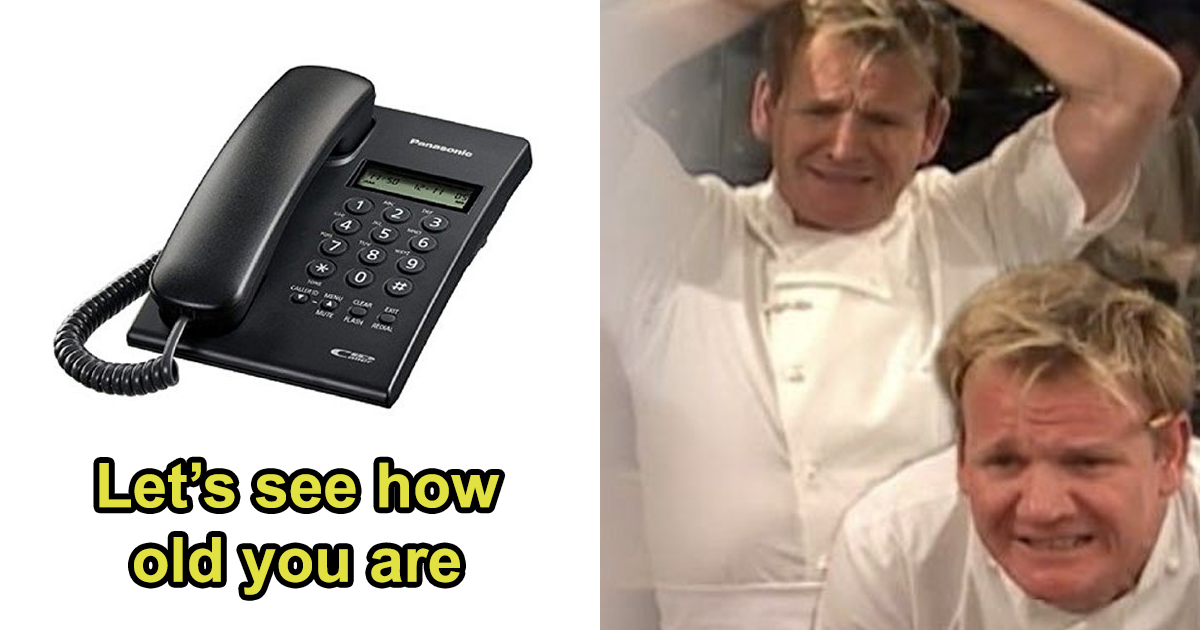
Another question might show an old landline phone, and suddenly you remember stretching the cord into another room for privacy. Privacy, of course, meant whispering dramatically while everyone in the house pretended not to listen. If the phone had call waiting, there was a special beep that could interrupt your entire emotional life. If someone was online using dial-up, phone calls became a household crisis. Modern Wi-Fi problems are annoying, but they rarely involve someone shouting, “Get off the internet, I need to call Aunt Linda!”
Then there are music memories. A cassette tape was not just a format; it was a commitment. Making a mixtape required timing, patience, and the courage to press “record” at exactly the right moment. If the radio host talked over the beginning of the song, your masterpiece was wounded forever. Later came CDs, which felt futuristic until they scratched if you looked at them with the wrong attitude. A full CD binder in the car was a personality profile. It told passengers who you were, who you wanted to be, and whether you were emotionally prepared for track seven.
School memories are just as powerful. Many people remember the squeak of chalk, the smell of dry-erase markers, and the sound of a teacher rolling in a television cart. That cart changed the entire mood of the classroom. It meant documentary, movie, or educational programming that still felt like a holiday. Students sat up straighter. Hope entered the room. Even the kid who never brought a pencil understood that something sacred was happening.
Food memories can be even stronger. Certain snacks, lunchboxes, cereals, and cafeteria meals become tied to childhood in ways that make no nutritional sense. A brightly colored drink, a square pizza slice, or a cookie from a vending machine can unlock an entire decade. You may not remember what you had for dinner last Tuesday, but you remember the exact snack your friend traded for your pudding cup in third grade. Memory has priorities, and apparently pudding is one of them.
These experiences show why getting 50% right can feel strangely satisfying. It is not about proving you are old. It is about proving you were present for a version of the world that no longer exists in quite the same way. You knew the rules. You adapted. You waited through commercials, untangled cords, rewound tapes, printed directions, and survived without being able to Google every question immediately. That is not just nostalgia. That is a record of everyday resilience, wrapped in humor and maybe a little dust from an old entertainment center.
Conclusion: Getting 50% Right Means You Have Stories
If you get 50% right, you might be oldbut more importantly, you might be rich in stories. Nostalgia quizzes work because they turn ordinary memories into shared entertainment. They remind us that culture changes quickly, technology becomes outdated, and the things we once considered normal can become hilarious artifacts faster than expected.
Still, aging should not be treated like a flaw. Remembering older references means you have lived through change. You have watched the world upgrade, glitch, reboot, and upgrade again. You know that progress is useful, but so is perspective. You understand that a smartphone is powerful, but so was a perfectly timed mixtape.
So take the quiz. Laugh at the references. Share it with someone from another generation. If you score high, wear it proudly. You are not outdated; you are a limited-edition human archive with excellent recall for theme songs, snack packaging, and technology that required manual labor.