
Some hobbies arrive wearing a cape. Origami arrives as a square piece of paper and politely says, “Trust me.” A few folds later, that quiet little square becomes a crane, fox, frog, elephant, rabbit, butterfly, whale, or suspiciously lopsided cat that still deserves applause. That is the magic behind the cheerful challenge, “Hey Pandas, Fold An Origami Animal”: it is simple enough for beginners, creative enough for artists, and funny enough for anyone who has ever folded a bird that looked more like a tax form with wings.
Origami animal folding is more than a cute craft. It blends art, patience, geometry, memory, hand-eye coordination, and storytelling into one low-cost activity. You do not need fancy tools, loud machines, or a craft room that looks like a glitter tornado passed through it. You need paper, a flat surface, a little curiosity, and the willingness to forgive yourself when your first paper frog refuses to jump and instead chooses a career as a triangle.
This guide explores the history, benefits, beginner techniques, animal ideas, paper choices, and personal experiences that make origami animals such a delightful creative project. Whether you are folding with kids, decorating your desk, hosting a family craft night, or simply trying to turn five quiet minutes into something adorable, origami has a way of making small moments feel wonderfully handmade.
What Is Origami Animal Folding?
Origami is the traditional art of paper folding, often associated with Japan, though paper folding has a long and complex history across different cultures. The word “origami” comes from Japanese roots that mean “folding” and “paper.” In its purest form, origami uses a single sheet of paper, usually square, without cutting or gluing. That one-sheet rule is part of the fun. It turns every finished model into a tiny paper puzzle solved by your hands.
Origami animals are among the most popular models because animals give folded paper instant personality. A crane feels graceful. A frog feels playful. A fox feels clever. A whale feels peaceful. Even a very simple dog face can somehow look like it wants a treat. Animal origami also works well for beginners because many models use basic folds that repeat across different designs.
Why Animals Are Perfect for Beginners
Animals are recognizable, expressive, and forgiving. A slightly uneven rabbit ear still looks like a rabbit ear. A crooked butterfly wing can look charming instead of tragic. Unlike technical models that demand extreme precision, many beginner origami animals allow personality to sneak in through the imperfections. That is good news for anyone whose folds occasionally wander off like they have weekend plans.
Popular beginner origami animals include cranes, jumping frogs, butterflies, dogs, cats, fish, foxes, rabbits, turtles, owls, whales, penguins, and elephants. These models introduce important folding skills without overwhelming new folders. Once you learn the basics, you can move toward more detailed creatures such as dragons, dinosaurs, insects, horses, and realistic birds.
A Brief History of Origami
The history of origami is not as neatly folded as a finished crane. Paper was first developed in ancient China, and paper folding likely appeared wherever paper became available. Japan, however, played a major role in shaping origami into the artistic tradition most people recognize today. Over centuries, folded paper appeared in ceremonies, gifts, decorations, games, and eventually educational and artistic practice.
One of the most famous origami symbols is the paper crane. In Japanese culture, the crane is often associated with peace, hope, and longevity. The idea of folding one thousand cranes has become widely known as a gesture of wish-making, healing, remembrance, and perseverance. Today, cranes are folded in classrooms, hospitals, memorial projects, art installations, and community events around the world.
Modern origami also expanded far beyond tradition. Artists, mathematicians, engineers, educators, and scientists have studied folding patterns for everything from architecture and robotics to space technology and medical device design. In other words, that little paper frog on your desk may have more intellectual cousins than expected.
Why Folding Origami Animals Is Good for Your Brain
Origami may look like play, but it quietly exercises several useful skills. Folding requires observation, sequencing, attention to detail, spatial reasoning, and patience. When you fold a paper animal, you are reading visual instructions, predicting how a flat sheet becomes a 3D form, and correcting small errors as you go. It is basically a workout for your brain, except you can do it while wearing fuzzy socks.
Origami Builds Focus and Patience
Origami asks you to slow down. Each crease matters, but no single crease needs to be dramatic. You fold, press, turn, repeat, and gradually the model appears. This process can be calming because it gives your hands something specific to do while your mind settles into the rhythm. For kids, origami can help develop attention and persistence. For adults, it can become a screen-free break that does not involve reorganizing the refrigerator for the third time this week.
Origami Supports Geometry and Spatial Thinking
Origami naturally introduces geometric ideas such as symmetry, angles, triangles, squares, diagonals, parallel lines, and fractions. A valley fold creates one relationship; a mountain fold creates another. Folding a square in half, then into quarters, teaches proportion in a physical way. Many educators use origami because it transforms abstract math into something students can touch, test, and remember.
Origami Encourages Creativity
Once you understand a model, you can customize it. Add drawn eyes to a fox. Use patterned paper for a butterfly. Fold a family of frogs in different sizes. Turn a paper whale into a bookmark. Origami gives structure first and creativity second, which is perfect for people who enjoy clear steps but still want room to make something personal.
Best Paper for Origami Animals
You can fold origami animals with many kinds of paper, but some options make the process easier. Traditional origami paper, often called kami, is thin, square, colorful, and designed to hold creases well. It usually has color on one side and white on the other, which helps create contrast in animal models such as foxes, penguins, and dogs.
Printer paper can work too, especially for practice. Just trim it into a square before starting. Wrapping paper, magazine pages, old calendars, notebook paper, and even clean food packaging can become origami material if they are not too thick. For beginners, thinner paper is usually better because it folds crisply and does not become bulky after several layers.
Paper Size Matters
Small paper looks cute, but it can be tricky for beginners because tiny folds require more precision. A square around six inches by six inches is a friendly starting size. Larger sheets are helpful for children, group activities, or models with many steps. Save miniature paper for later, when your fingers have earned their black belt in tiny creases.
Basic Folds Every Panda Should Know
Before folding an origami animal, learn a few basic folds. These simple moves appear again and again in beginner models. Once they feel natural, instructions become much easier to follow.
Valley Fold
A valley fold bends the paper toward you, forming a crease that looks like a valley. It is one of the most common folds in origami and often appears as a dashed line in diagrams.
Mountain Fold
A mountain fold bends the paper away from you, creating a raised ridge. If a valley fold says “come here,” a mountain fold says “I am going over there, respectfully.”
Reverse Fold
A reverse fold turns a flap inside or outside to create shapes such as beaks, tails, heads, and legs. It may sound intimidating, but after you do it a few times, it becomes one of the most satisfying origami moves.
Squash Fold
A squash fold opens a pocket and flattens it into a new shape. It is useful for birds, frogs, flowers, and many animal bases. The name is accurate: you open, press, and squashpolitely, of course.
Easy Origami Animals to Try First
Choosing the right first model makes a big difference. Start with animals that use fewer steps and broad folds. Success builds confidence, and confidence leads to more folding. Soon you may find yourself saying things like, “I can stop anytime,” while surrounded by seventeen paper penguins.
Origami Dog Face
The dog face is one of the easiest origami animals for children and beginners. It usually requires only a few folds: create a triangle, fold down two ears, fold up the chin, and add eyes and a nose. The result is simple, adorable, and highly customizable. Use brown paper for a puppy, gray paper for a schnauzer, or polka-dot paper for a dog that clearly works in fashion.
Origami Fox
The fox is another beginner-friendly favorite. Many simple fox models use a triangle base and a few clever folds to create ears, a face, and a tail. Orange paper makes it instantly recognizable, but any color works. A blue fox? Why not. Origami has no animal control department.
Origami Jumping Frog
The jumping frog is a classic action model. After folding, you press the back and watch it hop. Some frogs jump impressively; others scoot one millimeter and call it exercise. Either way, it is fun. This model is especially popular with kids because the finished animal becomes a toy.
Origami Crane
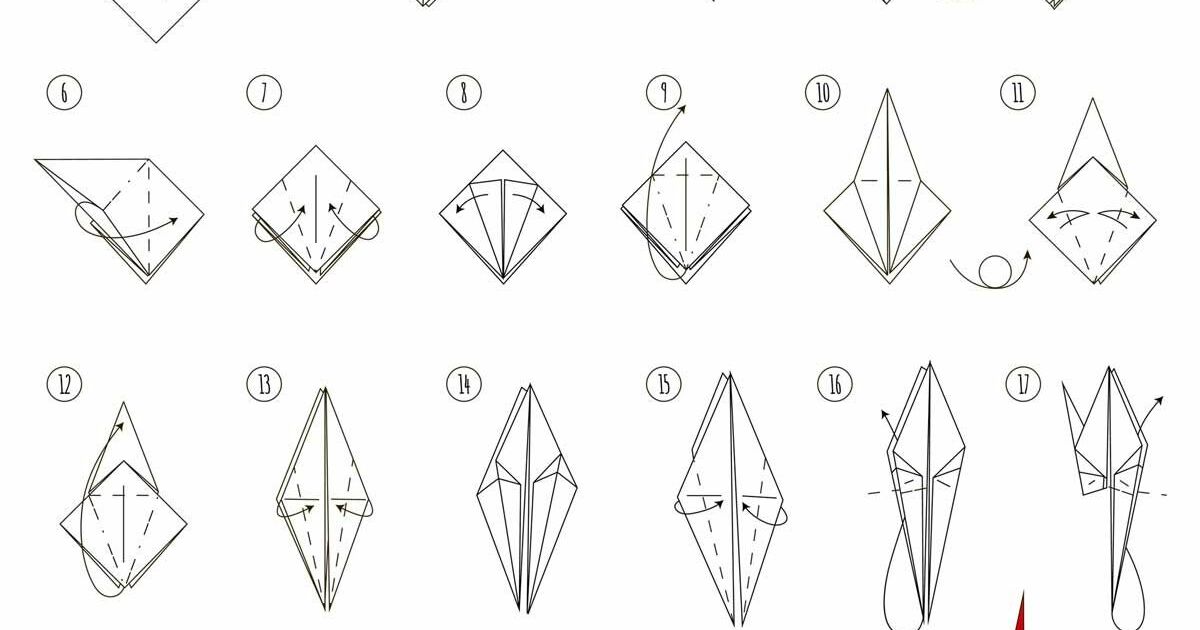
The crane is one of the most iconic origami animals. It is slightly more challenging than a dog face or fox, but it teaches valuable folds used in many other models. The crane begins from a bird base and includes folds for the wings, neck, head, and tail. It is elegant, meaningful, and worth practicing.
Origami Butterfly
A butterfly is a beautiful beginner model because patterned paper can make the wings look stunning with minimal effort. Butterflies are ideal for cards, wall decorations, gift wrapping, spring crafts, and classroom projects. They also prove that paper can look cheerful without needing glitter, which is a public service.
How to Fold Better Origami Animals
Origami rewards careful technique. You do not need to be perfect, but small improvements make a big difference in the final model. The best folders are not necessarily the fastest; they are the ones who understand that every crease is a tiny promise to the finished animal.
Start With a Clean Square
A precise square helps the folds line up. If your paper is slightly rectangular, the model may drift out of shape. For casual practice, that is fine. For a cleaner animal, trim carefully or use pre-cut origami paper.
Match Corners Before Pressing
Before flattening a fold, line up the corners and edges. Press lightly at first, adjust if needed, then sharpen the crease. This simple habit prevents many beginner mistakes.
Use Your Fingernail or a Folding Tool
Sharp creases help origami animals hold their shape. You can use your fingernail, the back of a spoon, or a bone folder. Just do not press so hard that the paper tears. Origami is a craft, not a wrestling match.
Practice the Same Model More Than Once
The first attempt teaches you the route. The second attempt looks better. The third attempt may actually resemble the animal on the tutorial. Repetition is not boring in origami; it is how your hands memorize the pattern.
Origami Animals for Kids, Families, and Classrooms
Origami animal folding is a wonderful activity for children because it combines creativity with problem-solving. Kids learn to follow directions, identify shapes, control small hand movements, and recover from mistakes. It also gives them a finished object they can name, decorate, race, gift, or proudly place on a shelf.
For family craft time, choose animals with different difficulty levels. Younger children can fold dog faces or fish, while older kids and adults try cranes or frogs. A group can create an entire paper zoo, ocean scene, forest, or farm. Add a cardboard background, and suddenly the dining table becomes a wildlife sanctuary with crumbs.
Teachers can use origami animals to support lessons in math, science, reading, art, and culture. Students can fold butterflies during a lesson about life cycles, cranes during a discussion about peace, frogs during a pond habitat unit, or whales during ocean studies. Origami turns passive learning into an active, memorable project.
Origami Animal Ideas by Theme
If you want to create a collection, choose a theme. A theme makes the activity feel more intentional and helps you decide what to fold next.
Paper Zoo
Fold elephants, lions, giraffes, monkeys, zebras, penguins, and parrots. Use different paper colors and sizes to create variety. A paper zoo is great for kids’ rooms, school displays, and rainy-day projects.
Ocean Animals
Try whales, fish, turtles, sharks, crabs, dolphins, and seahorses. Blue and green paper works beautifully for ocean scenes. Add waves cut from scrap paper if you are willing to bend the no-cutting tradition for decoration.
Woodland Creatures
Foxes, rabbits, owls, deer, bears, squirrels, and birds make a cozy forest collection. These animals are perfect for autumn crafts, storytime activities, or handmade greeting cards.
Farm Animals
Fold pigs, cows, chickens, ducks, sheep, horses, and dogs. Farm animals are especially fun for young children because the shapes are familiar and easy to name.
Common Origami Mistakes and How to Fix Them
Every origami folder makes mistakes. The difference between a beginner and an experienced folder is not perfection; it is knowing how to recover. Paper is patient, but it does remember creases, so gentle corrections are best.
The Model Looks Uneven
Uneven folds usually happen when corners were not aligned before pressing. Slow down and check alignment at every step. If the model is already finished, call it “expressive” and fold another one.
The Paper Tears
Tearing often means the paper is too thick, the folds are too small, or the same crease has been reversed too many times. Try thinner paper or a larger square.
The Instructions Feel Confusing
Origami diagrams can be tricky at first. Look for beginner tutorials with photos or videos, pause between steps, and compare your model often. Sometimes the best solution is to unfold one step, breathe, and remind the paper who is boss.
Creative Ways to Use Finished Origami Animals
Origami animals do not have to sit around looking cute, although they are very good at that. You can use them in practical and decorative ways.
Attach small animals to greeting cards, gift tags, bookmarks, party invitations, place cards, classroom bulletin boards, mobiles, shadow boxes, scrapbook pages, or holiday ornaments. Fold tiny cranes for a jar of wishes. Make butterfly garlands for spring. Add a paper fox to a thank-you note. Use jumping frogs for a silly family race. A handmade paper animal can turn an ordinary message into a keepsake.
Why “Hey Pandas, Fold An Origami Animal” Is Such a Fun Challenge
The phrase feels playful because it invites everyone to participate. It does not demand museum-level artwork. It says, “Grab a square, make an animal, and share the results.” That open invitation is exactly what makes origami charming. A beginner’s wobbly crane can be just as delightful as an expert’s elegant dragon because both show effort, curiosity, and a little paper bravery.
Origami animal challenges also create community. People can compare designs, trade tips, laugh over failed attempts, and celebrate surprising successes. One person folds a fox. Another folds a frog. Someone else produces a creature that may be a swan, may be a llama, and may require a formal introduction. The joy is in the making.
Personal Experiences With Folding Origami Animals
The first time many people try to fold an origami animal, they expect it to be easy because the materials look so innocent. It is just paper, right? How complicated could paper possibly be? Then step seven arrives, asking for an inside reverse fold, and suddenly the square has become a philosophical opponent. That moment is part of the experience. Origami teaches humility faster than a printer jam.
One of the best things about folding origami animals is how quickly frustration turns into delight. A dog face may begin as a crooked triangle, but once the ears fold down and someone draws a tiny nose, the model comes alive. Children often understand this faster than adults. They do not worry whether the left ear is three degrees lower than the right. They simply announce, “His name is Pickles,” and the paper dog becomes real.
Folding a paper crane offers a different experience. It feels almost ceremonial. The early folds are quiet and structured. The model passes through awkward stages where it looks nothing like a bird. Then the wings open, the neck lifts, and suddenly a flat square becomes something graceful. That transformation is deeply satisfying. It reminds you that progress sometimes looks strange in the middle.
The jumping frog is pure comedy. You fold carefully, press the back, and hope for athletic glory. Some frogs leap across the table like Olympic champions. Others collapse dramatically and need emotional support. In group settings, frog races become instant entertainment. Nobody cares if the folds are perfect when everyone is cheering for a paper amphibian named Sir Hops-a-Lot.
Origami butterflies are wonderful for gifts. A small butterfly tucked into a card feels thoughtful without being expensive. Patterned paper makes them look impressive even when the fold is simple. They are also forgiving models because slight unevenness can resemble natural wing variation. In other words, the butterfly kindly agrees with your mistakes.
Folding origami animals can also become a calming ritual. On a stressful day, repeating familiar folds gives the mind something manageable to hold. The paper does not ask for a password, send notifications, or require a software update. It simply waits. Fold by fold, the activity creates a small pocket of quiet. By the end, you have a tiny animal and, sometimes, a slightly less noisy brain.
There is also a lovely social side to origami. Teaching someone to fold a simple animal creates a shared moment. You point to corners, demonstrate creases, laugh when the model flips upside down, and celebrate the final result. The finished paper animal becomes evidence that two people spent time making something together. In a world full of quick messages and disappearing content, that little folded creature feels surprisingly meaningful.
The best experience, though, is realizing that origami does not require perfection to be worthwhile. A wrinkled fox still has charm. A lopsided rabbit still has personality. A crane with one dramatic wing still looks like it has a story. Origami animals remind us that creativity is not always about flawless results. Sometimes it is about turning an ordinary square into a small surprise and being happy enough to try again.
Conclusion
“Hey Pandas, Fold An Origami Animal” is more than a cute craft prompt. It is an invitation to slow down, play with paper, practice patience, and discover how much personality can fit inside one square. Origami animals are affordable, educational, relaxing, and endlessly adaptable. They can teach geometry, support focus, brighten a gift, entertain children, or give adults a peaceful break from screens and schedules.
Start simple. Fold a dog, fox, frog, butterfly, fish, or crane. Use paper you already have. Accept the first attempt as practice, the second as progress, and the third as proof that your hands are learning. Whether your animal looks elegant or hilariously confused, it still counts. After all, every paper zoo needs a few unusual residents.
Note: This article is written in original American English and synthesizes real information from reputable origami, education, art, craft, and paper-folding resources without inserting source links or unnecessary citation placeholders.