
Los Angeles is famous for sunshine, movie stars, palm trees, and traffic that can make even a ghost say, “You know what, I’ll walk.” But beneath the glossy surface of Hollywood premieres and rooftop cocktails, the city has another reputation: strange footsteps in empty hallways, mirrors with a little too much personality, elevators that feel like they are thinking, and historic hotels where the past seems reluctant to check out.
The best haunted hotels in Los Angeles are not just spooky because someone once heard a bump in the night. They are creepy because they sit at the intersection of real history, celebrity legend, architectural glamour, unsolved mysteries, and decades of whispered guest reports. These places have hosted Oscar winners, silent film icons, Hollywood hopefuls, musicians, writers, and, according to local lore, a few long-term guests who no longer need room service.
Before we grab the metaphorical flashlight, one important note: ghost stories are folklore. They are part of local culture, not laboratory-tested facts. Still, when a hotel has nearly a century of dramatic history, the walls do seem to develop opinions. And in Los Angeles, those opinions apparently include creaking, flickering, and making people regret choosing the “historic charm” package.
Why Los Angeles Has So Many Haunted Hotel Stories
Haunted hotel stories thrive in Los Angeles because the city itself is built on reinvention. A glamorous building can begin as a luxury hotel, become a celebrity hideaway, fall into decline, rebrand, reopen, and still keep the same marble staircase where generations of guests have dragged their luggage and emotional baggage. Old hotels collect stories the way carpets collect mysterious stains.
Hollywood also adds fuel to the ghostly fire. When famous people live, work, party, hide, recover, and sometimes meet sad endings inside the same buildings, their stories become part of the architecture. Add Art Deco lobbies, dim corridors, vintage elevators, and chandeliers that look like they know secrets, and you have the perfect setting for Los Angeles paranormal legends.
The Hollywood Roosevelt: Glamour, Mirrors, and Celebrity Ghost Lore
If Los Angeles had a haunted hotel red carpet, The Hollywood Roosevelt would probably arrive first, wearing sunglasses indoors. Opened in the 1920s, this landmark hotel sits on Hollywood Boulevard near the TCL Chinese Theatre and is famously tied to early Academy Awards history. Its Spanish Colonial Revival style and Old Hollywood atmosphere make it one of the most iconic historic hotels in Los Angeles.
The Marilyn Monroe Mirror Legend
The Roosevelt’s most famous ghost story centers on Marilyn Monroe. Local legend says Monroe’s image has appeared in a full-length mirror once associated with one of her stays at the hotel. Whether you believe the story or not, the idea is pure Hollywood: a silver-screen legend, a glamorous mirror, and guests trying very hard not to blink.
The story works because it fits the Roosevelt’s mood. The hotel feels cinematic even before anyone mentions ghosts. Walk through its public spaces and you can almost imagine the clink of old cocktail glasses, the flash of vintage cameras, and a movie star drifting by just out of view. Is it paranormal activity or excellent interior design? In Los Angeles, the answer can be “yes.”
Room 928 and Montgomery Clift
Another well-known Roosevelt legend involves actor Montgomery Clift, who stayed at the hotel while preparing for a film role. Guests and ghost tour guides have long repeated stories of unexplained music, footsteps, and the feeling of someone practicing lines in the room or hallway. It is one of those haunted hotel tales that feels oddly specific, which makes it more memorable than the usual “a cold breeze happened” report.
For travelers searching for haunted hotels in Los Angeles, the Hollywood Roosevelt is often the first stop because it offers the full package: celebrity history, gorgeous architecture, famous ghost stories, and the unsettling feeling that the elevator may have just judged your outfit.
The Biltmore Los Angeles: Elegance With a Darker Shadow
Downtown Los Angeles has its own grand haunted icon: The Biltmore Los Angeles, formerly widely known as the Millennium Biltmore. Opened in 1923, the hotel is a Beaux-Arts masterpiece with soaring ceilings, ornate ballrooms, carved details, and the kind of lobby that makes you instinctively stand up straighter. It has hosted politicians, celebrities, award ceremonies, and countless guests who came for luxury and left with a story.
The Black Dahlia Connection
The Biltmore is often linked in popular lore to Elizabeth Short, known as the Black Dahlia. Many accounts say she was seen at or near the hotel before her death in 1947. Because the case remains one of Los Angeles’ most famous unsolved mysteries, the association has become part of the hotel’s haunted reputation.
It is important to handle that history respectfully. The real case involved a young woman whose life was cut short, not simply a spooky decoration for tourism. Still, the unsolved nature of the story, combined with the hotel’s old-world elegance, has made the Biltmore a central location in conversations about haunted places in downtown Los Angeles.
Why the Biltmore Feels Haunted Even Before the Ghost Stories Begin
The Biltmore does not need jump scares. Its atmosphere does the work. The corridors feel long enough to contain a second zip code. The ballrooms seem built for parties that ended decades ago but forgot to turn off the mood lighting. Guests and paranormal enthusiasts have reported unusual sounds, strange sensations, and ghostly impressions over the years.
Even skeptics can understand why the Biltmore inspires legends. It is not a bland modern hotel with beige walls and tiny shampoo bottles. It is a palace of Los Angeles history. At night, when downtown quiets and the chandeliers glow, the building feels less like a hotel and more like a memory with room numbers.
The Cecil Hotel: Los Angeles’ Most Infamous Haunted Hotel
No list of haunted hotels in Los Angeles can ignore the Cecil Hotel. Built in the 1920s, the Cecil began as a downtown hotel for travelers but later became associated with hardship, crime, mystery, and urban legend. It was also rebranded for a time as Stay on Main, a name that sounds cheerful until you learn the building’s reputation and suddenly want to sleep with every light on, including the microwave.
A Reputation Built on Real Tragedy and Urban Legend
The Cecil’s haunted reputation comes from a mix of documented events and internet-age fascination. The hotel is tied to several tragic incidents and became internationally known after the death of Elisa Lam in 2013. That case drew enormous attention because of the circumstances surrounding her disappearance and the widely discussed elevator footage.
Because the Cecil has been connected to real suffering, it should not be treated like a Halloween prop. Its story is more unsettling than fun. The building’s history reflects changes in downtown Los Angeles, economic decline, housing struggles, public safety concerns, and the way the internet can transform tragedy into myth almost overnight.
Why the Cecil Still Creeps People Out
The Cecil is creepy because it feels layered. It is not just one ghost story; it is a stack of them. There are tales of strange noises, heavy energy, unsettling rooms, and a sense that the building has absorbed too many hard years. Whether one believes in ghosts or not, the Cecil has become a symbol of haunted Los Angeles because its real-world history already feels chilling.
Unlike the Roosevelt or the Biltmore, where glamour softens the shadows, the Cecil’s atmosphere is heavier. It represents the darker side of a city that sells dreams but does not always protect the dreamers. That makes it one of the most famous haunted hotels in Los Angelesand one of the most sobering.
Chateau Marmont: Celebrity Secrets on Sunset Boulevard
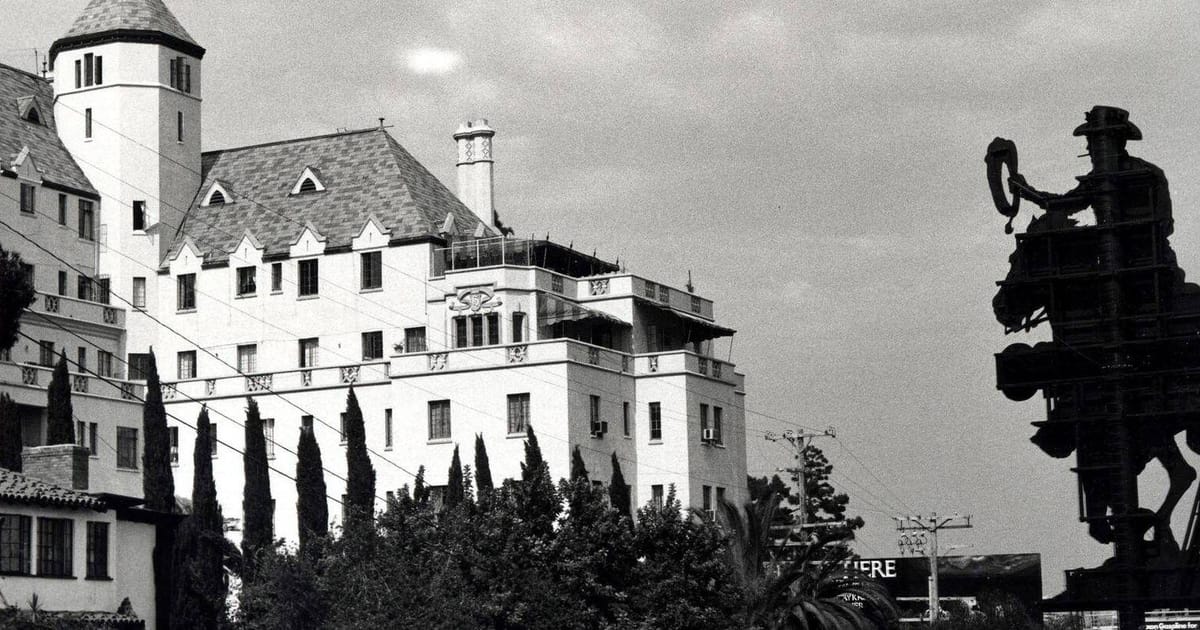
Chateau Marmont is not usually marketed with Halloween-store energy. It is too cool for that. Opened in the late 1920s and converted into a hotel in the early 1930s, this castle-like property on Sunset Boulevard became a legendary celebrity hideaway. For decades, actors, musicians, writers, and artists have treated it as a place to disappear in public.
The Bungalow 3 Legend
The most famous ghost story connected to Chateau Marmont involves John Belushi, who died at the hotel in 1982. Over the years, stories have circulated about strange feelings and possible sightings around Bungalow 3. Some versions of the legend describe a playful or lingering presence rather than a frightening one.
Again, the real history deserves respect. But the Chateau’s haunted reputation is tied less to traditional ghost-house scares and more to Hollywood mythology. It is the kind of place where secrets seem to have their own seating arrangements.
Why Chateau Marmont Feels Like a Haunted Movie Set
The Chateau’s creep factor is subtle. It does not need creaky staircases when it has nearly a century of celebrity lore, private bungalows, closed doors, and “no comment” energy. The building feels like it has watched fame arrive, unravel, and order another drink.
For readers interested in haunted hotels in Hollywood, Chateau Marmont is less about rattling chains and more about atmosphere. It is haunted by stories, reputations, scandals, and the eerie silence that follows when a place knows too much.
The Hollywood Knickerbocker: Séances, Stars, and Old Hollywood Spirits
The Hollywood Knickerbocker, now used as senior housing rather than a traditional hotel, remains one of Hollywood’s most fascinating haunted landmarks. Opened in the late 1920s, it once attracted film industry figures and became part of the neighborhood’s Golden Age landscape.
The Houdini Séance
One of the Knickerbocker’s most famous stories involves Bess Houdini, widow of magician Harry Houdini. In 1936, she held a séance on the roof in an attempt to contact her late husband. That detail alone gives the building more supernatural credibility than most hotels could achieve with a fog machine and a nervous front desk clerk.
The Knickerbocker is also linked in local lore to silent film stars and Hollywood figures whose names still echo through entertainment history. Ghost stories connected to the building include apparitions, odd sounds, and the sense that old Hollywood never fully packed its bags.
Why the Knickerbocker Belongs on This List
Even though visitors cannot treat it like a normal haunted hotel attraction, the Knickerbocker deserves mention because it captures a classic Los Angeles theme: glamour turning into legend. Its haunted reputation is tied to real Hollywood history, spiritualist culture, and the city’s long habit of mixing fame with melancholy.
The Georgian Hotel: Santa Monica’s Blue Beauty With Basement Whispers
Technically in Santa Monica, The Georgian Hotel still belongs in the broader Los Angeles haunted hotel conversation. Opened in 1933, its Art Deco design and oceanfront location make it one of the most visually striking historic hotels near Los Angeles. Painted in a distinctive blue-green shade, it looks cheerful by day and mysterious by night, which is exactly the kind of emotional range a haunted hotel needs.
Speakeasy Spirits
The Georgian is known for its Prohibition-era speakeasy history. Local ghost stories often focus on unexplained voices, phone calls from empty rooms, and strange activity connected to its lower-level spaces. A haunted speakeasy is almost too perfect: spirits serving spirits, basically the hospitality industry’s most efficient business model.
Unlike the Cecil’s dark reputation, The Georgian’s hauntings feel more playful and atmospheric. It is the kind of place where you might hear a mysterious sound and think, “Was that a ghost, or just an old building clearing its throat?” Either way, the setting is beautiful enough that you may forgive the goosebumps.
How to Visit Haunted Hotels in Los Angeles Respectfully
Haunted travel is fun, but real buildings have real guests, staff, residents, and histories. If you visit any haunted hotels in Los Angeles, do not sneak into private areas, disturb residents, bother employees, or treat tragedy like entertainment. The best ghost hunters are polite, legal, and capable of using indoor voices.
Book a room if the hotel is operating, join a reputable walking tour if available, or enjoy the architecture from public spaces. Many of these hotels are historic landmarks first and spooky destinations second. Their value comes from design, culture, and memorynot just from whether a hallway gives you goosebumps.
What Makes These Haunted Hotels So Creepy?
The creepiest thing about Los Angeles haunted hotels is not always the ghost story itself. It is the emotional contrast. The Hollywood Roosevelt is glamorous, but its legends suggest fame lingers after the spotlight fades. The Biltmore is elegant, yet tied to one of the city’s most haunting mysteries. The Cecil is infamous because its history feels painfully real. Chateau Marmont is stylish, secretive, and shadowed by celebrity lore. The Knickerbocker and Georgian remind us that old buildings can become storage units for unfinished stories.
That is why haunted hotels in Los Angeles fascinate so many people. They are not just scary places. They are time capsules. They preserve the city’s ambition, beauty, loneliness, reinvention, and occasional bad decision wearing excellent shoes.
Extra Experiences: What It Feels Like to Explore Haunted Hotels in Los Angeles
Visiting a haunted hotel in Los Angeles is less like walking into a horror movie and more like stepping into a very dramatic family album. The fear is not always loud. Often, it begins quietly: a hallway that seems longer than it should, an elevator that arrives with nobody inside, a lobby mirror that makes you check your reflection twice, just in case someone famous is borrowing the background.
The Hollywood Roosevelt offers the most cinematic experience. Even if you are not hunting ghosts, the place practically edits itself into a film noir montage. You walk past dark wood, warm lighting, old photographs, and guests who look like they might be influencers or vampires with good skincare routines. The spooky part is how easily the present and past overlap. One minute you are checking your phone; the next, you are imagining Marilyn Monroe stepping through the lobby like the building has been expecting her.
At the Biltmore, the experience is grander and heavier. The scale of the hotel makes you feel small in the best possible way. You can stand beneath its ornate ceilings and understand why people describe strange sensations there. The building has hosted so many events that silence feels unusual, almost suspicious. When a large historic hotel becomes quiet, every footstep turns into a paragraph.
The Cecil creates a completely different feeling. It is not spooky in a glamorous way; it is unsettling because its reputation is rooted in real hardship. Reading about it from a distance is one thing. Standing near it, or imagining its old corridors, brings up a more serious kind of discomfort. It reminds visitors that “haunted” can mean many things: grief, neglect, urban struggle, media obsession, and the stories a city would rather not tell at brunch.
Chateau Marmont feels haunted by privacy. That sounds strange, but it is true. Some places are creepy because they reveal too much; the Chateau is eerie because it reveals almost nothing. Its legends live behind gates, bungalow doors, and decades of celebrity silence. The atmosphere is not “boo.” It is “you did not hear that from me.” Honestly, that may be scarier.
The Georgian in Santa Monica brings a more stylish kind of shiver. Ocean air, Art Deco curves, and speakeasy lore combine into a setting that feels romantic until the lights dim. A basement with Prohibition stories already has built-in suspense. Add rumors of voices and odd calls, and suddenly that charming vintage mood has tiny goosebumps around the edges.
The best way to experience these places is to slow down. Notice the architecture. Read the historical plaques. Listen to guides who separate documented facts from folklore. Take ghost stories as cultural storytelling rather than proof. And if something bumps in the night, consider the three most likely explanations: old plumbing, another guest, or Los Angeles reminding you that rent is not the only thing that can be terrifying.
Conclusion: The Creepiest Check-In in the City of Angels
Los Angeles may be bright, loud, and permanently dressed for a premiere, but its haunted hotels reveal a moodier side of the city. These buildings are creepy because they are beautiful, historic, and emotionally crowded. They hold stories of fame, ambition, mystery, sadness, reinvention, and folklore that refuses to fade.
Whether you believe in ghosts or simply enjoy a good local legend, the haunted hotels in Los Angeles offer something more interesting than cheap scares. They show how history lingers. They remind us that every glamorous lobby has a backstory, every vintage mirror has seen a few things, and every old hallway becomes more dramatic after midnight.
Note: This article is based on publicly reported Los Angeles hotel history, local folklore, and widely discussed haunted hotel legends. Ghost stories are presented as cultural legends and guest reports, not verified facts.
SEO Tags