
Note: This article provides general educational information, not legal advice. Parking-ticket rules, deadlines, evidence standards, and appeal options vary by city and state. Always read the ticket carefully and confirm the local process before taking action.
A parking ticket can ruin an otherwise decent day with the speed and elegance of a pigeon aiming for a freshly washed car. One minute you are grabbing coffee, returning a library book, or buying exactly one item at the grocery store. The next minute, there is a fluorescent envelope tucked under your windshield wiper, quietly judging your life choices.
The good news is that a parking citation is not automatically unbeatable. Many tickets are valid, of course, and sometimes the wisest move is simply paying before the fine grows teeth. But when a ticket was issued in error, a sign was unclear, your permit was valid, a meter malfunctioned, or the details on the citation are wrong, you may have a reasonable chance to contest it.
Learning how to fight a parking ticket is less about delivering a courtroom monologue worthy of a legal drama and more about being organized. Your best tools are usually photographs, records, calm writing, and an annoying-but-necessary respect for deadlines.
Before You Fight a Parking Ticket: Know What You Are Trying to Prove
A successful parking ticket appeal usually depends on one clear point: the violation did not happen as written, the city’s evidence is inaccurate, or a legitimate defense applies under the local parking rules. “I did not see the sign” is rarely persuasive by itself. “The sign was blocked by construction fencing and no visible restriction applied to the space where the car was parked” is much stronger.
Your goal is not to tell the hearing officer every painful detail of your Tuesday. Your goal is to present a clean, believable explanation supported by evidence. Think less “angry internet comment section” and more “organized person with labeled screenshots.”
How to Fight a Parking Ticket in 11 Steps
1. Read the Ticket Like It Is a Tiny, Expensive Contract
Start with the ticket itself. Check the citation number, date, time, location, vehicle description, license plate, alleged violation, and response deadline. Small errors do not always make a ticket disappear, but a major factual mistake can matter.
For example, a citation may list the wrong license plate, the wrong street, an impossible time, or a vehicle that does not match yours. If your car was legally parked on Oak Street but the ticket says Pine Street, that discrepancy may support your challenge. Save the original ticket and photograph both sides before it becomes a crumpled artifact at the bottom of your cup holder.
2. Do Not Miss the Deadline
The deadline is the boss fight. Cities often provide only a limited period to request a hearing, submit a written challenge, or appeal an adverse decision. Missing that deadline can lead to late fees, loss of hearing rights, collection activity, boot eligibility, towing risk, or a much more stressful problem than the original ticket.
Put the deadline in your calendar immediately. Add a reminder several days before it expires. Then save confirmation emails, screenshots, mailed receipts, or reference numbers proving that you submitted your request on time. A contest filed on time is usually worth more than the world’s most persuasive explanation filed too late.
3. Visit the Parking Location as Soon as Possible
Return to the scene quickly, especially if you believe the signs were confusing, hidden, damaged, missing, or contradictory. Parking conditions can change fast. A construction crew may move a sign, a tree branch may be trimmed, or the city may repaint a curb before you have a chance to prove what you saw.
Take wide photographs of the entire block, including nearby intersections, driveways, curb markings, parking meters, street signs, loading zones, bus stops, fire hydrants, and any temporary restrictions. Then take close-ups of every relevant sign from multiple angles.
Do not photograph only the sign you like. Photograph the whole environment. A broad image can show that a restriction was not visible from your parking space, that signs were placed unusually far apart, or that another sign created genuine confusion.
4. Preserve Time-Sensitive Evidence
Evidence becomes weaker when it is vague. Preserve anything that can show where you were, when you parked, and what happened during the alleged violation. Useful items may include parking-app receipts, meter payment confirmations, text messages, calendar entries, store receipts, toll records, location history, or photographs saved on your phone.
Suppose you received a ticket for overstaying a two-hour zone. A payment receipt alone may not win the case if the zone prohibited parking after a certain time. But a receipt, a time-stamped photo, and a clear image of the sign together may show that you were within the allowed period.
Save original files whenever possible. Screenshots are helpful, but original records with visible dates, times, transaction numbers, and account details are usually more convincing.
5. Gather Documents That Support Your Specific Defense
Strong parking ticket evidence is targeted. Do not submit fifty unrelated screenshots because you hope one will look dramatic. Match each document to a particular fact you need to prove.
Examples of useful evidence include:
- A valid parking permit, disability placard, visitor pass, or temporary authorization.
- A parking-app payment confirmation showing the correct zone and time.
- A repair invoice if your vehicle was disabled unexpectedly.
- A tow receipt if the car had already been removed from the location.
- A witness statement from someone who saw the signs, the vehicle, or the parking conditions.
- Vehicle registration records if the citation identifies the wrong car or plate.
- Photos showing an obscured sign, broken meter, faded curb paint, or unclear restriction.
Keep the evidence clean and readable. Rename files logically, such as “Photo_1_WideStreetView” or “ParkingAppReceipt_2_15PM.” A hearing officer reviewing dozens of cases will appreciate organization more than a file named “IMG_8472_FINAL_REAL_FINAL.jpg.”
6. Look Up the Exact Parking Rule Listed on the Citation
The ticket should identify an ordinance, code section, or type of violation. Read the actual rule before writing your defense. This step is where many people discover that their strongest argument is not the one they originally planned to make.
For instance, you may assume you were ticketed for parking too long, but the citation may actually concern a residential permit restriction, street-cleaning rule, loading zone, commercial vehicle rule, or temporary no-parking order. Each type of violation has different requirements.
Focus on the elements of the alleged violation. Ask: What exactly did the city need to establish? Was the sign visible? Did the restriction apply at that time? Was the meter working? Was the vehicle actually in the prohibited area? Did you have a permit that covered the location?
7. Build One Clear Theory Instead of Ten Weak Complaints
Your challenge should have a main argument. You may include supporting points, but do not turn the appeal into a buffet of unrelated frustrations. A focused case is easier to understand and harder to dismiss.
Common arguments that may be worth exploring include:
- The citation contains a substantial factual error.
- The vehicle, plate number, location, or time was incorrectly identified.
- A required sign was missing, blocked, illegible, or confusing.
- You paid for parking or had a valid permit.
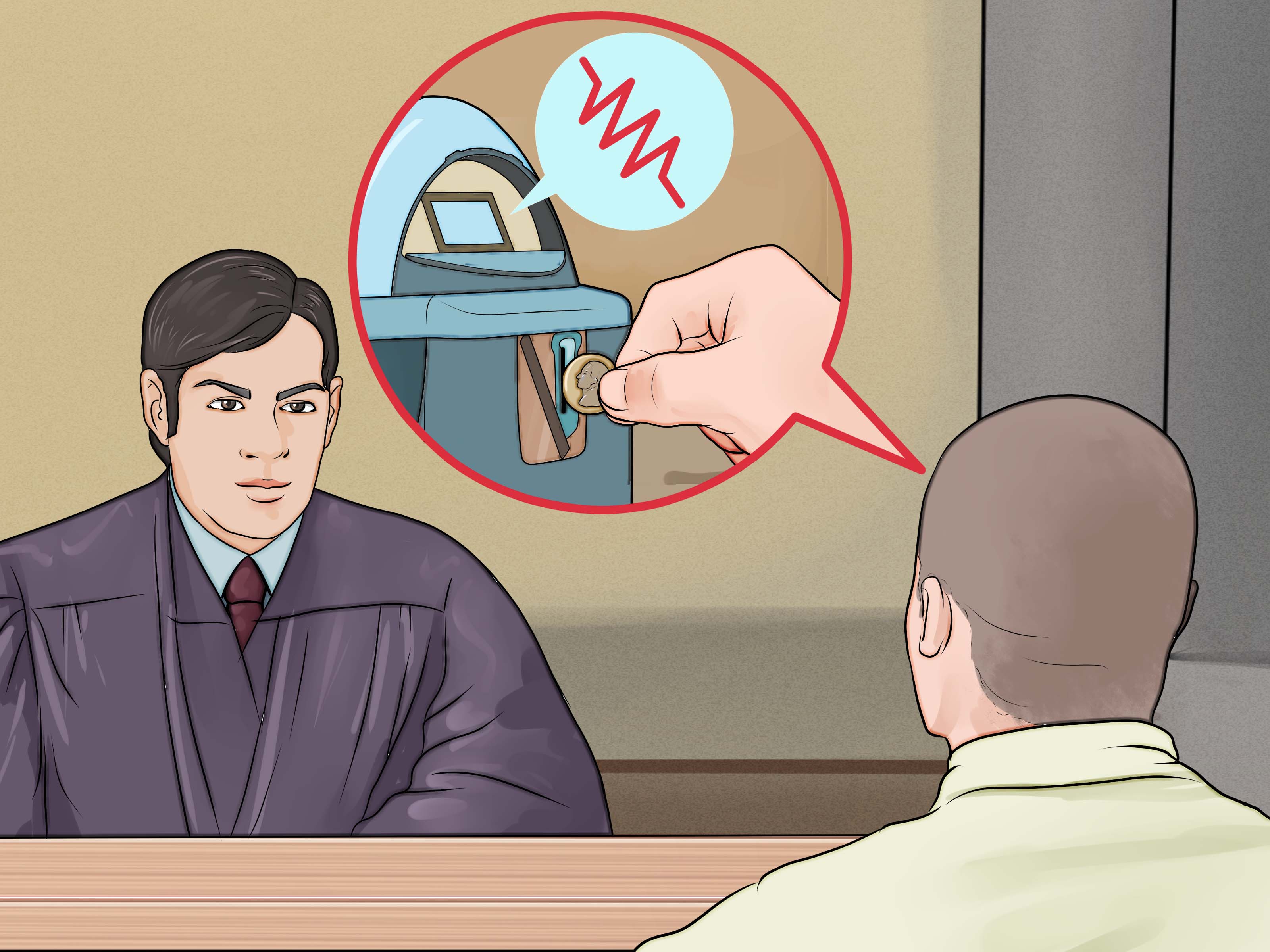
- A parking meter or payment system failed despite a reasonable effort to pay.
- Your vehicle was disabled unexpectedly and you have documentation.
- The restriction did not apply during the cited time period.
Notice what these arguments have in common: each one can be supported with something concrete. A good parking ticket defense is a bridge between the rule, the facts, and your proof.
8. Submit the Contest Request Through the Correct Channel
Many jurisdictions allow an online request, written declaration, mailed hearing request, phone process, virtual hearing, or in-person appearance. Use the official method listed on the citation or the city’s parking enforcement website.
Be careful before paying the ticket. In some places, payment may be treated as an admission of responsibility or may limit your ability to contest the citation later. Read the instructions first rather than assuming you can pay now and argue later.
After submitting your request, save every confirmation page. Print it or take screenshots. Keep the date, time, ticket number, and confirmation number in one folder. Bureaucracy may not be glamorous, but it does love paperwork.
9. Write a Calm, Evidence-Based Statement
Your written appeal should be polite, direct, and easy to scan. Start by identifying the ticket number, vehicle, date, and location. Then explain what happened in chronological order. Refer to evidence by name or number.
A simple structure works well:
- State that you are contesting the citation.
- Identify the specific reason.
- Explain the facts in a few short paragraphs.
- Refer to attached photos, receipts, permits, or records.
- Request dismissal of the citation.
Here is a basic example:
I respectfully contest Citation No. 123456. The ticket states that my vehicle was parked in a restricted zone at 2:15 p.m. However, the attached parking-app receipt shows that I paid for the correct zone through 2:30 p.m. Attached Photo 1 shows the posted zone number, and Attachment 2 shows the payment confirmation. I respectfully request dismissal of the citation.
Notice the tone. No insults. No conspiracy theories. No sentence beginning with “This is ridiculous because…” even when it feels emotionally accurate. Let the evidence do the heavy lifting.
10. Prepare for the Hearing Like a Short Presentation
If you attend a hearing, organize your materials in the same order as your written statement. Bring copies when allowed. Practice explaining your position in under two minutes.
At the hearing, focus on facts. Say what happened, explain why the rule did not apply or why the citation was mistaken, and point to your evidence. Answer questions honestly. If you do not know something, say so rather than guessing.
You may encounter evidence from the city, such as officer notes, photographs, meter records, or citation details. Review it carefully. If an image does not clearly show your vehicle, the location, or the relevant sign, calmly explain why it does not establish the violation.
Your goal is not to defeat someone in a debate tournament. Your goal is to make it easy for the decision-maker to see why the ticket should be dismissed.
11. Review the Outcome and Decide Your Next Move
If you win, save the dismissal notice. Do not assume the matter has vanished until you have written confirmation or the online system reflects the result.
If you lose, read the decision carefully. Some cities allow a further appeal, while others offer options such as mitigation, payment arrangements, financial hardship programs, or reduced penalties. Those options may have separate deadlines, so do not put the decision in a drawer and hope it develops amnesia.
If your evidence was strong but the decision appears to misunderstand a key fact, an appeal may be worth considering. If the ticket is valid and the evidence is thin, paying promptly may be the least expensive route. Fighting every ticket on principle can be noble, but it can also become a very pricey hobby.
When Fighting a Parking Ticket May Not Be Worth It
Not every ticket should become a personal crusade. Consider the fine amount, the time required, the strength of your evidence, and whether the violation is clearly supported by the signs and records.
For example, if you parked in a clearly marked no-parking zone, took no photos, had no permit, and simply forgot the rule, a formal contest may not succeed. You may still want to explore whether a payment plan, hardship option, or mitigation process exists, but do not confuse hope with evidence.
On the other hand, a ticket may be worth challenging when it involves a factual error, a valid permit, a payment-system problem, unclear signage, or a large fine that could affect your budget. A few organized minutes spent gathering proof can make a meaningful difference.
Common Real-World Experiences When Fighting a Parking Ticket
The most useful parking-ticket stories usually share the same lesson: people who document the situation early tend to have better options later. The person who returns to the block, takes photos, saves a receipt, and files on time is already in a better position than the person who waits three weeks and finds only a mysterious coffee stain where the ticket used to be.
One common experience involves confusing signage. A driver parks near the end of a block, sees a general parking sign, and assumes the restriction applies evenly across the street. Later, they discover a smaller sign near the intersection that changes the rule for part of the block. When the driver returns and photographs the entire area, the images may show that the restriction was technically posted but hard to see from the parking space. That does not guarantee dismissal, but it creates a much stronger argument than saying, “I honestly had no idea.”
Another frequent situation involves digital payment systems. Parking apps are convenient until the phone loses signal, the app freezes, the wrong zone appears, or the payment confirmation arrives after the ticket. Drivers who save transaction attempts, screenshots, bank records, and app error messages can sometimes show that they made a genuine effort to comply. The key is proving the timeline. A screenshot from later that evening is less persuasive than a time-stamped record showing the payment attempt at the moment you parked.
Permit-related tickets also create plenty of frustration. A visitor permit may slide off the dashboard, a disability placard may be partially hidden, or a resident permit may be valid but difficult for an officer to verify from outside the vehicle. In these cases, clear photos of the permit, registration details, and any related authorization can make a substantial difference. The argument is not that the officer should have guessed your intentions. The argument is that you had a valid authorization and can prove it.
Some people discover too late that explaining a difficult personal situation is not the same as contesting the violation. A hearing officer may sympathize with a late medical appointment, a school pickup problem, or an unexpected family emergency, but sympathy does not always erase a valid ticket. When the facts do not support dismissal, a mitigation request or payment option may be more realistic than arguing that the rule did not exist.
There is also the experience of winning for a reason that seems almost boring. A wrong plate number. A ticket issued after the vehicle had been towed. A meter record that did not match the cited time. A sign facing away from traffic. These victories are rarely cinematic. Nobody plays triumphant music while you refresh the online portal. Still, they prove an important point: small details matter.
The people who handle parking tickets most effectively tend to stay calm, gather proof, and avoid making the process personal. They treat the citation like a paperwork problem, not a battle against civilization itself. That approach may not make the ticket any less annoying, but it gives you the best chance of turning an expensive windshield surprise into a dismissed citation.
Conclusion
Knowing how to fight a parking ticket can save money, reduce stress, and prevent a small citation from growing into a larger administrative headache. Start by checking the details and deadline, then gather evidence before the scene changes. Build a focused argument, submit it through the correct channel, and keep records of every step.
The strongest parking ticket appeal is usually not loud. It is organized, specific, polite, and supported by proof. In the world of parking enforcement, a clear photo of a blocked sign may accomplish more than a ten-minute speech powered by caffeine and injustice.