
A garden hose is usually not invited to the fancy science party. It spends its days watering tomatoes, rinsing muddy boots, and occasionally attacking someone when the nozzle slips from your hand like a tiny green fire hose. But with the right nozzle design, that humble hose can produce one of the most mesmerizing effects in fluid mechanics: laminar flow.
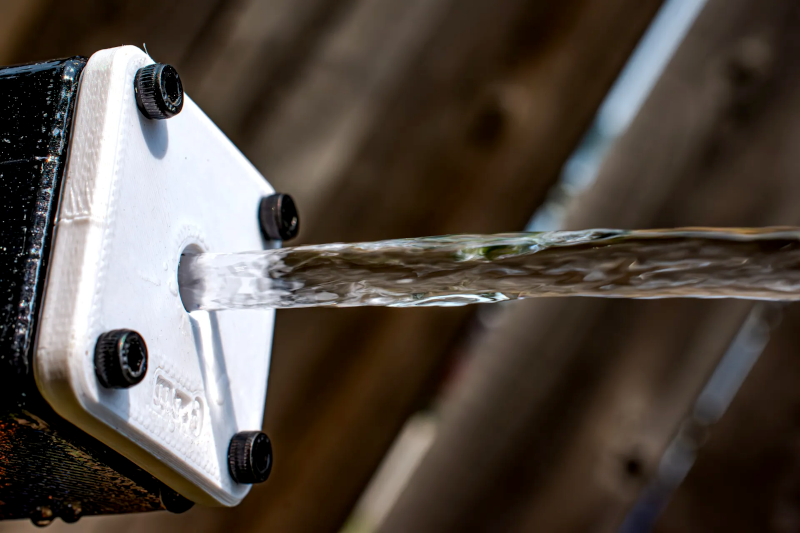
When a garden hose gets laminar flow, the water no longer sprays, sputters, or wiggles like it just heard bad news. Instead, it leaves the nozzle as a smooth, glassy stream that looks almost frozen in midair. The effect is so clean that people often mistake it for a clear acrylic rod until the water hits a bucket, stone, or unsuspecting sandal.
The idea has become popular among makers, backyard experimenters, fountain builders, and people who simply enjoy turning ordinary household items into tiny engineering miracles. The good news: laminar flow is not magic. The slightly less convenient news: it is picky. Water must be slowed, straightened, filtered, and released through a carefully shaped exit. In other words, your garden hose needs a spa day before it can act like a luxury fountain.
What Is Laminar Flow?
Laminar flow is a type of fluid motion where the water moves in smooth, parallel layers with very little mixing between them. Imagine a crowd politely walking in straight lines through airport security. That is laminar flow. Now imagine the same crowd after the airline announces one remaining seat upgrade. That is turbulence.
In turbulent flow, water particles swirl, collide, and change direction constantly. That is what you usually see from a normal hose nozzle, sprinkler head, or open faucet. The stream may look energetic, but it is full of tiny disturbances. Those disturbances create ripples, bubbles, mist, and wobble.
Laminar flow, by contrast, is quiet and orderly. A well-built laminar flow nozzle can create a stream that appears transparent and solid. This is why laminar jets are used in decorative fountains, museum exhibits, science demonstrations, and playful water features where the goal is to make water look almost unreal.
Why a Normal Garden Hose Is Turbulent
A garden hose is designed for convenience, not laboratory elegance. Water enters the hose from household plumbing, travels through fittings, curves around bends, scrapes along the inner wall, passes through couplings, and finally blasts through a nozzle. By the time it exits, the water has experienced enough drama to deserve a documentary.
Several factors make a garden hose stream turbulent:
- High velocity: Faster water usually creates more instability.
- Internal friction: Water rubs against the hose wall and loses pressure along the way.
- Kinks and bends: Every curve can introduce swirling motion.
- Rough fittings: Abrupt connectors and adapters disturb the flow.
- Nozzle shape: A poorly shaped exit breaks the stream into ripples or spray.
That is why simply turning down the faucet does not automatically create a clean laminar stream. Lower pressure helps, but the water also needs to be organized before it exits. A laminar flow nozzle is basically a tiny traffic-control system for water molecules.
The Science Behind the Smooth Stream
Reynolds Number: The Traffic Report for Water
The key concept behind laminar and turbulent flow is the Reynolds number. This dimensionless value compares inertial forces, which push fluid forward, with viscous forces, which resist motion and smooth things out. In pipe flow, a low Reynolds number generally points toward laminar behavior, while a high Reynolds number points toward turbulence.
For circular pipe flow, engineers often use broad guideposts: flow below about 2,300 is considered laminar, flow between about 2,300 and 4,000 is transitional, and flow above about 4,000 is typically turbulent. Garden hoses often operate in conditions where turbulence is easy to create because household water pressure, hose diameter, and flow rate can move water quickly.
Does this mean a garden hose cannot produce laminar flow? Not at all. It means the nozzle has to do extra work. The stream inside the hose may be messy, but a good laminar nozzle calms the water before release.
Pressure, Flow Rate, and the Garden Hose Problem
Most outdoor faucets deliver water at household pressures commonly measured in pounds per square inch, or PSI. The actual flow rate depends on hose diameter, hose length, restrictions, faucet pressure, and nozzle design. A short, wide hose can move much more water than a long, narrow hose. A kinked hose, of course, moves mostly frustration.
For laminar flow, more pressure is not always better. High pressure can increase speed and amplify turbulence. The best result often comes from a controlled flow: enough water to form a stable jet, but not so much that the nozzle becomes a tiny chaos cannon.
How a Garden Hose Gets Laminar Flow
A DIY laminar flow garden hose setup usually has four main jobs: slow the water, remove large disturbances, straighten the flow, and release it through a clean exit. Each part matters. Skip one and the stream may wobble, shimmer, or break apart earlier than expected.
1. The Expansion Chamber
The expansion chamber is a wider section of pipe or container that receives water from the garden hose. Instead of forcing water straight from the hose through a narrow opening, the chamber gives it room to slow down and spread out. This reduces the violence of the incoming jet.
Many DIY builds use PVC pipe, a large plastic jar, or a cylindrical housing. The garden hose may enter from the side or rear, but the goal is always the same: avoid shooting turbulent water directly out of the final nozzle.
2. Screens, Sponges, or Scrub Pads
Inside the chamber, many builders add layers of screen mesh, sponge material, or scrub pads. These materials act like flow conditioners. They break up large swirling motions and distribute water more evenly across the chamber.
This does not mean you should stuff the nozzle with the nearest kitchen sponge and call yourself a hydrodynamic genius. The material should be clean, evenly placed, and secure. If it shifts, clogs, or sheds particles, it can make the stream worse.
3. Straws or Honeycomb Straighteners
The classic DIY laminar flow nozzle often uses drinking straws packed tightly together. Each straw acts like a tiny channel that forces water to move in one direction. The result is a more uniform velocity profile before the water reaches the exit.
Commercial designs may use honeycomb flow straighteners or precision-machined channels. The homemade straw version works surprisingly well when packed evenly and trimmed cleanly. It is one of those rare moments when a bag of straws gets promoted from beverage accessory to engineering component.
4. A Sharp, Smooth Exit Nozzle
The exit is where many laminar flow projects succeed or fail. A clean, sharp-edged opening helps the stream detach from the nozzle without dragging along the outer surface. If the edge is rounded, rough, or uneven, water can cling to it, ripple, and break into turbulence.
A good laminar nozzle exit should be round, smooth, centered, and free from burrs. Some builders experiment with brass tubing, carefully cut plastic, or 3D-printed parts that are sanded and sealed. Even tiny imperfections can show up as visible wobble in the stream.
DIY Laminar Flow Nozzle: A Practical Example
A simple backyard build might use a section of 3-inch or 4-inch PVC pipe as the main body, a garden hose adapter as the inlet, a few layers of mesh or scrub pad near the inlet, a bundle of straws in the middle, and a carefully shaped outlet at the front.
The water enters the chamber, loses some of its violent energy, passes through the conditioning material, travels through the straw bundle, and finally exits through a round nozzle. If everything is aligned well, the stream becomes smoother and clearer than anything a normal hose nozzle can produce.
For best results, the nozzle should be held steady. A shaky hand can ruin a beautiful laminar stream faster than a squirrel can ruin a bird feeder. Mounting the nozzle to a stand, bucket, or garden frame makes testing much easier.
Common Problems and How to Fix Them
The Stream Wobbles
Wobble usually means the flow is not evenly conditioned before it exits. Check whether the straws are packed uniformly, the screens are flat, and the inlet is not blasting water directly into one side of the outlet. Reducing faucet pressure may also help.
The Stream Breaks Apart Too Soon
All water jets eventually break apart because of surface tension, air interaction, and small disturbances. However, if the stream breaks quickly, the exit edge may be rough or the water may be moving too fast. Smooth the nozzle edge and test at lower flow.
The Water Looks Cloudy or Bubbly
Air bubbles are the enemy of the glassy laminar look. Check for leaks around hose fittings, loose adapters, and any inlet design that may pull air into the chamber. Trapped air inside the nozzle body can also cause cloudy flow during startup.
The Nozzle Leaks
Leaks reduce pressure control and can introduce unwanted air. Use proper hose washers, threaded fittings, and waterproof sealant where appropriate. Do not rely on wishful thinking; wishful thinking is not rated for outdoor plumbing.
Where Laminar Hose Flow Is Useful
A laminar garden hose nozzle is not meant to replace a regular watering wand. It is not the fastest way to water a lawn, wash a car, or blast mud from a patio. Its purpose is precision, beauty, and experimentation.
Common uses include:
- Backyard fountains: A laminar jet can create elegant arcs into a basin or pond.
- STEM demonstrations: It offers a memorable way to teach Reynolds number, turbulence, and fluid motion.
- Photography and video: Smooth water streams look striking under sunlight or LED lighting.
- Maker projects: Builders can experiment with 3D-printed nozzles, flow straighteners, and pressure control.
- Garden design: A quiet laminar stream can add a polished look to a water feature.
Safety and Maintenance Tips
Because laminar nozzles can concentrate water into a clean stream, avoid aiming them at people, pets, windows, electrical outlets, or anything that would object to being pressure-washed by surprise. Use moderate pressure and test outdoors in an open area.
Maintenance is simple but important. Rinse the nozzle after use, especially if your water contains sediment or minerals. Remove debris from screens and straighteners. If the stream quality declines over time, the cause may be clogging, mineral buildup, or a shifted internal component.
If the nozzle is used in a decorative fountain, consider adding a filter before the hose inlet. Dirt and tiny particles can disturb the flow and scratch or clog the exit. Clean water produces cleaner laminar behavior.
Why This Project Is So Satisfying
The appeal of laminar flow is partly visual and partly emotional. We are used to seeing water behave wildly. It splashes, foams, sprays, and drips in ways that feel familiar. When a garden hose suddenly produces a smooth, silent cylinder of water, it feels like the backyard has unlocked a secret level.
It is also a perfect maker project because improvement is visible. Change the exit diameter, and the stream changes. Add more straightening material, and the wobble may decrease. Lower the pressure, and the jet may hold together longer. Every adjustment teaches something.
That makes a laminar flow garden hose nozzle more than a novelty. It is a hands-on lesson in fluid dynamics, pressure control, material finish, and design patience. It turns theory into something you can see, touch, and accidentally splash on your shoes.
Experience Notes: Building and Testing a Garden Hose Laminar Flow Setup
The first thing you learn when experimenting with laminar flow is humility. On paper, the idea sounds simple: straighten the water and let it glide. In practice, the stream has opinions. Lots of them.
A typical first test begins with optimism. You attach the hose, open the faucet, and expect a flawless glass rod to leap across the yard like a fountain from a luxury hotel. Instead, the first stream often wiggles, pulses, and breaks into droplets after a few feet. This is not failure; it is the nozzle introducing itself.
The most noticeable improvement usually comes from stabilizing the inlet. When water enters the chamber too aggressively, it creates a rotating current inside the body. That swirl travels forward and appears as twisting or pulsing at the exit. Adding more distance between the inlet and outlet, using diffuser material, or redirecting the inlet flow can make the stream calmer.
The second lesson is that the exit lip matters more than expected. A nozzle can have perfect internal straightening and still produce a disappointing stream if the final opening is rough. Sanding, trimming, and cleaning the exit edge often improves the result dramatically. A sharp edge lets water detach cleanly; a rounded or scratched edge invites clingy little ripples that ruin the illusion.
Pressure adjustment is another hands-on discovery. Many people instinctively turn the faucet all the way up because more power feels like more performance. With laminar flow, that approach can backfire. A slightly lower flow may look smoother and travel more gracefully. The sweet spot is not always the strongest setting; it is the setting where the stream stays coherent without shaking itself apart.
Lighting also changes the experience. In bright sunlight, a laminar stream can vanish because it is so clear. Against a darker background, it suddenly looks like glass. Add a small light source near the nozzle, and the water may carry the glow along the stream, creating the classic illuminated fountain effect. That moment is usually when everyone nearby stops pretending they are not impressed.
The most practical advice is to test one change at a time. Do not change the nozzle diameter, straw length, sponge density, and pressure all at once unless your goal is confusion with plumbing attached. Make one adjustment, observe the stream, and note what changed. Laminar flow rewards patience. It also punishes sloppy assembly with tiny, shimmering chaos.
In the end, the project is addictive because perfection always feels one tweak away. The stream gets smoother, then almost perfect, then develops one annoying wobble that sends you back to the workbench. That last bit of refinement is the fun. A garden hose gets laminar flow when science, craft, and stubborn curiosity finally agree to cooperate.
Conclusion
Garden hose laminar flow is a beautiful reminder that everyday objects can hide serious science. A hose, some fittings, a chamber, flow straighteners, and a careful exit nozzle can transform ordinary turbulent water into a smooth, glass-like stream. The process depends on controlling speed, reducing swirl, preventing air bubbles, and shaping the final outlet with care.
For gardeners, makers, teachers, and backyard tinkerers, the project offers more than a cool water trick. It explains why pressure is not the same as flow, why nozzle geometry matters, and why turbulence is so easy to create but so satisfying to tame. With patience and a few practical adjustments, a basic garden hose can become a miniature fluid dynamics exhibit hiding in plain sight.