
Pelvic tightness is sneaky. One day you are sitting at your desk like a responsible adult, and the next day your hips feel as if they have been replaced by rusty door hinges. The pelvis sits at the center of your movement system, connecting your spine, hips, core, glutes, pelvic floor, and legs. When this area gets stiff, weak, irritated, or overworked, it can show up as low back pain, hip tightness, groin discomfort, sacroiliac joint irritation, or that vague “my whole lower body feels stuck” sensation.
The good news: gentle pelvic stretches and mobility exercises can help reduce pain, restore range of motion, and make everyday activities feel smoother. The less-good-but-still-manageable news: stretching your pelvis is not about forcing your legs into dramatic yoga shapes for social media glory. It is about breathing, moving slowly, and convincing your nervous system that it does not need to guard every muscle like a tiny security team.
This guide explains how to stretch your pelvis safely, which muscles matter most, and how to build a simple routine that supports pain relief and better mobility. It is educational, not a diagnosis. If your pain is severe, worsening, linked to injury, accompanied by numbness, weakness, fever, unexplained weight loss, or changes in bladder or bowel control, speak with a healthcare professional before stretching.
Why Pelvic Mobility Matters
Your pelvis is more than a bony bowl. It is a movement hub. It helps transfer force between your upper body and lower body every time you walk, climb stairs, squat, run, bend, sit, or stand. The pelvis also works with the lumbar spine, hip joints, abdominal muscles, glutes, hamstrings, hip flexors, adductors, and pelvic floor.
When one part of this system gets tight, another area often compensates. Tight hip flexors may pull the front of the pelvis forward. Stiff glutes can limit hip rotation. Overactive inner thighs may restrict pelvic movement. A tense pelvic floor may contribute to discomfort and pressure. Weak core or glute muscles can make the pelvis feel unstable. In plain English: the pelvis is a group project, and sometimes one muscle refuses to do its share.
Common Reasons Your Pelvis Feels Tight or Painful
Pelvic stiffness can come from many sources. Long periods of sitting are one of the biggest culprits because sitting keeps the hips flexed and the glutes relatively inactive. Over time, the hip flexors may feel short and irritated, while the glutes become less responsive. This combination can affect posture, walking mechanics, and low back comfort.
Other common contributors include repetitive workouts, weak core muscles, poor lifting habits, pregnancy or postpartum changes, previous hip or back injuries, stress-related muscle tension, arthritis, sacroiliac joint irritation, and pelvic floor dysfunction. Some people also develop discomfort from doing too much too soon, especially with running, heavy lifting, or intense stretching.
The goal is not to “crack” your pelvis back into place. The goal is to restore comfortable motion, improve muscle coordination, and reduce the protective tension that can make pain linger.
Before You Stretch: Safety Rules That Actually Matter
1. Stretch gently, not aggressively
A good pelvic stretch should feel like mild to moderate tension, not sharp pain. Think “comfortable pull,” not “medieval punishment.” If you feel pinching in the front of the hip, burning nerve pain, tingling, or pain that travels down your leg, stop and modify the movement.
2. Breathe slowly
Deep breathing helps relax the abdominal wall, hip muscles, and pelvic floor. Try inhaling through your nose for three to four seconds, then exhaling slowly for four to six seconds. During the exhale, let your belly, hips, and buttocks soften.
3. Stay consistent
Stretching once and expecting lifelong mobility is like brushing your teeth once and declaring dental victory. Short, regular sessions are usually more useful than one heroic weekly stretching marathon.
4. Pair stretching with strengthening
Mobility improves when the body feels both flexible and supported. For lasting relief, combine pelvic stretches with gentle core, glute, and hip strengthening exercises such as bridges, clamshells, side steps, and controlled pelvic tilts.
The Best Pelvic Stretches for Pain Relief and Mobility
The following stretches target the muscles most commonly involved in pelvic discomfort: hip flexors, glutes, piriformis, hamstrings, adductors, lower back muscles, and pelvic floor. Move slowly, keep your breathing relaxed, and choose the variations that feel best for your body.
1. Pelvic Tilt
The pelvic tilt is one of the simplest ways to reconnect with pelvic movement. It gently mobilizes the lower back and teaches your core muscles to control the pelvis.
Lie on your back with your knees bent and feet flat on the floor. Place your hands on your hip bones. Slowly flatten your lower back toward the floor by gently tipping your pelvis backward. Then release and allow a small natural arch to return under your lower back. Move slowly for 10 to 15 repetitions.
Tip: Do not squeeze your glutes hard. Keep the movement smooth and small. This is not a wrestling match with your spine.
2. Knee-to-Chest Stretch
This stretch targets the glutes, lower back, and back of the pelvis. It can feel especially helpful after long sitting.
Lie on your back with both legs extended or knees bent. Bring one knee toward your chest and hold behind the thigh or around the shin. Keep the opposite leg relaxed. Hold for 20 to 30 seconds, then switch sides. You can also bring both knees toward the chest if that feels comfortable.
Modify it: If your hip pinches, hold behind the thigh instead of pulling the knee tightly toward your chest.
3. Figure-Four Glute Stretch
The figure-four stretch helps release the glutes and deep hip rotators, including the piriformis. These muscles can influence pelvic alignment and hip rotation.
Lie on your back with both knees bent. Cross your right ankle over your left thigh, making a “4” shape. Gently pull the left thigh toward your chest until you feel a stretch in the right buttock. Hold for 20 to 30 seconds, then switch sides.
Common mistake: Do not yank the leg. Let the stretch build gradually. Your hip is not a stubborn jar lid.
4. Kneeling Hip Flexor Stretch
Tight hip flexors are often linked with pelvic discomfort, especially for people who sit for long hours. This stretch targets the front of the hip and upper thigh.
Kneel on your right knee with your left foot forward, like a half-kneeling lunge. Tuck your pelvis slightly under, as if bringing your belt buckle toward your ribs. Gently shift your weight forward until you feel a stretch in the front of the right hip. Hold for 20 to 30 seconds, then switch sides.
Make it better: Squeeze the glute on the kneeling side lightly. This helps prevent your lower back from arching.
5. Butterfly Stretch
The butterfly stretch targets the inner thighs and groin muscles, which attach near the pelvis and can affect hip mobility.
Sit tall with the soles of your feet together and knees open to the sides. Hold your ankles or feet. Keep your spine long and gently hinge forward from your hips. Hold for 20 to 40 seconds.
Do not force it: Your knees do not need to touch the floor. Gravity is patient; be patient too.
6. Child’s Pose With Wide Knees
This gentle stretch can relax the lower back, hips, and pelvic floor. It is especially useful when pelvic discomfort feels connected to tension or stress.
Start on your hands and knees. Bring your big toes together and widen your knees. Sit your hips back toward your heels and stretch your arms forward. Rest your forehead on the floor, a pillow, or stacked hands. Breathe slowly for 30 to 60 seconds.
Modification: Place a pillow under your hips or chest if the position feels too intense.
7. Cat-Cow
Cat-cow improves movement through the spine and pelvis. It is excellent for people who feel stiff after sleeping, sitting, or standing still.
Start on your hands and knees. As you inhale, gently arch your back and tilt your pelvis forward. As you exhale, round your spine and tuck your pelvis under. Repeat for 8 to 12 slow cycles.
Focus: Move from the pelvis first, then let the spine follow. Smooth motion matters more than range.
8. Supine Hamstring Stretch
The hamstrings attach near the bottom of the pelvis. When they are tight, they can limit pelvic motion and contribute to lower back stiffness.
Lie on your back. Loop a towel or strap around one foot and raise that leg toward the ceiling. Keep the knee slightly bent if needed. Hold for 20 to 30 seconds, then switch sides.
Tip: Keep your pelvis heavy on the floor. If your hips twist, lower the leg slightly.
9. Low Lunge With Side Reach
This stretch combines hip flexor lengthening with side-body mobility. It can be useful when pelvic tightness is paired with lower back or rib stiffness.
Begin in a half-kneeling lunge. Tuck your pelvis gently. Reach the arm on the kneeling side overhead and slightly toward the opposite side. You should feel a stretch through the front of the hip and side of the body. Hold for 20 seconds per side.
10. Deep Squat Hold With Support
A supported deep squat can open the hips, ankles, and pelvic floor. However, it is not right for everyone, especially if you have knee pain, hip impingement, or balance issues.
Stand with feet slightly wider than hip-width. Hold a sturdy surface, door frame, or countertop. Slowly lower into a comfortable squat, keeping your heels down if possible. Stay upright and breathe for 15 to 30 seconds.
Modify it: Sit on a yoga block, low stool, or stack of pillows. The goal is comfort, not winning an imaginary caveperson contest.
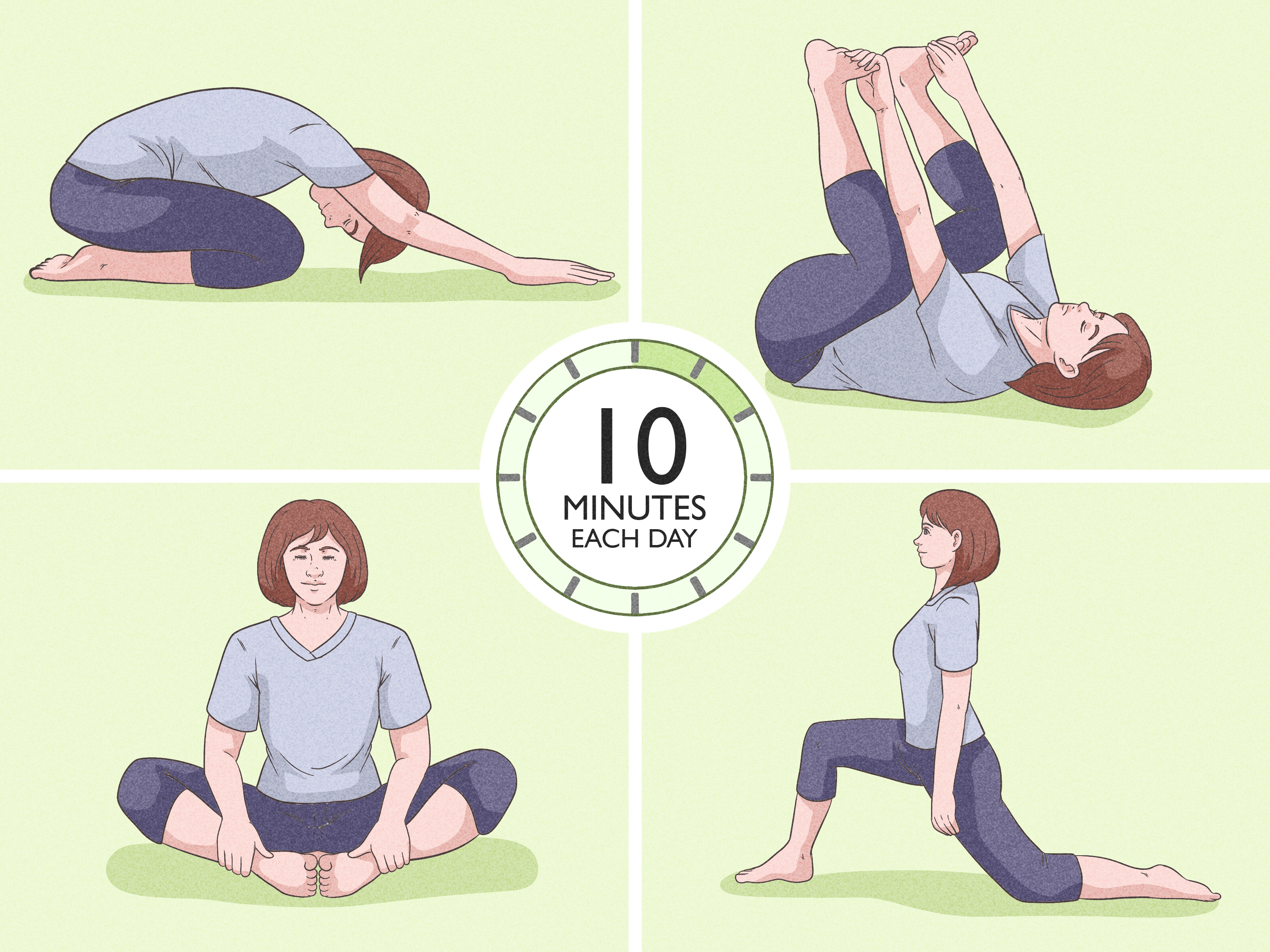
A Simple 10-Minute Pelvic Mobility Routine
Here is a beginner-friendly routine you can do three to five days per week. It works well in the morning, after long sitting, or after a light walk.
- Pelvic tilts: 12 slow repetitions
- Cat-cow: 8 slow repetitions
- Kneeling hip flexor stretch: 30 seconds per side
- Figure-four stretch: 30 seconds per side
- Butterfly stretch: 30 seconds
- Child’s pose with wide knees: 60 seconds
- Supported deep squat: 20 to 30 seconds, optional
Before stretching, warm up with two to five minutes of easy movement, such as walking, marching in place, or gentle hip circles. Warm muscles usually stretch more comfortably than cold ones.
How to Stretch the Pelvic Floor Without Overdoing It
Many people hear “pelvic floor” and immediately think of strengthening exercises. Strength can help some people, especially those with leakage or poor support, but not every pelvic floor problem needs more squeezing. Some people have pelvic floor muscles that are overactive, tense, or poorly coordinated. In those cases, relaxation and lengthening may be more helpful than constant contractions.
To encourage pelvic floor relaxation, try diaphragmatic breathing in a comfortable position. Lie on your back with knees bent or rest in child’s pose. Inhale slowly and imagine the lower belly, ribs, hips, and pelvic floor gently expanding. Exhale and allow everything to soften. Repeat for one to three minutes.
Avoid forcing the pelvic floor downward. The goal is not to push or strain. It is to relax. If you have pelvic pain, bladder symptoms, bowel symptoms, pain with sitting, or persistent pressure, a pelvic floor physical therapist can provide a personalized evaluation.
What to Avoid When Stretching Your Pelvis
Stretching should reduce tension, not create a new problem. Avoid bouncing, holding your breath, pushing through sharp pain, or forcing extreme ranges of motion. Also avoid copying advanced poses if your body is clearly voting “no.” Social media flexibility is not a medical plan.
If a stretch causes pinching in the front of the hip, try decreasing the range, changing your angle, or choosing a different stretch. Hip pinching can happen when the joint is compressed, and pushing harder usually does not help.
If symptoms flare after stretching, reduce intensity and duration. Try shorter holds, fewer repetitions, and more breathing-based mobility. Pain relief routines should feel supportive, not like a dramatic sequel called “Revenge of the Hip Flexor.”
When to See a Professional
See a healthcare professional or physical therapist if pelvic pain lasts more than a few weeks, keeps returning, limits walking or daily activities, or appears after a fall, accident, surgery, pregnancy, or childbirth. Also seek care if you notice numbness, weakness, pain traveling below the knee, fever, unexplained weight loss, night pain that does not improve with position changes, or bladder or bowel changes.
A physical therapist can assess hip mobility, spine movement, gait, strength, pelvic control, and muscle tension. A pelvic floor physical therapist can also evaluate whether symptoms are related to pelvic floor weakness, overactivity, coordination issues, or other factors.
How Long Does It Take to Feel Better?
Some people feel looser after one session, especially if their discomfort is mainly from sitting or mild stiffness. For chronic pelvic tightness, meaningful improvement often takes several weeks of consistent practice. Think of mobility as a conversation with your body, not a command. You are asking muscles, joints, and nerves to trust movement again.
Track progress with simple daily markers: Is it easier to stand up from a chair? Can you walk longer without stiffness? Does your low back feel less guarded in the morning? Can you breathe more deeply during stretches? These small wins matter.
Experience-Based Notes: What Pelvic Stretching Feels Like in Real Life
People often expect pelvic stretching to feel dramatic. In reality, the best results usually come from movements that look almost boring. A person who sits eight hours a day may start with a kneeling hip flexor stretch and feel very little at first. Then they adjust by tucking the pelvis slightly, squeezing the back glute, and breathing slowly. Suddenly the stretch appears in the front of the hip like, “Hello, I have been here since 2019.”
Another common experience is discovering that one side feels completely different from the other. The right hip may glide easily while the left hip behaves like it has a tiny lawyer objecting to every motion. This asymmetry is common. It does not mean your body is broken. It means your movement habits, posture, sports, sleep positions, old injuries, and daily routines have shaped each side differently.
Many beginners also stretch too hard. They chase the strongest sensation because they assume more intensity equals faster results. Usually, the opposite is true. When a stretch is too aggressive, the body may tighten in response. A gentler stretch, held with relaxed breathing, often works better. The body is more like a nervous cat than a stubborn machine. You do not fix it by yelling.
A practical example: after a long workday, start with two minutes of walking around the room. Then do pelvic tilts on the floor, cat-cow, and child’s pose. After that, try the figure-four stretch and kneeling hip flexor stretch. Many people notice that the second or third stretch feels easier because the nervous system has warmed up. The pelvis starts to move as part of a chain rather than as one stiff block.
Another useful habit is pairing stretches with daily triggers. Stretch after brushing your teeth, after shutting your laptop, after a commute, or before bed. This removes the need for heroic motivation. You are not “starting a fitness journey.” You are simply giving your hips a small software update.
People with stress-related pelvic tension may benefit most from breathing-focused positions. Wide-knee child’s pose, supported deep squat, or lying on the back with knees supported can help the belly and pelvic floor relax. The key is not to push. Instead, inhale gently into the ribs and lower belly, then exhale slowly as if fogging a mirror. Over time, this can teach the pelvis that relaxation is allowed.
For active people, pelvic stretching often works best after training or on recovery days. Runners may benefit from hip flexor, glute, hamstring, and adductor mobility. Lifters may need hip rotation work and core control. Desk workers often need frequent movement snacks rather than one long stretch at night. Parents, students, drivers, and anyone who spends too much time folded into a chair can benefit from short sessions spread throughout the day.
The biggest lesson is simple: pelvic mobility improves when you stop treating pain as an enemy and start treating it as information. Move gently, listen closely, and progress gradually. Your pelvis does not need punishment. It needs patience, variety, strength, and a little daily attention.
Conclusion
Learning how to stretch your pelvis can help reduce pain, improve hip mobility, support better posture, and make everyday movement feel easier. The most effective routine is not the most complicated one. It is the one you can repeat consistently without irritating your symptoms.
Start with gentle pelvic tilts, hip flexor stretches, figure-four stretches, butterfly stretches, cat-cow, and breathing-based relaxation. Keep the intensity moderate, avoid forcing painful positions, and combine mobility work with basic strengthening for the glutes, core, and hips. If your pain is persistent, severe, or unusual, get professional guidance. Your pelvis is important real estate. Treat it kindly.