After A Few Years Of Hard Work I Was Finally Able To Quit My Day Job. Here Are 59 Of My Best Comics

Every artist has a version of the same daydream: one morning, the alarm goes off, the inbox groans, the coffee tastes like mild regret, and instead of heading to a day job, the artist gets to sit down and make the thing they actually love. For cartoonist Chris Hallbeck, that dream was not a magical lightning strike. It was more like a very patient pigeon: awkward, persistent, and eventually impossible to ignore.
The story behind “After A Few Years Of Hard Work I Was Finally Able To Quit My Day Job. Here Are 59 Of My Best Comics” is not only about funny comics. It is about creative endurance, changing media, internet culture, and the strange bravery required to keep drawing when the traditional career path for cartoonists seems to be folding itself into yesterday’s newspaper.
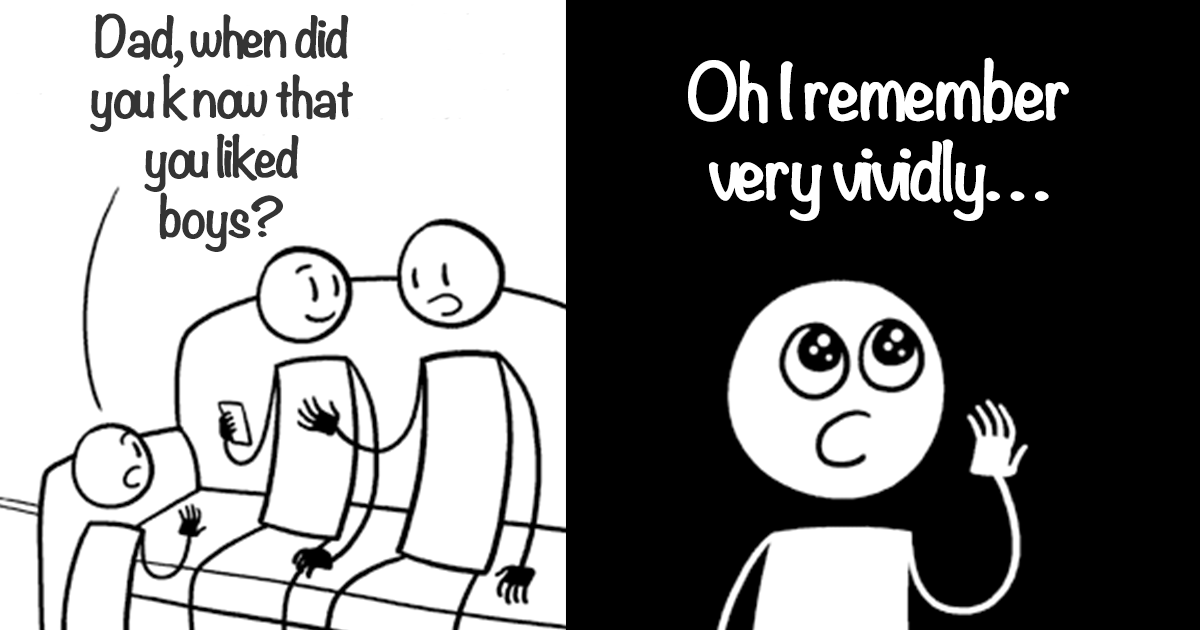
Hallbeck, known for Maximumble, Minimumble, The Book of Biff, and later Pebble and Wren, built his career through years of consistent online publishing. His comics are often simple in appearance but sharp in timing: clean characters, playful absurdity, and punchlines that arrive with the confidence of a cat knocking a glass off the table while maintaining eye contact.
From Newspaper Dreams to Internet Reality
For many cartoonists, the classic dream once looked straightforward: get syndicated, appear in newspapers, build a loyal readership, and maybe become the next household name sitting somewhere between Peanuts, Garfield, and Calvin and Hobbes. Hallbeck grew up admiring that world. He wanted to be a newspaper cartoonist, and like many artists, he started by entertaining friends long before there was any money involved.
But timing has a sense of humor. By the time Hallbeck was leaving college, the newspaper business was already facing major disruption. Print circulation had been sliding for years, ad revenue was under pressure, and the comic strip page was no longer the guaranteed creative kingdom it had once been. In other words, the dream job did not vanish dramatically with thunder and violins. It just got smaller, thinner, and harder to find.
At the same time, the internet was opening a different door. It was not polished. It did not come with a syndication contract, a fancy office, or a person named Gary who says things like “We’ll run this in the Sunday edition.” But it did offer something powerful: direct access to readers.
Why Chris Hallbeck’s Comics Work So Well Online
Hallbeck’s comics are built for quick recognition. They do not need a long introduction, a complicated mythology, or a corkboard covered in red string. Many strips begin with an everyday setup: a conversation, a small social moment, a workplace frustration, a childhood memory, a tiny fear. Then, with a turn of logic, the ordinary becomes ridiculous.
This is one reason Chris Hallbeck comics fit naturally into digital culture. Online readers often encounter comics while scrolling between emails, lunch breaks, bus rides, or whatever three-minute gap exists before pretending to be productive again. A short webcomic has to make an impression fast. Hallbeck’s style does exactly that.
Simple Art, Strong Timing
The artwork in Hallbeck’s comics is intentionally clean and minimal. That simplicity is not a weakness; it is part of the engine. When the characters are visually uncomplicated, the joke gets more room to breathe. Facial expressions, silence, and panel rhythm carry the weight. A raised eyebrow can become a full emotional press conference.
Minimal art also makes the comics feel universal. The characters are not usually defined by elaborate backgrounds or overly specific design. They become stand-ins for anyone who has misunderstood a social cue, failed at being normal, or had an internal crisis over something as small as choosing the wrong sandwich.
Absurdity With a Human Center
The best funny webcomics are not random for the sake of being random. They have a little truth hiding inside the silliness. Hallbeck’s jokes often work because they exaggerate familiar feelings: anxiety, awkwardness, ambition, laziness, curiosity, friendship, and the tiny daily negotiations between wanting to be responsible and wanting to become a blanket burrito forever.
That emotional center is why a comic about a monster, a weird office exchange, or a surreal misunderstanding can feel oddly relatable. The details are strange, but the feeling is recognizable. It is the comedy version of looking in a funhouse mirror and saying, “Unfortunately, yes, that is me.”
The Hard Work Behind “Sudden” Creative Success
When readers see an artist announce that they were finally able to quit their day job, it can sound like a clean before-and-after story. Before: office chair. After: freedom, cartoons, and presumably a kitchen stocked entirely with celebratory snacks. But creative careers rarely work that neatly.
Hallbeck’s path shows the less glamorous truth: publishing consistently matters. He did not simply post one comic, go viral, and ride a golden hoverboard into full-time cartooning. He spent years drawing, refining, posting, sharing, learning from readers, and building a body of work large enough for people to trust that he would keep showing up.
That consistency is one of the most important lessons for anyone trying to become a full-time artist. Talent matters, yes. A unique voice matters. But the internet also rewards persistence. Readers return when they believe there will be something new waiting for them. The relationship between artist and audience is built one comic at a time.
How Webcomics Changed the Cartoonist’s Career Path
The rise of webcomics changed what it means to be a cartoonist. In the newspaper era, a small number of gatekeepers controlled access to mass audiences. Online, creators could publish independently and build communities without waiting for permission. That freedom came with challenges, of course. The internet is not exactly famous for being calm, predictable, or kind to attention spans.
Still, webcomics gave cartoonists new tools: personal websites, email newsletters, social media platforms, crowdfunding, merchandise stores, digital books, animation channels, and membership communities. A modern comic artist may earn income from several sources at once rather than relying on one traditional paycheck.
For creators like Hallbeck, that shift mattered. His work could travel directly to readers. Fans could follow his comics, share favorite strips, support his projects, buy books, or subscribe through creator platforms. The cartoonist was no longer only a person trying to fit into a shrinking newspaper slot. The cartoonist could become a small creative business.
What Makes the “59 Best Comics” Format So Appealing?
There is a reason collections like 59 best comics are so clickable. Readers love variety, and comics are naturally snackable. A list of comics gives people permission to keep scrolling because each entry offers a fresh joke, a new setup, and a tiny emotional reset. It is entertainment in bite-size form, which is perfect for the internet and dangerous for anyone who promised themselves they would only read “one more.”
But the format also does something useful for the artist. It introduces new readers to a range of themes and tones. One comic might be absurd, another sweet, another darkly silly, another painfully relatable. Together, they show the creator’s voice more clearly than a single strip can.
A Portfolio Disguised as Fun
A “best comics” collection is essentially a portfolio with better jokes. It lets casual readers become fans without feeling like they are being handed a résumé. Instead of saying, “Please observe my professional range,” the artist says, “Here are some tiny disasters I drew. Enjoy.” That is much more charming.
For Hallbeck, a large collection also shows how durable his humor is. The strips do not rely on one gimmick. They move through different situations while keeping a recognizable voice: curious, deadpan, slightly absurd, and warmly human.
Lessons Creators Can Learn From Chris Hallbeck’s Journey
Hallbeck’s story is inspiring, but not because it suggests quitting a day job is easy. It is inspiring because it shows that creative freedom can be built gradually. There is no single secret button labeled “Become Full-Time Artist,” which is rude, frankly. But there are patterns worth noticing.
1. Start Before the Career Looks Possible
Hallbeck drew comics for friends before he had a large audience. That matters. Many creative careers begin as a private habit, not a public brand. The early work may be rough, but it builds the muscles: joke writing, visual clarity, timing, discipline, and the ability to finish something even when nobody is applauding yet.
2. Adapt When the Industry Changes
The decline of newspaper opportunities could have been the end of the dream. Instead, the internet became the new stage. This is a key lesson for artists: the form of the dream may change, but the core desire can survive. Hallbeck wanted to make comics for readers. Whether those readers arrived through a newspaper or a browser window, the heart of the work remained the same.
3. Build a Direct Relationship With Readers
Modern creators benefit when readers know where to find them. A comic posted online can be shared widely, but a sustainable career often depends on deeper connections: followers who return, fans who support memberships, readers who buy books, and communities that care about the artist behind the work.
4. Let the Work Stay Fun
One of the best qualities in Hallbeck’s comics is that they still feel playful. Even when the subject is work, stress, or social awkwardness, the tone rarely feels heavy-handed. The jokes seem to come from curiosity rather than cynicism. That sense of fun is not just pleasant; it is strategic. Readers can feel when a creator enjoys the world they are building.
Why Relatable Comics Keep Winning Online
Relatable comics are one of the internet’s favorite art forms because they compress emotion into a tiny package. A good comic can say, “Yes, being a person is weird,” faster than a 2,000-word essay. Please ignore the fact that this is a 2,000-word article saying exactly that.
People share comics because they recognize themselves in them. A strip about procrastination becomes a group confession. A joke about anxiety becomes a gentle nod between strangers. A comic about quitting a day job becomes a symbol of creative possibility. That shareability helps webcomic artists grow beyond their own websites and reach readers across platforms.
Hallbeck’s work fits into this tradition because it is approachable without being shallow. The jokes are easy to enter, but they often carry an extra little twist. The reader gets the quick laugh first, then the second laugh arrives when the absurdity settles in.
The Business Side: Turning Comics Into a Livelihood
Quitting a day job to make comics full time sounds romantic, but it also requires business reality. Full-time creators often juggle multiple income streams: ads, books, prints, merchandise, freelance work, crowdfunding, memberships, licensing, commissions, and platform revenue. The art may be whimsical, but the spreadsheet is very real. It sits there blinking, wearing tiny accountant glasses.
For webcomic artists, platforms like Patreon and crowdfunding sites have become important because they allow fans to support ongoing work directly. Digital comic platforms also offer monetization tools, while print publishers can help successful webcomic concepts reach bookstores and libraries. Hallbeck’s later graphic novel work shows how online comics can expand into longer-form publishing without losing their original charm.
The biggest takeaway is that a creative career is usually not one big door. It is a hallway full of smaller doors, some of which squeak, some of which lead to opportunity, and at least one of which is probably a closet full of old convention banners.
Why This Story Still Feels Relevant Today
The creator economy has grown enormously, but the emotional core of Hallbeck’s story remains current. Many people still want to turn a creative passion into a livelihood. Many still feel stuck between practical bills and impractical dreams. Many still wonder whether the thing they make at night, after work, could become the thing they do in daylight.
Hallbeck’s journey does not promise instant results. In fact, its power comes from the opposite message: a creative career can emerge from years of steady effort. It can begin as doodles for friends. It can survive industry collapse. It can grow online. It can become a livelihood when the work, audience, timing, and persistence finally meet.
Experience Section: What This Journey Teaches Anyone Trying to Quit a Day Job Through Creative Work
The idea of quitting a day job after years of hard work has a shiny glow from far away. Up close, it is less like a movie montage and more like assembling furniture without instructions while a raccoon judges you through the window. Creative independence is exciting, but it is also practical, repetitive, and occasionally terrifying.
One of the biggest lessons from a story like Hallbeck’s is that the day job is not always the enemy. For many creators, it is the bridge. A regular paycheck can provide the stability needed to practice without demanding that every sketch immediately pay rent. That does not make the job emotionally easy, especially when the workday drains energy that could have gone into art. But treating the day job as temporary scaffolding can make the process feel less like failure and more like construction.
Another important experience is learning how to make work even when motivation is not wearing its fancy shoes. Anyone can create during a burst of inspiration. The harder part is drawing, writing, editing, posting, and improving during normal weeks when laundry exists, emails multiply, and the creative brain has apparently gone camping. Consistency is not glamorous, but it is how an audience learns to trust a creator.
Creators also have to become comfortable with imperfect beginnings. Early comics, videos, essays, or illustrations may not match the vision in your head. That gap can be frustrating. But the only way to close it is by producing more work. Every finished piece teaches something: how to simplify an idea, how to land a joke faster, how to pace a scene, how to choose a title, how to read audience feedback without letting it chew through your confidence like a caffeinated termite.
There is also the business lesson. A creative career needs more than talent. It needs systems. Where will people find the work? How will they follow it? What can they buy or support? How often will new pieces appear? What happens when one platform changes its algorithm, loses traffic, or suddenly decides everyone wants vertical videos of soup? A sustainable creator learns to diversify without scattering their energy into confetti.
Perhaps the most human lesson is patience. Quitting a day job is often presented as the victory moment, but the real victory happens earlier: when the creator keeps going before the results are obvious. It happens when they post to a small audience, revise a weak idea, try again after a flop, and continue building a voice. By the time the day job finally becomes optional, the artist has already become the person capable of doing the work.
That is why “After A Few Years Of Hard Work I Was Finally Able To Quit My Day Job. Here Are 59 Of My Best Comics” resonates beyond one collection of funny strips. It captures the quiet miracle of persistence. Not overnight success. Not luck disguised as wisdom. Just years of drawing, sharing, adapting, and slowly proving that a strange little dream can grow legs, put on shoes, and walk directly into real life.
Conclusion
Chris Hallbeck’s path from childhood comic dreams to full-time cartooning is a reminder that creative success often arrives through persistence rather than drama. His comics work because they are simple, funny, emotionally familiar, and built with excellent timing. His career works because he adapted to a changing media landscape and kept publishing long enough for readers to find him.
For fans, the 59-comic collection is a joyful scroll through clever visual humor. For creators, it is something more: proof that the internet can turn small, consistent work into a real career. The dream may not arrive in the form you expected. Sometimes it comes back wearing a different hat, holding a drawing tablet, and asking if you are ready to get to work.