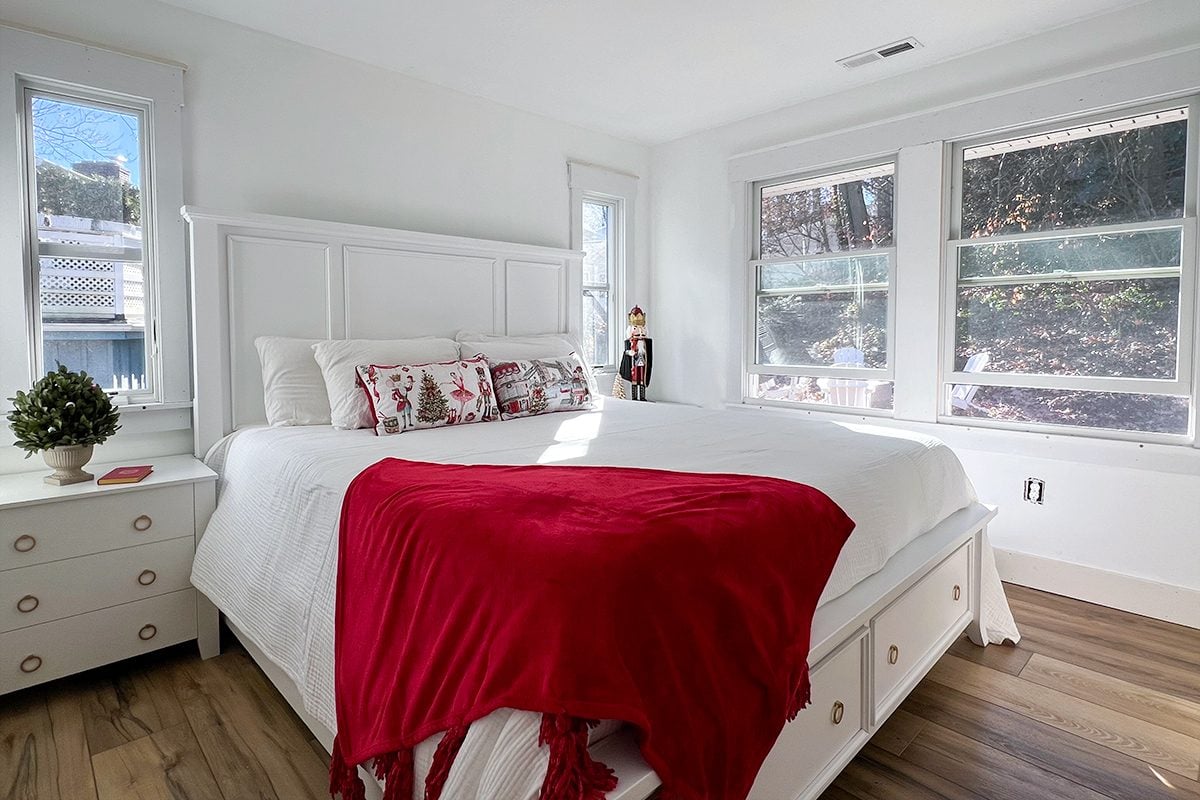

Our master bedroom redesign began with a problem that was both luxurious and slightly ridiculous: the new California king mattress fit through the doorway, but almost nothing else in the room seemed willing to cooperate.
The old nightstands looked like dollhouse furniture. The rug resembled a bath mat that had wandered into the wrong room. Our dresser blocked a natural walking path, and the bench at the foot of the bed turned every midnight bathroom trip into an obstacle course.
Instead of squeezing a large mattress into an arrangement designed for a queen, we started over. We treated the California king bed as the anchor of the entire master bedroom layout and rebuilt every decision around its dimensions, visual weight, and daily use.
The result was not simply a bigger bed in a prettier room. We created a calmer, more balanced space with better circulation, useful storage, layered lighting, properly scaled furniture, and bedding that actually reached the bottom of the mattress. Here is exactly how we approached the project, including the mistakes we made and what living with the finished room taught us.
Why We Chose a California King Mattress
A California king mattress measures 72 inches wide by 84 inches long. A standard king measures 76 inches wide by 80 inches long. In other words, the California king sacrifices four inches of width to gain four inches of length.
That difference sounds minor until one person is tall, another person likes sleeping diagonally, and a dog believes the bottom third of the mattress belongs to him. The extra length gave us more usable space without creating quite as wide a footprint as a standard king.
Our bedroom is longer than it is wide, so the California king’s proportions also worked with the shape of the room. A standard king would have left less space for nightstands and side clearances. The narrower California king allowed us to maintain a comfortable walkway on both sides while still enjoying a generously sized sleeping surface.
It is important to understand that a California king is not automatically “bigger” than a standard king. Its total surface area is slightly smaller. Its advantage is proportion. It is especially practical for tall sleepers, elongated rooms, and households in which pets prefer sleeping near the foot of the bed.
We Measured the Entire Room Before Buying Anything Else
Our first useful tool was not a design app, a mood board, or an inspirational social media account. It was a tape measure.
We measured the room’s length, width, ceiling height, doors, windows, closet openings, electrical outlets, air vents, and baseboards. We also recorded which direction each door swung. That last detail saved us from ordering a dresser that would have interfered with the closet door by approximately one annoying inch.
We Measured the Bed Frame, Not Just the Mattress
A 72-by-84-inch mattress does not necessarily create a 72-by-84-inch footprint. Upholstered rails, extended headboards, footboards, and decorative edges can add several inches in every direction.
Our finished bed frame was wider and longer than the mattress, so we based the floor plan on the frame’s exterior measurements. We also included the depth of the headboard, since a thick upholstered headboard pushes the mattress farther into the room.
We Protected the Walking Paths
We wanted approximately two feet of usable clearance on both sides of the bed wherever possible. That made it easier to walk, change the sheets, open drawers, and avoid performing sideways gymnastics every morning.
We also kept the path between the bedroom entrance, bathroom, and closet as open as possible. A large bed can dominate a room, but it should not control traffic like an overconfident crossing guard.
Before ordering furniture, we marked the proposed bed, rug, nightstands, and dresser on the floor with painter’s tape. The taped outlines immediately showed that our original bench was too deep and that one proposed dresser would make the room feel narrower than it really was.
We Made the California King the Main Focal Point
Once we confirmed the clearances, we centered the bed on the largest uninterrupted wall. This created a strong focal point and allowed us to place a nightstand on each side.
Centering the bed also helped the long room feel intentional rather than tunnel-like. The headboard became the visual anchor, while the rug and overhead light reinforced the same center line.
We considered placing the bed beneath the windows, but that arrangement would have blocked natural light and complicated the curtains. It also would have forced one side of the bed too close to the bathroom door. The largest solid wall offered the cleanest combination of symmetry, circulation, and function.
Our Headboard Had to Match the Mattress’s Scale
The California king mattress made our old headboard appear strangely undersized. We replaced it with a wider upholstered headboard that extended beyond the mattress without overwhelming the nightstands.
We chose a medium-height design rather than an extremely tall one. The room has a standard ceiling, and a towering headboard would have made the ceiling feel lower. The upholstered surface added softness and helped absorb some sound, which made the room feel more cocoon-like at night.
Above the headboard, we used one large piece of art instead of a collection of tiny frames. A large bed creates substantial visual weight, so small decorations can look scattered and nervous by comparison.
We Chose Nightstands That Could Hold Their Own
Our original nightstands were narrow, lightweight tables that looked perfectly reasonable beside a queen bed. Next to the California king, however, they looked as if they had arrived for Bring Your Child to Work Day.
We replaced them with wider nightstands that balanced the mattress and provided closed storage. Their tops sit close to the height of the mattress, making it easy to reach a glass of water, phone, book, or alarm clock without leaning into another ZIP code.
Matching nightstands gave the room a calm, symmetrical foundation, but we avoided buying a complete matching bedroom suite. Mixing the upholstered bed with warm wood nightstands and a painted dresser made the room feel collected rather than copied from a showroom display.
Wall Sconces Freed the Nightstand Surfaces
Instead of placing large lamps on both tables, we installed adjustable wall sconces above them. This preserved valuable surface space and made nighttime reading more comfortable.
The sconces also drew attention upward, helping balance the visual width of the bed. We placed the switches within easy reach and used warm, dimmable bulbs so the room could transition from practical evening lighting to a softer pre-sleep glow.
We Selected a Rug Large Enough for the Bed
The rug was one of the most important purchases in the redesign because it visually connected the bed, nightstands, and surrounding floor space.
A rug beneath a king-size bed generally needs to extend at least 18 to 24 inches beyond the sides and foot to feel balanced. Depending on the room and whether the nightstands sit on the rug, common choices include 9-by-12-foot, 10-by-14-foot, and larger sizes.
We used painter’s tape to compare two dimensions before ordering. The smaller option technically fit beneath the bed, but it left only narrow strips visible on the sides. It made the California king look as though it were balancing on a postage stamp.
We chose the larger rug. It extends generously beyond the bed, provides a soft landing underfoot, and leaves a visible border of flooring around the room. A rug pad keeps it stable, adds cushioning, and helps protect both the rug and the hardwood underneath.
To simplify placement, we positioned the rug perpendicular to the bed and placed it far enough beneath the frame to anchor most of the bed while leaving the nightstands on the hard floor. This gave us plenty of softness where our feet land without requiring an oversized custom rug.
We Reduced the Amount of Furniture
A larger mattress does not merely occupy more floor space. It also changes how every other piece of furniture feels. Pieces that once seemed appropriately sized can suddenly make the room look crowded.
We removed a bulky chest, relocated a small bookcase, and replaced a deep dresser with a narrower model. The new dresser still holds our everyday clothing, but it does not project as far into the walking path.
We briefly considered a large bench for the foot of the bed. After taping its proposed dimensions on the floor, we realized it would reduce circulation and become a luxurious storage system for unfolded laundry. We chose two small upholstered stools instead. They can be moved easily and tucked elsewhere when we need more open space.
Vertical Storage Worked Better Than Wide Storage
Because the bed occupied so much horizontal space, we looked upward. A tall dresser, wall hooks inside the closet, and shelves above a low cabinet increased storage without consuming the center of the room.
We also used shallow under-bed containers for seasonal bedding. Before buying them, we measured the actual clearance beneath the frame. “Under-bed storage” is not a useful concept when the container is half an inch too tall and must live permanently in the hallway.
We Built a Calmer Color Palette Around the Bed
The California king naturally commands attention, so we did not want every other surface competing with it. We chose warm off-white walls, a soft taupe upholstered headboard, medium-tone wood furniture, and muted green accents.
Warm whites and gentle neutrals can make a bedroom feel peaceful without appearing sterile. Soft blues, greens, taupes, and misty grays are also commonly used when the goal is a restful atmosphere.
Our palette relies more on texture than high-contrast pattern. Linen curtains, a woven rug, cotton bedding, a knit throw, and the upholstered headboard keep the neutral colors interesting. The room feels layered, but it does not shout at us while we are trying to sleep.
We repeated each important color at least twice. The green in the pillows appears again in the artwork. The warm wood of the nightstands is echoed by a picture frame and a small tray. Repetition made the combination feel deliberate.
We Layered the Lighting Instead of Relying on One Fixture
Our old room depended on a single ceiling light that offered two settings: interrogation room and darkness. The redesign included three lighting layers.
- Ambient lighting: A central ceiling fixture provides general illumination.
- Task lighting: Adjustable bedside sconces support reading and nighttime routines.
- Accent lighting: A small lamp on the dresser adds a low, warm glow.
Each layer is dimmable or independently controlled. In the morning, the main fixture helps us get dressed. At night, the sconces and dresser lamp provide enough light without making the room feel like a retail store five minutes before closing.
We also made sure the central fixture was appropriately scaled to the room and visually aligned with the bed. A fixture that is too small can disappear above a California king, while an oversized chandelier can make ordinary ceiling heights feel cramped.
We Bought Bedding Specifically for a California King
One of the least glamorous but most important lessons was that standard king bedding does not always behave properly on a California king mattress.
Because the California king is longer and narrower, fitted sheets must match its dimensions. We checked mattress depth as well as length and width, especially because our mattress includes a substantial comfort layer.
We also chose a California king comforter designed to provide better coverage at the foot. Some standard king comforters are wide enough but look too short on the longer mattress. Product dimensions matter more than the label, so we measured before ordering.
We Kept the Pillow Arrangement Manageable
A wide headboard can tempt a person into buying seventeen decorative pillows. We resisted. Our arrangement includes sleeping pillows, a row of supportive shams, and two decorative pillows in front.
It looks finished without requiring a nightly pillow relocation ceremony. The bed remains inviting, and the floor does not become a pillow parking lot.
Small Design Decisions That Made a Big Difference
Several inexpensive details had an outsized effect on the finished master bedroom.
- Floor-length curtains made the windows appear taller and softened the hard lines of the furniture.
- A large mirror near the dresser reflected natural light without facing the bed directly.
- Matching trays on the nightstands contained chargers, glasses, and other small items.
- Cord covers and strategically placed power strips reduced visible cable clutter.
- Felt pads beneath movable furniture protected the flooring.
- A washable throw at the foot of the bed created a designated spot for the dog.
None of these changes was especially dramatic. Together, however, they made the bedroom easier to maintain. That matters because a beautiful room that requires constant staging is not a restful room. It is a part-time job wearing linen curtains.
Mistakes We Avoided During the Redesign
Buying Furniture Before Finalizing the Floor Plan
We completed the layout before ordering the nightstands, dresser, rug, or stools. Product photos can be deceptive, and dimensions that seem reasonable online can feel enormous in a real room.
Assuming Every King Accessory Would Fit
California king mattresses require correctly sized sheets, protectors, frames, and often comforters. We checked the detailed measurements rather than relying on the word “king.”
Using a Rug That Was Too Small
A small rug would have made the bed look disproportionately large. Choosing a generous rug helped the entire arrangement feel grounded.
Filling Every Empty Corner
We left some open floor space instead of treating every corner as a furniture emergency. The negative space allows the room to breathe and makes the California king feel intentional rather than intrusive.
Ignoring Delivery Access
Before ordering the frame and mattress, we measured the stairway, hallway, doorways, and turns leading to the bedroom. A mattress that fits the room is not helpful if it becomes a permanent resident of the staircase.
Our Experience Living With the California King Bedroom
The most surprising part of the redesign is that the bedroom now feels larger, even though the mattress is larger than the one it replaced. That seems mathematically suspicious, but it makes sense when we consider how much unnecessary furniture we removed.
Before the project, the room contained more pieces but offered less useful space. The queen bed was surrounded by an oversized dresser, a deep bench, two small tables, a bookcase, and a storage chest. Each item had arrived separately over the years, and together they created what might politely be called an eclectic collection. Less politely, it looked like a furniture store’s loading dock.
Designing around the California king forced us to become selective. Every object had to justify the floor space it occupied. The result is a room with fewer pieces, wider walking paths, and better storage.
The extra mattress length made an immediate difference for sleeping comfort. There is more space at the foot, and the dog can curl up there without gradually pushing our legs toward opposite corners. The narrower width compared with a standard king has not felt restrictive. In fact, it is one reason the layout works so well in our elongated room.
We also noticed how much easier the bedroom is to clean. The open paths allow a vacuum to move around the bed without repeatedly colliding with furniture. Closed nightstand drawers keep small objects out of sight, and the removable stools are easier to move than a heavy bench.
Making the bed takes slightly more effort because there is simply more bed to make. Fitted sheets require teamwork, patience, or unusually long arms. However, leaving enough clearance on both sides prevents the task from becoming a wrestling match with elastic corners.
The lighting changes improved our evening routine more than expected. We rarely use the bright ceiling fixture before bed. The sconces provide focused reading light, while the dresser lamp gives the rest of the room a comfortable glow. Because the controls are reachable from bed, nobody has to perform the traditional sprint from the wall switch to the mattress after turning out the lights.
The larger rug also proved worthwhile. It makes the room quieter, adds warmth underfoot, and visually connects the major furniture pieces. We were initially reluctant to spend more on the larger size, but the smaller rug would have undermined the scale of the entire design.
Our neutral color palette has been easy to live with because it is flexible. We can change the mood with new pillow covers, a different throw, or seasonal greenery without repainting the room. In cooler months, we add rust and brown accents. During spring and summer, we bring in pale green and dusty blue.
Not every decision was perfect. We underestimated how much space was needed to open one nightstand drawer while standing beside the bed. We eventually shifted the bed a few inches and adjusted the rug. That tiny correction made the arrangement noticeably more functional.
We also learned that decorative restraint is difficult around a large bed. The generous surface practically invites a mountain of blankets and pillows. After a few weeks of moving decorative cushions twice a day, we reduced the collection. The simplified arrangement looks better because the proportions are clearer, and bedtime no longer begins with furniture management.
Most importantly, the room finally supports the way we live. It offers comfortable sleep, convenient reading light, accessible storage, open circulation, and enough softness to feel welcoming. The California king is unquestionably the star, but the rest of the room no longer behaves like a nervous supporting cast.
Final Thoughts
Redesigning a master bedroom around a California king mattress is primarily an exercise in proportion. The mattress may fit within the walls, but a successful layout must also accommodate the frame, nightstands, rug, storage, lighting, bedding, door swings, and daily walking paths.
Our most effective decisions were also the simplest: measure everything, mark furniture outlines with tape, protect at least two feet of circulation where possible, buy a properly scaled rug, reduce unnecessary furniture, and verify the dimensions of every accessory.
A California king can make a bedroom feel luxurious without making it feel crowded. The secret is not trying to preserve a layout designed for a smaller mattress. Let the bed establish the scale, then choose each supporting element with purpose. When the proportions work, the room stops feeling like it contains an enormous mattress and starts feeling like a complete, comfortable retreat.