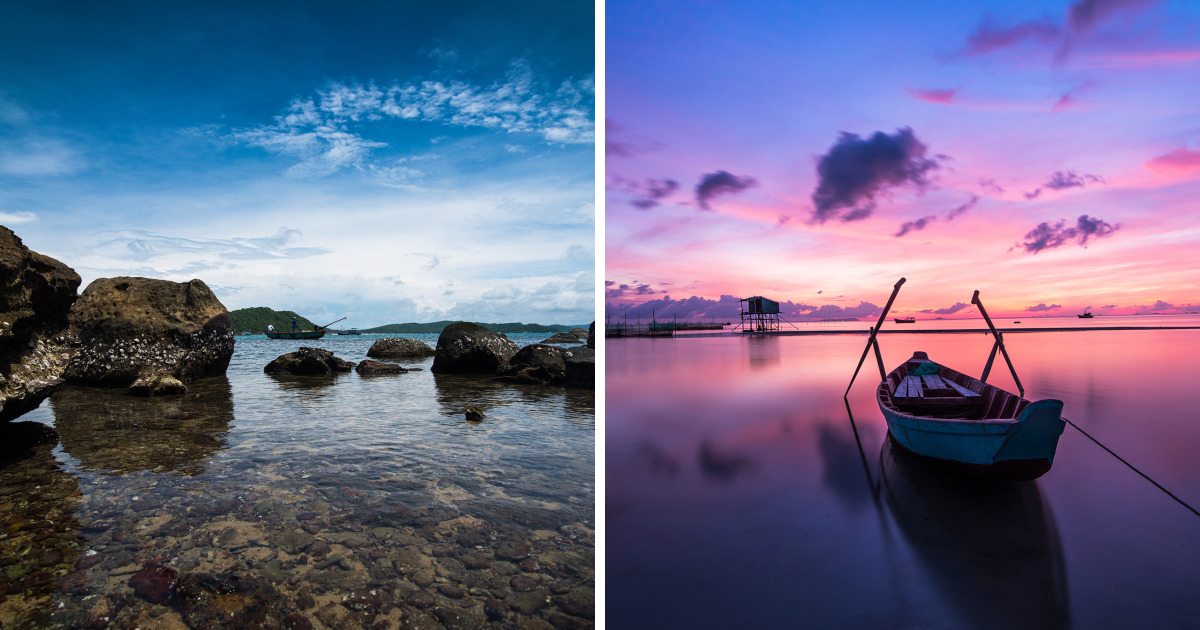

Some destinations politely introduce themselves. Phu Quoc, Vietnam, does not. It arrives barefoot, sunlit, and slightly salty, with jungle on one shoulder and turquoise water on the other. I traveled to Phu Quoc to capture its wild beauty, but the island had other plans. It wanted me to slow down, sweat a little, chase sunsets like a cartoon character chasing a runaway hat, and learn that the best travel photos often happen when your itinerary gives up and goes for a swim.
Located off Vietnam’s southwest coast in the Gulf of Thailand, Phu Quoc is often called the “Pearl Island,” and yes, that nickname is doing some heavy lifting in travel brochures. But after a few days there, I understood it. This island has white-sand beaches, thick forest, fishing villages, coral reefs, pepper farms, night markets, and sunsets so dramatic they seem personally offended by subtlety. It is also changing fast, with luxury resorts, cable cars, theme parks, and polished beachfront developments rising beside quieter pockets of local life.
That contrast is exactly what makes Phu Quoc fascinating. It is not just a beach vacation. It is a living island, a nature destination, a seafood playground, a photography challenge, and a reminder that wild beauty does not always mean untouched. Sometimes it means resilient, layered, humid, noisy, fragrant, and very much alive.
Why Phu Quoc Feels Different From Other Beach Destinations
Phu Quoc has many of the ingredients travelers expect from a tropical island: calm water, palm trees, beach resorts, boat trips, and seafood served with the confidence of people who know they live near the source. But what surprised me most was the variety packed into one island. In the morning, I could walk through a quiet fishing hamlet. By afternoon, I could be on a forest road near Phu Quoc National Park. By evening, I could photograph the sun melting into the sea near Long Beach while someone nearby negotiated the price of grilled squid with the seriousness of a diplomatic treaty.
The island’s beauty is not one-note. Long Beach is the classic sunset stage, with wide sand and soft waves. Sao Beach, on the southeast side, is famous for pale sand and clear water. Ganh Dau and Bai Thom feel quieter and more local, especially when you leave the polished resort zones behind. The An Thoi Archipelago in the south brings island-hopping, snorkeling, and sea views that look suspiciously like someone turned the saturation slider too high.
For photographers, Phu Quoc is a generous subject. It gives you color, texture, weather, movement, and small human stories. Fishing boats rest on glassy water. Pepper vines climb in careful rows. Forest shadows shift across red dirt roads. Night market smoke curls around trays of seafood. Even the island’s imperfectionsconstruction, traffic, plastic waste in places, and the push-pull of rapid developmenttell a more honest story than a postcard ever could.
The Best Time To Visit Phu Quoc For Photography And Adventure
If your goal is to photograph Phu Quoc’s beaches, sunsets, and underwater scenery, the dry season is usually the friendliest choice. From roughly November through April, the island tends to have calmer seas, brighter skies, and better conditions for snorkeling, swimming, boat trips, and sunset photography. This is also the period when beaches look most like the fantasy you had in your head while booking your flight at midnight.
The rainy season, generally from May to October, is not a disaster. In fact, it can be beautiful in a moody, cinematic way. The jungle turns greener, clouds become more dramatic, and crowds thin out. But heavy showers can interrupt boat trips, make forest trails muddy, and turn your “casual beach shoot” into “person wrestling a poncho while protecting a camera bag.” If you travel during this time, build flexibility into your schedule and make peace with the sky having opinions.
For golden-hour photography, Phu Quoc is especially kind. The west coast is famous for sunset views, and Long Beach is the obvious place to start. Arrive early, scout foregrounds, and look for silhouettes: boats, palms, piers, beachgoers, or even your own sandals if you are desperate and artistically committed. Sunrise can be quieter on the east side, especially around Ham Ninh, where fishing boats and soft morning light create a gentler, more documentary-style scene.
Chasing The Wild Side: Phu Quoc National Park
Phu Quoc National Park is where the island changes its voice. The beach soundtrack fades, the air gets thicker, and the landscape becomes a layered green wall of tropical forest. The park is part of the wider Kien Giang Biosphere Reserve, a UNESCO-recognized area that includes terrestrial and marine ecosystems. This matters because Phu Quoc is not just pretty; it is ecologically significant.
Walking into the forest, I immediately realized two things. First, nature photography here rewards patience. Second, I had severely underestimated the humidity and overestimated my personal elegance. Jungle paths can be warm, damp, and uneven, but they are full of details: leaves bigger than dinner plates, vines twisting like old phone cords, insects with metallic colors, and shafts of light that appear and disappear in seconds.
The park is best experienced slowly. You are not there to conquer anything. You are there to listen, observe, and hopefully not make eye contact with a mosquito that looks like it has been training for this moment. Bring water, insect repellent, sturdy shoes, and a camera setup you can carry comfortably. A zoom lens is useful for wildlife and distant textures, while a wide-angle lens helps capture the density of the forest.
What I loved most was the contrast between the park and the beach. One hour, Phu Quoc is all open horizons and blue water. The next, it becomes shadow, leaf, root, and birdcall. That dual personality is the island’s real magic.
Beaches That Deserve More Than A Quick Selfie
Long Beach: The Sunset Classic
Long Beach is popular for good reason. It stretches along the west coast and gives travelers easy access to restaurants, hotels, bars, and sunset views. For photographers, the trick is to avoid shooting only the obvious. Yes, the sun dropping into the sea is gorgeous. But look sideways. Photograph reflections in wet sand, hands holding cold coconuts, children running through the edge of the tide, and the glow on faces after the sun has technically disappeared but the sky keeps showing off.
Sao Beach: The Soft-Sand Showpiece
Sao Beach often appears in conversations about the most beautiful beaches in Phu Quoc. Its pale sand and shallow water make it visually irresistible, especially on a clear day. It can get busy, so arrive early if you want quieter images. The water here can shift from blue to green depending on light and weather, and the gentle curve of the shoreline works beautifully for wide shots.
Ganh Dau And Bai Thom: Quieter Edges
For a more rugged, local feeling, head toward the northern parts of the island. Ganh Dau and Bai Thom are not always polished in the resort-brochure sense, but they offer a stronger sense of place. You may find fishing boats, local homes, quiet roads, and views that feel less staged. These areas reminded me that wild beauty is not always pristine. Sometimes it is a working shoreline, a sun-faded boat, and a dog asleep under a plastic chair like it owns the island.
The An Thoi Archipelago: Where The Water Gets Ridiculous
South of Phu Quoc, the An Thoi Archipelago is a major draw for island-hopping, snorkeling, and boat photography. The water can be astonishingly clear in good conditions, and the smaller islands create layered seascapes that are ideal for drone-style compositions, boat shots, and wide tropical frames. Even if you are not a professional photographer, this is the kind of place where your camera roll suddenly becomes very confident.
One of the most famous modern attractions in this area is the Hon Thom cable car, a sea-crossing ride that gives passengers sweeping views over islands, boats, and bright water. It is not exactly a secret wilderness experience, but visually, it is memorable. From above, Phu Quoc’s southern coastline looks like a map drawn by someone who had a lot of blue pencils and excellent taste.
If you snorkel, choose operators that respect marine life. Do not stand on coral, do not touch sea creatures, and do not treat starfish like props for your vacation album. The ocean is not a photo studio with fins. Responsible travel matters here, especially as Phu Quoc grows more popular.
Food, Markets, And The Flavor Of The Island
You cannot understand Phu Quoc with your eyes alone. You need your nose, your appetite, and ideally a willingness to eat something you cannot confidently identify at first glance. Phu Quoc is famous for fish sauce, pepper, seafood, and casual meals that make fancy tasting menus look like they are trying too hard.
The night market in Duong Dong is a great place to start. It is lively, smoky, bright, and slightly chaotic in the best way. Grilled scallops, prawns, squid, sea urchin, noodles, tropical fruit, coconut ice cream, and skewers compete for your attention. The air smells like charcoal, garlic, saltwater, and poor impulse control. I recommend arriving hungry and leaving with no regrets, except perhaps ordering one extra thing “just to try” when you were already full 20 minutes earlier.
Phu Quoc pepper farms are also worth visiting. The island’s pepper is prized for its fragrance and heat, and the farms are surprisingly photogenic. Rows of pepper vines create leading lines, farmers move between the plants, and the green-red-black color palette adds variety to a beach-heavy photo story.
Then there is fish sauce. Phu Quoc fish sauce has deep cultural and culinary importance, made traditionally from anchovies and salt through a long fermentation process. A visit to a fish sauce house is not for delicate noses, but it is fascinating. The wooden barrels, amber liquid, and intense aroma tell a story of craft, patience, and flavor. It is not glamorous in the influencer sense, but it is one of the most authentic windows into the island’s identity.
How To Photograph Phu Quoc Without Missing The Point
The biggest mistake you can make in Phu Quoc is treating it like a checklist. Beach, click. Sunset, click. Cable car, click. Seafood, click. Done. But the island is better when you let it breathe. Some of my favorite images came from moments I did not plan: a vendor rinsing herbs in a metal bowl, a fishing boat returning under a bruised purple sky, a child laughing as waves chased his ankles, a road lined with palms after rain.
For better travel photography in Phu Quoc, start early. Morning light is softer, streets are calmer, and local life begins before tourists have finished negotiating with their hotel breakfast buffet. Use the middle of the day for shaded markets, forest details, food photography, or rest. Then return outside for late afternoon and sunset.
Pack light but smart. A weather-sealed camera is helpful, though not mandatory. A microfiber cloth is essential because salt spray and humidity are determined little villains. A polarizing filter can help manage glare on water and deepen skies. If you shoot with a phone, clean your lens constantly. This sounds basic, but many “mysterious dreamy glow” travel photos are just fingerprints having a career moment.
The Honest Side Of Paradise
Phu Quoc is beautiful, but it is not frozen in time. Tourism development has transformed parts of the island. Resorts, entertainment complexes, roads, and new attractions have created jobs and expanded access, but they have also changed landscapes and increased pressure on natural areas. That does not mean travelers should avoid Phu Quoc. It means we should visit with open eyes.
Support local businesses when possible. Choose responsible tour operators. Avoid littering, reduce single-use plastics, respect marine life, and remember that beaches are not just backdrops; they are ecosystems and community spaces. If you visit fishing villages or rural areas, photograph people respectfully. A smile, a gesture, or a simple request can turn an image from extractive to human.
Wild beauty is not only something to consume. It is something to protect. Phu Quoc gave me plenty of postcard moments, but it also asked a question: what kind of traveler do you become when the destination is both stunning and vulnerable?
A Three-Day Phu Quoc Itinerary For Nature Lovers And Photographers
Day One: West Coast Arrival And Sunset
Start in Duong Dong or along Long Beach. Spend the afternoon settling in, walking the shoreline, and scouting sunset compositions. In the evening, visit the night market for seafood and street photography. Keep your camera ready, but do not forget to eat. Art is important; grilled scallops are also important.
Day Two: National Park, Pepper Farm, And Local Roads
Head north toward Phu Quoc National Park and nearby quieter areas such as Ganh Dau or Bai Thom. Focus on forest textures, roadside scenes, and local life. Visit a pepper farm if time allows. Return before dark unless you are comfortable driving unfamiliar roads at night.
Day Three: Southern Islands And Sao Beach
Spend your final day exploring the south. Take a boat trip around the An Thoi islands, ride the Hon Thom cable car if it fits your style, and stop at Sao Beach for classic tropical images. End with one last sunset because Phu Quoc sunsets are like potato chips: pretending one is enough is adorable but unrealistic.
What I Learned From Traveling To Phu Quoc
I came to Phu Quoc to capture wild beauty, but the island taught me that beauty is not always quiet. Sometimes it smells like fish sauce barrels. Sometimes it buzzes like a night market. Sometimes it is tangled in vines, wrapped in humidity, or half-hidden behind a construction crane. Sometimes it appears for seven seconds when a fisherman’s net catches the light and then disappears before you can change settings.
Phu Quoc is not perfect, and that is exactly why it feels real. It is a destination in motion, balancing nature, culture, tourism, and local life. For travelers, that makes it richer than a simple beach escape. For photographers, it makes it endlessly interesting. The island does not hand you one story. It gives you a dozen and lets you chase them barefoot through sand, forest, market smoke, and rain.
Extra Field Notes: More Experiences From My Phu Quoc Journey
One of my favorite mornings in Phu Quoc began before sunrise, which is a heroic sentence for someone who generally believes alarms are tiny machines of betrayal. I left my room while the island was still blue-gray and sleepy. The road was quiet except for a few motorbikes, a rooster with opera-level confidence, and the soft clink of breakfast stalls getting ready. I headed toward the coast, hoping for a sunrise photograph, but what I found was better than the picture I had planned.
At the water’s edge, a few fishermen were already working. Their boats rocked gently, painted in colors softened by salt and time. Nets lay in loose piles, and the first light slipped over the scene without drama. No blazing sky, no cinematic explosion of orange. Just a slow reveal. A man in a conical hat lifted a basket. A woman rinsed something in the shallows. A dog wandered by, inspected me, and decided I was not carrying snacks. It was not the kind of sunrise that wins social media immediately, but it was the kind that stays with you.
Later that day, I rented a motorbike and followed roads that seemed to change personality every few miles. One stretch was smooth and resort-lined. Another turned red and dusty, framed by palms and small houses. I passed pepper farms, roadside cafes, hammocks, shrines, and fruit stands stacked with rambutan and mango. Every few minutes, I wanted to stop. This is both the blessing and curse of traveling with a camera: you become extremely interruptible.
At a small cafe, I ordered iced coffee and sat under a fan that made more noise than wind. The coffee was strong, sweet, and completely uninterested in subtlety. Nearby, a family prepared lunch, and the smell of garlic, pepper, and something sizzling made me question why I had not ordered food. Travel in Phu Quoc often worked like that. I would set out to photograph a beach and end up learning more from a roadside meal, a conversation, or a wrong turn.
One afternoon, rain arrived suddenly. Not polite rain. Tropical rain. The sky opened like it had been waiting all day to make a point. I ducked under a shelter with two other travelers and a local vendor who looked deeply amused by our surprise. For 20 minutes, the island became silver and loud. Water bounced off the road, leaves shivered, and the sea turned matte and mysterious. When the rain stopped, everything looked freshly painted. The greens were greener, the sand was darker, and the air smelled clean, earthy, and alive.
That evening, I returned to the west coast for sunset. Clouds from the storm still hung over the horizon, turning the sky into layers of peach, lavender, and smoky blue. People gathered quietly along the beach. Some took photos. Some simply watched. I set up my shot, adjusted my frame, and then, for once, lowered the camera. The best image of Phu Quoc, I realized, was not only the one I could capture. It was also the one I had to stand inside and remember.
Conclusion: Phu Quoc Is More Than A Pretty Island
Phu Quoc is a place of bright beaches, dense forest, coral waters, pepper farms, seafood smoke, and sunsets that make even tired travelers stop talking. But its wild beauty is not just visual. It is sensory, cultural, and emotional. It lives in the national park’s green silence, the night market’s joyful chaos, the taste of pepper and fish sauce, and the changing light on fishing boats at the edge of the day.
If you travel to Phu Quoc, go for the beaches, but do not stop there. Visit the forest. Eat locally. Wake early. Take the slower road. Respect the reefs. Watch the sky. Let the island be more complicated than paradise. That is where its real beauty lives.