‘It’s Called Fashein Sweaty’: 30 Times People Just Had To Shame Ugly, Horrible Or Hilarious Clothes

Fashion is supposed to be personal, expressive, and occasionally a little dramatic. But every now and then, an outfit walks into the room and makes everyone wonder whether a sewing machine sneezed. That is the delicious chaos behind the phrase “It’s called fashein, sweaty” a playful internet twist on “It’s called fashion, sweetie,” usually dropped when clothing is so ugly, confusing, or unintentionally hilarious that it circles back around to being art. Questionable art, yes, but still art with pockets.
From jeans with windows in places jeans do not need windows, to shirts printed with grammar crimes, to runway pieces that look like the designer lost a bet, ugly clothes have become a whole category of online entertainment. People love sharing fashion fails because they sit at the perfect intersection of creativity, consumer culture, meme humor, and “who approved this?” energy.
But behind the jokes is a bigger story. The rise of fast fashion and ultra-fast fashion has changed how clothes are designed, produced, marketed, purchased, returned, and mocked online. The U.S. Environmental Protection Agency estimated that 17 million tons of textiles were generated in municipal solid waste in 2018, and the Government Accountability Office has noted that fast fashion’s lower quality can limit reuse and resale, helping push discarded textiles toward landfills. In other words, that neon mesh crop-top with seven sleeves may be funny on the internet, but it might also be part of a much bigger closet problem.
Why Ugly Clothes Go Viral So Easily
Ugly clothing is internet gold because it needs no translation. A jacket shaped like a sleeping bag with confidence issues? Funny in every language. A pair of pants with a belt printed on the fabric instead of an actual belt? Comedy. A luxury handbag that resembles a crushed lunch sack? Suddenly everyone is a fashion critic with a Wi-Fi connection.
What makes these fashion fails so shareable is surprise. People expect clothing to be functional, flattering, or at least understandable. When a garment breaks all three rules at once, the brain pauses, blinks, and says, “I need someone else to witness this.” That reaction fuels entire communities dedicated to strange clothing, thrift-store disasters, suspicious online listings, and runway looks that appear to have been designed during a thunderstorm.
The “Fashein Sweaty” Effect
The joke works because fashion often asks us to suspend disbelief. We are told that unusual cuts are “architectural,” clashing prints are “bold,” and pants that stop at the ankle, knee, and emotional stability are “avant-garde.” Sometimes that is true. Fashion history is full of ideas that looked strange at first and later became normal. But sometimes a bad shirt is just a bad shirt wearing a press release.
“Fashein sweaty” humor pokes fun at that tension. It says, “Maybe this is high fashion, or maybe somebody accidentally attached a curtain to a cardigan.” It is not always cruel; often it is affectionate. The internet loves a confident disaster. If a person wears a bizarre outfit with full commitment, many viewers will laugh and admire the bravery at the same time.
30 Types of Ugly, Horrible, or Hilarious Clothes People Love to Shame
Instead of targeting real people, let’s look at the common categories of clothing chaos that regularly get roasted online. These examples are inspired by recurring fashion-fail patterns seen across social media, resale listings, fast-fashion catalogs, thrift-store finds, and meme culture.
1. The Confusing Cutout
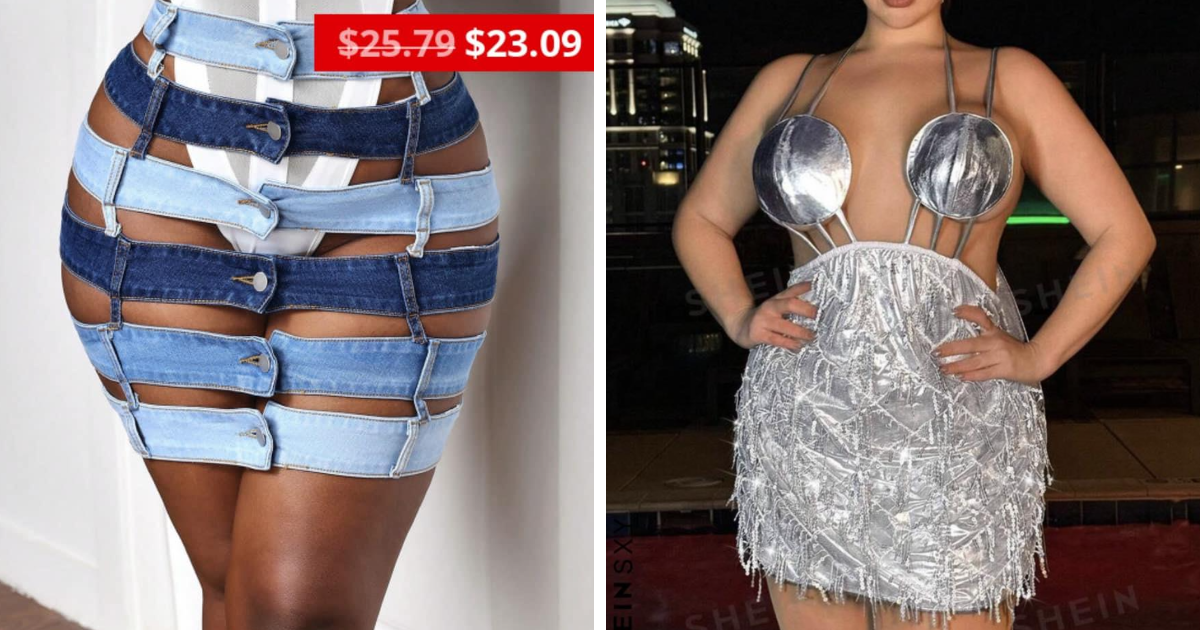
Cutouts can be chic. They can also look like a raccoon got into the laundry basket. The worst offenders place holes in locations that make sitting, walking, or existing feel like a public negotiation.
2. The Pants That Forgot Their Job
Some pants are ripped. Some are distressed. Some look as if they survived a lawn mower and are now seeking closure. Extreme shredded denim often goes viral because it challenges the definition of “pants” in a courtroom-style way.
3. The Motivational Quote Shirt Gone Wrong
A T-shirt saying “Be Yourself” is harmless. A shirt saying “Dream Bigly Confidence Banana” is a mystery. Bad typography, awkward translations, and random inspirational phrases remain one of fashion’s funniest accidental art forms.
4. The Fake Luxury Flex
Some clothes imitate designer logos so aggressively that they create new alphabets. “Guccy,” “Prado,” and “Channelle” are not brands; they are fashion’s fever dreams.
5. The See-Through Surprise
Online product photos can be sneaky. A dress that looks elegant under studio lights may become a ghost costume in daylight. Fabric transparency is one of the fastest ways for a purchase to turn into a cautionary tale.
6. The One-Sleeve Mystery
Asymmetry can be stylish. But when a top has one sleeve, half a collar, and a strap going nowhere, it starts to look less like design and more like a garment escaping construction.
7. The Shoes That Hate Feet
Some shoes are not made for walking. Some are barely made for standing. Platforms shaped like bricks, heels angled like geometry homework, and sandals with toe traps all deserve their own emergency hotline.
8. The Pattern Collision
Leopard print plus plaid plus flames plus butterflies? It can happen. It should not happen often. A loud print can be fun, but five loud prints together feel like a group chat with everyone typing in caps.
9. The “Business in the Front, Costume Party Everywhere Else” Blazer
Blazers with random lace backs, denim sleeves, or surprise rhinestone dragons often become viral because they cannot decide whether they are going to a meeting or hosting karaoke.
10. The Overly Literal Novelty Sweater
A sweater with a snowman on it is festive. A sweater with 3D carrots, battery-powered lights, and dangling fabric snowballs is a wearable insurance claim.
11. The Tiny Pocket Scam
Nothing unites people like fake pockets. A garment can be ugly, but fake pockets make it personal. Fashion should not promise storage and then betray the hand.
12. The Dress That Looks Different From the Listing
Online shopping has created a whole genre of expectation-versus-reality clothing. The listing says “ethereal goddess gown.” The package says “wrinkled napkin with ambition.” Online return rates remain a major retail issue; the National Retail Federation estimated that 19.3% of online sales would be returned in 2025.
13. The Graphic Tee With Unfortunate Placement
Design placement matters. A cute cartoon, slogan, or logo can become instantly cursed when printed across seams, folds, or body zones where no sentence should be interrupted.
14. The Luxury Item That Looks Like Trash
High fashion occasionally creates expensive items that resemble garbage bags, packing materials, or emergency blankets. The joke writes itself, then charges $1,900.
15. The Fabric That Makes Noise
Some garments swish, squeak, or crunch with every step. If your outfit announces your arrival like a bag of chips entering a library, people will have comments.
16. The Trend That Aged in Dog Years
Not every trend survives contact with time. Ultra-low-rise jeans, micro vests, and certain slogan belts may return, but they often bring emotional baggage in a tiny rhinestone suitcase.
17. The “Almost Formal” Disaster
This is the outfit that wants to be elegant but includes one baffling detail: a giant bow, a random zipper, a capelet, or sleeves that resemble pastry bags.
18. The Knockoff Gone Abstract
Some knockoffs are subtle. Others look like someone described a famous dress over a bad phone connection and the factory said, “Close enough.”
19. The Festival Outfit That Cannot Survive Weather
Festival fashion can be playful, but some pieces appear allergic to wind, rain, sitting, dancing, and human movement. That is not an outfit; that is a scheduling conflict.
20. The Jeans With Too Many Features
Laces, straps, chains, zippers, cargo pockets, fake patches, acid wash, and rhinestones can all exist. They do not all need to exist on the same leg.
21. The Sweater Vest Revival Gone Rogue
Sweater vests returned with charm, but some versions look like a couch cushion joined a private school. Nostalgia is powerful, but upholstery is stronger.
22. The “Edgy” Shirt That Tries Too Hard
Skulls, flames, barbed wire, and random Latin words can create a rebellious look. Combine them poorly and the shirt starts giving “mall kiosk villain.”
23. The Dress With Built-In Confusion
Is it a dress? A tunic? A long shirt? A table runner with armholes? Some garments refuse labels because labels have standards.
24. The Badly Cropped Crop Top
A crop top should look intentional. When it appears as though the bottom half simply gave up and moved out, shoppers notice.
25. The Fast-Fashion Dupe With No Soul
Ultra-fast fashion can turn trends into products at astonishing speed, but speed often comes with quality and ethics concerns. The OECD has warned that ultra-fast fashion creates complex supply-chain risks involving workers, the environment, and business integrity.
26. The “Sustainable” Claim That Sounds Suspicious
Words like “eco,” “green,” and “planet-friendly” can be meaningful when backed by evidence. They can also be vague decoration. The Federal Trade Commission’s Green Guides are intended to help marketers avoid misleading environmental claims.
27. The Size Chart From Another Dimension
Online fashion sizing can feel like a riddle guarded by a dragon. A medium in one brand is a small in another, and a “one size” garment often means “good luck, brave citizen.”
28. The Viral Outfit That Only Works in One Pose
Some clothes look amazing in a carefully angled photo but fail during real life. If an outfit requires perfect lighting, one hip tilt, and no breathing, it may be more sculpture than clothing.
29. The Thrift-Store Masterpiece
Thrift stores are museums of human decisions. You may find a gorgeous vintage coat, or you may find a sweater showing a cat playing saxophone on a pizza moon. Both are treasures, just for different reasons.
30. The Outfit So Bad It Becomes Good
This is the holy grail of fashion fails: a piece so strange, bold, and unapologetic that it becomes iconic. Not beautiful, exactly. Not practical. But unforgettable. Sometimes confidence is the best accessory, especially when the outfit itself appears to be filing paperwork.
Why We Laugh at Clothes Without Hating Fashion
Mocking ugly clothes does not mean fashion is pointless. Actually, the opposite is true. People care about fashion because clothing communicates identity, mood, taste, humor, status, rebellion, and belonging. When a garment misses the mark, the failure is visible and immediate. It becomes a tiny cultural event.
Fashion has always involved risk. Many beloved styles looked ridiculous before they looked classic. Sneakers with dresses, oversized silhouettes, visible socks, clashing colors, and even denim-on-denim all had their awkward eras. The line between “hideous” and “ahead of its time” is often drawn by confidence, styling, and whether a celebrity wears it before brunch.
The healthiest way to enjoy fashion-fail humor is to laugh at design choices, marketing absurdity, and product weirdness rather than people’s bodies. There is a difference between saying “that shirt has the energy of a haunted shower curtain” and insulting the person wearing it. The first is comedy. The second is just lazy.
The Fast-Fashion Connection
Many hilarious clothing fails come from the speed of modern retail. Brands race to identify trends, copy viral looks, produce items quickly, and push them into feeds before shoppers lose interest. That pace encourages experimentation, but it also creates mistakes: odd proportions, thin fabrics, poor stitching, chaotic graphics, and listings that look better than the item feels.
Fast fashion is popular because it is affordable and constantly updated. For shoppers, that can feel exciting. For closets, wallets, workers, and waste systems, the picture is more complicated. Cheap pieces are easier to buy impulsively and easier to discard. When quality is low, repairs and resale become less appealing, and the garment’s life gets shorter.
This is why ugly-clothes humor often overlaps with conversations about overconsumption. A funny bad dress is not just a bad dress; it can be a symptom of a market that rewards speed over durability. The joke gets bigger when ten nearly identical versions of the same strange dress appear across different online shops, each with a product description written like a malfunctioning romance novel.
How to Avoid Buying Clothes That Become Internet Evidence
Read Reviews Like a Detective
Customer photos are your best friends. Studio photos sell the dream; customer photos reveal whether the dream has seams, lining, and sleeves of equal length. Look for comments about fabric thickness, stretch, washing, transparency, and fit.
Check the Fabric Content
A beautiful silhouette can be ruined by fabric that pills, wrinkles instantly, or feels like a picnic tablecloth. Natural fibers, blends, and synthetics all have uses, but knowing the material helps you predict comfort and durability.
Respect the Size Chart, But Question It
Measure yourself and compare carefully, especially with international retailers. Also check whether reviewers say the item runs small, large, short, long, or “made for a decorative broom.”
Ask the Three-Use Question
Before buying a wild piece, ask: Can I wear it three ways? Can I wash it without fear? Will I still like it after the trend moves on? If the answer is no, consider admiring it from a safe digital distance.
Choose Funny on Purpose
There is nothing wrong with novelty fashion when it is intentional. A ridiculous sweater for a party? Wonderful. A dramatic jacket that makes you feel like the mayor of a disco planet? Excellent. The key is knowing whether the joke is yours or the garment’s.
Experience Section: What Ugly Clothes Teach Us About Personal Style
Everyone has owned at least one questionable item of clothing. Maybe it was a pair of jeans that looked amazing in the store mirror but transformed into a denim puzzle at home. Maybe it was a jacket bought during a “new me” phase, even though the old you was quietly whispering, “We do not attend yacht parties.” Maybe it was an online purchase that arrived vacuum-sealed, wrinkled, and smelling faintly of regret.
The funny thing about ugly clothes is that they often become better stories than good clothes. A perfect black T-shirt does its job and disappears into your life. A terrible neon blouse with ruffles the size of salad leaves becomes family history. Friends remember it. Photos preserve it. Years later, someone finds it in the back of the closet and the room erupts: “Why did you buy this?” And honestly, you may not know. The heart wants what it wants, and sometimes the heart wants sleeves shaped like tortilla chips.
Bad fashion experiences also sharpen taste. You learn that not every trend deserves rent-free space in your wardrobe. You learn that “influencer cute” and “standing in line at the pharmacy cute” are very different categories. You learn that some fabrics look expensive online because pixels cannot feel polyester. You learn that if a model is posing with one hand permanently holding the dress in place, the dress may not be built for civilian life.
Thrift shopping adds another layer of experience. The racks are full of personality: formal dresses from forgotten weddings, corporate blouses from the era of shoulder-pad diplomacy, novelty sweaters that appear to have been designed by a committee of holiday elves, and mysterious garments with no clear front or back. These pieces are easy to laugh at, but they also show how playful clothing can be. Not every item needs to be minimalist, timeless, or approved by a beige mood board. Sometimes fashion is allowed to be silly.
There is also joy in rescuing a strange piece and styling it well. A loud jacket can work with simple jeans. A weird vintage blouse can become charming under a structured blazer. A dress with too much drama can be perfect for a themed event. The difference between a fashion fail and a fashion moment is often context. The same shiny boots that look absurd at the grocery store might look legendary at a concert.
The best personal style comes from balancing humor with self-awareness. Wear what makes you feel good, but know when a piece is doing too much unpaid labor. Laugh at fashion mistakes, but do not let fear of being judged make your closet boring. A world where nobody takes style risks would be efficient, practical, and deeply dull. We need the occasional ridiculous hat. We need the dramatic coat. We need the shirt that makes people ask questions, preferably not medical ones.
So yes, ugly clothes deserve their place in the internet hall of fame. They remind us that fashion is human: ambitious, emotional, experimental, and occasionally shaped like a lampshade. The goal is not to dress perfectly every day. The goal is to choose clothes that feel like you, survive basic movement, and do not require a legal defense team. And when an outfit goes wrong? Take the photo, laugh kindly, learn something, and remember: sometimes it is not fashion, sweetie. Sometimes it is fashein, sweaty.
Conclusion
Ugly, horrible, and hilarious clothes are more than cheap laughs. They reveal how trends spread, how fast fashion accelerates mistakes, how online shopping distorts expectations, and how people use humor to process the absurdity of modern consumer culture. From confusing cutouts to fake pockets and suspicious slogans, fashion fails remind us that style is both serious business and excellent comedy.
The next time you see an outfit that looks like it was designed by a committee of caffeinated raccoons, pause before judging the wearer. Maybe it was a bad purchase. Maybe it was intentional. Maybe it is the next big trend and we are all simply not ready. Either way, the internet will be watching, laughing, and whispering the sacred words: “It’s called fashein, sweaty.”
Editorial note: This article is original, written in standard American English, and synthesizes public information about fashion fails, fast fashion, textile waste, online shopping behavior, sustainability claims, and consumer style culture without copying source text.