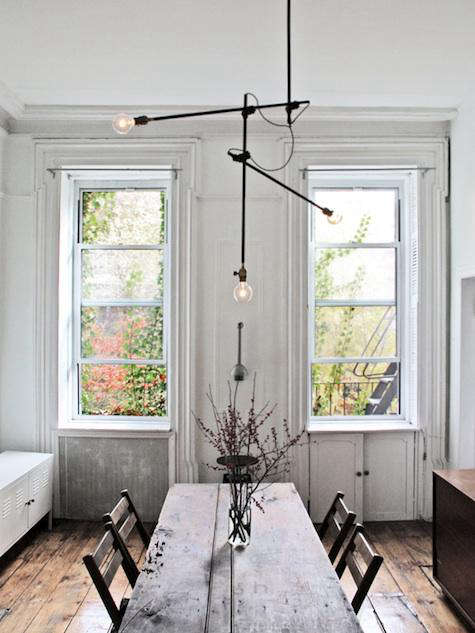

Some chandeliers arrive wearing sequins. The Workstead Industrial Chandelier shows up in a tailored black coat, says very little, and somehow becomes the most interesting thing in the room. That is the magic of this fixture. It borrows from old factory lighting, but it never feels dusty, clunky, or like it belongs in a coffee shop that only serves oat milk and opinions. Instead, it lands in that sweet spot between modern industrial lighting, sculpture, and everyday function.
If you have been hunting for a designer chandelier that feels architectural rather than fussy, this one deserves a serious look. Workstead’s version of industrial style is more disciplined than gritty. The lines are spare. The materials feel honest. The light is warm. And the overall effect is quietly dramatic, which is interior-design speak for “people will absolutely ask about it, but in a respectful tone.”
In this guide, we are taking a close look at what makes the Workstead Industrial Chandelier so appealing, where it works best, how to style it, what to watch out for before buying it, and why it has become the kind of statement lighting that designers love because it does not need to shout to own a room.
Why the Workstead Industrial Chandelier Stands Out
The first thing that makes this chandelier memorable is its point of view. A lot of industrial fixtures lean hard on the usual tricks: oversized shades, thick hardware, aggressively dark finishes, and enough visual weight to make a ceiling feel nervous. Workstead goes in the opposite direction. The fixture has a stripped-down, almost drawing-like profile, made from slender metal tubing, hand-cast clamps, exposed cloth-covered cord, and glowing porcelain-finish bulbs. The result is industrial, yes, but also airy, refined, and highly intentional.
That balance matters. In a room filled with wood, plaster, stone, linen, or vintage furniture, a heavy chandelier can dominate the conversation like a guy at brunch explaining fermentation. The Workstead Industrial Chandelier behaves better. It gives you the industrial character and sculptural edge without swallowing the rest of the room.
Another reason it stands out is flexibility. This is not a one-note ceiling fixture. Its configuration allows it to read differently depending on how it is installed and what surrounds it. In one setting it feels like an abstract line drawing suspended in the air. In another, it reads as a warm modern counterpoint to rustic beams or traditional millwork. That adaptability is a big part of its appeal. It is not a trend-piece with an expiration date stamped on the box.
Design Details That Make It Feel Expensive in the Best Way
1. The silhouette is lean, not bulky
Good luxury lighting often looks effortless, even when the engineering is doing quite a bit behind the scenes. Here, the long, narrow arms and exposed bulbs create visual openness. You still get a strong focal point, but there is a sense of negative space that keeps the chandelier from feeling oppressive. That makes it especially attractive in rooms where you want a focal fixture without sacrificing airiness.
2. The industrial influence is edited
Workstead describes the piece as an interpretation of 19th-century factory lighting, and that heritage shows up in the clamps, cord, and metal construction. But the brand edits out the grimier clichés. There are no overworked faux-vintage gimmicks here. No fake distressing. No “rustic” panic attack. Just clean geometry and material honesty.
3. The finish options are timeless
The chandelier is offered in Industrial Black and Hewn Brass, two finishes that play well with a wide range of interiors. Black feels crisp, graphic, and a little more architectural. Brass warms things up and gives the piece a richer, softer presence. Neither option feels flashy. Both feel like they were chosen by someone who owns a tape measure and knows how to use it.
4. The light quality is warm and livable
This is an underrated part of the fixture’s appeal. Pretty design can only carry a light fixture so far if the actual light makes your dining room look like a dentist’s office. The included dimmable LED bulbs are warm, which helps the chandelier create mood as well as visibility. In practical terms, that means dinners look better, wood tones feel richer, and nobody suddenly appears to be auditioning for a vampire reboot.
Where a Workstead Industrial Chandelier Works Best
Dining rooms
This may be the most natural home for the fixture. A dining room is one of the few places where a chandelier can really act as both lighting and composition. The Workstead Industrial Chandelier looks especially strong above wood dining tables, stone-top tables, and simple modern pieces that need an upper-level focal point. Because the design is open and linear, it does not visually crowd the table the way a dense drum shade or elaborate crystal form might.
It is also a smart choice if your dining room mixes styles. Maybe you have a farmhouse table with cleaner, contemporary chairs. Maybe your room has traditional trim but modern art. Maybe you inherited a gorgeous sideboard and would prefer not to replace it just because your lighting taste evolved past “Tuscan villa in 2007.” This chandelier bridges those worlds beautifully.
Breakfast nooks and eat-in kitchens
In an eat-in kitchen, the fixture can bring just enough drama without turning breakfast into a formal event. It looks particularly good in kitchens with natural oak cabinetry, soapstone or marble counters, matte black hardware, or white plaster walls. Because its shape is sculptural but not visually heavy, it can coexist with cabinetry, open shelving, and range hoods without making the room feel too top-loaded.
Living rooms and open-plan spaces
In open layouts, lighting has to do more than illuminate. It has to help organize space. A sculptural chandelier like this can define a seating or dining zone without adding walls or visual clutter. If your room has generous ceiling height and an otherwise calm palette, the chandelier can act like the punctuation mark that gives the whole design some confidence.
Entryways and transitional spaces
If you have an entry with decent ceiling height, this fixture makes a sharp first impression. It says the house has taste, not just square footage. It is also a strong fit for stair landings, loft-like hallways, and other transition areas where standard flush mounts tend to feel like a compromise.
How to Size and Hang It Without Making Future You Angry
Even a gorgeous industrial chandelier can look wrong if the scale is off. The good news is that the usual chandelier rules still help here.
Start with the table, not just the room. Over a dining table, a fixture generally looks best when it is narrower than the tabletop and leaves breathing room at the sides. If you are working from room dimensions, many designers still use the old guideline of adding the room’s length and width in feet to estimate a good chandelier diameter in inches. It is not the only rule, but it is a useful starting point. Over a table, many experts recommend a fixture that lands around half to two-thirds of the table’s width, depending on the form and how airy it looks.
Hanging height matters just as much. Above a dining table, chandeliers typically look right when the bottom of the fixture sits about 30 to 36 inches above the tabletop, adjusted a bit for ceiling height and sightlines. Because the Workstead fixture has an open, line-based silhouette, it can sometimes feel visually lighter than a bulkier design at the same drop, which is helpful if you want presence without crowding conversation.
Also think about where people walk. A chandelier that looks poetic over a table can become less poetic when someone tall meets it with their forehead. If the fixture is going in a circulation path or a room with lower ceilings, plan carefully. This is not a “wing it and see” situation. That phrase belongs in haircuts, not lighting.
Styling Ideas: What to Pair With a Workstead Industrial Chandelier
Natural wood and soft texture
One of the easiest ways to make this fixture sing is to surround it with materials that soften the industrial edge. Think white oak, walnut, aged pine, limewash, wool rugs, linen curtains, and leather seating. The contrast keeps the room from feeling cold or overly severe.
Stone, plaster, and quiet walls
The chandelier looks especially strong when the backdrop is calm. Plaster walls, matte paint, subtle wall texture, and pale stone surfaces allow the linear form to read clearly. It does not need a loud wallpaper behind it to prove it exists.
Mixed metals done with restraint
If you choose the black version, it can pair well with aged brass hardware elsewhere in the room. If you choose the brass version, let it echo through cabinet pulls, picture lights, or a mirror frame. The goal is conversation, not a metal family reunion where everyone talks at once.
Vintage and modern furniture together
This is where the chandelier becomes especially useful. It has enough historical reference to feel at home with antiques and enough modern clarity to work with contemporary furniture. That makes it a strong anchor if your style is not purely minimalist, purely farmhouse, or purely midcentury, but a more collected mix.
Practical Considerations Before You Buy
Beautiful lighting still has to survive real life. The Workstead Industrial Chandelier is hardwired, so installation is a professional job for most homeowners. It is also a fixture you want centered carefully and measured thoughtfully, especially because its geometry makes misalignment more obvious than it would be on a rounder, softer light.
Ceiling height is another real consideration. The chandelier’s adjustability helps, but you should still map the drop before ordering. What looks breezy in a studio photograph can feel too assertive in a room with beams, a sloped ceiling, or a tall household member who is already suspicious of decorative lighting.
Dimming is essential. Because the included bulbs are dimmable, this is the kind of fixture that really benefits from multiple moods. Bright for working or hosting. Softer for dinner. Very low when you want the room to look expensive for absolutely no reason on a Tuesday.
Finally, think about the rest of the lighting plan. A chandelier should not be forced to do every job in the room. The strongest interiors layer ambient, task, accent, and decorative lighting, which means this fixture works best when paired with sconces, lamps, recessed lighting, or under-cabinet lighting as needed. In other words, let it be the star, not the entire cast.
Who This Chandelier Is Best For
This fixture is a strong fit for people who want their lighting to feel like design, not just hardware. It is for homeowners who appreciate proportion, craftsmanship, and a modern industrial look that stays refined. It also suits people who like versatile interiors that mix old and new, clean lines and texture, discipline and warmth.
On the other hand, if you want something ultra-ornate, extremely traditional, or heavily decorative, this may not be your forever fixture. It is also not the best match for rooms that already have a lot of visually busy ceiling action. Coffers, beams, bold wallpaper, oversized art, and highly patterned furniture can all work, but the composition has to be handled with care.
The Experience of Living With a Workstead Industrial Chandelier
The most interesting thing about a fixture like the Workstead Industrial Chandelier is that you do not just look at it. You live around it, under it, and because of it. That sounds dramatic, but good lighting really does change behavior inside a room.
In the morning, the chandelier reads almost like line art against daylight. The room feels organized before anyone has even made coffee. Because the form is so open, it does not cast a heavy visual shadow over the table or island beneath it. Instead, it frames the space. That means the furniture below it suddenly feels more intentional, even if one of the chairs is currently wearing yesterday’s sweater. A lot of fixtures only turn on at night. This one contributes all day long.
By late afternoon, the character changes. As natural light starts to fade, the bulbs begin to glow more noticeably, and the fixture shifts from sculpture to atmosphere-maker. Warm light lands on tabletops, wood grain becomes richer, and the room starts to feel pulled together. It is a subtle effect, but it is often the difference between a room that looks good in photos and one that actually feels good to inhabit. That is a bigger compliment than it gets credit for.
During dinner, this type of chandelier earns its keep. It creates a center of gravity. People gather more naturally. Conversation feels anchored. The table becomes an actual destination instead of just the place where mail, keys, and one rogue reusable shopping bag go to retire. Because the form is sculptural without being bulky, it helps the room feel special without slipping into formality. You can serve takeout noodles under it and still feel strangely elegant.
It also has a kind of emotional versatility that a lot of trendier fixtures do not. In a minimalist space, it adds warmth and shape. In a traditional room, it sharpens the edges and keeps things from getting sleepy. In a rustic-modern interior, it acts like the diplomat between rough texture and clean lines. In a city apartment, it can add soul. In a country house, it can add discipline. That is a rare skill set for a ceiling fixture.
Then there is the long-term experience. Over time, people tend to appreciate pieces that do more than fill a category. This chandelier is not just “the light above the table.” It becomes part of the room’s identity. Guests remember it. Photos catch it. It influences what artwork feels right nearby, what chairs you choose next, even how polished the room feels when nothing else has changed. That is the difference between buying lighting as a checklist item and buying lighting as part of the architecture of daily life.
Put simply, living with a Workstead Industrial Chandelier is less about owning a trendy object and more about enjoying a fixture that makes ordinary routines look better. Breakfast feels calmer. Dinner feels more intentional. Even the room itself seems to stand up straighter. Not bad for something attached to the ceiling.
Final Thoughts
The Workstead Industrial Chandelier succeeds because it understands something many fixtures forget: people want lighting that is both useful and emotionally convincing. They want illumination, yes, but they also want atmosphere, shape, identity, and a sense that the room has been considered from top to bottom.
This chandelier delivers that with a rare mix of restraint and personality. It references industrial history without cosplay. It feels sculptural without becoming precious. It is warm, flexible, and striking, but still disciplined enough to live with for years. If you are looking for a dining room chandelier or statement lighting piece that feels modern, layered, and intelligently designed, this one earns the attention it gets.
In a market full of lights trying very hard to be memorable, the Workstead Industrial Chandelier does something smarter. It simply is.