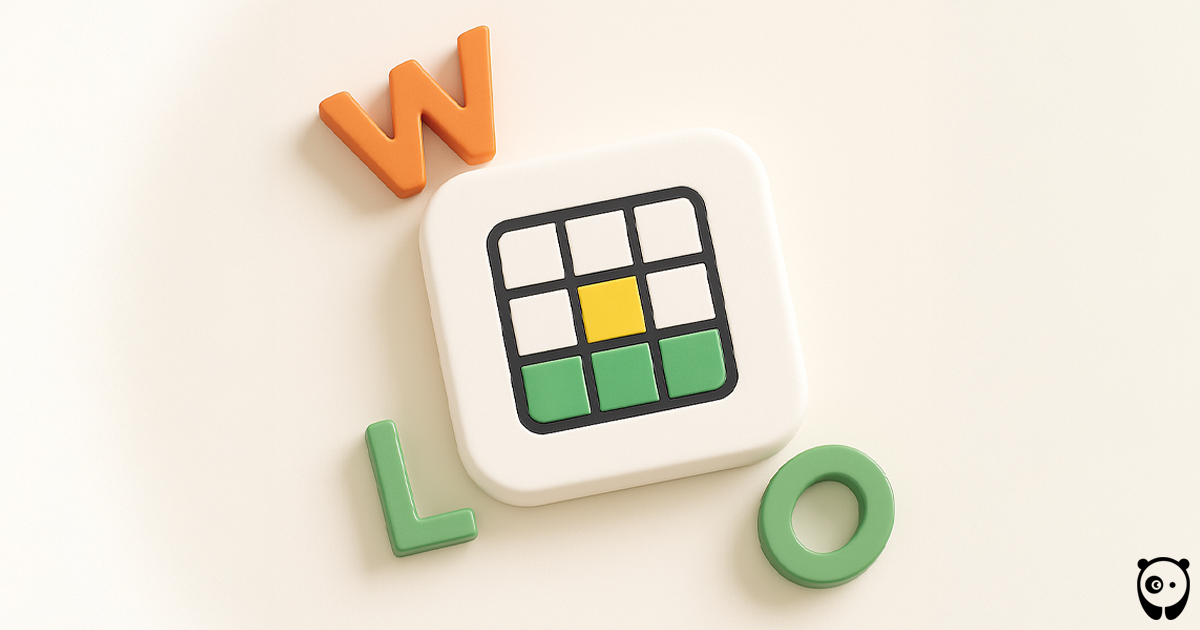

Note: This is a historical guide to New, July 30, 2025. The article begins with spoiler-free clues and reveals the answer farther down the page.
Some Wordle puzzles greet you like an old friend. Others quietly replace your coffee with decaf and watch the confusion unfold. The NYT Wordle for July 30, 2025 belonged firmly in the second category.
Wordle #1502 used familiar letters, but it arranged them in a way that punished anyone who assumed every letter appeared only once. The solution also came from a technical corner of the English language, making it harder to recognize even after several tiles turned yellow or green.
This guide provides gradually stronger hints, explains the answer’s meaning, examines why the puzzle was tricky, and offers a realistic solving path. Players who only need a tiny nudge can stop before the spoiler section. Those whose streak is hanging from a thread can continue to the complete answer without judgment. Wordle is supposed to be fun, not a five-box hostage negotiation.
Quick Facts About Wordle #1502
- Date: Wednesday, July 30, 2025
- Puzzle number: Wordle #1502
- Word length: Five letters
- Difficulty: Moderately difficult to challenging
- Main obstacle: Two different repeated letters
- Part of speech: Primarily a noun or verb
Multiple puzzle archives and daily Wordle columns identify the July 30, 2025 puzzle as game #1502 and confirm the same solution. n>
NYT Wordle Hints for July 30, 2025
The following clues become progressively more revealing. Read them one at a time so you can preserve as much of the challenge as possible.
Hint 1: The General Meaning
The word is connected with examining, testing, or evaluating something.
Hint 2: The First Letter
The answer begins with a vowel.
Hint 3: The Final Letter
The word ends with the letter Y.
Hint 4: The Letter Pattern
Two different letters each appear twice. Yes, Wordle brought two duplicate-letter traps to the same party and did not even bring snacks.
Hint 5: The Word’s Structure
The answer contains two occurrences of its opening vowel and two occurrences of the same consonant.
Hint 6: A Strong Synonym
Think of words such as test, analysis, assessment, or evaluation.
Hint 7: A Real-World Example
A laboratory might perform this kind of test to determine the composition, concentration, quality, or purity of a substance.
Contemporary hint columns similarly described the solution as an evaluation or scientific test, noted that it begins with a vowel, and warned players about its repeated letters. n>
How Wordle Works
Wordle gives players six attempts to identify a hidden five-letter word. Every submitted guess produces color-coded feedback:
- Green: The letter is correct and occupies the correct position.
- Yellow: The letter appears in the answer but belongs in another position.
- Gray: The answer does not contain that letter, or the guess used more copies of the letter than the answer contains.
The final rule is especially important for Wordle #1502. Repeated-letter puzzles can make gray tiles look misleading. For example, if a guess contains three copies of a consonant but the answer contains only two, one of those tiles may remain gray even though the consonant itself is part of the solution.
A productive opening word usually includes several common letters without repetition. That approach gathers broad information during the first move. However, once the board suggests a duplicate, players must be willing to abandon the “every letter is unique” assumption. PC Gamer’s Wordle guidance likewise recommends starting with common vowels and consonants before using later guesses to investigate the emerging pattern. n>
Why the July 30, 2025 Wordle Was Tricky
It Contained Two Sets of Duplicate Letters
Most players understand that a Wordle answer can contain a repeated letter. The harder mental leap is accepting that a five-letter word might contain two separate pairs.
In this puzzle, four of the five positions were occupied by repeated letters. A player who discovered one vowel and one consonant could easily continue testing new letters rather than considering additional copies of letters already found.
The Answer Was More Technical Than Conversational
The solution is a legitimate English word, but it is not something most people say while ordering lunch or discussing weekend plans. It appears more naturally in laboratories, metallurgy, pharmacology, mining, medicine, and quality-control settings.
That creates an awkward Wordle experience: the letters may look plausible while the complete word remains just outside everyday vocabulary. Your brain recognizes the shape but keeps asking whether it accidentally wandered into a chemistry exam.
The Final Y Complicated the Vowel Count
The answer contains the vowel A twice. Its final Y also carries a vowel sound, which is why some hint guides described the puzzle as having two vowels plus a semivowel. Players who use rigid vowel-counting strategies may overlook Y even though it frequently appears at the end of five-letter words.
Common Starting Words Could Reveal Very Little
Openers centered on E, I, O, U, R, T, N, or L might eliminate useful letters without showing much of the final structure. Even a respectable opening guess could leave a large pool of possibilities unless it included A or S.
That does not make the opening guess bad. Sometimes Wordle simply shrugs at your statistically sensible strategy and hands you two yellow tiles as compensation.
Spoiler Warning: The Wordle Answer for July 30, 2025
The complete answer appears immediately below. Stop scrolling now if you still want to solve Wordle #1502 independently.
The Answer Is ASSAY
The NYT Wordle answer for Wednesday, July 30, 2025 was ASSAY. e spelling pattern is:
A-S-S-A-Y
The word includes two As, two Ss, and one Y. Its opening A returns in the fourth position, while the consecutive Ss occupy the middle of the word.
What Does ASSAY Mean?
As a noun, an assay is an examination or analysis used to determine the characteristics, composition, purity, potency, or quantity of something. It can also refer to the test itself or to the recorded result of that test.
As a verb, to assay means to analyze or evaluate a substance. A laboratory might assay a drug to measure its potency, while a mining operation might assay ore to determine how much valuable metal it contains.
Merriam-Webster defines the verb in terms of analyzing a material for specific components and the noun as an examination or analysis used to determine qualities or quantities. It also records broader and older senses related to judging, trying, or attempting. xamples of ASSAY in a Sentence
- The laboratory performed an assay to measure the concentration of the compound.
- Engineers assayed the ore before approving additional excavation.
- The researchers developed a faster assay for detecting the protein.
- The sample was assayed for traces of gold and silver.
How Is ASSAY Pronounced?
The word is commonly pronounced either ASS-ay or uh-SAY, depending on usage and regional preference. Both pronunciations are recognized.
ASSAY and ESSAY Are Historical Relatives
The resemblance between assay and essay is not a coincidence. Both words developed from roots associated with testing, trying, weighing, or making an attempt. Over time, essay became strongly associated with a written composition, while assay retained its connection to technical testing and evaluation. Merriam-Webster traces the word through Middle English and Anglo-French forms and records its use as far back as the 14th century. n>
A Possible Way to Solve Wordle #1502
There is no single correct solving path, but the following example shows how a player could logically reach ASSAY in three guesses.
Guess 1: SLATE
SLATE tests five common letters. Against ASSAY, the S and A would appear yellow, while L, T, and E would be eliminated.
After this guess, the player knows that:
- S is in the answer but not in position one.
- A is in the answer but not in position three.
- L, T, and E are absent.
Guess 2: MASSY
MASSY is an aggressive information-gathering guess because it checks Y and tests two copies of S. The result would reveal a green S in the third position, another yellow S, a green Y at the end, and a misplaced A.
At that point, the pattern becomes much clearer:
_ _ S _ Y
The feedback also establishes that the answer contains two Ss. Since A has not yet found its correct location, the opening and fourth positions become strong candidates.
Guess 3: ASSAY
Placing A first, the second S in position two, and another A in position four produces ASSAY and completes the puzzle.
This example is illustrative rather than an official WordleBot solution. Its main lesson is that duplicate testing can be more valuable than introducing five entirely new letters once the board provides evidence that a letter may repeat.
Strategies for Future Duplicate-Letter Wordles
Do Not Treat a Yellow Letter as a Single-Copy Letter
A yellow tile proves that the letter appears somewhere else. It does not prove that the answer contains only one copy. When the remaining pattern looks unnatural, consider whether that letter belongs in two positions.
Use the Second Guess to Gather New Information
If the first guess reveals almost nothing, use a second word containing different common letters. However, when the first guess strongly suggests a duplicate, testing that duplicate can be more productive than maximizing letter variety.
Pay Attention to Word Families
Once Y is fixed at the end, consider common structures such as -LY, -RY, -TY, -SY, or -AY. The ending does not solve the puzzle by itself, but it can reduce the number of natural arrangements.
Remember That Technical Words Can Be Answers
Wordle generally favors recognizable vocabulary, but recognizable does not always mean conversational. Scientific, literary, legal, and old-fashioned words can appear. When the tile pattern looks valid, do not reject a word simply because you last encountered it in a textbook.
Avoid Panic Guessing on Attempt Six
Before submitting the final guess, review every gray letter, every locked position, and every possible duplicate. A ten-second audit is often more useful than typing the first word that vaguely resembles the pattern.
How ASSAY Fit Into the Late-July 2025 Wordle Run
The surrounding puzzles included TIZZY on July 21, QUAKE on July 24, HAUNT on July 26, SAVVY on July 28, OMEGA on July 29, ASSAY on July 30, and FRILL on July 31. That sequence mixed uncommon letters, repeated consonants, repeated vowels, and less predictable vocabulary. SAY was particularly memorable because it followed SAVVY, another answer containing repeated letters and a final Y. Players who had recently been reminded to watch for duplicates may have gained an advantage. Others may have assumed the game would not use another repetition-heavy word so soon. Wordle has a talent for turning our expectations into tiny square-shaped liabilities.
A Solver’s-Eye Experience of Wordle #1502
Imagine opening Wordle on the morning of July 30, 2025 with a respectable streak, a favorite starter word, and the dangerous confidence of someone who solved yesterday’s puzzle before finishing breakfast. You enter a dependable opener such as CRANE, SLATE, or RAISE. The tiles flip dramatically, and the board rewards you with one or two yellow letters.
Not terrible, but hardly a parade.
Your second guess moves the known letters into new positions and tests several common consonants. More gray tiles appear. Perhaps one S turns green, while an A remains stubbornly yellow. You now know useful information, but the answer still refuses to look like an ordinary word.
This is the stage when many solvers begin bargaining with the board. Maybe the A belongs in the first position. Maybe the final letter is Y. Maybe the word ends in -ASH, -AST, or -ASY. You mentally audition possibilities, reject them, reconsider them, and briefly wonder whether Wordle has started accepting the names of obscure medieval farming tools.
The most important realization comes when you stop searching exclusively for unused letters. A repeated S becomes plausible. Then a repeated A becomes possible. The answer is no longer a five-letter collection of unique characters; it is a compact arrangement built from only three different letters.
That realization changes the emotional tone of the puzzle. Before it, ASSAY feels nearly invisible. After it, the solution can seem embarrassingly obvious. This is one of Wordle’s cleverest psychological tricks. The game rarely hides the answer through complicated rules. Instead, it encourages the player to form a reasonable assumption and then quietly builds the puzzle around the exception.
A player who encounters the pattern _SS_Y may first think of words such as ESSAY. That is a particularly mischievous near-neighbor because ESSAY and ASSAY differ by only one letter and share historical roots. If E has already been eliminated, however, the board forces the solver toward the less common alternative.
Submitting ASSAY can therefore feel like equal parts deduction and vocabulary gamble. The letters fit. The word sounds familiar. You may remember hearing it in a laboratory context, a news report about mineral testing, or a scientific paper. Still, there is a brief pause before pressing Enter: “Is that definitely spelled with two Ss and two As?”
Then the tiles turn green.
The satisfaction comes not only from preserving the streak but from understanding why the puzzle resisted. ASSAY rewards players who notice letter quantities rather than merely letter presence. It also demonstrates why Wordle strategy must remain flexible. A strong opener is valuable, but no starting word can replace careful interpretation of the feedback.
The experience offers several practical lessons. First, yellow letters deserve continued attention even after they have been repositioned. Second, duplicate letters should be tested when the remaining combinations look awkward. Third, a word does not have to be common in casual speech to be a reasonable solution. Finally, staring at the same grid for several minutes can make obvious patterns harder to see.
Taking a brief break can genuinely help. Looking away from the screen, refilling a drink, or returning after answering an email may reset the mental search. The letters have not changed, but your assumptions may loosen. Suddenly, the strange cluster of As, Ss, and a final Y stops looking impossible and begins looking like ASSAY.
That is why puzzles such as Wordle #1502 remain enjoyable after thousands of daily rounds. The game has only five letters, six attempts, and three tile colors, yet it can still produce surprise through vocabulary, repetition, and human habit. On July 30, 2025, the challenge was not discovering rare letters. It was recognizing that the familiar letters wanted to appear twice.
Conclusion
The NYT Wordle answer for July 30, 2025 was ASSAY. Wordle #1502 was challenging because it contained two As, two Ss, a final Y, and a meaning more commonly encountered in scientific or technical settings than in everyday conversation.
The puzzle is a useful reminder that repeated letters should never be ignored. When the remaining possibilities feel unnatural, testing another copy of a confirmed letter may reveal more than introducing a completely new consonant. In other words, sometimes the smartest Wordle move is not expanding your options but doubling down.
SEO Information