People Are Posting ‘Illegal’ Lego Building Techniques And They Are Actually Genius

Somewhere on the internet, a LEGO fan is currently placing a plate where no plate was meant to go, angling a clip with suspicious confidence, and whispering, “It fits, therefore it sits.” Welcome to the wonderfully nerdy world of illegal LEGO building techniques: the place where creativity, geometry, plastic stress, and mild chaos meet for coffee.
First, let’s clear the air before anyone calls the tiny plastic police. “Illegal” LEGO techniques are not criminal. Nobody is going to kick down your door because you wedged a cheese slope into a questionable gap. In LEGO language, “illegal” generally means a connection that official designers avoid because it may stress, bend, deform, trap, or damage LEGO elements over time. In other words, the brick may fit, but it might also be quietly screaming.
And yet, people keep posting these techniques online because many of them are clever. Some create smoother curves. Some unlock impossible angles. Some turn ordinary pieces into hair, stone walls, robot joints, furniture, creature teeth, architectural trim, or tiny design miracles. The result is a strange truth: many illegal LEGO building techniques are technically risky, but artistically brilliant.
What Are Illegal LEGO Building Techniques?
An illegal LEGO building technique is a way of connecting LEGO pieces that goes outside the design standards used for official LEGO sets. The most common reason is part stress. LEGO bricks are engineered with extremely precise geometry, clutch power, and tolerances. When you force a connection that does not respect those tolerances, the plastic may bend too far, become compressed, lose grip, crack, or become difficult to separate.
That is the practical side. The cultural side is much funnier. In the LEGO fan community, “illegal” has become a playful term for connections that feel like forbidden knowledge. Builders share them the way magicians share card tricks: “Look what happens if you put this plate between these studs.” Suddenly, a flat wall has texture, a sculpture has a curve, and every rule-following brick in the bin looks deeply offended.
Why Official LEGO Designers Avoid Them
Official LEGO sets must survive repeated building, rebuilding, play, shipping, storage, and the enthusiastic force of children who believe every stuck piece can be solved with more strength. That is why LEGO designers follow internal rules for stability and stress. A model sold worldwide cannot rely on a connection that only works if the builder applies the exact pressure of a nervous watchmaker.
Many questionable techniques fail for one of four reasons. They push parts too tightly together. They hold a clip, hinge, or bar in constant tension. They combine LEGO System and Technic pieces in ways that do not perfectly align. Or they trap pieces so firmly that taking the model apart becomes a family event involving tweezers, prayer, and possibly a butter knife.
This does not mean fans should never experiment. It means the builder should understand the difference between a display model and a play model. A technique that works beautifully on a shelf for a custom castle wall might be a terrible idea inside a toy spaceship meant to be swooshed across the living room at mach speed.
Why Fans Love Posting Illegal LEGO Techniques
Part of the appeal is visual shock. LEGO is famous for order: studs align, plates stack, bricks click, and everything follows a grid. Illegal LEGO techniques bend that grid. They create diagonals, textures, offsets, and shapes that look impossible at first glance. When someone posts one, the viewer has the same reaction as seeing a cat open a door: “I did not know you were allowed to do that.”
The other appeal is problem-solving. Serious LEGO builders, especially AFOLs, or Adult Fans of LEGO, often build custom creations known as MOCs. When a builder wants a realistic roofline, a smooth car hood, a curved dragon spine, or a wall with irregular stonework, standard stacking may not be enough. Illegal or non-standard connections can become shortcuts to beauty.
Genius Examples of Illegal LEGO Building Techniques
1. Plates Wedged Between Studs
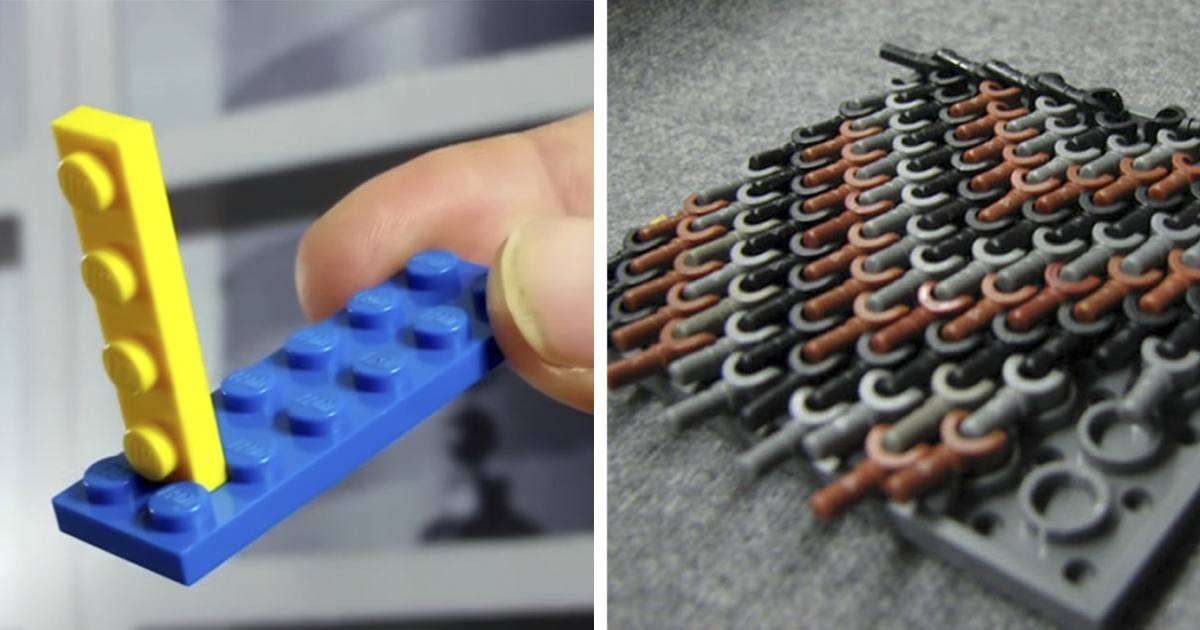
One of the most famous illegal LEGO techniques is placing a plate upright between studs. It can create thin vertical details, fence-like textures, vents, stonework, or decorative paneling. The genius is obvious: the plate becomes a design feature instead of a stacked layer.
The risk is also obvious. Stud spacing was not designed to grip a plate this way for long periods. The connection may put outward pressure on the studs or squeeze the plate. Used lightly in a display model, it can look fantastic. Used as a structural habit across a large model, it may be less “genius hack” and more “future stress fracture waiting room.”
2. Technic Pins Forced Into System Connections
LEGO Technic and LEGO System are cousins, not identical twins. They can work together beautifully when used correctly, but some connections are slightly misaligned or too tight. Builders sometimes force Technic pins, axles, or hole-based parts into System brick arrangements to create compact joints or unusual offsets.
This can be brilliant in small custom builds where the goal is precision. However, Technic holes and System studs do not always share the same ideal geometry. If the connection compresses the pin or bends surrounding plastic, it becomes illegal in the classic LEGO sense: it works, but the piece may pay rent in pain.
3. Clips Holding Parts Under Constant Tension
Clips are among the most useful LEGO elements ever made. They hold bars, tools, flags, minifigure accessories, handles, and all sorts of tiny magic. But a clip has limits. If a builder forces a piece into a clip that keeps the clip spread open, the clip may eventually weaken or break.
Still, fans use clip tension to create amazing effects: angled signs, decorative trim, organic shapes, insect legs, mechanical arms, and architectural flourishes. The trick is knowing when the clip is simply gripping and when it is being forced to hold a yoga pose it never signed up for.
4. Headlight Brick Interference
The classic headlight brick is a favorite for SNOT building because it has a stud on the side. SNOT stands for Studs Not On Top, which means turning LEGO building sideways, upside down, or in any direction that makes a purist raise an eyebrow. The headlight brick makes this possible by changing the direction of connection.
However, the side stud on a headlight brick can create interference when placed too close to another element. If another brick or plate presses against that protruding stud, the structure may not sit flush. The builder might still force the assembly together, but the pieces are then fighting each other. That fight may look invisible from the outside, but the plastic knows.
5. Illegal Angles With Hinges
Hinges are designed for angles, but not every angle is friendly. Some LEGO hinge elements are meant to click into approved positions. When builders hold them between click points or lock them into a stressed shape with surrounding parts, the result can create beautiful roofs, wings, sculpture lines, or vehicle panels.
The genius is that illegal hinge angles make LEGO feel less square. The risk is that the hinge or surrounding pieces may remain under stress. A good rule of thumb: if the build looks like geometry homework but the hinge looks unhappy, reconsider the connection.
How Illegal Techniques Make LEGO Builds Look Better
LEGO is a grid-based system, and the grid is both its superpower and its limitation. Legal building gives strength, consistency, and reliability. Illegal or non-standard building gives surprise. The most impressive LEGO artists often understand both worlds. They know how to build strong foundations legally, then use experimental tricks sparingly for texture or detail.
For example, a castle builder might use standard bricks for the main wall, then add wedged plates or offset tiles to create the rough look of stone. A vehicle builder might use legal SNOT brackets for the body, then a questionable clip angle for a mirror or exhaust detail. A character sculptor might use an odd connection to create eyebrows, hair, or claws. In each case, the illegal technique is not the whole build. It is the spice. Too much spice, and suddenly dinner is on fire.
Legal, Illegal, and “Probably Fine”
Not every weird LEGO connection is illegal. Some only look suspicious. Modern LEGO has introduced many elements specifically designed for advanced building: brackets, modified plates, jumper plates, clips, bars, curved slopes, ball joints, and side-stud bricks. A technique that once seemed like sorcery may now be perfectly acceptable because newer pieces are designed to handle it.
This is why the conversation keeps evolving. A connection that was once discouraged may become legal with a redesigned part. A clip may gain more flexibility. A bracket may solve a geometry problem that previously required stress. LEGO building is not frozen in time; it is a living design language, and the vocabulary keeps expanding.
Should You Try Illegal LEGO Building Techniques?
Yes, but with common sense. If you are building a temporary model, experimenting with a small scene, or creating a display piece, trying an illegal technique can be a great way to learn. It teaches you how LEGO geometry works. It helps you understand tension, offset, alignment, and clutch power. It can also make you appreciate official set designers, who manage to create strong, beautiful models while avoiding the tempting shortcut of “just jam it in there.”
However, be careful with rare, expensive, transparent, old, brittle, or sentimental pieces. Transparent LEGO elements can sometimes feel less forgiving than standard colored parts. Older brown, dark red, and certain retired colors have a reputation among fans for being more fragile in some eras. If a part is valuable or emotionally important, do not use it as a stress-test volunteer.
Tips for Experimenting Safely
Use Spare Parts First
Test unusual connections with common pieces before using them in a prized build. If something feels too tight, stop. LEGO should click, not beg for mercy.
Check for Constant Stress
After connecting pieces, look for bending, bowing, gaps, whitening plastic, or parts trying to spring apart. These are signs that the build may not age well.
Use Illegal Techniques as Details, Not Foundations
A small non-standard detail on a display model may be fine. A whole tower held together by stressed clips is less fine. That is not architecture; that is a hostage situation.
Respect the Difference Between Display and Play
A model that sits on a shelf can use more delicate tricks than a model handled by children. If it will be played with, transported, or rebuilt often, legal techniques are usually the better choice.
The Real Genius Behind These “Illegal” Builds
The reason these posts go viral is not just because they break rules. It is because they reveal how flexible LEGO can be when builders understand the system deeply enough to bend it. Great LEGO building is not only about owning more pieces. It is about seeing new possibilities in pieces everyone already has.
A minifigure hand becomes a tiny bracket. A hot dog becomes a railing. A plate becomes a wall texture. A clip becomes a hinge. A headlight brick turns a model sideways. A piece designed for one purpose suddenly becomes a design solution for something completely different. That is the heart of LEGO creativity: the ability to look at a brick and say, “You are not what the instructions say you are. Today, you are a dragon eyebrow.”
Experience: What It Feels Like to Build With Illegal LEGO Techniques
Trying illegal LEGO building techniques for the first time feels a little like sneaking into the staff-only area of a toy store. You know you are not exactly doing what the instructions intended, but the curiosity is too strong. You take a plate, slide it between studs, and suddenly your brain opens a secret door. The wall that looked flat now has texture. The roof that looked blocky now has character. The tiny robot that looked like a refrigerator now looks like it has shoulders and a personality.
The first lesson is that LEGO pieces are more precise than they look. Casual builders often think bricks are simple rectangles, but advanced building quickly reveals a world of measurements. A brick is three plates tall. A stud has a specific diameter. A side stud has a particular offset. A clip has a specific flex range. Once you start experimenting, you begin to feel the difference between a clean connection and a forced one. A legal connection has that satisfying click. An illegal connection often has a slightly guilty crunch, like stepping on cereal in a quiet kitchen.
The second lesson is patience. Many illegal techniques look easy in photos, but recreating them can be surprisingly difficult. The angle is slightly wrong. The plate pops out. The clip refuses to cooperate. The build collapses in a dramatic little avalanche, and suddenly you are negotiating with plastic like it has a union representative. But when it works, the reward is huge. You see a shape that ordinary stacking could not produce, and the model feels more personal because you solved the problem yourself.
The third lesson is restraint. Once you discover one clever trick, it is tempting to use it everywhere. This is how a simple cottage becomes a structural crime scene. The best builders use illegal techniques carefully, almost like visual seasoning. One unusual connection can make a chimney look handmade, a tree look organic, or a spaceship look sleek. Twenty illegal connections in the same small model can make it fragile, frustrating, and impossible to rebuild without muttering words not included in the official LEGO vocabulary.
The most useful experience is learning when not to force it. If a piece bends, if a clip stays open, if a plate will not sit flush, or if the model has to be squeezed into alignment, the technique may not be worth it. Sometimes the smarter solution is to search for a newer part, redesign the section, or accept a slightly different shape. That may sound less rebellious, but it is often more satisfying. True LEGO genius is not just breaking rules; it is knowing which rules matter.
In the end, building with illegal LEGO techniques makes you a better builder because it teaches awareness. You start noticing geometry, stress, texture, and part behavior. You stop seeing LEGO as a pile of bricks and start seeing it as a design system with hidden shortcuts, traps, and possibilities. And yes, sometimes those possibilities are a little illegal. But when the result is a smoother roofline, a funnier character face, or a tiny detail that makes people say, “Wait, how did you do that?” it is hard not to admire the genius.
Conclusion
People are posting illegal LEGO building techniques because they are strange, clever, and often genuinely inspiring. These techniques reveal the playful tension between official design rules and fan creativity. LEGO designers avoid stress-based connections for excellent reasons: durability, safety, consistency, and long-term playability. But fans building custom display models often explore the edges of the system, discovering new textures, angles, and details along the way.
The smartest approach is not to worship illegal techniques or fear them. Understand them. Test them carefully. Use them sparingly. Protect your rare parts. And remember that the best LEGO builds are not impressive because they break rules. They are impressive because they solve problems with imagination. Sometimes that solution is perfectly legal. Sometimes it is a little suspicious. Either way, the tiny plastic world is better when builders keep asking, “What else can this piece do?”
Note: This article is based on real LEGO design terminology, official LEGO guidance about internal connection rules, the widely referenced Jamie Berard “Stressing the Elements” presentation, and long-running LEGO fan community discussions about SNOT, Technic/System compatibility, clip stress, headlight bricks, and non-standard part usage.