
Before smartphones made everyone a walking newsroom, before email attachments turned “send photo” into a two-second reflex, and long before cloud storage began silently judging our camera rolls, there was wirephoto. In the 1930s, sending a photograph across the country was not a casual tap. It was an event. It involved film, chemicals, rotating drums, photoelectric cells, telephone lines, newsroom urgency, and enough mechanical drama to make a modern office printer feel emotionally underdeveloped.
The phrase “putting pictures on the wire” sounds almost poetic today, but in the 1930s it was cutting-edge media technology. Wirephoto systems allowed newspapers to transmit photographs over telephone circuits so that a picture taken in one city could appear in another city’s newspaper within minutes instead of arriving days later by train, airplane, courier, or mail. For photojournalism, this was not a small upgrade. It was the difference between yesterday’s illustration and today’s evidence.
This is the wonderfully clattering world of 1930s wirephoto technology: part darkroom, part telephone exchange, part science fair, and part newsroom panic with better hats.
What Was Wirephoto?
Wirephoto was an early system for transmitting still images over long-distance communication lines. In plain English, it was a way to scan a photograph, convert its light and dark areas into electrical signals, send those signals through telephone wires, and reconstruct the image at the receiving end. If that sounds like a fax machine, congratulations: you have spotted the family resemblance. Wirephoto was one of the important ancestors of modern facsimile transmission, image scanning, and digital photo distribution.
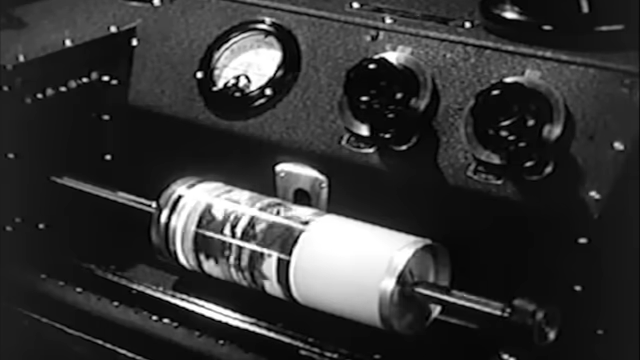
The system was analog, not digital. There were no JPEGs, no pixels in the modern sense, no Wi-Fi password taped to the newsroom wall. Instead, a physical photograph was wrapped around a rotating drum. A narrow beam of light scanned the image line by line. A photoelectric cell detected how much light was reflected from each tiny area of the print. Bright areas produced stronger signals; dark areas produced weaker ones. Those changing electrical signals traveled through a telephone circuit to a receiver, where a synchronized drum exposed photographic film or paper. After development, the receiving newsroom had a duplicate of the original image.
It was slow by today’s standards, but wildly fast for its time. A process that once required planes, trains, and heroic patience could suddenly happen in minutes. In a newsroom, that was not just a technical improvement. That was caffeine with wires attached.
Why Pictures Were So Hard To Move Before The 1930s
Text had traveled quickly for decades. Telegraphy, teletype machines, and wire services had already transformed written news. A reporter could send a breaking story across the country with impressive speed. Photographs, however, remained stubbornly physical. A photo existed as film, a negative, or a print. To publish it somewhere else, somebody had to physically move it.
That meant a photograph might travel by courier to a train station, by train to a major city, by plane if the budget allowed, and then through a photoengraving process before it reached a printing press. In fast-moving news, the image often arrived too late to accompany the story. Newspapers might print a dramatic headline one day and publish the photograph a day or two later, after the public’s attention had already wandered off to baseball scores, weather complaints, or whatever scandal was currently improving circulation.
Wirephoto changed that timing. It gave editors a new promise: the day’s picture could appear with the day’s news. That seems obvious now, but in the 1930s it felt revolutionary. A reader in Cleveland, Des Moines, Detroit, or Los Angeles could see a photograph from a distant event while the event was still fresh. News became more visual, more immediate, and more emotionally persuasive.
The AP Wirephoto Breakthrough Of 1935
The Associated Press launched its Wirephoto service on January 1, 1935. The first AP Wirephoto showed the wreckage of a small plane crash in the Adirondack region of New York. The image was transmitted to newspapers across the country, proving that a photo could travel through a leased-wire network and arrive quickly enough to matter.
AP’s system built on earlier experiments by inventors, telephone engineers, and facsimile pioneers. AT&T had demonstrated telephone-based photo transmission in the 1920s, and other systems had explored radio and telegraph-based image transmission. But AP’s achievement was practical and journalistic: it created a network designed for newsrooms, with the goal of distributing photographs to many newspapers quickly and reliably.
That distinction matters. A laboratory demonstration is impressive; a newsroom system used under deadline pressure is something else entirely. Newspapers do not care that your machine is elegant if it fails while the editor is shouting and the front page has a large empty rectangle waiting for a picture.
How A 1930s Wirephoto Actually Worked
The basic wirephoto workflow was beautifully logical once you got past the machinery. Imagine a black-and-white photograph mounted on a cylinder. As the cylinder rotated, a beam of light moved across the surface in a spiral pattern, scanning the image one narrow line at a time. Each light or dark patch changed the electrical output of a photoelectric cell.
Step 1: Capture The Image
A photographer first had to shoot the scene using film. In the 1930s, press photographers often used large-format cameras such as the Speed Graphic. These cameras were rugged, respected, and about as subtle as bringing a toaster oven to a birthday party. They produced high-quality negatives, but they also required skill, preparation, and physical film handling.
Step 2: Develop And Print
The film had to be developed before the image could be transmitted. In major bureaus, this meant darkroom work. In field situations, portable darkrooms or improvised processing setups could be used. The faster the print was ready, the faster the image could get on the wire. A photographer’s job did not end with pressing the shutter; the real race often began afterward.
Step 3: Scan The Print On A Drum
The finished print was mounted around a rotating drum in the transmitter. A light beam scanned it line by line. White areas reflected more light. Black areas reflected less. Gray tones produced intermediate signals. This was the analog magic: the photograph’s visual information became a continuously changing electrical signal.
Step 4: Send The Signal Through Telephone Lines
The electrical signal traveled over telephone wires, often through dedicated or leased circuits. In some dramatized field systems, the process looked wonderfully adventurous: a press vehicle reached a telephone line, connected to the network, and sent the image from the field. In real operations, reliability mattered enormously. Line noise, poor synchronization, weak signal quality, or mechanical trouble could turn a historic photograph into a striped ghost.
Step 5: Rebuild The Picture At The Other End
At the receiving end, another drum rotated in synchronization with the transmitter. A light source, often controlled by the incoming signal, exposed photographic material. The stronger the signal, the brighter the exposure at that point. When the receiving film was developed, the original photograph reappeared as a new image. Not perfect, not glossy-magazine gorgeous, but good enough for newspaper reproduction. In deadline journalism, “good enough and on time” is sometimes the most beautiful phrase in the English language.
The 1937 “Spot News” Demonstration: Newsreel Drama Meets Engineering
One of the most entertaining historical glimpses of wirephoto technology comes from the 1937 short film “Spot News.” The film dramatized how a newspaper could capture a breaking-news photograph in the field and transmit it back to the newsroom by telephone. It featured the kind of brisk narration, heroic machinery, and cheerful risk-taking that made 1930s educational films feel as if every invention had personally saved civilization before lunch.
In the film, a newsroom learns about an aviation stunt. A reporter and photographer rush to the scene in a specially equipped vehicle. The photographer gets the shot, the film is developed, the image is mounted on a transmitting drum, and the picture is sent over a telephone connection to the newspaper. At the receiving end, the image is reconstructed and prepared for publication.
Of course, the film adds theatrical flair. Real news gathering was messier, slower, and less conveniently staged. But the technical principles were genuine. The short film remains fascinating because it shows the chain of events: field photography, processing, scanning, signal transmission, receiving, developing, and printing. It is basically a 1930s version of “uploading from mobile,” except the mobile device is a truck, the cloud is a telephone pole, and the progress bar wears suspenders.
Why Wirephoto Was A Big Deal For Photojournalism
Wirephoto made news more immediate and more visual. Before this technology, newspapers depended heavily on written description when covering distant events. A reporter could describe a disaster, a trial, a championship, or a political moment, but the image often lagged behind. Wirephoto narrowed that gap.
Major events of the 1930s helped prove the value of fast picture transmission. AP Wirephoto carried images related to aviation accidents, major trials, sports events, the 1936 Berlin Olympics, and the Hindenburg disaster in 1937. These were not decorative pictures. They helped readers feel that they were witnessing history rather than merely reading about it.
The technology also changed editorial decision-making. Editors now had to think not only about which stories deserved space, but which images deserved fast transmission. A compelling wirephoto could dominate a front page. It could shape public memory. It could become the version of an event that millions of readers carried in their minds.
Wirephoto And The Rise Of Visual News Culture
The 1930s were already a crucial decade for visual media. Illustrated magazines were growing in influence, camera technology was improving, and readers increasingly expected photographs to accompany serious reporting. Wirephoto fit perfectly into this cultural shift.
Newspapers had long used images, but the ability to distribute fresh news photographs quickly made photography more central to daily journalism. It supported the idea that a photograph could function as evidence. A wirephoto said, in effect: “This happened, and here is what it looked like.” That claim was powerful, even when the image was grainy, streaked, or softened by transmission.
There was also a subtle change in the rhythm of public attention. When readers saw images faster, events felt closer. A crash in New York, a sports moment in Detroit, or an international crisis no longer seemed quite so distant. Wirephoto compressed geography. It made the country feel more connected, one rotating drum at a time.
The Technology Was Brilliant, But Not Exactly Simple
Wirephoto systems required expensive equipment, skilled operators, stable lines, careful synchronization, and darkroom support. Early machines were large and costly. Transmission quality could vary. The reproduced images were often lower in definition than the original prints. Telephone line interference could introduce streaks or distortions. Nobody in a newsroom wanted to wait for a dramatic rescue photo only to receive something that looked like it had been sneezed through a venetian blind.
Still, the system worked well enough to become essential. AP and other services improved equipment throughout the decade. Portable transmitters became more practical. Receiving units became lighter and more convenient. By the end of the 1930s, wirephoto had become a serious part of newspaper infrastructure.
Its limitations also reveal why the technology was so impressive. Engineers had to solve scanning, synchronization, signal modulation, exposure control, and photographic reproduction using analog components. They had to make machines that could operate under deadline pressure. They had to translate a two-dimensional image into a one-dimensional stream of changing signals and then rebuild it elsewhere. That is not just clever. That is “please give these people more coffee and a raise” clever.
From Wirephoto To Fax, Scanners, And Digital Images
Wirephoto belongs to a long family tree of image transmission. Earlier facsimile inventions date back to the nineteenth century, and early twentieth-century engineers experimented with selenium cells, radio transmission, transparent drums, and photographic receivers. Wirephoto did not appear from nowhere; it was the newsroom-ready expression of decades of experimentation.
The same basic idea survives in later technologies. A fax machine scans a document line by line, converts it into a signal, sends it over a communication channel, and prints a copy at the other end. A flatbed scanner reads light values and converts them into data. A digital camera turns light into electronic information. A smartphone compresses that information and sends it through networks faster than a 1930s editor could say, “Hold page one.”
The tools changed, but the conceptual bridge remains. Wirephoto showed that images could become signals. Once society accepted that idea, the path opened toward fax, television image transmission, satellite news photography, digital photo wires, and real-time visual journalism.
Why The 1930s Version Still Feels So Cool
Part of the charm of wirephoto is that you can understand it by watching it work. Modern image transmission is buried under software layers, compression algorithms, packet routing, error correction, and devices sealed tighter than a bank vault with a fruit logo. Wirephoto, by contrast, is visible. A drum spins. A lamp shines. A cell responds. A signal travels. A second drum exposes a new image. You can practically hear the machine thinking.
That visibility gives the technology its retrotechtacular appeal. It sits at the sweet spot between mechanical and electronic invention. It is advanced enough to feel futuristic for its era, yet physical enough that a curious person can follow the process. It is not magic hidden in silicon. It is magic wearing gears.
Real-World Examples That Proved Wirephoto’s Power
Some of the strongest examples came from breaking news and sports. The first AP Wirephoto in 1935 showed a plane crash scene. Later that year, Wirephoto helped distribute images tied to major national stories. Sports photography also benefited because action pictures could move quickly enough to appear while public interest was still hot. During the 1935 World Series, some newspapers were able to publish game images with remarkable speed for the period.
In 1936, images from the Berlin Olympics helped show American readers Jesse Owens’ historic achievements. In 1937, photographs of the Hindenburg disaster demonstrated the emotional force of rapid visual reporting. The famous images of the airship’s fiery destruction became part of public memory not merely because they existed, but because news organizations could move them quickly.
Wirephoto did not make photographers better at composition, timing, or courage. But it made their work travel faster. That speed changed the value of a news photograph. A great image no longer had to wait patiently in an envelope while the story cooled off.
What Wirephoto Teaches Us About Innovation
The story of putting pictures on the wire in the 1930s is not just a charming tale about old machines. It is a lesson in practical innovation. The winning technology was not necessarily the first idea, the purest invention, or the prettiest machine. It was the system that solved a real problem for real users under real pressure.
Newspapers needed speed. Photographers needed a way to deliver images from distant places. Editors needed pictures that could fit production schedules. Readers wanted to see the world, not just hear about it. Wirephoto succeeded because it connected those needs.
That is why the technology still matters. It reminds us that media history is not only about content; it is also about delivery. The way information moves changes what information feels important. A photograph that arrives today can shape today’s conversation. A photograph that arrives next week becomes history homework.
Experiences And Reflections: What 1930s Wirephoto Feels Like From A Modern View
Spending time with the story of 1930s wirephoto is a little like opening the back of an old clock and realizing the clock was also a radio, a camera, and a small newspaper employee with anxiety. The whole process feels wonderfully physical. Today, we send images without thinking. We take a picture, tap a screen, and become mildly annoyed if the upload takes longer than it takes to blink. Wirephoto forces us to slow down and notice every step that modern technology has hidden.
Imagine being a young newsroom assistant in 1935. The city desk is loud. Typewriters are hammering. Editors are arguing about headlines. Somebody yells that a photograph is coming in over the wire. The receiver starts working, and slowly, line by line, an image appears. It is not instant. It is suspenseful. You are not watching a file download; you are watching a picture being reborn. The machine is turning invisible electricity into something the press can print. That must have felt like witnessing a practical miracle, even if the miracle smelled faintly of chemicals and hot equipment.
The experience also makes modern communication feel less weightless. A 1930s wirephoto had friction. Film had to be exposed. Negatives had to be developed. Prints had to be mounted correctly. Operators had to trust the line, the drum speed, the light source, and the receiving film. Any weak link could damage the result. That friction created respect for the image. A transmitted photograph was not disposable content. It had labor inside it.
There is also something inspiring about the problem-solving mindset. The engineers did not have digital processors, cloud servers, or image compression software. They had light, motors, tubes, wires, chemistry, and stubbornness. They looked at a photograph and asked: how do we turn this surface into a signal? Then they built a machine that answered the question. That is the kind of invention that makes you want to clean your desk, buy a notebook, and pretend you understand vacuum tubes.
For writers, photographers, designers, and technology fans, wirephoto offers a useful reminder: every “instant” tool we use today sits on top of older systems that were anything but instant. News images did not become fast by accident. They became fast because generations of inventors, editors, operators, and photographers kept shaving time from the journey between seeing and sharing.
In that sense, the 1930s wirephoto machine is not just a museum piece. It is a mechanical ancestor of our visual internet. Every time a breaking-news image crosses the world in seconds, there is a faint echo of that rotating drum, that scanning beam, that telephone line, and that newsroom waiting for the picture to come through. The old machine may be retired, but its idea is still very much alive: turn light into information, move it fast, and let people see history while it is still warm.
Conclusion: The Day Pictures Learned To Travel Fast
Wirephoto technology in the 1930s transformed journalism by solving one of the newspaper industry’s biggest problems: photographs were powerful, but they were slow. By converting images into electrical signals and transmitting them over telephone wires, wirephoto systems allowed newspapers to publish distant pictures with unprecedented speed.
The machines were bulky, expensive, and occasionally temperamental, but they changed the expectations of editors and readers alike. News could now be seen almost as quickly as it could be described. From plane crashes and prize fights to Olympic victories and major disasters, wirephoto helped define the modern visual news cycle.
Today, when billions of images move through digital networks every day, 1930s wirephoto may seem quaint. But look closer and it becomes astonishing. It was a bridge between photography and telecommunications, between the darkroom and the data stream, between the printed newspaper and the visual world we now carry in our pockets. Not bad for a spinning drum, a beam of light, and a telephone line with ambition.
Editorial note: This article is based on real historical information about wirephoto, AP Wirephoto, AT&T telephotography, facsimile systems, 1930s newspaper technology, and archived explanations of the 1937 “Spot News” wirephoto demonstration. Source links are intentionally omitted for clean web publication.
SEO Metadata