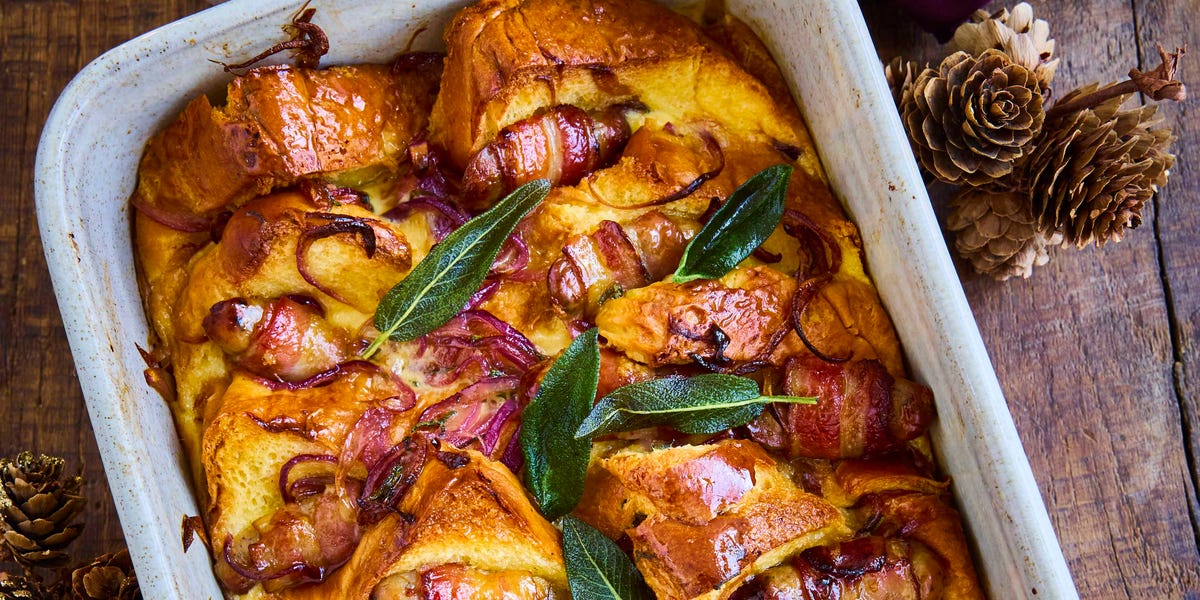
Salty pigs in blankets bread and butter pudding recipe with crispy sage and caramelised onions

Some recipes politely enter the room. This one kicks open the door wearing a Christmas sweater, carrying a casserole dish, and smelling like butter, bacon, sage, and onions that have been slowly sweet-talked into caramelized glory. This salty pigs in blankets bread and butter pudding recipe with crispy sage and caramelised onions is the savory comfort food your holiday table did not know it needed.
Think of it as a rich, custardy bread pudding that decided dessert was not its destiny. Instead of sugar and raisins, it leans into juicy sausages, crisp bacon, golden bread, sharp cheese, creamy eggs, sweet onions, and fragrant sage. The result is a warm, spoonable dish with a crunchy top, a soft interior, and enough savory charm to make stuffing feel slightly nervous.
For American cooks, one quick note: “pigs in blankets” can mean different things depending on where you live. In the United States, it often means mini hot dogs wrapped in pastry. In British-style holiday cooking, it usually means small sausages wrapped in bacon. This recipe uses the bacon-wrapped sausage version because it brings smoky, salty richness that works beautifully in bread and butter pudding.
Why this savory bread and butter pudding works
Classic bread pudding is built on a simple idea: stale or toasted bread soaks up a custard made with eggs and dairy, then bakes into something tender inside and crisp on top. This savory version uses the same technique but swaps sweet flavors for bold holiday ingredients.
The magic comes from balance. The pigs in blankets bring salt, fat, and meaty flavor. The caramelized onions add natural sweetness. Crispy sage cuts through the richness with an earthy, almost peppery aroma. A little Dijon mustard gives the custard a gentle tang, while Gruyere or sharp white cheddar melts into the bread like a very responsible adult who also knows how to party.
The dish is also practical. It uses day-old bread, can be assembled ahead, feeds a crowd, and turns familiar ingredients into something that feels special. Serve it for brunch, dinner, holiday leftovers night, or that mysterious meal between lunch and dinner when everyone is “not hungry” but somehow eats half a pan.
Ingredients for salty pigs in blankets bread and butter pudding
Main ingredients
- 12 small pork sausages or breakfast links
- 12 thin slices bacon, cut to fit if needed
- 10 ounces day-old sourdough, brioche, challah, or French bread, cut into 1-inch cubes
- 2 large yellow onions, thinly sliced
- 3 tablespoons unsalted butter, divided
- 1 tablespoon olive oil
- 10 to 12 fresh sage leaves
- 5 large eggs
- 2 cups whole milk
- 1 cup heavy cream or half-and-half
- 1 tablespoon Dijon mustard
- 1 teaspoon Worcestershire sauce
- 1/2 teaspoon kosher salt, plus more to taste
- 1/2 teaspoon freshly ground black pepper
- 1 1/2 cups shredded Gruyere, sharp white cheddar, or a mix
- 1/4 cup grated Parmesan cheese
Optional flavor boosters
- 1 teaspoon chopped fresh thyme
- 1/4 teaspoon nutmeg
- 1 tablespoon chopped parsley for serving
- 1 teaspoon maple syrup stirred into the onions for a sweet-salty finish
- A pinch of red pepper flakes for gentle heat
How to make pigs in blankets bread and butter pudding
Step 1: Toast the bread
Preheat the oven to 350°F. Spread the bread cubes on a rimmed baking sheet and toast for 8 to 10 minutes, just until dry on the outside but not deeply browned. This step matters. Fresh, soft bread can turn soggy because it collapses before it absorbs the custard properly. Toasted or slightly stale bread behaves like a sponge with good manners.
Step 2: Make the pigs in blankets
Wrap each small sausage with a piece of bacon. Arrange them seam-side down on a parchment-lined baking sheet. Bake for 18 to 22 minutes, turning once, until the bacon is golden and the sausages are cooked through. Let them cool slightly, then cut each one into bite-size pieces.
If you are using fully cooked cocktail sausages, the baking time may be shorter. If you are using raw pork sausage, make sure it reaches a safe internal temperature before it goes into the pudding. A kitchen thermometer is not fancy; it is just the tiny judge that keeps dinner honest.
Step 3: Caramelize the onions
While the sausages cook, place a large skillet over medium-low heat. Add 1 tablespoon butter and the olive oil. Add the sliced onions with a pinch of salt. Cook slowly, stirring often, for 30 to 40 minutes, until the onions become soft, golden brown, and jammy.
Do not rush this part. Caramelized onions are not sautéed onions wearing a fake mustache. True caramelized onions need time for their moisture to cook off and their natural sugars to deepen. If the pan gets too dry, add a splash of water and scrape up the browned bits. That little bit of steam helps prevent scorching while keeping all the flavor in the skillet.
Step 4: Fry the sage until crispy
In a small skillet, melt 2 tablespoons butter over medium heat. Add the sage leaves and cook for 30 to 60 seconds, just until the leaves crisp and the butter smells nutty. Transfer the sage to a paper towel. Save the sage butter because it is liquid gold and deserves a starring role.
Step 5: Whisk the savory custard
In a large mixing bowl, whisk together the eggs, milk, cream, Dijon mustard, Worcestershire sauce, salt, pepper, and optional nutmeg. The custard should taste savory, lightly seasoned, and balanced. Remember that the bacon, sausage, Parmesan, and cheese will add more salt as the pudding bakes.
Step 6: Assemble the pudding
Butter a 9-by-13-inch baking dish. Add half of the toasted bread cubes, half of the pigs in blankets pieces, half of the caramelized onions, and half of the shredded cheese. Repeat with the remaining bread, sausage pieces, onions, and cheese.
Pour the custard evenly over the top. Press the bread gently with a spatula so every piece gets a chance to soak. Drizzle the reserved sage butter over the surface. Cover and let the mixture rest for at least 30 minutes, or refrigerate it for up to 12 hours. A longer soak gives the custard time to move into the bread instead of sitting at the bottom like a shy guest at a party.
Step 7: Bake until golden and set
Preheat the oven to 350°F if it is not already on. Sprinkle Parmesan cheese over the top. Bake uncovered for 40 to 50 minutes, until the center is set, the top is golden, and the edges are bubbling. If the top browns too quickly, tent loosely with foil.
Let the pudding rest for 10 minutes before serving. Scatter the crispy sage leaves over the top just before it hits the table. This keeps them crisp and gives the dish a fragrant finish that says, “Yes, I did something impressive today.”
Recipe timing and servings
- Prep time: 35 minutes
- Cook time: 1 hour 20 minutes
- Resting time: 30 minutes to overnight
- Total time: About 2 hours, plus optional chilling
- Servings: 8 generous portions
Best bread for savory bread and butter pudding
The best bread for this recipe is sturdy, flavorful, and slightly dry. Sourdough brings tang and chew. Brioche adds buttery richness. Challah creates a soft, custardy texture. French bread gives you a rustic bite with crisp edges. Avoid very soft sandwich bread unless you toast it thoroughly first.
If your bread is fresh, cube it and dry it in the oven. This helps the bread absorb the egg mixture without turning mushy. The goal is a pudding that slices cleanly but still feels creamy inside. Nobody came here for wet bread with commitment issues.
Tips for the best flavor and texture
Use thin bacon
Thin-cut bacon wraps around the sausages more easily and crisps faster. Thick-cut bacon can work, but it may stay chewy unless partially cooked before wrapping.
Do not oversalt the custard
Bacon, sausage, Parmesan, and aged cheese all bring salt. Start conservatively, then add flaky salt at the table if needed.
Let the dish rest before baking
A short soak improves texture. An overnight soak makes the dish even more convenient and gives the custard time to settle into every corner.
Keep the sage crisp
Add crispy sage after baking, not before. If it bakes under steam, it loses its delicate crunch.
Make-ahead instructions
This recipe is ideal for holiday planning. Assemble the pudding the night before, cover it tightly, and refrigerate. The next day, remove it from the refrigerator about 30 minutes before baking so the dish is not ice-cold when it goes into the oven.
If you want the crispiest top, hold back a small handful of cheese and a few bread cubes. Sprinkle them on just before baking. That simple move creates a golden, crunchy lid over the soft custard below.
Storage and reheating
Store leftovers in an airtight container in the refrigerator for up to 3 days. Reheat individual portions in a 325°F oven until warmed through, or use the microwave for a faster option. The oven gives better texture because it revives the crisp top.
For food safety, casseroles and leftovers should be reheated until hot throughout. If you are serving this at a party, do not leave it sitting out for hours while everyone debates whether “just one more bite” counts as a full meal. It does.
Serving ideas
This salty pigs in blankets bread and butter pudding is rich, so it loves something bright on the side. Serve it with a crisp green salad, roasted Brussels sprouts, green beans with lemon, cranberry relish, or pickled onions. For brunch, add poached eggs or a simple arugula salad with apple slices.
At a holiday dinner, this dish can replace stuffing or sit proudly beside it. At brunch, it becomes a show-stopping casserole. At midnight, eaten cold from the fridge with a fork? That is between you and your kitchen light.
Recipe variations
Cheddar and apple version
Add 1 diced apple to the caramelized onions during the final 10 minutes of cooking. Use sharp cheddar instead of Gruyere. The apple adds sweetness that plays beautifully with bacon and sage.
Spicy version
Use hot Italian sausage or add red pepper flakes to the custard. A little heat makes the creamy base feel lighter and more lively.
Vegetable-packed version
Add sautéed mushrooms, wilted spinach, or roasted butternut squash. Cook vegetables first so they do not release too much water into the pudding.
Extra-crispy topping
Mix 1/2 cup panko breadcrumbs with 1 tablespoon melted butter and 2 tablespoons Parmesan. Sprinkle over the top before baking for a crunchy, golden crust.
Common mistakes to avoid
Using bread that is too soft
Soft bread can dissolve into the custard. Toasting fixes this and gives the final dish better structure.
Skipping the onion caramelization
Plain onions are fine, but caramelized onions are the difference between “nice casserole” and “who made this and are they accepting applause?”
Adding crispy sage too early
Crispy sage is delicate. Add it at the end so it stays crisp and aromatic.
Baking at too high a temperature
A moderate oven helps the custard set gently. Too much heat can make the eggs firm before the center becomes creamy.
Why this recipe is perfect for holidays and leftovers
This dish has the cozy spirit of stuffing, the creamy texture of strata, and the salty joy of pigs in blankets. It also solves a very real holiday problem: what to do with extra bread, extra sausages, extra bacon, and a house full of people who keep wandering into the kitchen asking, “Is there anything to snack on?”
It is also flexible. You can make it elegant with Gruyere and sourdough, casual with cheddar and French bread, or extra festive with apples and thyme. The base technique stays the same, which means you can adapt it without fear. Once you understand the bread-to-custard balance, this recipe becomes a template for many savory bread puddings.
Experience notes: making and serving this salty pigs in blankets bread and butter pudding
The first thing you notice when making this recipe is the smell. Before the pudding even goes into the oven, the kitchen starts acting like it deserves its own holiday movie. Bacon sizzles, onions soften into sweetness, and sage crisps in butter with that cozy, woodsy aroma that makes everyone suddenly appear in the doorway. No one is “checking on you.” They are checking on the butter.
This is the kind of recipe that rewards a relaxed cook. You do not need restaurant-level precision. You need patience for the onions, a good baking dish, and the wisdom not to eat too many pigs in blankets before they make it into the pudding. That last part is harder than it sounds. The little bacon-wrapped sausages look innocent, but they have snack energy. Stay strong.
When assembling the dish, the layers feel generous and slightly chaotic in the best way. Bread cubes tumble into the pan, onions stretch into glossy ribbons, cheese falls into the gaps, and pieces of sausage peek out like savory treasure. Then the custard goes in, and everything settles down. Pressing the bread gently into the custard is oddly satisfying, like tucking in a very delicious blanket.
The baking stage is when the recipe becomes dramatic. The edges bubble, the top turns golden, and the cheese forms little browned patches that everyone will fight over later. The center should look set but still soft, not dry. Letting it rest is important, even though the smell will test your character. That 10-minute pause helps the custard firm up enough to serve clean portions instead of delicious landslides.
Serving it is fun because people usually expect bread pudding to be sweet. The first bite surprises them. It is creamy, salty, smoky, oniony, and slightly herbal from the sage. The crispy top gives way to a soft interior, while the bacon-wrapped sausage pieces make the whole dish feel hearty enough for dinner. It is comfort food with a sense of occasion.
This recipe also has excellent leftover personality. The next day, a square reheated in the oven tastes even deeper because the onions, cheese, sausage, and custard have had time to become close friends. Add a fried egg on top and it becomes brunch. Add a green salad and it becomes lunch. Eat it standing at the counter while pretending to “just even out the edge,” and it becomes a private culinary ceremony.
Most importantly, this dish feels generous. It is not fussy or fragile. It is built for sharing, passing around, and going back for seconds. It makes good use of ingredients that might otherwise sit around after a holiday meal, and it turns them into something memorable. Salty pigs in blankets bread and butter pudding with crispy sage and caramelized onions is not just a recipe; it is a casserole-shaped argument for staying a little longer at the table.
Conclusion
This salty pigs in blankets bread and butter pudding recipe with crispy sage and caramelised onions is rich, practical, festive, and deeply satisfying. It transforms simple ingredients into a savory baked pudding with a crisp top, creamy center, smoky sausage, sweet onions, and fragrant sage. Make it ahead for brunch, serve it as a holiday side, or turn leftovers into the coziest meal of the week. However you serve it, expect clean plates, happy silence, and at least one person asking for the recipe before dessert even appears.