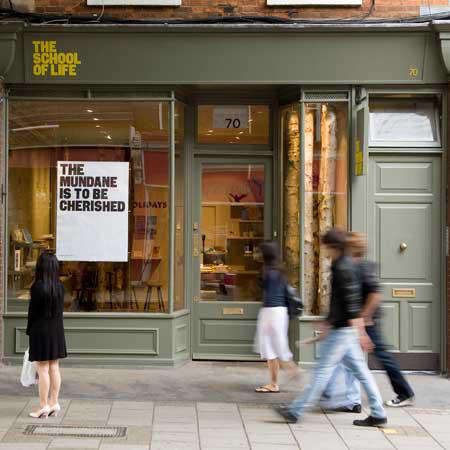

Some shops sell things. Other shops quietly make you question your entire personality while you are holding a beautifully boxed deck of conversation cards. The School of Life in London belongs firmly in the second category. It is not the kind of place where you rush in, grab a souvenir magnet, and leave with a receipt you will later find in your coat pocket like a tiny accusation. It is a concept shop, bookshop, classroom, emotional first-aid station, and design-minded gift destination rolled into one thoughtful London stop.
Located in Bloomsbury, one of London’s most literary and quietly elegant neighborhoods, The School of Life has long attracted shoppers who like their retail with a side of self-reflection. Founded in London in 2008 by philosopher and writer Alain de Botton and collaborators, the brand grew from a simple but powerful idea: many of the most important lessons in life are not taught in school. How do we handle anxiety? How do we love better? How do we work with meaning? How do we apologize without sounding like a malfunctioning corporate memo? These are the questions The School of Life turns into books, card sets, classes, videos, therapy resources, and gifts that look good enough to leave on the coffee table.
Why The School of Life Feels Different From a Regular Shop
Walk into most stores and the message is clear: buy more, feel better. Walk into The School of Life and the message is more interesting: understand more, live better. That does not mean the shop is solemn. Far from it. The appeal lies in its warm, witty, and beautifully packaged approach to serious subjects. Instead of presenting philosophy as something trapped in a dusty library, the shop makes emotional intelligence feel practical, stylish, and surprisingly giftable.
The shelves often feature books on relationships, work, self-knowledge, calm, creativity, and modern emotional life. Nearby, you may find prompt cards designed to start deeper conversations, games that help couples or friends speak more honestly, and workbooks that make personal growth feel less like homework and more like a private conversation with someone wise who also understands your calendar is a disaster.
This is what makes The School of Life such a strong subject for a shopper’s diary. It is not simply about what to buy. It is about what kind of person you become while browsing. You enter looking for a smart gift for a friend. You leave wondering whether your fear of failure started in middle school. Retail therapy, apparently, has evolved.
The Bloomsbury Setting: A Perfect Home for Thoughtful Shopping
Bloomsbury is the right backdrop for The School of Life because the neighborhood already feels like a conversation between books, architecture, gardens, and ideas. Known for its literary associations, academic atmosphere, leafy squares, and proximity to cultural landmarks, Bloomsbury has a slower intellectual rhythm than some of London’s louder shopping districts. It is central, but not frantic. Elegant, but not icy. Clever, but not showing off too much.
That matters because The School of Life is not designed for the grab-and-go shopper. It rewards lingering. You need time to read the book titles, flip through card prompts, compare gifts, and have at least one small internal crisis near the stationery section. The surrounding streets make the experience even better. A visit can become part of a larger London afternoon: coffee, a walk through Russell Square, a stop at an independent bookshop, a slow browse, and perhaps a pastry that you justify as “research.”
What Makes Marchmont Street Memorable
Marchmont Street, historically associated with independent retailers and neighborhood life, has the kind of charm that chain-heavy shopping streets often struggle to fake. The School of Life’s presence there fits naturally. The shop does not scream for attention. It invites curiosity. For travelers, it offers a more personal London shopping experience than a department store. For locals, it can feel like a place to reset between errands, deadlines, and the emotional gymnastics of city life.
What to Buy at The School of Life in London
The School of Life is especially good for gifts because its products have a built-in sense of meaning. You are not just giving someone a book. You are giving them a gentle nudge toward self-understanding. You are not just buying conversation cards. You are creating the possibility that dinner guests might discuss something deeper than weather, property prices, or how everyone is “so busy.”
1. Books on Emotional Intelligence
Books are the backbone of The School of Life experience. Many titles focus on the practical emotional skills adults often wish they had learned earlier: how to manage difficult feelings, understand relationships, deal with work frustration, find calm, and build a more honest life. The tone is usually accessible and humane rather than academic. That makes the books suitable for curious readers who want depth without feeling as if they have accidentally enrolled in a graduate seminar.
For SEO-minded readers searching for “best books from The School of Life,” the strongest choices are usually the broad emotional education titles, relationship guides, self-knowledge workbooks, and practical books about work or calm. They make thoughtful gifts for graduates, newlyweds, friends in transition, or anyone who keeps saying, “I’m fine,” in a voice that suggests they are absolutely not fine.
2. Conversation Cards and Prompt Decks
The School of Life’s card sets are among its most recognizable products. They are designed to make conversations more honest, imaginative, and useful. Some focus on relationships. Others help with self-knowledge, family discussions, creativity, or emotional awareness. The genius of the format is that it lowers the pressure. Instead of announcing, “Let us now have a meaningful exchange about vulnerability,” you can simply pull a card and blame the stationery.
These decks work well for dinner parties, couples, close friends, team workshops, or solo journaling. They also make excellent travel purchases because they are portable, attractive, and easy to pack. Unlike a fragile ceramic teapot shaped like a fox, a card deck will not ruin your suitcase or your mood at airport security.
3. Games for Couples, Friends, and Families
The School of Life also creates games that encourage reflection and connection. These are not loud party games built around embarrassing dares or questionable impressions of celebrities. They are quieter, sharper, and often more revealing. A good game from The School of Life can help people explore values, assumptions, dreams, annoyances, and hopes without turning the evening into a therapy session with snacks.
For shoppers, these games are excellent when you want a gift that feels original but still useful. They are particularly strong choices for hosts, couples, book club friends, and people who already own enough candles to illuminate a medieval village.
4. Workbooks and Journals
Workbooks and journals are ideal for shoppers who want something personal and practical. They help translate broad ideas into written reflection. A well-designed workbook can turn vague feelings into clearer thoughts, which is no small achievement in an age when many of us process emotions by opening twelve browser tabs and calling it “coping.”
These products are especially helpful for people interested in mindfulness, personal development, emotional intelligence, or creative self-discovery. They also appeal to anyone who loves stationery but wants to pretend the purchase is spiritually necessary.
5. Small Gifts With Big Ideas
Beyond books and cards, The School of Life is known for small objects and tools that package wisdom in design-friendly ways. The best items tend to be compact, clever, and easy to give. They do not require the recipient to redecorate their home or pretend to understand abstract sculpture. Instead, they offer a moment of pause, reflection, or conversation.
This is one reason the shop appeals to design travelers. The packaging is usually clean, colorful, and modern. The products look good on a shelf, desk, or bedside table, but they also have a purpose beyond decoration. In other words, they pass the rare gift test: attractive, useful, and unlikely to be regifted at the next office party.
How to Shop The School of Life Like a Pro
Shopping at The School of Life is best approached with curiosity rather than a rigid list. Yes, you can go in looking for a birthday present. But the real pleasure comes from browsing by emotional category. Need something for a friend starting a new job? Look at work, confidence, or creativity. Buying for a couple? Explore relationship games or conversation decks. Treating yourself? Start with self-knowledge, calm, or emotional resilience.
It also helps to think about the recipient’s temperament. Some people love direct self-improvement books. Others would rather wrestle a sofa up six flights of stairs than admit they are reading about vulnerability. For the second group, choose a witty card set or a beautifully designed game. The School of Life is good at making personal growth feel socially acceptable, even for people allergic to the phrase “personal growth.”
Best Gifts by Recipient
For a thoughtful friend: Choose a self-knowledge book or conversation deck. These gifts say, “I see your depth,” without forcing anyone to cry in a café.
For a couple: Relationship cards or compatibility games can be both playful and useful. They are far better than another novelty mug with a slogan no one requested.
For a stressed coworker: A calm-focused card set or workbook is appropriate, gentle, and unlikely to trigger an HR meeting.
For yourself: Start with a book or journal that addresses the area of life currently making the most noise in your head. Love, work, anxiety, purpose, confidencethe shelves have seen it all.
The Design Appeal: Why the Shop Looks as Good as It Thinks
The School of Life understands that ideas travel better when they are beautifully presented. The design language is a key part of the appeal: clear typography, bright colors, simple packaging, and a visual identity that makes philosophy feel less intimidating. The shop experience reflects the same principle. Instead of overwhelming shoppers with clutter, the layout encourages discovery.
This matters because emotional topics can be heavy. Good design lightens the entry point. A book about anxiety becomes easier to pick up when it is presented with warmth and clarity. A deck about relationships feels less awkward when it looks like a smart design object. The School of Life’s retail success comes from this balance: serious ideas, playful packaging, and a tone that respects the reader without lecturing them.
Why The School of Life Still Matters
In a world overflowing with wellness advice, productivity hacks, and motivational quotes that sound like they were assembled by a refrigerator magnet committee, The School of Life stands out because it connects self-help with culture, philosophy, psychology, and design. Its best products do not promise instant transformation. They offer better questions.
That distinction is important. The School of Life is not selling perfection. It is selling tools for being more honest, calm, connected, and emotionally literate. For many shoppers, that is more valuable than another luxury item. A beautiful object may improve a room. A useful idea may improve a Tuesday afternoon, a difficult conversation, or the way someone understands themselves.
Shopper’s Diary Experience: A Personal Walk Through The School of Life in London
Imagine arriving in Bloomsbury on a gray London afternoon, the kind of day when the sky looks like it has been edited in grayscale and everyone’s umbrella seems personally offended. You duck into The School of Life partly because you planned to visit and partly because the weather has started making philosophical arguments of its own. Inside, the mood changes. The shop is calm, bright, and quietly inviting. The shelves do not shout. They suggest.
The first thing you notice is how unusual the categories feel. This is not a store organized only by product type. It is organized around human problems: love, work, self-knowledge, calm, sociability, creativity. You may arrive as a shopper, but within minutes you become a diagnostic case study with a tote bag. A book about emotional maturity catches your eye. A card deck asks a question that is far too accurate for a weekday. A workbook promises clarity, which sounds ambitious but appealing.
There is a particular pleasure in shopping somewhere that assumes people are complicated. Many gift shops flatten human beings into hobbies: golfer, gardener, cook, traveler, cat person. The School of Life takes a different approach. It assumes we are all trying to become a little less confused. That makes the buying process more intimate. You do not shop for “a friend who likes blue.” You shop for a friend who is starting over, falling in love, feeling stuck, becoming braver, or learning to rest.
One of the best experiences is reading the prompts on the card sets. Some are funny. Some are disarmingly direct. Some make you think of a specific person immediately. That is when the shop becomes dangerous in the best way. Suddenly, one gift becomes three. A relationship game for your friends. A calm deck for your desk. A self-knowledge book for the person you are becoming, assuming that person survives their inbox.
The surrounding neighborhood adds to the mood. After browsing, you can step back into Bloomsbury and feel as if the city has become part of the lesson. The squares, bookshops, cafés, and old buildings all seem to agree with the shop’s central idea: life is richer when we pay attention. Even a short walk feels more reflective. You may notice how much London rewards curiosity. The best discoveries are rarely the loudest ones.
As a shopping destination, The School of Life is especially memorable because it gives you permission to buy slowly. There is no need to rush. The products invite comparison, reading, and thought. You can stand in front of a shelf and ask, “Who is this for?” Then, almost inconveniently, “Why am I drawn to this?” That double question is the secret of the store. It sells gifts for others while quietly revealing what you may need yourself.
The best purchase might be a book you read on the flight home, a card set that improves a dinner conversation, or a workbook that sits unopened for three months before changing one very specific evening. Not every item needs to create a dramatic revelation. Sometimes the value is smaller and more durable: a better question, a kinder phrase, a new way to begin.
That is why The School of Life in London deserves its place in any thoughtful shopper’s diary. It is not just a shop of beautiful books and clever cards. It is a reminder that shopping can be reflective, design can be emotionally useful, and souvenirs can carry more than a city name. They can carry a question worth keeping.
Conclusion: A London Shop for the Thoughtful, Curious, and Slightly Overwhelmed
The School of Life in London is more than a retail stop. It is a small cultural experience built around the art of living better. With its mix of books, cards, games, classes, emotional tools, and design-forward gifts, it offers something rare in modern shopping: products that are attractive, intelligent, and genuinely useful. Whether you are visiting Bloomsbury as a traveler or rediscovering it as a local, The School of Life rewards anyone who enjoys ideas, meaningful gifts, and the occasional beautifully packaged existential question.
For shoppers, it is a place to find gifts with substance. For readers, it is a source of accessible wisdom. For design lovers, it is proof that emotional intelligence can have excellent packaging. And for anyone navigating the comedy and confusion of adulthood, it is a reminder that none of us received the full instruction manualbut at least there is a very good shop trying to help.
Note: This article is written for web publication in clean HTML body format and is based on publicly available information about The School of Life, its London origins, product categories, and Bloomsbury shopping context.