
For most of human history, clothing had a fairly straightforward job description: cover the body, provide warmth, and occasionally make the neighbors jealous. Smart clothes are giving that humble résumé a major upgrade.
By combining familiar fabrics with nanoscale materials, flexible sensors, miniature computers, and wireless communication, researchers are developing garments that can monitor health, analyze movement, regulate temperature, generate electricity, and respond to their surroundings. The technology is beginning to move beyond bulky gadgets awkwardly attached to shirts. Increasingly, the fabric itself becomes the device.
This emerging field is known as wearable nanotechnology, and it could change healthcare, sports, workplace safety, military equipment, fashion, and everyday life. Your future shirt may know that you are overheating before you do. Whether it will politely suggest taking a break or send your coach a strongly worded notification remains to be seen.
What Are Smart Clothes?
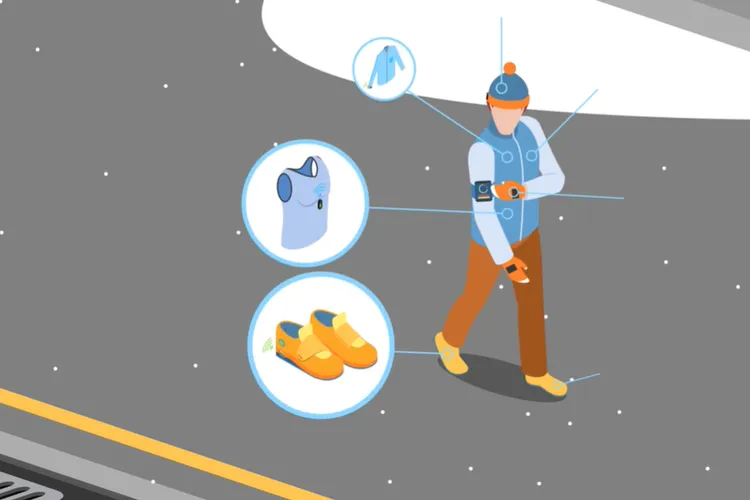
Smart clothes are garments containing materials or electronic systems that can sense, process, transmit, or respond to information. They are also called smart textiles, electronic textiles, intelligent fabrics, connected clothing, or e-textiles.
Some products place removable electronic modules inside conventional garments. More advanced designs integrate conductive fibers, sensors, antennas, energy-storage components, or processors directly into yarn and fabric.
Passive, Active, and Ultra-Smart Textiles
Smart textiles are often grouped into three broad categories:
- Passive smart textiles detect environmental or bodily conditions without actively changing their behavior. A UV-sensitive fabric that changes color in sunlight is one example.
- Active smart textiles sense a condition and respond to it, such as a jacket that adjusts insulation when the temperature falls.
- Ultra-smart textiles combine sensing, data processing, communication, and an intelligent response. These garments may interpret patterns with machine learning and provide real-time feedback.
The lines between these categories are becoming less tidy as researchers squeeze more functions into individual fibers. A single strand may eventually act as a sensor, communication pathway, memory device, and power source. That is a great deal of responsibility for something that still has to survive the laundry basket.
Why Nanotechnology Matters in Smart Clothing
Nanotechnology involves engineering materials and structures at extremely small scales, generally measured in nanometers. A nanometer is one-billionth of a meter, making nanoscale components small enough to alter fabric performance without necessarily turning a comfortable shirt into wearable hardware.
At this scale, materials can display unusual electrical, mechanical, optical, thermal, and chemical properties. These characteristics allow engineers to create coatings and fibers that conduct electricity, detect tiny movements, react to heat, repel water, neutralize odors, or measure chemicals in sweat.
Carbon Nanotubes
Carbon nanotubes are tiny cylindrical carbon structures valued for their electrical conductivity, strength, flexibility, and low weight. They can be mixed into polymers, printed onto fabric, or applied as conductive coatings.
In smart clothing, carbon nanotube networks may function as strain sensors. When a wearer bends an elbow or expands the chest while breathing, the electrical resistance of the material changes. Software can translate those changes into movement or respiratory data.
Graphene
Graphene is a one-atom-thick sheet of carbon arranged in a honeycomb pattern. It is highly conductive, mechanically strong, lightweight, and flexible, making it an attractive material for wearable sensors, heaters, electrodes, and energy-storage systems.
Graphene-based coatings can help fabrics detect pressure, stretching, temperature, or physiological signals. Researchers are also exploring graphene textiles for thermal management and electromagnetic shielding.
MXenes and Metal Nanowires
MXenes are a family of thin, conductive materials that can be processed into inks and deposited onto flexible surfaces. Their high conductivity and large surface area make them promising for biosensors, pressure sensors, antennas, and supercapacitors.
Silver nanowires and other metal nanostructures can create highly conductive pathways that remain flexible when properly embedded. However, cost, oxidation, skin compatibility, and environmental impact must be considered before such materials become common in mass-market clothing.
Conductive Polymers and Nanofibers
Conductive polymers combine some electrical properties of metals with the processability of plastics. Materials such as polyaniline and PEDOT-based formulations can be coated onto fibers or incorporated into composites.
Electrospinning is another important technique. It uses an electrical field to produce extremely fine fibers, creating lightweight mats with high surface area and controllable porosity. These nanofiber layers may support filtration, sensing, energy generation, wound care, or personal temperature control.
How Smart Clothing Collects Information
The human body produces a nonstop stream of mechanical, electrical, thermal, and chemical signals. Conventional wearables collect some of these signals from a small area of skin. Smart garments can potentially measure them across larger regions while remaining in place during normal movement.
Motion and Posture Sensors
Textile strain sensors can measure stretching caused by joint movement, muscle activity, breathing, or posture changes. Pressure-sensitive fabrics can map how the body contacts a chair, shoe, glove, bed, or rehabilitation device.
Researchers at MIT have demonstrated form-fitting smart textiles capable of recognizing activities such as walking, running, and jumping. Related tactile fabrics can record human interaction with objects and surfaces, creating possibilities for physical therapy, athletic coaching, robotics, and elder care.
Heart and Breathing Monitoring
Conductive textile electrodes can collect electrocardiogram signals when they maintain consistent contact with the skin. Chest straps and sensorized shirts may also estimate respiratory rate by measuring fabric expansion.
Unlike adhesive electrodes, textile systems may be more comfortable for long-term use. The challenge is maintaining reliable contact when the wearer moves, sweats, changes posture, or decides that today is apparently a “wear the shirt backward” kind of day.
Sweat and Chemical Analysis
Sweat contains electrolytes and metabolites that may provide information about hydration, exertion, and certain physiological processes. Nanoscale chemical sensors can be incorporated into patches, threads, or fabric channels to measure substances such as sodium, lactate, glucose, or changes in pH.
These systems are promising, but sweat measurements are not automatically equivalent to blood tests. Results can be affected by sweat rate, contamination, temperature, placement, and individual biology. Medical interpretation therefore requires careful validation rather than enthusiastic guessing by a T-shirt.
The Latest Advances in Wearable Nanotechnology
Fibers That Function Like Computers
One of the most significant trends is the development of programmable fibers. In 2025, MIT researchers reported an elastic fiber computer designed to be sewn into clothing. The fiber incorporated computational capabilities while remaining flexible, comfortable, and machine washable under tested conditions.
Instead of sending every raw signal to a smartphone or cloud server, future garments may process information within the fabric. Local processing could reduce communication delays, improve responsiveness, and potentially limit the amount of sensitive data transmitted elsewhere.
Shape-Changing and Temperature-Adaptive Fabrics
Researchers are developing fibers that change shape in response to heat or electrical input. A liquid crystal elastomer fiber developed by MIT and Northeastern University can contract when heated and is compatible with established textile machinery.
Possible applications include garments that open ventilation structures, alter their fit, or increase insulation as conditions change. A jacket could theoretically become warmer without adding another bulky layer, finally ending the annual debate over whether carrying a sweater “just in case” counts as planning or paranoia.
Textile Energy Harvesting
Power remains one of wearable technology’s biggest challenges. Tiny batteries must be safe, flexible, lightweight, and resistant to repeated bending. Researchers are investigating fiber-shaped batteries, supercapacitors, flexible solar cells, thermoelectric generators, and triboelectric nanogenerators.
Triboelectric systems generate electrical charge through contact and separation between materials. In clothing, ordinary body movement can create this repeated friction. Thermoelectric textiles attempt to use the temperature difference between the body and surrounding air, while piezoelectric materials can generate charge when bent or compressed.
Most energy-harvesting garments cannot continuously power every imaginable feature. However, they may extend battery life, support low-power sensors, or reduce how often a device must be charged.
Washable Textile Electronics
Laboratory performance means little if a garment stops working after meeting detergent. Current research focuses on encapsulating conductive materials, improving fiber-to-device connections, and designing circuits that tolerate bending, abrasion, sweat, and repeated washing.
Washability claims need close inspection. A garment may be washable only after removing its battery or control module. It may require a laundry bag, gentle cycle, cold water, or air drying. “Machine washable” is useful information, but it is not a magical force field.
Where Smart Clothes Could Make the Biggest Difference
Healthcare and Remote Patient Monitoring
Medical smart clothing could support continuous monitoring outside clinics. Sensorized garments are being studied for heart activity, respiration, sleep, gait, muscle movement, rehabilitation, wound care, and fall-risk assessment.
A comfortable shirt may collect information for longer periods than a handheld device or temporary clinical test. This could help clinicians identify patterns that appear during daily life rather than during a brief appointment.
However, wellness clothing and medical devices are not the same. Products used to diagnose, treat, or guide medical decisions require appropriate clinical evidence, risk controls, and regulatory oversight.
Sports and Fitness
Athletes can use smart garments to evaluate posture, joint angles, muscle activation, breathing, workload, and technique. Because sensors are distributed through fabric, they can capture movement without requiring a collection of rigid devices strapped to every limb.
Potential benefits include more precise coaching, injury-risk detection, rehabilitation tracking, and feedback during exercise. The most useful products will turn measurements into clear recommendations. Nobody needs 4,000 new data points merely to learn that sprinting uphill is tiring.
Workplace and Military Safety
Smart uniforms could monitor heat strain, fatigue, exposure to hazardous substances, posture, and physical workload. Firefighters, industrial workers, first responders, and military personnel may benefit from garments that detect dangerous environmental conditions or provide location and health information.
These applications also raise serious questions about worker surveillance. Safety monitoring should not quietly become a system for punishing employees based on poorly interpreted biological data.
Assistive Technology
Sensorized gloves and garments may support rehabilitation, tactile guidance, sign-language recognition, or skill training. Haptic feedback can provide vibrations or pressure cues that guide a user through movements.
Smart textiles may also serve as soft interfaces for robotic exosuits. Fabric-based sensors can monitor body position while lightweight actuators provide assistance, potentially making wearable robotics less rigid and more comfortable.
Challenges Smart Clothing Still Has to Overcome
Comfort and Fit
A sensor works only when the garment is worn correctly. Loose fabric may produce unstable signals, while tight clothing can become uncomfortable. Manufacturers must account for different body shapes, movement patterns, skin sensitivities, and accessibility needs.
Power and Connectivity
Batteries add weight and may create rigid spots. Wireless communication consumes power and can become unreliable when the body blocks signals. Engineers must balance sampling frequency, processing, battery capacity, and garment comfort.
Privacy and Cybersecurity
Smart clothes may collect intimate information about heart rate, movement, location, sleep, stress indicators, or daily routines. Buyers should know what is collected, where it is stored, who can access it, and whether it is used for advertising or algorithm development.
Strong encryption, secure software updates, limited data retention, and meaningful consent should be treated as core product featuresnot optional accessories tucked beside the spare button.
Environmental Impact
Combining textiles, polymers, metals, nanomaterials, adhesives, and electronic components can make recycling difficult. Some nanoscale materials may also create concerns during manufacturing, washing, disposal, or fiber shedding.
Sustainable smart clothing will require safer materials, replaceable modules, repairable construction, responsible manufacturing, and plans for recovering electronic components at the end of a garment’s life.
Standards and Measurement Accuracy
Results can vary with garment size, sensor placement, sweat, motion, washing history, and software settings. Shared testing standards are needed so buyers, researchers, and clinicians can compare performance across products.
What Wearing Smart Clothes Is Actually Like
The most successful smart clothing does not feel especially futuristic. That may sound disappointing to anyone hoping for a glowing superhero suit, but it is excellent news for everyday users. Good wearable technology fades into the background.
Putting on a sensorized fitness shirt usually feels much like wearing compression apparel. The garment may fit more closely than an ordinary T-shirt because textile electrodes and strain sensors need stable contact. Once it is positioned correctly, the wearer should be able to move without thinking about the electronics.
Setup can be less invisible. Some garments require a small control module to be snapped into place, charged, and paired with an app. First-time calibration may involve standing still, performing several movements, or entering body measurements. This process is rarely difficult, but it can take the romance out of feeling like an early adopter. Even tomorrow’s clothing occasionally wants a firmware update.
During exercise, smart garments offer an important advantage over watches: they can collect information from multiple parts of the torso or limbs. A shirt may monitor breathing and posture while shorts examine hip or knee movement. Feedback can feel more relevant because it reflects how the body moves as a system.
That does not mean every alert is useful. A garment may mistake fabric shifting for poor technique, especially when the fit is wrong. Sweat, vigorous motion, or a loose electrode can introduce noise. Users quickly learn that smart clothing should guide judgment rather than replace it.
Comfort varies by design. Conductive yarns can feel completely ordinary, while poorly placed seams, connectors, or modules can create pressure points. Heat and moisture management matter because many smart garments fit closely. A brilliant sensor system inside a hot, scratchy shirt is still a hot, scratchy shirt.
Laundry becomes part of the ownership experience. Users typically need to remove electronic modules, close fasteners, use mild detergent, and avoid high dryer temperatures. The routine is manageable, but smart clothing is not always suited to being tossed into a mixed load with towels, jeans, and whatever mysterious object has been living in the washer seal.
Battery habits also shape the experience. A garment that lasts through several workouts feels convenient. One that runs out of power halfway through every session becomes an expensive normal shirt. Low-power processing, energy harvesting, and fiber-based storage may reduce this annoyance over time.
In health-monitoring settings, the experience can be more meaningful. Soft textile electrodes may be easier to tolerate than repeated adhesive patches, particularly during long-term observation. Continuous monitoring can also provide reassurance, although constant access to bodily data may increase anxiety for some users. Thoughtful apps should highlight meaningful patterns instead of treating every minor fluctuation like the season finale of a medical drama.
The best smart clothes provide useful information with minimal effort. They fit well, survive regular care, explain their findings clearly, and protect personal data. The least successful products make the wearer manage batteries, Bluetooth, calibration, laundry restrictions, and confusing graphs for insights that could have been obtained by looking in a mirror.
For buyers, the practical lesson is simple: evaluate the garment first and the gadget second. Check comfort, sizing, care instructions, battery life, app compatibility, privacy terms, and the evidence supporting any health or performance claims. A smart shirt should still succeed at being a shirt.
The Future of Smart Clothes
The next stage of wearable nanotechnology will likely involve deeper integration. Sensors, processors, antennas, energy systems, and displays will become less like components attached to fabric and more like properties of the fibers themselves.
Artificial intelligence may allow garments to recognize personal patterns rather than relying on generic thresholds. A rehabilitation sleeve could learn a patient’s normal movement, while protective workwear could combine temperature, exertion, and environmental readings to identify rising heat risk.
Clothing may also become more adaptive. Fabrics could change porosity, insulation, color, compression, or shape according to physical conditions. Medical garments might deliver controlled stimulation or support treatment while monitoring the body’s response.
The largest breakthrough may not be a single dazzling feature. It may be scalable manufacturing that makes advanced fibers affordable, durable, washable, and recyclable. Smart clothing will enter ordinary life only when it can survive ordinary lifeincluding rain, sweat, stretching, accidental spills, and the deeply humbling experience of being washed with a red sock.
Conclusion
Smart clothes are transforming fabric from a passive covering into an interactive platform. Nanomaterials such as graphene, carbon nanotubes, MXenes, metal nanowires, and conductive polymers make it possible to build sensing and electronic functions into soft, flexible textiles.
The latest wearable nanotechnology includes programmable fiber computers, motion-sensing garments, shape-changing fabrics, chemical sweat sensors, textile energy harvesters, and increasingly washable electronics. These advances could support healthcare, athletic performance, assistive technology, personal comfort, and worker safety.
Major obstacles remain. Smart garments must become more durable, comfortable, accurate, secure, sustainable, and affordable. Developers must also prove that collected data leads to useful decisions rather than creating another screen full of colorful graphs.
Even so, the direction is clear: tomorrow’s most important wearable device may not sit on the wrist. It may already be hanging quietly in the closet.