
Dusting looks like the easiest household chore. Grab a cloth, wave it around the furniture, admire the temporary shine, and move on with your life. Unforteaned floors, and leaves hidden dust colonies thriving behind televisions and ceiling fans.
Learning how to dust your home the right way is less about working harder and more about using the correct tools, order, and technique. A smart routine captures dust instead of relocating it from the bookshelf to your lungs. It also helps reduce pollen, pet dander, dust mite debris, fabric fibers, and other particles that can affect indoor air quality.
This guide explains exactly what to use, where to begin, how to clean tricky surfaces, and how to keep dust from returning five minutes after you put the vacuum away.
What Is Household Dust, Anyway?
Household dust is not one mysterious substance. It is a constantly changing mixture of particles from both inside and outside your home. Depending on where you live and who shares your space, dust may contain soil, pollen, hair, shed skin cells, textile fibers, pet dander, tiny insect fragments, smoke residue, and microscopic particles produced by cooking or everyday activities.
Dust mites can also contribute allergens, especially in bedding, carpets, upholstered furniture, and humid rooms. The mites themselves are microscopic and do not bite, but proteins in their waste and body fragments may trigger symptoms in sensitive people.
No home can remain completely dust-free. Opening a door, folding a blanket, walking across carpet, or allowing the dog to perform its post-bath victory lap can release particles. The realistic goal is to prevent excessive buildup and remove settled dust without throwing most of it back into the air.
The Best Tools for Dusting a Home
You do not need a closet full of magical cleaning gadgets. A small collection of well-chosen tools can handle nearly every room.
Microfiber Cloths
A quality microfiber cloth is the everyday champion of dust removal. Its fine fibers collect and hold particles more effectively than an old cotton T-shirt or a wad of paper towels. For routine cleaning, lightly dampen the cloth with water. It should feel barely moist, not wet enough to leave droplets or streaks.
Fold each cloth into quarters before using it. This creates several clean working surfaces. When one side becomes dirty, refold the cloth instead of rubbing captured grime back across the furniture.
A Vacuum with Useful Attachments
A vacuum is not just for floors. A soft dusting brush can clean vents, baseboards, lampshades, shelves, blinds, and some walls. An upholstery attachment works well on sofas and mattresses, while a crevice tool reaches corners, tracks, and the spaces beside appliances.
A vacuum with effective filtration, preferably a sealed system with a HEPA filter, can help prevent fine particles from escaping through the exhaust. Maintain the machine according to its instructions because an overloaded dust cup or clogged filter can weaken suction.
An Extendable Microfiber Duster
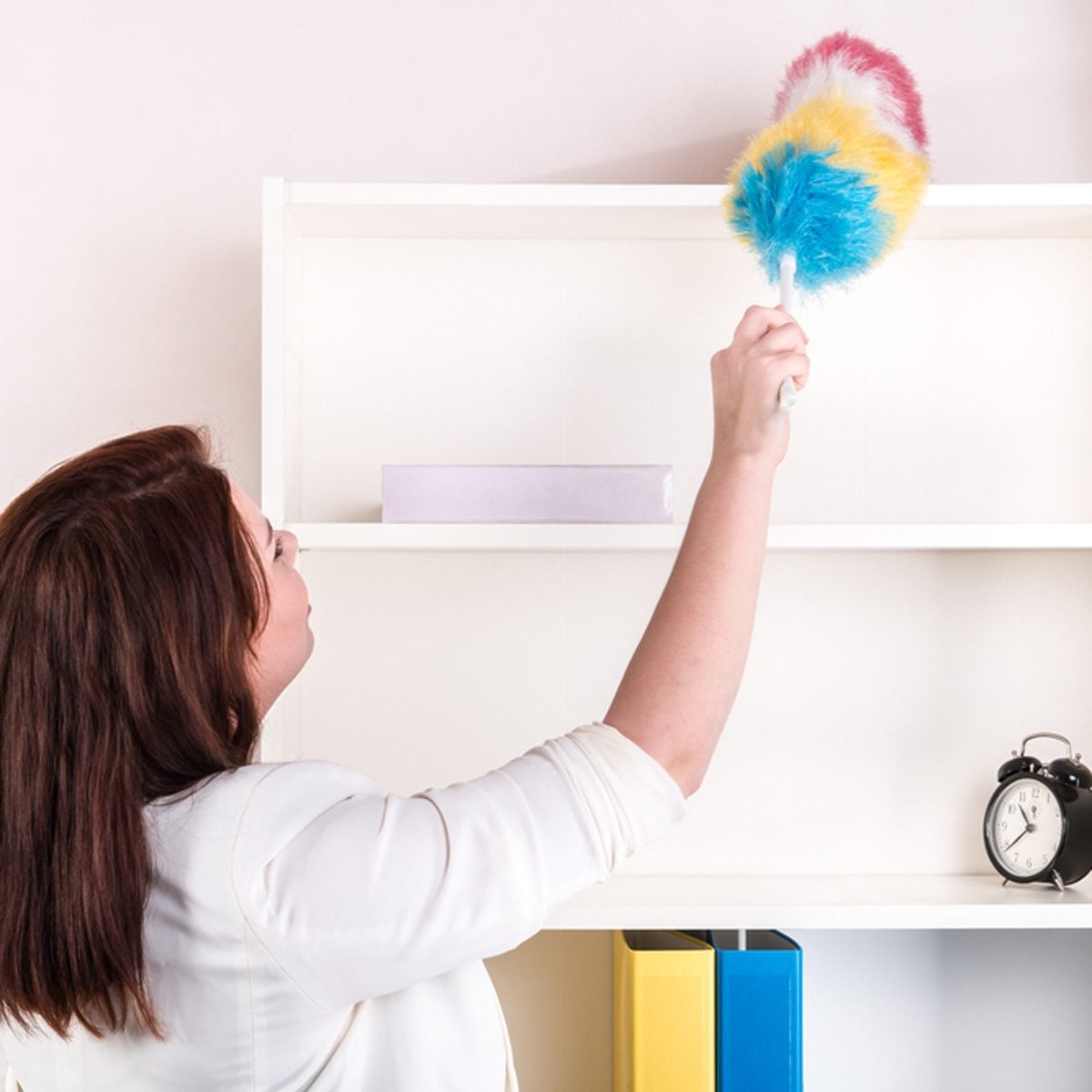
Use an extendable duster for ceiling corners, tall shelves, light fixtures, and fan blades. Choose a washable microfiber head that traps dust rather than a traditional feather duster that may simply launch it into a new postal code.
A Microfiber Mop
A flat microfiber mop can clean hard floors, walls, and tall baseboards. It is especially helpful when you want to reach behind furniture without crawling around like a detective searching for evidence.
Small Detail Brushes
A clean, soft paintbrush or makeup brush is excellent for carved furniture, decorative objects, keyboard edges, and narrow crevices. Reserve these brushes for cleaning and label them unless you enjoy applying bookshelf residue to your face.
The Golden Rule: Dust from Top to Bottom
Gravity is extremely dependable. Dust a ceiling fan, and some particles will fall onto the table. Clean the table, and a few will reach the floor. Starting low means you may have to clean the same surfaces again.
The correct order is simple:
- Declutter the room.
- Clean ceiling corners, fans, and light fixtures.
- Dust tall furniture, shelves, and wall decorations.
- Clean tables, counters, electronics, and lower furniture.
- Finish with baseboards and vents.
- Vacuum or damp-mop the floor last.
Move around the room in one direction rather than bouncing randomly between surfaces. A clockwise route works well and makes it easier to see what has already been cleaned.
How to Dust Your Home Step by Step
1. Prepare the Room
Pick up clothing, toys, paperwork, dishes, and other clutter before dusting. The fewer objects you must move, the faster the job becomes. Closed storage also collects less dust than crowded open shelving.
Gather all your tools before starting. Carrying a small cleaning caddy prevents repeated trips to the supply closet and removes the temptation to abandon the job halfway through.
2. Turn Off Fans and Electronics
Switch off ceiling fans and allow the blades to stop completely. Unplug electronics when appropriate before cleaning them. Never spray liquid directly toward electrical components, outlets, screens, vents, or controls.
3. Remove High Dust First
Use an extendable microfiber tool or a vacuum attachment on ceiling corners, crown molding, high shelves, vents, and light fixtures. Work gently. Aggressive sweeping creates a dramatic dust cloud, which may look impressive in a beam of sunlight but is not the goal.
4. Wipe Hard Surfaces
Run a lightly damp microfiber cloth across shelves, furniture, windowsills, door frames, and decorative objects. Use long, controlled strokes rather than rapidly flicking the cloth. Lift objects instead of cleaning around them whenever practical.
Apply any furniture product to the cloth rather than spraying it directly onto the surface. Direct spraying can cause overspray, uneven residue, and airborne droplets. Always confirm that a cleaner is suitable for the material and test it in an inconspicuous spot.
5. Vacuum Soft Surfaces
Dust settles on couches, chairs, mattresses, curtains, and fabric headboards even when it is less visible. Use the appropriate vacuum attachment and move slowly. Remove sofa cushions so you can clean both sides, underneath them, and along seams where crumbs and pet hair gather for private meetings.
6. Clean Baseboards and Floor-Level Vents
Vacuum loose debris from baseboards before wiping marks with a damp cloth. Clean vent covers with a soft brush attachment and follow with microfiber if necessary. Do not push dust deeper into ducts or electrical equipment.
7. Finish with the Floors
Vacuum carpet, rugs, and hard flooring after every elevated surface has been cleaned. Move slowly and overlap your passes so the vacuum has time to lift embedded particles. On carpet, changing direction can help reach debris caught between fibers.
For hard floors, vacuum or use a microfiber dust mop first. Follow with a damp mop only when the flooring manufacturer allows it. Avoid soaking wood or laminate floors.
How to Dust Difficult Areas
Ceiling Fans
Turn the fan off and use a stable step stool or an extendable tool. A lightly damp microfiber cloth captures thick buildup well. Wipe both the top and bottom of each blade while supporting it gently to avoid unnecessary pressure on the motor assembly.
An old pillowcase can also contain loose dust. Slide it over a blade, press lightly, and pull it back so much of the debris remains inside the fabric. Wash the pillowcase separately afterward.
Window Blinds
Close horizontal blinds and wipe or vacuum the slats from one side. Rotate them in the opposite direction and repeat. Support delicate slats with one hand so they do not bend. Real wood, cellular, and fabric shades may require special care, so check the manufacturer’s instructions before applying moisture.
Electronics and Screens
Unplug the device when safe to do so. Use a clean, dry microfiber cloth on screens unless the manufacturer recommends a specific cleaning method. Never apply ordinary glass cleaner directly to a television, monitor, or phone screen.
Use a soft brush or low-suction vacuum attachment around exterior vents and cables. Avoid opening equipment or pushing tools deep into ports.
Books and Bookshelves
Remove a manageable section of books at a time. Vacuum or wipe the empty shelf, then dust the top edges and covers of the books with a dry microfiber cloth or soft brush. Return them only after the shelf is dry.
Do not remove an entire personal library unless you have cleared your afternoon and emotionally prepared for discovering books you forgot you owned.
Lampshades
Use a lint roller on sturdy fabric shades or vacuum them gently with an upholstery attachment at low suction. A clean paintbrush works well on pleated shades. Wipe glass or metal lamp bases separately after unplugging the lamp.
Plants
Dust can block light from reaching houseplant leaves. Support each broad leaf with one hand and wipe it with a soft damp cloth. For plants with many small leaves, a gentle lukewarm shower may work if the species and potting setup can tolerate it. Allow the plant to drain thoroughly.
Radiators, Refrigerators, and Appliances
Unplug movable appliances when appropriate and follow their safety instructions. Use a crevice tool or long, flexible duster behind refrigerators, radiators, washers, and dryers. Dust buildup around vents or condenser coils can affect appliance performance, but components should be cleaned only as directed by the manufacturer.
How Often Should You Dust?
There is no universal schedule because homes accumulate dust at different rates. Pets, carpeting, open windows, nearby construction, local pollen, household size, and heating or cooling systems all influence how quickly particles return.
A practical schedule is:
- Weekly: Frequently used furniture, electronics, bedroom surfaces, visible shelves, floors, and pet areas.
- Every two to four weeks: Blinds, vents, baseboards, lampshades, picture frames, doors, and less-used rooms.
- Every three to six months: Ceiling fans, high ledges, mattresses, under large furniture, behind appliances, curtain tops, and closet shelves.
Homes with pets or allergy-sensitive residents may need more frequent cleaning. The best test is visual: if a finger swipe leaves an obvious line, the surface is requesting attention in the least subtle way possible.
How to Keep Dust from Coming Back So Quickly
Use Entrance Mats and Consider a Shoe-Free Rule
Place durable mats outside and washable mats inside exterior doors. Removing outdoor shoes can reduce the soil, pollen, and debris tracked through the home.
Maintain HVAC Filters
Check heating and cooling filters regularly and replace or clean them according to the system manufacturer’s directions. The correct filter depends on your equipment; installing one that creates excessive airflow resistance can cause problems.
Control Indoor Humidity
Keeping relative humidity roughly between 30% and 50% can discourage dust mites and help prevent mold growth. Use exhaust fans in kitchens and bathrooms, repair leaks, and consider a dehumidifier in persistently damp areas.
Wash Bedding Regularly
Sheets, pillowcases, blankets, and washable pet bedding collect skin flakes, hair, and allergens. Follow care labels and wash them on a consistent schedule. People with diagnosed dust mite allergies may also benefit from allergen-resistant mattress and pillow covers.
Groom Pets
Regular brushing can help control loose fur and dander. Brush pets in an easy-to-clean area and wash their bedding. Follow veterinary advice about bathing frequency because overbathing can irritate an animal’s skin.
Reduce Open-Surface Clutter
Collections and decorations are not forbidden, but every exposed item creates additional edges and crevices. Use cabinets, drawers, and containers for objects that do not need to be displayed.
Seal Obvious Gaps
Weatherstripping and appropriate sealants can reduce particles entering around drafty windows and doors. They may also improve comfort and energy efficiency.
Dusting for People with Allergies or Asthma
Dusting temporarily disturbs particles, so people with respiratory sensitivities may experience symptoms during or immediately after cleaning. When possible, have someone without the allergy perform heavy dusting and vacuuming. Sensitive residents may prefer to leave the room until airborne particles have settled and ventilation has improved.
Use damp cleaning methods, a well-filtered vacuum, and fragrance-free products when strong scents are irritating. A properly sized portable HEPA air cleaner may help capture some airborne particles, but it does not replace source control, cleaning, moisture management, or ventilation.
Persistent coughing, wheezing, shortness of breath, congestion, or eye irritation deserves medical attention. Cleaning can reduce exposure, but it cannot diagnose or treat an allergy.
Common Dusting Mistakes to Avoid
- Using a dry feather duster: It may scatter particles instead of capturing them.
- Cleaning the floor first: Dust from higher surfaces will fall onto it later.
- Using a soaking-wet cloth: Excess water may damage wood, electronics, paint, or laminate.
- Spraying products directly onto furniture: This can leave residue and create overspray.
- Ignoring textiles: Curtains, mattresses, upholstery, and rugs can hold substantial dust.
- Forgetting the vacuum itself: Full bins, tangled rollers, and dirty filters reduce performance.
- Overusing disinfectant: Ordinary dust removal usually requires cleaning, not disinfection.
- Mixing cleaning chemicals: Some combinations can produce dangerous fumes. Follow labels and never experiment.
Experience Notes: What Actually Works in Real Homes
The biggest lesson from maintaining a home is that dusting fails when it becomes a giant special event. Waiting until every shelf looks as though it belongs in an abandoned mansion turns a simple task into an exhausting project. A ten-minute weekly routine is usually more effective than an heroic cleaning marathon every few months.
One useful habit is keeping microfiber cloths in the rooms where they are needed. A cloth stored in a bathroom cabinet makes it easy to wipe a dusty ledge while waiting for the shower to warm. Another kept near the television can handle the media console before the dust becomes visible from across the room. Convenience beats motivation surprisingly often.
Working in zones also makes a noticeable difference. Instead of announcing, “Today I shall clean the entire kingdom,” choose one room and follow the same route every time: ceiling, walls, furniture, baseboards, and floor. A predictable sequence reduces decision fatigue and makes missed areas easier to spot.
Microfiber performs best when it is clean and only slightly damp. Once a cloth becomes gray and overloaded, continuing to use it simply paints a thin layer of dirt onto the next surface. Folding the cloth into quarters and rotating to a fresh side extends its usefulness. Keeping several cloths nearby prevents the classic mistake of using one increasingly suspicious rag throughout the whole house.
Another practical discovery is that clutter determines how long dusting takes. Wiping an empty nightstand requires seconds. Dusting a nightstand covered with receipts, charging cables, coins, water glasses, and three objects nobody remembers buying becomes an archaeological expedition. Reducing surface clutter can cut cleaning time more dramatically than purchasing another gadget.
Pet households benefit from attacking the source as well as the surfaces. Washing pet blankets, vacuuming favorite sleeping spots, and brushing animals consistently can reduce the fuzzy tumbleweeds that roll dramatically across the floor whenever guests arrive. A cordless vacuum near the main pet area can make quick maintenance easier, although a full-size vacuum may still be necessary for deeper carpet cleaning.
It is also worth paying attention to where dust returns first. A shelf near an open window may collect pollen and outdoor debris. A black television stand makes every particle visible. A bedroom may become dusty because bedding and clothing release fibers. A room that looks dirty again within a day may have an overloaded HVAC filter, a drafty opening, ongoing renovation nearby, or another source that wiping alone will not solve.
Finally, perfection is a terrible cleaning standard. Dust is produced continuously, and even a carefully maintained home will not stay spotless forever. The goal is not to defeat every particle in permanent combat. The goal is to create a repeatable system that keeps surfaces, textiles, floors, and indoor air reasonably clean without sacrificing an entire weekend.
Dust high surfaces first, capture particles with the right tools, vacuum last, and prevent new buildup where possible. Follow that rhythm consistently, and dusting becomes a manageable household habit rather than a recurring domestic crisis.