
Note: This article is written for web publication, synthesized from official episode information and reputable entertainment coverage, with no source links inserted in the copy.
A Very South Park Kind of Christmas Miracle
When South Park promises a “Christmas miracle,” longtime viewers know better than to expect sleigh bells, sugar cookies, and a tidy moral wrapped in a bow. The animated comedy has spent nearly three decades treating the holiday season like a snow globe someone shook too hard, dropped on the floor, and then blamed on Cartman. So when the Season 28 finale, titled “The Crap Out,” arrived with a teaser about Stan praying and only a Christmas miracle being able to save the day, fans understood one thing immediately: this would not be a cozy fireplace episode.
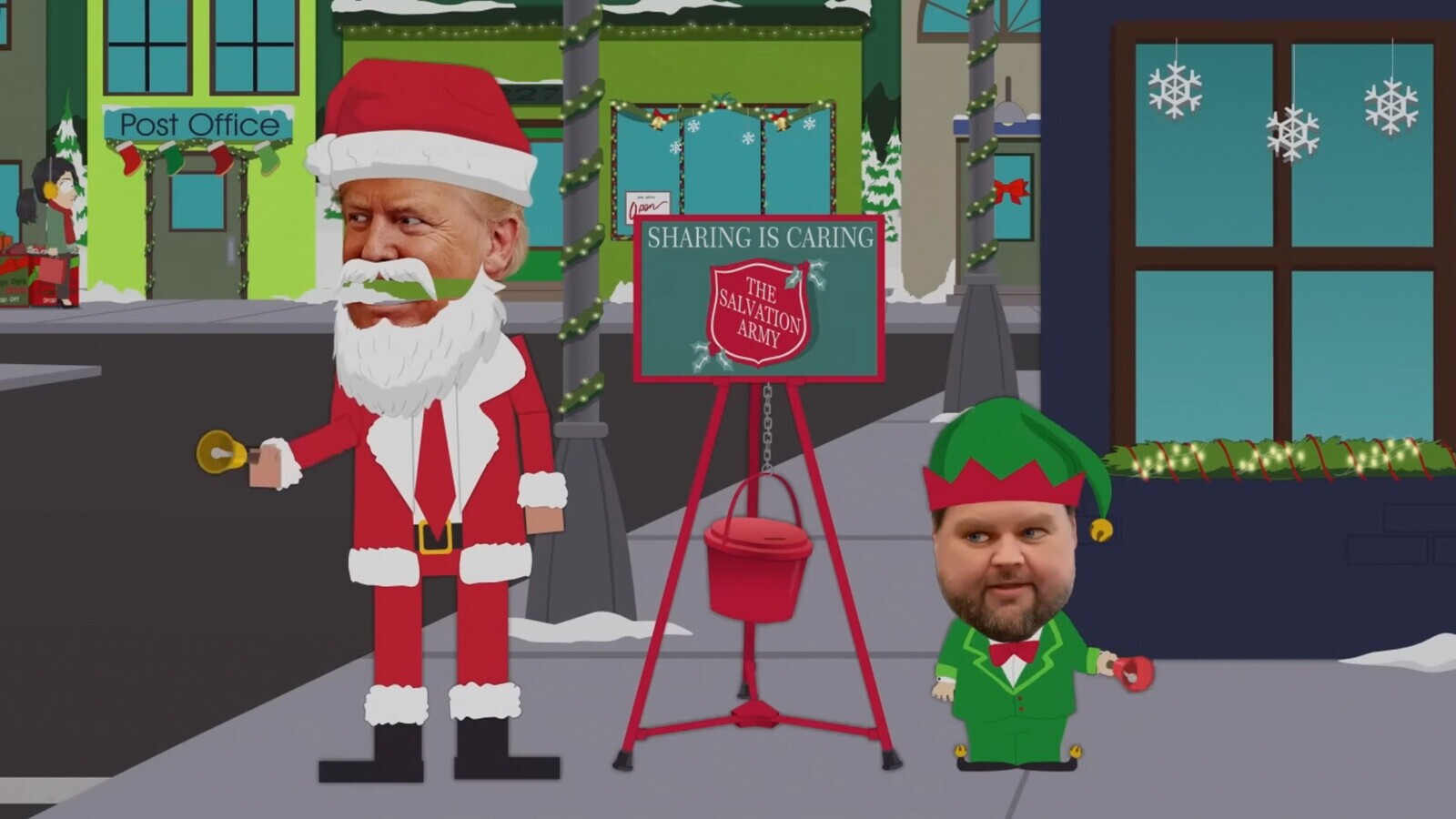
The finale aired on Comedy Central on December 10, 2025, and became the closing chapter of one of the show’s strangest, most politically charged modern arcs. The official description framed the episode around Satan’s due date, Stan’s desperate prayer, and the possibility that only a miracle could deliver the Antichrist on time. That sentence alone is basically a full South Park mission statement: religious satire, absurd stakes, political chaos, and a holiday setting all crammed into one snow-covered pressure cooker.
But beneath the intentionally ridiculous premise, the finale also showed why South Park remains culturally sticky. Trey Parker and Matt Stone have always had a gift for turning whatever America is arguing about into a grotesque cartoon carnival. In this finale, the show mixed Christmas nostalgia, political parody, fan-favorite callbacks, and a surprisingly emotional Stan Marsh storyline into an episode that felt both chaotic and oddly reflective.
What Is “The Crap Out” About?
“The Crap Out” serves as Season 28, Episode 5, and it continues the serialized storyline that had run through the 2025 episodes. The season leaned hard into political satire, using fictionalized versions of public figures, apocalyptic imagery, and the town of South Park’s usual inability to behave like normal people for more than seven seconds.
At the center of the finale is Stan, who is emotionally exhausted after a season full of instability. His family has lost Tegridy Farms, his town has become a magnet for national madness, and the adult world around him seems to have fully misplaced its instruction manual. Stan turns toward the idea of a Christmas miracle not because he is suddenly cheerful, but because he has reached the point where ordinary solutions feel useless.
That choice is important. In classic South Park fashion, the episode does not treat faith, hope, or holiday spirit with simple sweetness. It puts them through the blender. Stan wants relief. The town wants a reset. The larger plot wants a spectacular ending. The result is a finale that asks whether a “miracle” is really a blessing, a convenient escape, or just another way people avoid facing the mess they helped create.
Why the Christmas Setting Matters
South Park has a long and messy history with Christmas episodes. The series helped define its early identity with holiday installments such as “Mr. Hankey, the Christmas Poo” and later returned to dark seasonal satire with episodes involving Woodland Critters, commercialized holiday cheer, and the town’s recurring talent for turning good intentions into public disasters.
That history gives “The Crap Out” extra weight. The phrase “Christmas miracle” is not just a seasonal hook; it is a callback to the show’s favorite holiday trick. South Park loves taking symbols of innocence and warmth, then asking what happens when they are dragged through American media, politics, consumer culture, and adult hypocrisy.
In this finale, Christmas is less a decoration than a pressure test. The holiday setting makes the episode’s bleak jokes sharper because Christmas usually promises comfort, family, forgiveness, and renewal. South Park, naturally, responds by asking: what if everyone wants renewal but nobody wants accountability?
Stan Marsh Becomes the Emotional Center
One of the smartest choices in the finale is making Stan the emotional anchor. Cartman can steal scenes, Randy can cause chaos, and the political parody can grab headlines, but Stan often works best as the show’s exhausted conscience. He is not perfect, and he is not above the town’s nonsense, but he is usually the kid most likely to notice when reality has gone completely off the rails.
By having Stan pray for a Christmas miracle, the finale gives viewers a familiar emotional doorway into an otherwise wild story. He is not asking for fame, money, or a grand victory. He wants his life to stop feeling broken. That makes the episode’s outrageous plot easier to follow because beneath all the satire is a simple human wish: can things please get better?
This is where South Park often does its best work. The show can be crude, loud, and deliberately offensive, but its strongest episodes usually contain a real emotional thread. Stan’s search for meaning gives the finale more than shock value. It gives the madness a reason to matter.
The Return of Holiday Chaos
Fans also had plenty to chew on thanks to the finale’s callbacks. The episode plays with the show’s old Christmas mythology, including the kind of cute-but-terrifying holiday imagery that longtime viewers associate with the Woodland Critters. In South Park, adorable woodland animals are never just adorable woodland animals. They are usually a warning label with paws.
These callbacks are not random nostalgia buttons. They connect the finale to the show’s earlier holiday episodes and remind viewers that Christmas in South Park has always been suspiciously unstable. The town has never known how to celebrate anything without accidentally creating a cultural incident, a public panic, or a musical number that should probably be discussed in therapy.
For SEO readers searching for the South Park Christmas episode, South Park Season 28 finale, or South Park Christmas miracle, this is the key appeal: “The Crap Out” is both a new chapter and a throwback. It uses current headlines while drawing from the show’s long tradition of turning holiday cheer into satire with teeth.
Political Satire Takes Center Stage
The 2025 run of South Park was unusually political even by the show’s standards. Season 27 and Season 28 formed a connected arc that frequently targeted the modern political climate, media reaction cycles, tech influence, culture-war outrage, and the strange way public life now feels like a live-streamed argument that nobody can mute.
The finale continues that approach with fictionalized political figures and an apocalyptic storyline designed to exaggerate real-world power struggles. As usual, South Park is not interested in polite imitation. It turns public personalities into cartoon symbols, then pushes those symbols until they become ridiculous enough to reveal something uncomfortable.
That style can be divisive. Some viewers love the show’s willingness to attack sacred cows from multiple directions. Others feel the satire can become too chaotic, too blunt, or too eager to shock. But the Season 28 finale proves that South Park still knows how to dominate conversation by making its absurdity feel connected to the national mood.
Why the Finale Felt Bigger Than a Regular Episode
Part of the finale’s importance comes from timing. In 2025, South Park returned after a complicated release period involving schedule changes, streaming rights, and a major Paramount+ deal. The show’s move into a new streaming arrangement made the season feel like more than another batch of episodes. It felt like a relaunch of sorts, with Comedy Central still serving as the broadcast home while Paramount+ became central to how fans watch the series.
That business context matters because South Park is no longer just a weekly cable cartoon. It is a long-running franchise with streaming value, cultural memory, and the rare ability to turn a new episode into an event. The Season 28 finale arrived at a moment when fans were already paying close attention to how the show would handle shorter seasons, serialized plots, and its renewed place in the streaming landscape.
In other words, the Christmas miracle was not only inside the episode. For some fans, the miracle was that South Park still felt unpredictable after all these years.
The Comedy of Desperation
The funniest thing about “The Crap Out” may be how desperate everyone seems. Stan wants a miracle. The adults want control. Political characters want power. Holiday figures want relevance. The town wants things to make sense, which is adorable, because this is South Park and sense left town sometime around the first commercial break in 1997.
That desperation gives the finale momentum. Rather than simply stacking random jokes, the episode builds around the feeling that everyone is running out of time. Christmas is coming. The prophecy is approaching. Stan is spiraling. The town is once again the center of a crisis it absolutely did not ask for but will somehow make worse.
This is a useful reminder of how South Park structures chaos. The show may look messy on purpose, but its best episodes usually have a clear engine. Here, the engine is the search for a miracle in a world where most people are too selfish, distracted, or ridiculous to recognize what a real miracle would even look like.
How “The Crap Out” Fits Into Modern South Park
Modern South Park has shifted away from the purely standalone rhythm of its early years. While the show still delivers individual episode premises, recent seasons have often used longer arcs, returning storylines, and callbacks that reward regular viewers. “The Crap Out” is very much part of that serialized era.
That can be both a strength and a challenge. New viewers may find the finale strange if they jump in without context. Longtime fans, however, get the payoff of seeing Season 27 and Season 28 threads collide. The episode references prior developments involving Stan’s family, political chaos, and the broader apocalyptic setup.
For web readers wondering whether they can watch the finale on its own, the answer is: yes, but with a helmet. You will understand the basic joke because South Park is rarely subtle. But the episode works better if you have followed the 2025 storyline, especially the way Stan’s personal frustration mirrors the town’s larger collapse into absurdity.
Specific Examples That Make the Finale Work
1. Stan’s Prayer Gives the Episode a Human Pulse
The phrase “Christmas miracle” could have been only a joke. Instead, Stan’s need for one gives the finale emotional grounding. His prayer is funny because of the world around it, but it is also sincere enough to keep the episode from becoming pure noise.
2. The Holiday Callbacks Reward Longtime Fans
The return of familiar Christmas-related elements reminds viewers of the show’s history. Rather than treating Christmas as a generic background, the finale uses South Park’s own bizarre holiday mythology as part of the story.
3. The Political Plot Reflects the Season’s Bigger Theme
The finale’s political satire is not separate from the Christmas story. It is the reason the miracle feels necessary. The town’s problems are not caused by one silly misunderstanding; they come from a world where power, media, and public panic have become impossible to separate.
4. The Ending Keeps the Tone Complicated
Without turning into a neat greeting card, the episode gives Stan a form of relief while leaving the larger satire intact. That balance is very South Park: one character may get a small emotional win, but the world remains proudly un-fixed.
Why Fans Keep Coming Back
The reason fans continue to watch South Park is not simply because it is shocking. Shock fades. What lasts is the show’s ability to feel like it was made five minutes before the world changed again. Even when episodes are animated, scripted, and produced through an intense process, they often carry the energy of a panic-written group chat from people who are both horrified and amused by the news.
“The Crap Out” captures that energy. It is topical but not only topical. It is nostalgic but not trapped in nostalgia. It is offensive by design but also interested in why modern life feels so spiritually scrambled. The Christmas miracle promised in the finale works because it is both sincere and ridiculous, which may be the most honest combination the show has.
Experience Section: Watching the Finale Like a Longtime Fan
Watching “The Crap Out” as a longtime South Park viewer feels a little like opening a Christmas present from someone who wrapped it beautifully but may have put a raccoon inside. You are curious. You are nervous. You are not entirely sure the box should be making that noise.
The first experience is recognition. The snowy setting, the holiday language, and the promise of a miracle immediately bring back memories of earlier Christmas episodes. For fans who remember when Mr. Hankey became one of the strangest holiday mascots in television history, the finale feels like a return to familiar territory. Not safe territory, obviously. This is South Park. The neighborhood welcome sign should probably include a legal waiver.
The second experience is whiplash. One moment, the episode is playing like a Christmas special. The next, it is deep inside political parody, religious absurdity, and Stan’s emotional crisis. That tonal chaos is part of the fun. South Park has always been at its best when it makes viewers laugh and then immediately wonder whether they should feel bad for laughing. The finale delivers that sensation repeatedly, though the strongest moments are not always the loudest ones.
The third experience is realizing how much the show still depends on Stan. Cartman may be the meme machine, Randy may be the chaos cannon, and Butters may be the innocent little disaster magnet, but Stan remains one of the show’s most useful emotional guides. When he feels overwhelmed, the audience understands why. His frustration is not abstract. It is the frustration of trying to be a normal kid in a world where adults have turned every institution into a circus tent with Wi-Fi.
For viewers, that makes the Christmas miracle idea oddly relatable. Most people have had moments when they wanted life to reset overnight. Maybe not with Woodland Critters, political demons, or a town-wide holiday meltdown, but the feeling is familiar. You want the house back. You want the family to calm down. You want the noise to stop. You want one clean, simple moment where everything makes sense again.
The finale also creates the experience of watching a show argue with its own legacy. South Park knows fans love callbacks, but it rarely offers them in a purely sentimental way. Instead, it brings back familiar holiday energy and then twists it into something current. That is why the episode does not feel like a museum exhibit of old jokes. It feels like the old jokes escaped the museum and started commenting on the news.
Another memorable viewing experience is the sense of speed. Modern South Park often feels like it is sprinting to keep up with public life, and this finale is no exception. The jokes arrive quickly, the references stack up, and the plot keeps escalating. For some viewers, that pace is thrilling. For others, it may feel overwhelming. But that tension is part of the show’s identity in 2025: it reflects a culture where every headline becomes a reaction, every reaction becomes content, and every piece of content becomes another argument.
By the end, the “Christmas miracle” works less like a traditional holiday lesson and more like a question. What would a miracle even look like in South Park? A happy family moment? A political escape hatch? A return to normal? Or just one kid getting a small piece of comfort while the rest of the world continues being absurd?
That is the experience the finale leaves behind. It is funny, messy, uncomfortable, nostalgic, and strangely thoughtful. It reminds viewers that South Park has never been interested in perfect endings. The show prefers cracked endings, suspicious endings, endings with snow on top and something deeply questionable underneath. And somehow, after all these seasons, that still feels like its own kind of Christmas miracle.
Conclusion
‘South Park’ Season Finale Promises a ‘Christmas Miracle’ is more than a catchy headline. It describes exactly what “The Crap Out” tries to do: take the warmest phrase in holiday storytelling and drag it through the weirdest corners of American satire. The Season 28 finale blends Stan Marsh’s emotional search for relief, the show’s long-running Christmas mythology, and an outrageous political storyline into an episode that is unmistakably South Park.
It may not be gentle. It may not be tidy. It may not be the kind of Christmas special anyone should play while grandma is quietly sipping cocoa in the living room. But it proves that South Park can still turn a holiday episode into a cultural conversation. The miracle is not that everything becomes perfect. The miracle is that after nearly three decades, the show can still make chaos feel weirdly meaningful.