
Note: This article is for general education and does not replace personal medical advice, widespread, painful, or unexplained skin changes.
Stretch marks are one of those body features that seem to arrive without sending a calendar invite. You may notice them after pregnancy, a growth spurt, weight changes, strength training, or simply because your skin decided it had a lot on its plate. They can look red, purple, brown, pink, silver, or white, and they may appear on the stomach, breasts, hips, thighs, buttocks, upper arms, or lower back.
The good news is that stretch marks are harmless. They are not contagious, they are not caused by poor hygiene, and they are not a sign that your body has somehow failed an imaginary beauty exam. The less-good-but-still-manageable news is that no treatment can reliably erase stretch marks completely. However, several options may help make them less noticeable, especially when treatment begins early.
What Are Stretch Marks?
Stretch marks, medically known as striae or striae distensae, are a type of scar. They develop when skin stretches or shrinks quickly enough to disrupt collagen and elastin fibers in the deeper layers of the skin.
Think of collagen as the supportive framework that gives skin strength, while elastin acts more like a tiny bungee cord that helps skin stretch and spring back. When rapid changes overwhelm those fibers, the skin repairs itself with streak-like scars. Your skin is doing repair work, not filing a complaint.
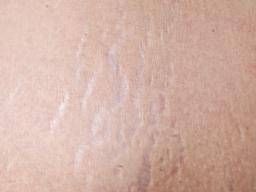
New stretch marks are often called striae rubrae. They may look red, pink, purple, dark brown, blue-black, or reddish-brown, depending on your natural skin tone. Over time, they often fade into lighter, flatter marks called striae albae. Older stretch marks may appear white, silvery, glossy, or slightly indented.
What Causes Stretch Marks?
The main trigger is rapid change in the size or shape of an area of the body. But the story is not always as simple as “skin stretched, therefore stripe.” Genetics, hormones, skin structure, and certain medical conditions can also influence who develops stretch marks and how noticeable they become.
Pregnancy
Pregnancy is one of the most common reasons for stretch marks, especially during the second and third trimesters. The abdomen expands, hormones shift, and the skin has a very busy nine months. Stretch marks may also develop on the breasts, hips, thighs, and buttocks.
Some people develop many pregnancy stretch marks, while others develop few or none. Family history can matter. If your mother, sister, or close relatives had pregnancy stretch marks, you may be more likely to develop them too.
Puberty and Growth Spurts
Teenagers can develop stretch marks during rapid growth spurts. They commonly appear on the thighs, hips, lower back, buttocks, breasts, shoulders, or upper arms. This is especially common during adolescence, when the body can seemingly grow three inches between Tuesday and Friday.
Weight Gain or Weight Loss
Rapid weight gain can stretch the skin and contribute to stretch marks. Significant weight loss can also make existing stretch marks more visible because the skin and underlying tissue are changing again. Stretch marks are not limited to people in any one body size, and they should not be treated as a moral scoreboard for eating, exercise, or appearance.
Muscle Growth and Bodybuilding
Quick increases in muscle size can cause stretch marks, particularly around the shoulders, chest, upper arms, thighs, and back. People who lift weights, use bodybuilding supplements, or follow intense muscle-building programs may notice new marks when their bodies change rapidly.
Genetics and Hormones
Some people are more prone to stretch marks because of inherited skin characteristics. Hormones also matter. Cortisol, a hormone made by the adrenal glands, can affect skin elasticity when levels are unusually high.
Stretch marks may be associated with conditions that affect connective tissue or cortisol levels, including Cushing syndrome, Ehlers-Danlos syndrome, and Marfan syndrome. Long-term use of corticosteroid medications, including pills, injections, inhalers, and strong topical steroid creams, may also contribute in some cases.
Where Do Stretch Marks Usually Appear?
Stretch marks can occur almost anywhere skin undergoes rapid expansion or contraction. Common locations include:
- Abdomen and flanks
- Breasts and chest
- Hips and buttocks
- Thighs and calves
- Upper arms and shoulders
- Lower back
The marks are often symmetrical, meaning they may show up on both thighs, both hips, or both sides of the abdomen. They can itch slightly when they first appear, but they are usually not painful.
Can You Prevent Stretch Marks?
There is no guaranteed method for preventing stretch marks. That is worth saying clearly because the beauty aisle has been making some very ambitious promises for decades.
Keeping skin moisturized can feel soothing, especially during pregnancy or seasonal dryness, but moisturizing alone has not been proven to prevent stretch marks consistently. Cocoa butter, olive oil, vitamin E oil, almond oil, and similar products may improve the feel of dry skin, yet they do not reliably stop stretch marks from forming.
Some ingredients, such as hyaluronic acid and centella asiatica, may offer modest benefits for certain people, particularly when used early. Still, results vary, and no cream can rewrite genetics, hormones, or a growth spurt that has already chosen chaos.
Practical Ways to Support Skin Health
Although prevention is not foolproof, a few habits may help support overall skin health:
- Aim for gradual weight changes when possible.
- Follow pregnancy weight-gain guidance from your obstetric clinician.
- Eat a varied diet with adequate protein, fruits, vegetables, and healthy fats.
- Stay hydrated for overall health, while remembering that water is not a proven stretch-mark shield.
- Use sunscreen on exposed stretch marks, since tanning can make color contrast more noticeable.
- Avoid using strong steroid creams longer than prescribed without medical guidance.
Stretch Mark Treatments That May Help
Stretch mark treatment is mainly cosmetic. The goal is usually to soften texture, reduce color contrast, and make the marks less noticeable. Results depend on your skin type, the age of the stretch marks, their location, the treatment method, and your expectations.
Fresh stretch marks often respond better than older ones. That does not mean mature marks are untreatable; it simply means they can be more stubborn. Much like an old coffee stain, they tend to have opinions.
Topical Retinoids and Retinol
Prescription tretinoin and over-the-counter retinol are vitamin A derivatives that may help improve early stretch marks by encouraging collagen-related skin remodeling. These products are usually used consistently for several months before changes become noticeable.
Retinoids can cause dryness, redness, peeling, irritation, and increased sun sensitivity. They should not be used during pregnancy. If you are breastfeeding, trying to conceive, or have sensitive skin, ask your clinician or dermatologist before using a retinoid product.
Hyaluronic Acid and Centella Asiatica
Some evidence suggests that products containing hyaluronic acid or centella asiatica may help improve the appearance of early stretch marks. Hyaluronic acid attracts moisture, while centella is a plant-based ingredient used in some skincare formulas.
These products may be worth discussing with a dermatologist, but they should be viewed as modest options rather than miracle workers in a shiny bottle. Consistent use matters, and results are not guaranteed.
Laser Therapy
Laser treatment may improve the color or texture of stretch marks. Different lasers target different concerns. Pulsed-dye lasers are often used for newer red or purple stretch marks, while fractional laser treatments may help improve texture in older, lighter marks.
Laser therapy usually requires multiple sessions. Temporary redness, swelling, discomfort, pigment changes, and healing time are possible. The risk of darkening or lightening of the skin may be higher in some skin tones, so treatment should be planned by a qualified dermatologist experienced with diverse skin types.
Microneedling
Microneedling uses tiny needles to create controlled micro-injuries in the skin. The goal is to stimulate collagen and elastin production as the skin heals. It may improve the texture and visibility of stretch marks over several treatments.
Microneedling is not risk-free. Possible side effects include bleeding, bruising, redness, irritation, infection, pigment changes, and scarring. Avoid do-it-yourself microneedling devices for stretch marks, especially deep marks or large areas. A professional treatment plan is safer than turning your bathroom into a low-budget medical spa.
Radiofrequency and Radiofrequency Microneedling
Radiofrequency treatments use heat energy to stimulate collagen remodeling. Some dermatologists may combine radiofrequency with microneedling for certain scars and stretch marks.
These procedures should be approached carefully. Radiofrequency microneedling can cause serious complications when performed improperly, including burns, scarring, pigment changes, fat loss, and nerve injury. Choose a licensed medical professional who can explain the device, expected benefit, risks, recovery period, and alternatives.
Microdermabrasion and Chemical Peels
Microdermabrasion and chemical peels may improve surface texture for some people, but their effect on deep stretch marks is usually limited. They may be considered as part of a broader treatment plan rather than as stand-alone solutions.
Anyone with eczema, active skin infections, a history of keloid scars, melasma, or darker skin that easily develops hyperpigmentation should discuss risks carefully before undergoing resurfacing treatments.
What Usually Does Not Work Well?
Many popular home remedies have little evidence behind them. Cocoa butter, coconut oil, olive oil, almond oil, vitamin E, and other oils can make skin feel softer, but they have not consistently been shown to remove or prevent stretch marks.
Tanning is also not a treatment. Stretch marks often do not tan the same way as surrounding skin, which can make them stand out more. A self-tanner may temporarily camouflage color contrast, but it will not change the scar itself.
Be cautious with products promising “100% removal,” “instant collagen rebuilding,” or results that look suspiciously like they were photographed through a fog machine. Stretch marks are common scars, not a personal emergency, and honest treatment plans should sound realistic.
When Should You See a Doctor?
Most stretch marks do not require medical treatment. However, it is smart to contact a healthcare professional when stretch marks appear suddenly, cover a large area, or develop without an obvious reason such as pregnancy, puberty, weight changes, or muscle growth.
Also seek medical advice if stretch marks occur along with easy bruising, unusual weight gain around the trunk, muscle weakness, high blood pressure, slow-healing wounds, irregular periods, or long-term steroid use. These symptoms can point to an underlying hormone-related condition that deserves medical evaluation.
Living With Stretch Marks: A More Useful Perspective
Stretch marks can affect confidence, especially when they first appear. Social media does not always help, considering how often lighting, posing, filters, and editing tools are invited to the party. It is completely valid to want treatment, camouflage, or expert advice. It is also completely valid to do nothing.
Body acceptance does not require pretending you love every skin change. It can simply mean recognizing that your body has changed, healed, grown, carried weight, built muscle, survived pregnancy, or moved through life in a very human way.
Experiences With Stretch Marks: What People Commonly Notice
People often describe the first appearance of stretch marks as surprising. A teenager may notice reddish lines on the lower back after a growth spurt and assume something is wrong. A new parent may see purple streaks across the abdomen after pregnancy and feel unprepared, even though stretch marks are incredibly common. Someone who has been strength training may spot marks near the shoulders and wonder whether they trained too hard. The emotional reaction can range from mild curiosity to genuine distress.
One common experience is that stretch marks look much more dramatic at first than they do months later. Fresh marks can be bright, raised-looking, itchy, or highly visible against surrounding skin. Over time, many fade and flatten. The contrast often becomes less intense, even without treatment. That gradual change can be reassuring, although the timeline is not identical for everyone.
People also frequently go through a “product experiment phase.” This is the part where a bathroom shelf starts to resemble a tiny skincare laboratory: cocoa butter, oils, body creams, serums, exfoliants, and a mysterious jar purchased because the label said “repairing.” Moisturizers can absolutely feel comforting and may help with dryness or itchiness, but disappointment can set in when they do not remove marks as promised.
Another common experience is learning that treatment decisions are personal. Some people feel better after a dermatologist explains their options and expectations. They may choose retinol for newer marks, laser therapy for color, microneedling for texture, or a combination approach. Others decide that the cost, downtime, potential irritation, and modest improvement are not worth it. Neither choice is more correct.
For people with darker skin tones, the conversation may include extra attention to pigmentation changes. A treatment that works well for one person may carry a higher risk of temporary or lasting darkening or lightening for someone else. This is why choosing a clinician experienced with many skin tones can be especially important.
Many people eventually report that the emotional weight of stretch marks changes more than the marks themselves. At first, they may avoid swimsuits, mirrors, fitted clothing, or photographs. Later, they may notice that friends, partners, and strangers are far less focused on those lines than they are. The marks become one small detail rather than the headline.
The most helpful experiences tend to involve realistic expectations. Stretch marks may fade, treatments may improve them, and skincare can support comfort. But a person does not need perfectly smooth skin to look healthy, attractive, strong, or worthy of being seen. Sometimes the best treatment plan includes a dermatologist. Sometimes it includes sunscreen, a good moisturizer, and fewer arguments with the mirror.
Conclusion
Stretch marks are common, harmless scars caused by rapid skin stretching or shrinking, genetics, hormone changes, pregnancy, puberty, weight fluctuations, muscle growth, and occasionally medical conditions or corticosteroid use. While no treatment can guarantee complete removal, early stretch marks may respond better to options such as retinoids, hyaluronic acid, laser therapy, microneedling, and carefully selected professional procedures.
Skip the miracle claims, protect your skin from sun exposure, and speak with a dermatologist when marks are sudden, widespread, unexplained, or emotionally distressing. The goal is not to make your skin look like it has never lived a life. It is to make informed choices that help you feel comfortable in the skin you are in.