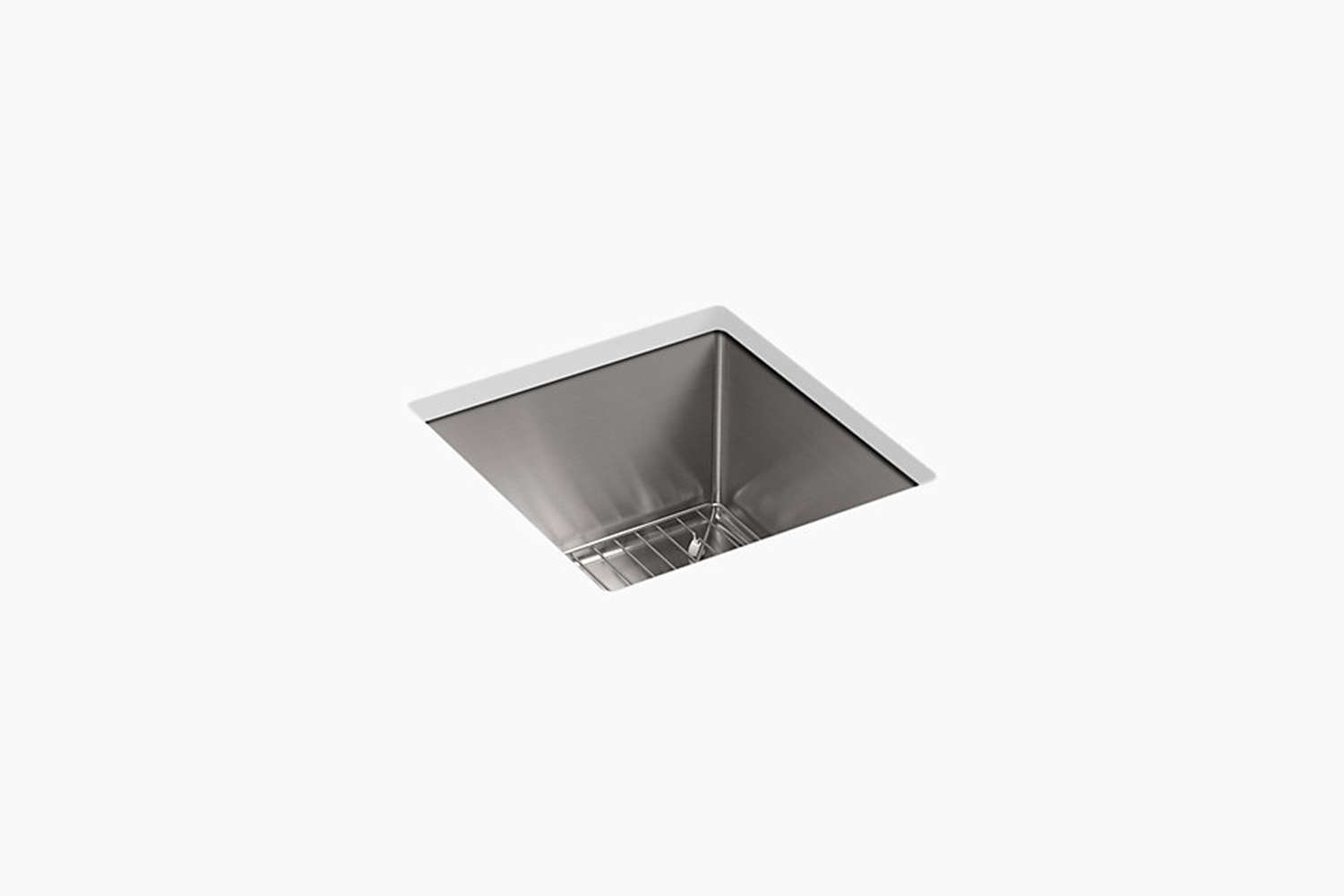

The Strive Under-Mount Bar Sink with Sink Rack is the kind of fixture that quietly makes a small kitchen, wet bar, or entertainment area feel far more capable. It does not arrive with flashing lights, Bluetooth, or a motivational speech. Instead, it offers a compact square basin, thick stainless-steel construction, a clean under-counter installation, and a fitted rack that protects the bottom while keeping glasses above standing water.
The product most commonly associated with this exact name is the Kohler Strive K-5287-NA, a 15-inch undermount bar sink designed for an 18-inch minimum base cabinet. Its size makes it especially appealing where a full kitchen sink would overwhelm the countertop but a tiny hand-rinse bowl would feel frustratingly limited. This review examines its design, dimensions, installation needs, daily usefulness, maintenance, advantages, and practical drawbacks.
What Is the Strive Under-Mount Bar Sink?
The Strive is a compact, single-bowl stainless-steel sink intended for secondary work areas. It is suitable for a wet bar, but “bar sink” should not be read as “only useful for limes and cocktail shakers.” It can also function as a prep sink in an island, a rinse station in a butler’s pantry, a cleanup basin in a coffee bar, or a small utility sink in an entertainment room.
Because the sink mounts beneath the countertop, its rim remains hidden. That creates a smooth transition from counter to basin and allows crumbs, citrus pulp, and other tiny culinary escape artists to be wiped directly into the sink. The look is streamlined and architectural, particularly when paired with quartz, granite, solid-surface material, or properly fabricated natural stone.
Key Specifications at a Glance
| Model | Kohler Strive K-5287-NA |
|---|---|
| Installation | Undermount |
| Overall size | 15 inches by 15 inches |
| Basin size | Approximately 13-1/4 inches by 13-1/4 inches |
| Basin depth | Approximately 9-5/16 inches |
| Minimum cabinet width | 18 inches |
| Material | Premium 16-gauge stainless steel |
| Drain opening | 3-11/16 inches |
| Included items | Fitted sink rack and installation hardware |
| Faucet holes | None; faucet is mounted in the counter or wall |
These dimensions place the Strive in a useful middle ground. It is compact enough for a bar cabinet or island, yet its nine-inch-plus depth gives it more working volume than many shallow prep sinks. The square footprint also uses cabinet space efficiently instead of spending precious inches on decorative curves that look lovely but hold approximately three olives.
Why the 16-Gauge Stainless Steel Matters
Stainless-steel thickness is expressed by gauge, and the numbers work backward: a lower gauge indicates thicker steel. The Strive uses 16-gauge stainless steel, which is a substantial specification for a compact bar sink. Thicker steel generally feels more solid, resists denting better than very thin material, and produces less of the hollow “rainstorm in a metal bucket” effect associated with bargain sinks.
The material also suits a secondary sink because it handles ordinary drink preparation, food rinsing, ice, utensils, and frequent temperature changes without demanding delicate treatment. Stainless steel is not completely scratch-proof, however. Fine marks develop with use, especially if metal tools are dragged across the grain. Over time, those marks usually blend into a soft working patina rather than appearing as one dramatic scar.
Kohler also uses sound-absorption technology in this model. In practice, sound dampening does not make running water silent, but it can reduce vibration and harsh metallic resonance. That is useful in an open entertainment area where guests are attempting conversation and nobody wants the sink to perform a percussion solo.
The Included Sink Rack Is More Useful Than It Looks
The fitted bottom rack is not merely an accessory added to make the box feel heavier. It creates a raised platform above the basin floor, helping protect the stainless-steel surface from direct contact with glasses, utensils, small pans, and bar tools. Rubber feet add separation between the rack and sink.
The rack also improves workflow. Rinsed glassware can rest above draining water, a sponge can dry with better airflow, and a colander is less likely to sit directly in backed-up water. For cocktail preparation, the grid provides a stable landing area for shakers and tools while letting melting ice and rinse water flow below.
There is one maintenance catch: anything living at the bottom of a sink eventually meets lemon pulp, coffee grounds, and the mysterious leaf fragment nobody remembers inviting. The rack should be lifted regularly so the basin and rubber feet can be cleaned. The compatible rack is stainless steel and is listed as dishwasher safe, which makes this chore less theatrical.
How the Rear Drain Improves the Work Area
The drain is positioned toward the rear rather than occupying the middle of the bowl. This arrangement leaves more uninterrupted space on the basin floor and can improve storage flexibility below the sink. Plumbing still consumes cabinet roompipes remain stubbornly three-dimensionalbut moving the drain backward may leave a more usable zone toward the front for a small trash bin, cleaning supplies, or a pullout organizer.
Inside the bowl, a rear drain is helpful when rinsing produce, filling an ice bucket, or resting several glasses on the rack. Items are less likely to cover the opening completely. The design does not eliminate the need to rinse the corners and direct debris toward the drain, but it gives the compact basin a more open working surface.
Best Places to Install This Compact Bar Sink
Wet Bars and Beverage Centers
This is the obvious assignment. The sink can rinse wine glasses, cocktail tools, reusable straws, citrus, and small serving pieces without sending the host back to the main kitchen every four minutes. Pair it with a proportional bar faucet rather than an oversized commercial-style faucet that visually threatens to eat the entire counter.
Kitchen Islands
As a secondary prep sink, the Strive can create a separate zone for washing produce, filling containers, or cleaning hands while someone else uses the main sink. A 15-inch sink preserves more uninterrupted countertop than a full-size basin, although plumbing placement must be planned before cabinets and flooring make the decision expensive.
Butler’s Pantries and Coffee Stations
A small sink near a coffee maker is excellent for filling reservoirs, rinsing milk pitchers, and containing drips. In a butler’s pantry, it supports glassware cleanup and light food preparation while keeping entertaining clutter away from the primary kitchen.
Basement and Media-Room Bars
For a basement lounge, the sink reduces trips upstairs and makes the room genuinely functional rather than merely decorative. It is deep enough to handle an ice bucket or several glasses, yet compact enough to coexist with an under-counter refrigerator and storage cabinets.
Installation Considerations Before You Buy
Undermount installation is one of the Strive’s biggest visual strengths, but it requires accurate fabrication and dependable support. The countertop cutout must match the manufacturer’s template, and the sink needs to be secured with the specified mounting system and sealed correctly. A professional installer is usually the sensible choice, especially when the counter is stone or engineered quartz.
The sink requires an 18-inch minimum base cabinet. That measurement should not be treated as a casual suggestion. Installers need room for the sink body, mounting clips, plumbing, faucet connections, and hands belonging to an actual human plumber. Confirm interior cabinet dimensions, not just the width printed on a cabinet plan.
The faucet, drain, strainer, disposal flange, and plumbing components may be separate purchases. Because the sink has no faucet holes, the faucet must be mounted in the countertop or wall. Check the available deck space behind the basin, the faucet reach, handle clearance, backsplash location, and whether a soap dispenser or filtered-water faucet will share the area.
Undermount sinks are best suited to countertop materials that can expose a finished, moisture-resistant cut edge. Laminate can be problematic because its substrate is vulnerable to water and may not hold undermount fasteners reliably. Local plumbing requirements and accessibility goals should also be reviewed during planning.
Advantages and Potential Drawbacks
What the Strive Does Well
- Premium construction: The 16-gauge stainless steel feels appropriate for a long-term remodel rather than a temporary upgrade.
- Compact but deep: The square 15-inch footprint preserves counter space while the deep bowl helps control splashing.
- Clean undermount appearance: The concealed rim makes the counter look continuous and simplifies everyday wipe-downs.
- Useful fitted rack: The included grid protects the basin and creates an elevated draining surface.
- Practical rear drain: The layout improves usable bowl space and can help organize the cabinet below.
- Rounded corners: Ten-millimeter corner radii balance a modern squared look with easier cleaning.
What to Think About
- It is still a small sink: Large roasting pans, stockpots, and baking sheets belong in the main kitchen basin.
- Installation is not a casual DIY project: Counter fabrication, sealing, support, and plumbing add cost.
- Stainless steel shows water spots: Hard-water areas may require frequent drying and occasional mineral removal.
- The rack needs cleaning: It protects the sink, but it also creates another surface where debris can collect.
- Accessories increase the final budget: A faucet, drain assembly, and possibly a disposal connection must be included in the project total.
Cleaning and Maintenance
Daily care is straightforward. Rinse away food residue, wipe the basin with mild dish soap and a soft sponge or cloth, then dry the stainless steel to reduce water spots. When polishing or cleaning more thoroughly, work in the direction of the grain rather than scrubbing across it.
Avoid steel wool, wire brushes, harsh scouring pads, and aggressive abrasive powders. These can leave obvious scratches or embed particles that later appear rusty. Stainless steel itself resists corrosion, but iron residue from another tool can create surface staining that looks like the sink has betrayed you.
Lift the rack at least weekly in a frequently used bar area. Wash the grid, clean around its rubber feet, wipe the basin beneath it, and rinse around the drain. After serving acidic drinks, rinse away citrus juice, wine, and cocktail mixers rather than letting residue dry overnight. This tiny habit prevents the morning-after cleanup from becoming more memorable than the party.
Who Should Buy the Strive Under-Mount Bar Sink?
This sink makes the most sense for homeowners who want a polished, durable secondary basin and are already investing in quality countertops and professional installation. It is particularly well suited to modern, transitional, industrial, and professional-style interiors because stainless steel coordinates easily with appliances, bar faucets, cabinet hardware, and mixed-metal finishes.
It may be excessive for a rarely used decorative bar or a budget rental refresh. A less expensive drop-in sink can provide water access with simpler installation. The Strive earns its value when it will be used regularly and when the clean undermount appearance contributes to a broader renovation rather than standing alone like one expensive shoe.
Real-World Ownership Experience: What Daily Use Feels Like
A realistic ownership experience begins with the first surprise: the Strive feels larger in use than its 15-inch exterior dimensions suggest. The depth matters. You can rinse a cocktail shaker, wash a handful of glasses, or fill a medium ice bucket without creating a miniature indoor water park. The basin is not wide enough for major cookware, but that is not its job. It behaves like a focused workstation rather than a shrunken main sink.
During drink preparation, the bottom rack quickly becomes the feature that seemed optional in the showroom but useful at home. Wet tools remain elevated, glass rims are less likely to strike the basin floor, and melting ice drains underneath instead of surrounding everything in a cold puddle. When several guests return glasses at once, the rack creates order. The sink still looks busy, but it looks intentionally busy rather than “someone dropped a cutlery drawer into a bucket.”
The undermount edge also changes cleanup. On a bar counter covered with lime zest, coffee grounds, or crumbs from appetizers, one pass with a damp cloth sends debris directly into the bowl. There is no raised lip to work around. The tradeoff appears below the counter edge, where the silicone joint should be inspected and cleaned. Most days this is not a concern, but neglecting any undermount seam indefinitely is an optimistic lifestyle choice.
Noise performance is another subtle benefit. A thick stainless-steel sink with sound absorption does not turn running water into a whisper, but it sounds controlled. Dropping a spoon or setting down a shaker produces a shorter, duller note than the sharp clang common to thin sinks. In an open-plan basement or kitchen, that difference is noticeable when people are talking nearby.
The most common annoyance is water spotting. A few droplets left to evaporate can mark the stainless finish, especially with hard water. Owners who expect a showroom-perfect basin at all times will develop a close relationship with a microfiber cloth. Owners who accept a working patina will be happier. Fine scratches are also normal. The rack reduces direct wear, but it cannot repeal physics or prevent every enthusiastic bar spoon from making contact.
Cleaning the grid is simple but must become routine. Food fragments and citrus fibers hide around the feet and drain opening. Lifting the rack, rinsing it, and wiping the basin takes only a few minutes. Skip that step for several weeks and the sink will begin conducting its own unsupervised biology experiment.
Cabinet storage is better than it might be with a centrally placed drain, but the plumbing still requires planning. A compact pullout bin or narrow cleaning organizer can often fit toward the front, depending on the trap and supply lines. The smartest installation experience comes from designing those components together rather than discovering afterward that the preferred organizer and the drain pipe want the same address.
Over time, the strongest impression is that the Strive does not try to be a novelty. It is a compact, sturdy, professional-looking basin that supports entertaining and prep work with minimal fuss. For a household that hosts often, makes coffee daily, or uses an island prep zone, it can become one of those improvements that feels unnecessary until it is installedand inconvenient to imagine living without afterward.
Final Verdict
The Strive Under-Mount Bar Sink with Sink Rack is a strong choice for a premium secondary sink. Its 16-gauge stainless steel, deep square bowl, rear drain, rounded corners, sound absorption, and fitted protective grid form a thoughtful package. It costs more to purchase and install than a basic bar sink, but it also delivers better material quality, cleaner integration, and more practical daily performance. For a well-used wet bar, island, pantry, or beverage station, it offers an excellent balance of compact dimensions and grown-up functionality.
SEO Metadata
Note: Product specifications, included components, and warranty terms may change. Confirm the current manufacturer template and installation requirements before ordering countertops or beginning fabrication.