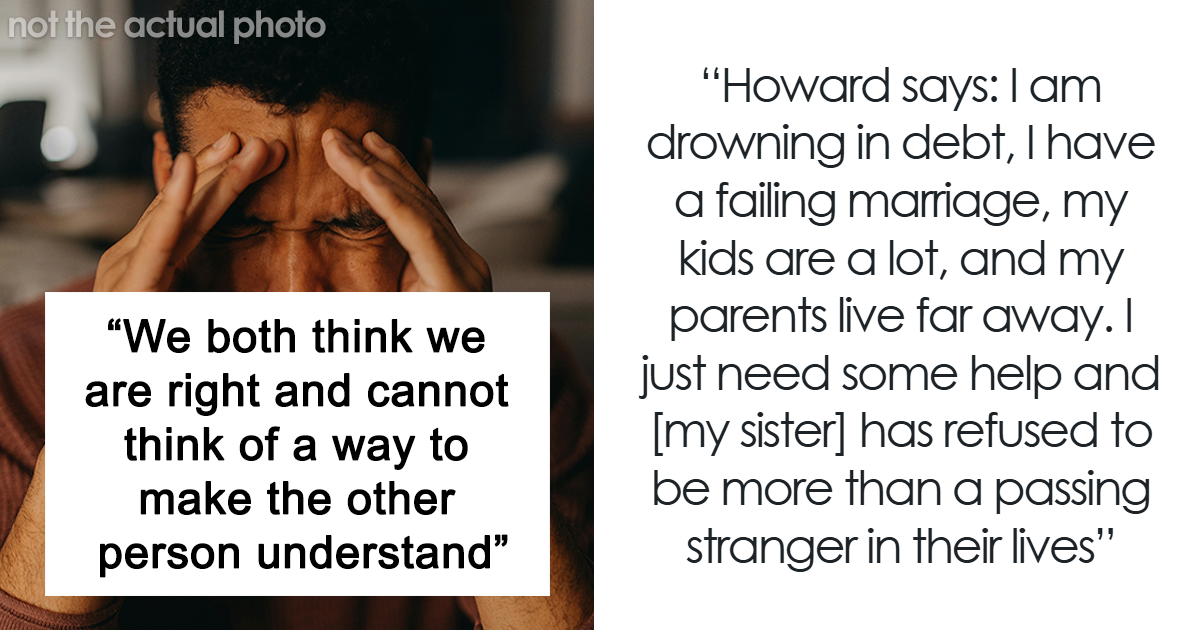
Struggling Brother Demands Childcare From Sister, Calls Her A “Stranger” To His Kids

Note: This article discusses common family-boundary conflicts through a hypothetical scenario. It is not legal, financial, or mental health advice.
Family can be wonderful. Family can also be the only group chat where someone asks for a “tiny favor” that somehow requires you to rearrange your work schedule, empty your wallet, cancel your weekend, and become a full-time nanny with zero benefits and a fridge full of mystery yogurt.
That is the heart of a particularly painful family conflict: a struggling brother asks his sister to provide regular childcare, then calls her “a stranger” to his children when she hesitates. On the surface, it sounds like a disagreement about babysitting. Underneath, it is usually about money, resentment, expectations, guilt, sibling history, and the uncomfortable truth that being related does not automatically make someone available on demand.
Childcare is expensive, exhausting, and often hard to find. Parents who are overwhelmed deserve empathy. But empathy is not the same thing as unlimited access to another adult’s time, home, labor, or emotional bandwidth. A sister can care deeply about her brother and his children while still saying, “I cannot be your childcare plan.”
When Family Help Turns Into a Family Obligation
Many families rely on relatives for occasional babysitting. An aunt watches the kids during a doctor’s appointment. A grandparent helps during school breaks. A sibling picks up a child after soccer practice when traffic turns into a parking-lot-themed nightmare.
That kind of support can be meaningful. Children often benefit from having caring adults in their lives, and relatives can create lasting memories that do not involve being bribed with chicken nuggets. But support becomes unhealthy when it is treated as an automatic obligation rather than a voluntary gift.
A brother who says, “You are their aunt, so you should help,” may be expressing stress. He may also be skipping a crucial word: ask. Family relationships work best when people ask for help respectfully, accept the answer they receive, and avoid turning love into a bill that someone else is expected to pay.
There is a major difference between:
- “I am in a tough spot. Could you watch the kids next Tuesday?”
- “You have no choice because you are family.”
- “You never help, so you clearly do not care about my children.”
The first is a request. The second is a demand. The third is emotional pressure wearing a fake mustache and pretending it is a reasonable conversation.
Why Calling a Sister a “Stranger” Hits So Hard
When a brother calls his sister a stranger to his children, he may be trying to make a point: she does not spend much time with them, so she should step up. But the comment can be deeply unfair, especially when the parent has not made a real effort to build a relationship between the aunt and the children.
Relationships with nieces and nephews do not appear by magic at a birthday party next to the cake table. They take invitations, time, consistency, communication, and mutual effort. A child may not know an aunt well because the aunt lives far away, works long hours, has health limitations, has her own children, or was simply not included in family life.
It is also possible that the brother only reaches out when he needs something. In that case, calling his sister a stranger is especially painful. He may be expecting emotional closeness without having created the conditions for it.
Children notice more than adults think. They can sense when a relative is welcomed into their life and when that person is treated like an emergency substitute teacher who has been handed the classroom keys with no lesson plan. Building a healthy aunt-niece or aunt-nephew relationship should not begin with, “Can you cover every weekday from 7 a.m. to 6 p.m.?”
Being Related Is Not the Same as Being Available
Blood relation is not a timeshare agreement on someone’s schedule. A person can be a loving sister and aunt while having limited availability. She may work full time, care for a parent, manage a household, attend school, travel for work, have a demanding relationship, or simply need time to rest.
Care work is still work, even when it happens in a living room filled with stuffed animals and crackers crushed into the carpet. Watching children requires attention, energy, patience, transportation, safety awareness, meal planning, routine management, and a willingness to hear “Why?” approximately 4,000 times before lunch.
When childcare is expected regularly, it should be discussed like any other major responsibility. That means clear hours, backup plans, discipline expectations, pickup times, food allergies, payment arrangements if appropriate, emergency contacts, and a realistic understanding that the caregiver can say no.
The Childcare Crisis Is Real, but Guilt Is Not a Solution
There is no question that many American families are under serious childcare pressure. The cost of care can rival rent, mortgage payments, or major household expenses, and finding a reliable provider can feel like trying to get concert tickets five seconds after they go on sale.
Parents may be juggling unpredictable work shifts, high housing costs, transportation problems, school closures, sick children, and limited local childcare options. A struggling parent may genuinely feel cornered. That pressure deserves compassion.
Still, a difficult childcare situation does not give someone permission to recruit relatives through guilt, insults, public shaming, or emotional blackmail. “You are selfish if you do not do this” is not a childcare plan. It is a family conflict with a diaper bag attached.
A healthier response is to separate the problem from the person. Instead of blaming a sister for not being available, a parent can say:
“I am overwhelmed and trying to figure out childcare for the next few weeks. Do you have any availability, or do you know someone trustworthy who might?”
That approach leaves room for help without demanding it. It also respects the sister as an adult with her own responsibilities.
How a Sister Can Set Boundaries Without Starting World War Family
Setting boundaries with siblings can be difficult because adult siblings often carry old roles into new conflicts. One person may still feel like the responsible child. Another may still act like the sibling who expects rescue. Thanksgiving may have happened 20 years ago, but emotionally, everyone is still arguing over who got the bigger slice of pie.
The goal is not to win the argument. The goal is to be clear, calm, and consistent.
Use a Direct, Respectful Answer
A sister does not need a 12-slide presentation explaining why she cannot provide childcare. A short answer can be enough:
“I care about you and the kids, but I cannot commit to regular childcare. My schedule and responsibilities do not allow it.”
That statement is firm without being cruel. It does not insult the brother. It does not debate whether he is stressed. It simply explains the limit.
Do Not Argue About Whether the Boundary Is “Fair”
Once someone hears “no,” they may start negotiating. They may say it is only temporary, only a few days, only until their job situation improves, only until the moon enters the seventh house, and only until everyone stops being so dramatic.
Sometimes temporary help is reasonable. Sometimes “temporary” becomes six months, three school breaks, and a permanent car seat in your back seat. A sister should only agree to what she can realistically handle.
Useful phrases include:
- “I understand this is stressful, but my answer is still no.”
- “I can help one afternoon this month, but I cannot provide weekly care.”
- “I am not available to be a regular babysitter.”
- “Please do not insult me because I cannot solve this for you.”
Offer Help Only When It Is Genuine
A sister may want to help in smaller ways. She might share local childcare resources, help search for subsidy programs, recommend a trusted sitter, cover one emergency evening, or bring dinner during a difficult week.
But she should not offer alternatives just to soften the discomfort of saying no. A half-hearted “maybe” can create more confusion than a respectful refusal. It is better to offer one specific thing she can truly do than to promise a vague rescue package made entirely of guilt and calendar chaos.
What the Brother Needs to Understand
A struggling parent can be both overwhelmed and unfair. Stress may explain harsh behavior, but it does not excuse it.
If the brother wants his sister to be more involved in his children’s lives, he needs to approach her as family, not free labor. That means inviting her to birthdays, school events, casual dinners, weekend outings, and ordinary moments that build connection. It means respecting her answer when she cannot help. It means not treating every phone call as a dispatch from the emergency babysitting hotline.
He also needs to own the fact that childcare is primarily a parental responsibility. Support from relatives can be valuable, but it is not guaranteed. Parents may need to explore community programs, employer benefits, state assistance, flexible work arrangements, licensed providers, cooperative care swaps, after-school programs, or support from the child’s other parent.
Most importantly, he should apologize for calling his sister a stranger. That phrase may have been spoken in anger, but it sends a message: “You are only family when I need something from you.” That is a hard message to forget.
How to Rebuild the Aunt-and-Child Relationship
If both siblings want to repair the relationship, they should stop treating childcare as the only measure of family love. An aunt can become close to her nieces or nephews in many ways that do not involve taking over weekday supervision.
She might start small:
- Schedule a monthly lunch, park visit, or movie night.
- Call or video chat before birthdays and holidays.
- Attend an important school event when possible.
- Send a postcard, book, craft kit, or silly voice message.
- Create a tradition, such as pancake breakfasts, library days, or annual photo walks.
Children usually remember consistent affection more than elaborate gestures. A reliable monthly outing can mean more than a frantic week of childcare provided by someone who feels pressured, exhausted, and resentful.
The brother also has a responsibility to speak positively about his sister in front of the children. Parents should not pull children into adult disputes or use them as emotional evidence in a sibling argument. A child should never feel responsible for convincing Aunt Rachel to babysit or guilty because adults are fighting over schedules.
When Family Conflict Crosses the Line
Some conflict is normal. People get stressed, say clumsy things, cool off, and hopefully apologize before someone throws a casserole dish into the emotional atmosphere.
But a sister should take the situation more seriously if her brother repeatedly insults her, threatens to cut her off from the children, pressures her to provide care after she says no, shows up without asking, or spreads false stories to other relatives. These behaviors can turn a disagreement into a pattern of manipulation.
In those cases, shorter communication may be best. Text messages can help keep conversations clear. A sister may choose to say, “I will only discuss childcare requests if they are respectful,” and then stop responding to insults. If the relationship feels unsafe, highly volatile, or emotionally damaging, support from a family therapist or counselor may help.
Healthy family relationships are not built on perfect agreement. They are built on respect. People can be disappointed without being cruel. They can ask for help without demanding it. They can love each other without handing out unpaid job descriptions at Christmas dinner.
Experiences That Often Show Up in These Family Childcare Conflicts
Stories about siblings fighting over childcare can sound dramatic from the outside, but they are common because they combine three emotionally charged subjects: money, children, and family history. Nobody enters that conversation with a clipboard and a calm voice. Usually, they enter it after a rough week, three missed calls, and a text message that begins with, “I hate to ask, but…”
One common experience involves the sibling who has always been labeled “the reliable one.” Maybe she was the organized child growing up. Maybe she has a stable job, no children, or a flexible schedule. Other relatives may assume that because her life looks manageable from a distance, she has endless time to solve everyone else’s emergencies. But a person can appear steady without having spare capacity. The reliable sibling often becomes exhausted because everyone sees her competence and nobody sees the cost.
Another experience is the sibling who genuinely wants a relationship with the children but resents being contacted only when help is needed. She may receive no holiday invitations, no casual check-ins, no photos, no updates about school plays, and no “the kids asked about you today” messages. Then suddenly she is expected to take time off work because daycare fell through. It can feel less like being included in the family and more like being added to a rotating backup schedule.
Parents, on the other hand, may feel abandoned. A brother might look at his sister’s social media, see dinner photos or weekend trips, and assume she is choosing fun over family. He may not understand her work stress, financial goals, health needs, relationship struggles, or personal responsibilities. When someone is desperate for childcare, every unavailable person can feel like proof that they are alone. That feeling is real, even when the conclusion is unfair.
There is also the issue of “free” childcare that is not actually free. The aunt may pay for snacks, gas, toys, activities, extra utilities, and missed work opportunities. She may lose sleep because she has to wake up early, change her routine, or reorganize her home for a child. She may love the kids completely and still feel drained. Both feelings can exist at once.
The best outcomes usually happen when families stop keeping score and start making specific agreements. Instead of vague promises, they discuss days, hours, notice requirements, payment if appropriate, transportation, discipline rules, screen time, food, sickness policies, and what happens when the caregiver needs a break. Clear expectations are not cold. They are often the difference between a loving arrangement and a slow-motion resentment parade.
In the end, the issue is rarely whether a sister “should” help. The better question is whether the family can create support without sacrificing respect. A brother can need help. A sister can have boundaries. Children can benefit from loving relatives. All three things can be true at the same time.
Final Thoughts: Help Should Be Offered, Not Extracted
A struggling brother asking his sister for childcare is not wrong. Parenting can be expensive, stressful, and unpredictable. But calling her a stranger to his kids because she cannot become his regular childcare provider is a painful and counterproductive move.
Family support works best when it is rooted in respect, appreciation, communication, and realistic expectations. A sister is allowed to say no. A brother is allowed to feel disappointed. Neither person benefits when love becomes a bargaining chip.
The healthiest path forward is simple, even if it is not easy: apologize for the insult, stop using guilt as a childcare strategy, build a relationship with intention, and make requests instead of demands. After all, relatives are not emergency staffing agencies. They are people. And people deserve to be treated like family even when they cannot babysit on Thursday.