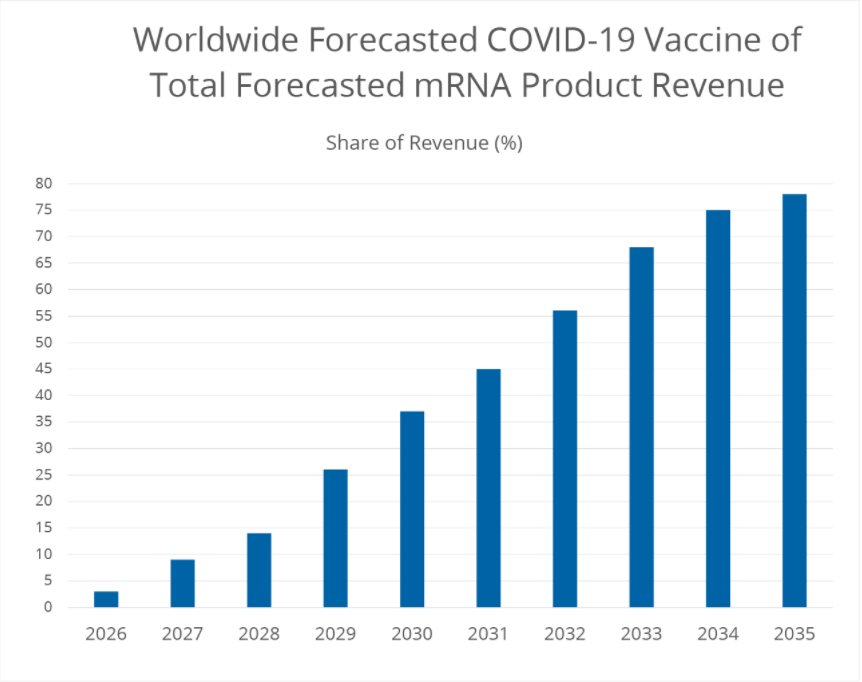

Messenger RNA went from being a laboratory phrase that made most people reach for a biology textbook to becoming one of the most discussed technologies in medicine. The COVID-19 pandemic proved that mRNA could move from genetic sequence to commercial vaccine at remarkable speed. Investors quickly followed, bidding up biotechnology companies, launching thematic funds, and imagining a future in which programmable medicines could tackle everything from seasonal flu to cancer.
That enthusiasm was understandable. It was also a little dangerous. A powerful technology does not automatically produce a powerful investment. The internet transformed society, but plenty of internet stocks still vanished. Railroads changed America, yet railroad investors frequently discovered that world-changing infrastructure and shareholder returns are not always invited to the same dinner party.
Investing in mRNA technology therefore requires two conversations. The first is about the science: What can the platform actually do? The second is about economics: Which companies can turn those scientific capabilities into durable revenue without incinerating their cash reserves along the way?
What Does “Talk Your Book” Mean?
In investing, “talking your book” means publicly discussing an asset, strategy, or market theme in which you have a financial interest. The phrase does not necessarily imply dishonesty. A portfolio manager may genuinely believe in an investment and still benefit when other investors become interested in it.
The title became particularly appropriate when the Talk Your Book podcast discussed mRNA investing with an executive from Direxion in 2022. At the time, Direxion offered the MSGR mRNA ETF, designed to provide exposure to companies involved in messenger RNA research, manufacturing, delivery systems, and related biotechnology.
That fund later became an excellent lesson in thematic investing. MSGR was liquidated in April 2023 because it had not attracted enough assets to operate efficiently. The underlying technology did not disappear, but the investment wrapper did. Apparently, even revolutionary science must eventually meet the less glamorous requirements of trading volume, investor demand, and fund economics.
Research basis:
How mRNA Technology Works
Messenger RNA is a temporary set of biological instructions. DNA stores genetic information, while mRNA carries selected instructions from DNA to the cellular machinery that makes proteins.
An mRNA medicine introduces a carefully designed sequence that tells cells to produce a particular protein. In a vaccine, that protein may resemble part of a virus, allowing the immune system to learn what it should recognize. In a cancer treatment, the instructions may help the immune system identify tumor-specific targets. In a rare-disease therapy, mRNA might direct cells to produce a protein that the patient’s body cannot make adequately.
The message is temporary. It is broken down naturally after delivering its instructions and does not need to enter the cell nucleus. This temporary behavior can be an advantage because researchers may produce a therapeutic effect without permanently changing a patient’s DNA.
Research basis:
The Platform Advantage
Traditional drug development often requires scientists to create a different manufacturing process for every new molecule. An mRNA platform may be more reusable. Developers can alter the genetic sequence while retaining many of the same production systems, analytical tools, delivery technologies, and quality-control procedures.
Think of it less like building a new factory for every product and more like changing the software running through an established system. That does not make development easy, but it can make the platform faster and more adaptable.
The most attractive potential advantages include:
- Rapid design after researchers identify a biological target
- Manufacturing processes that can be reused across multiple candidates
- The ability to encode several proteins in one product
- Potential applications across vaccines, oncology, rare diseases, and protein replacement
- Faster responses to changing viral strains or emerging pathogens
However, “programmable medicine” should not be confused with “press a button and collect FDA approval.” The body is more complicated than an app store, and it leaves surprisingly harsh reviews.
mRNA Has Already Moved Beyond One COVID-19 Product
Investors sometimes treat mRNA as though it were merely a pandemic trade. That view is now too narrow. The United States has licensed several mRNA-based COVID-19 vaccines, and Moderna’s MRESVIA became the first approved mRNA vaccine for respiratory syncytial virus. Its indication includes adults 60 and older, as well as certain higher-risk adults between 18 and 59.
Seasonal influenza could become another major commercial category. In June 2026, an FDA advisory committee voted unanimously that the benefits of Moderna’s investigational mRNA flu vaccine, mFlusiva, outweighed its risks for adults 50 and older. As of August 2, 2026, the final FDA decision was still pending, with a target date expected shortly afterward.
A successful flu launch would matter for more than one product. It would demonstrate that mRNA can compete in a large, established vaccine category rather than succeeding only during an extraordinary global emergency.
Research basis:
The Bigger Opportunity: Cancer Vaccines
The most exciting long-term mRNA investment thesis may be in oncology. Cancer cells often contain mutations that produce abnormal proteins called neoantigens. Researchers can analyze a patient’s tumor, identify relevant neoantigens, and design a personalized mRNA vaccine that teaches the immune system to recognize them.
This approach turns vaccine development into a highly individualized manufacturing process. Instead of producing one identical medicine for millions of people, a company may need to sequence a patient’s tumor, select targets, manufacture a custom product, pass quality tests, and deliver it while the patient is still able to receive treatment.
That is scientifically elegant and operationally intimidating. It resembles running a pharmaceutical company, a software platform, a sequencing laboratory, and a precision logistics network at the same time. Investors should not underestimate the importance of turnaround time, manufacturing reliability, and treatment-center coordination.
Early research has nevertheless produced encouraging signals. An NIH-highlighted study of a personalized mRNA vaccine for pancreatic cancer generated strong immune responses in approximately half of the participants, although the trial was small and far too early to establish broad clinical effectiveness. Reviews of the clinical landscape have identified more than 120 mRNA cancer-vaccine trials or development efforts across multiple tumor types.
Research basis:
Moderna and Merck
Moderna has been developing an individualized neoantigen therapy in combination with Merck’s immune-checkpoint inhibitor Keytruda. This partnership is strategically important because cancer vaccines may work best as part of a treatment combination rather than as stand-alone products.
Checkpoint inhibitors remove biological brakes that prevent immune cells from attacking tumors. A personalized vaccine may give those immune cells better directions. In very simplified terms, one treatment wakes up the security team while the other hands it photographs of the intruder.
The investment opportunity will depend on whether late-stage trials confirm earlier results, whether regulators accept the manufacturing process, how revenue is divided between partners, and whether payers will reimburse a personalized product at an economically attractive price.
BioNTech’s Oncology Transformation
BioNTech is also attempting to evolve beyond its COVID-19 partnership with Pfizer. Its pipeline includes mRNA cancer immunotherapies alongside immunomodulators and antibody-drug conjugates. By early 2026, the company described a growing late-stage oncology portfolio supported by collaborations with major pharmaceutical companies.
This diversification is important. A company marketed as an “mRNA pure play” may eventually become a broader oncology business because the best way to commercialize mRNA could involve combining it with other drug classes. Investors who insist on thematic purity may miss the point. Patients care whether a treatment works, not whether every component fits neatly inside an ETF’s marketing brochure.
Research basis:
Self-Amplifying RNA: The Next Version of the Platform
Conventional mRNA instructs cells to produce a protein until the message degrades. Self-amplifying RNA includes additional machinery that allows the RNA to copy itself inside the cell for a limited period. In theory, this may create a stronger or longer-lasting response from a smaller dose.
Arcturus Therapeutics developed KOSTAIVE, described as the first approved and commercially available self-amplifying mRNA vaccine. It initially received approval in Japan, providing evidence that mRNA innovation is not limited to the two companies that dominated pandemic headlines.
For investors, self-amplifying RNA presents both opportunity and competition. Lower doses might improve manufacturing efficiency and supply economics. On the other hand, a new platform must establish safety, effectiveness, regulatory acceptance, and commercial demand. “Next generation” sounds wonderful in a presentation. It sounds less wonderful when the next generation needs another decade of trials.
Research basis:
Why mRNA Stocks Are So Difficult to Value
A mature consumer company can often be valued using relatively stable revenue, margins, and cash flow. An mRNA biotechnology company may have declining sales from an older product, enormous research expenses, uncertain trial results, and several programs that could be worth either billions of dollars or approximately the price of a used laboratory refrigerator.
Revenue Can Be Seasonal and Concentrated
Respiratory-vaccine sales are increasingly concentrated around fall and winter vaccination campaigns. Quarterly revenue may therefore appear weak during part of the year and surge later. Investors must distinguish normal seasonality from genuine market-share deterioration.
Product concentration also matters. Moderna’s rapid pandemic success created extraordinary revenue, but the decline in COVID-19 demand left the company with a much smaller commercial base and substantial continuing expenses. The company has responded by cutting costs, prioritizing selected programs, and attempting to diversify through RSV, influenza, oncology, and rare-disease candidates.
The key question is not whether Moderna has an interesting pipeline. It clearly does. The question is whether new products will generate meaningful revenue before accumulated research, manufacturing, and operating costs consume too much of its financial cushion.
Research basis:
Pipeline Value Is Probability-Weighted
A Phase 3 product should usually be valued more highly than a laboratory concept, but even late-stage trials fail. Investors can evaluate a pipeline by estimating:
- The potential number of eligible patients
- The expected price and reimbursement environment
- The probability of technical and regulatory success
- The time remaining before a possible launch
- Manufacturing and commercialization costs
- Competitive products likely to reach the market
- Royalty, milestone, and profit-sharing obligations
Suppose a cancer product could theoretically generate $4 billion in annual sales. That figure should not simply be added to a valuation model as though approval were guaranteed. If the program has a 25% probability of success, requires several more years of spending, and shares profits with a partner, its present value may be dramatically lower than the headline opportunity.
The Major Risks of Investing in mRNA Technology
Clinical Failure
A promising immune response does not always translate into fewer infections, longer survival, or improved quality of life. Small trials may also produce results that disappear when tested in larger and more diverse populations.
Delivery Challenges
Naked mRNA is fragile and can be destroyed rapidly in the body. Lipid nanoparticles and other delivery systems protect the molecule and help it enter cells, but delivering mRNA to the correct tissue remains one of the field’s hardest problems. Vaccines can often target immune cells relatively effectively; delivering therapeutic mRNA deep inside specific organs is more demanding.
Safety and Tolerability
Any medicine that stimulates the immune system can create unwanted reactions. Developers must optimize the RNA sequence, dosage, lipid formulation, protein expression, and treatment schedule. A product can be scientifically active but commercially disappointing if patients or physicians consider it too difficult to tolerate.
Regulatory and Political Risk
Vaccine recommendations, government purchasing policies, reimbursement rules, and public confidence can materially affect demand. Regulatory timelines may also change as agencies request additional data or modify approval requirements.
Patent Disputes
mRNA products rely on overlapping discoveries involving modified nucleosides, lipid nanoparticles, manufacturing methods, sequences, and delivery systems. Patent litigation can create costs, royalties, uncertainty, or restrictions even after a product succeeds clinically.
Capital Intensity
Biotechnology companies can spend hundreds of millions of dollars before determining whether a major program works. Investors should monitor cash, marketable securities, annual operating expenses, debt, partnership payments, and potential share dilution. Cash is the oxygen tank of clinical-stage biotechnology. An inspiring mission statement is not a substitute for oxygen.
How to Invest Without Betting the Laboratory
Investors interested in mRNA technology have several approaches, each with different risks.
1. Established Pharmaceutical Companies
Large companies such as Pfizer and Merck offer indirect exposure through partnerships and commercial products. Their diversified revenue can reduce company-specific risk, although a successful mRNA program may have a smaller effect on the total business.
2. Platform Leaders
Moderna and BioNTech provide more concentrated exposure to mRNA capabilities. Their valuations may respond sharply to clinical data, regulatory decisions, vaccine demand, and pipeline updates.
3. Smaller Technology Developers
Companies working on self-amplifying RNA, delivery systems, manufacturing tools, or specialized therapeutic applications may offer greater upside if their technologies succeed. They also carry higher financing, liquidity, and clinical risk.
4. Broader Biotechnology Funds
A diversified biotechnology ETF can provide exposure to mRNA companies without depending on a narrowly defined theme. This may be less exciting than owning the apparent winner, but excitement is an unreliable retirement plan.
A Practical Checklist for mRNA Investors
Before purchasing an mRNA-related stock, examine the following:
- Commercial products: Does the company already sell anything?
- Pipeline maturity: How many programs have reached Phase 2 or Phase 3?
- Clinical endpoints: Are trials measuring meaningful patient outcomes?
- Cash runway: Can the company reach important milestones without raising capital?
- Manufacturing: Can it reliably produce the medicine at commercial scale?
- Partnerships: Do collaborators validate the science and share development costs?
- Economics: Who owns the product, and who receives the profits?
- Competition: Is the candidate clearly better than existing treatments?
- Valuation: How much success is already reflected in the share price?
Conclusion: Invest in Evidence, Not Just Possibility
mRNA technology has already changed vaccine development and may eventually reshape oncology, rare-disease treatment, protein replacement, and pandemic preparedness. Its ability to turn genetic information into temporary therapeutic instructions gives it genuine platform potential.
But an investment thesis must survive outside the laboratory. Investors need approved products, reliable manufacturing, reimbursement, competitive differentiation, sensible development spending, and enough cash to reach the next milestone.
The strongest case for mRNA is not that every company in the field will succeed. It is that the platform has been validated, its commercial applications are expanding, and several important clinical questions are finally being tested at scale. That creates opportunitybut not certainty.
Talk your book if you must. Just make sure the book includes footnotes, failure probabilities, and a chapter titled “What Happens When the Cash Runs Out?”
Investor Experience: Lessons From Following the mRNA Cycle
Following mRNA investments through the pandemic boom and the subsequent biotechnology downturn teaches a useful lesson: the market often recognizes a scientific breakthrough before it understands the business model.
During the first wave of enthusiasm, many investors assumed that pandemic vaccine revenue represented a permanent earnings base. They valued companies using peak sales, even though government purchasing, emergency demand, limited competition, and global urgency had created unusually favorable conditions. When demand normalized, revenue declined much faster than operating expenses. The science had not failed; the extrapolation had.
A better experience begins by separating platform validation from product valuation. COVID-19 vaccines validated the ability to design, manufacture, authorize, and distribute mRNA products at enormous scale. That achievement increased the credibility of later programs. It did not guarantee that every respiratory vaccine, cancer candidate, or rare-disease therapy would succeed.
Investors also learn to respect binary events. A clinical readout can change a company’s value in one morning. Before such an event, it is helpful to write down the optimistic, neutral, and negative scenarios. What would a statistically significant result mean? What if efficacy is acceptable but tolerability is poor? What if the trial succeeds but the commercial market is smaller than expected? Preparing these scenarios in advance reduces the temptation to invent a new thesis after the stock has already moved 30%.
Another practical lesson is to follow cash rather than press-release adjectives. Words such as “transformational,” “breakthrough,” and “potentially best-in-class” are common in biotechnology communications. Cash-flow statements are less poetic but often more informative. A company with enough money to complete major trials can negotiate from strength. A company approaching the end of its runway may be forced to issue shares, borrow on unfavorable terms, license away valuable economics, or discontinue promising programs.
Partnerships deserve careful interpretation as well. Collaboration with a major pharmaceutical company can validate a platform, provide funding, and supply commercialization expertise. However, investors should read the economic terms. A small developer may receive milestones and royalties rather than retaining the full value of a successful product. Owning a smaller percentage of a successful medicine can still be attractive, but the valuation should reflect the actual agreement rather than the size of the total market.
Finally, experience encourages position sizing. A diversified portfolio can include speculative biotechnology without allowing one clinical disappointment to become a personal financial emergency. Smaller positions also make it easier to remain analytical when volatility arrives. There is a major psychological difference between watching a 40% decline in a 2% position and watching the same decline in half of your retirement account.
The central lesson is simple: mRNA may be a generational medical platform, but investors are purchasing companies, not scientific concepts. The winning businesses will be those that combine strong biology with disciplined spending, scalable manufacturing, thoughtful partnerships, and products that improve patient outcomes enough to earn durable reimbursement.
SEO Metadata
Note: This article is for educational and informational purposes only. It does not provide personalized medical, legal, tax, or investment advice. Clinical programs, regulatory decisions, company finances, and market conditions can change rapidly; the factual status of pending developments is current through August 2, 2026.