
Richmond, Virginia, is large enough to have a skyline, a state capitol, nationally known museums, whitewater rapids, universities, restaurant openings, traffic complaints, and at least three ongoing arguments about the correct boundary of every neighborhood. Yet it is also small enough for your new neighbor to turn out to be the person who toured your old house, your contractor’s cousin to know your college roommate, and the barista to remember what you ordered before you do.
When one of those coincidences occurs, locals have a ready-made response: “That’s Richmond for ya.” The phrase is not really a complaint, although Richmonders are perfectly capable of using it that way. It is an affectionate acknowledgment that RVA operates like a city built on invisible social threads. Pull one, and five familiar names, two historic houses, a former coworker, and somebody’s dog may tumble out.
That combination of urban energy and small-town familiarity is central to Richmond’s identity. The city has roughly a quarter-million residents, dozens of distinctive neighborhoods, major cultural institutions, and a growing food and arts scene. Still, daily life often feels surprisingly personal. Richmond is not merely a place where everyone knows everyone. It is a place where everyone knows someone who knows why your porch railing looks familiar.
What Does “That’s Richmond For Ya” Mean?
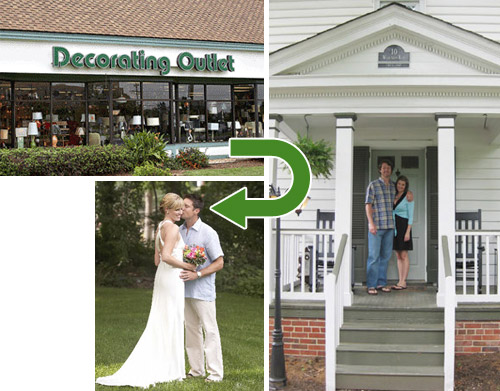
The saying describes a classic small-world moment: two people discover that their lives overlap in a completely unexpected way. Perhaps a couple moves next door and turns out to be the same couple who once considered buying the house you previously owned. Perhaps the movers recognize the property because they handled the last move on the block. Perhaps a casual conversation at a lighting store reveals a connection to a wedding venue, a rental apartment, and a mutual friend.
In a larger city, these events might feel statistically miraculous. In Richmond, they feel like Tuesday.
The phrase works because Richmond occupies an unusual middle ground. It is Virginia’s capital and a regional center for government, education, medicine, finance, law, art, and culture. At the same time, its neighborhoods have strong identities, its social circles overlap, and many residents build long relationships with local businesses, schools, parks, and community organizations. The result is a city with metropolitan resources and a remarkably short social distance.
Why Richmond Produces So Many Small-World Stories
Neighborhoods Function Like Villages
Richmond is often described as a patchwork city, and the description fits. Church Hill, Jackson Ward, The Fan, Carytown, Manchester, Forest Hill, Northside, the Museum District, Scott’s Addition, and other areas each have their own architecture, routines, gathering places, and unofficial rules.
A person may technically live in Richmond, but daily life is usually rooted in a smaller orbit. The same people walk the same blocks, visit the same market, take their children to the same playground, and appear at the same coffee shop with suspicious regularity. Soon, strangers become familiar faces. Familiar faces become acquaintances. Acquaintances reveal that they once rented from your aunt or worked with your neighbor.
Neighborhood loyalty also encourages people to stay local. A Saturday might involve breakfast in Church Hill, a walk near the James River, an afternoon at the Virginia Museum of Fine Arts, and dinner in The Fan. That sounds like a full city itinerary, but it can happen within a compact radius. Repeated encounters are not an accident; they are built into the geography.
Historic Homes Carry Long Memories
Richmond’s housing stock adds another layer to the social web. Historic districts contain row houses, brick townhomes, bungalows, Italianate buildings, cottages, and houses that have accumulated generations of owners, tenants, renovations, stories, and questionable wiring decisions.
In a newer subdivision, a house may have one clean ownership narrative. In Richmond, a house can have lore. A former resident may stop by during a yard sale. A neighbor may remember when the kitchen was green. A contractor may have worked on the same property 20 years earlier. An old photograph may surface showing that the decorative detail everyone assumed was original was actually added during a very enthusiastic 1980s remodel.
Home buying and renovation therefore become social activities as much as financial ones. Buyers meet sellers, neighbors compare notes, tradespeople circulate across districts, and preservation-minded residents swap recommendations. The city’s built environment keeps introducing people who might otherwise never meet.
Richmond Has Shared Community Anchors
The social overlap extends beyond houses. Richmonders repeatedly cross paths at major institutions and beloved public spaces. Virginia Commonwealth University brings students, artists, researchers, health professionals, and longtime residents into the same urban environment. The Virginia Museum of Fine Arts offers a cultural gathering place that feels both world-class and casually local. The James River Park System gives hikers, cyclists, paddlers, climbers, dog walkers, and sunbathers countless opportunities to recognize one another.
Then there are neighborhood markets, festivals, galleries, breweries, historic sites, nonprofit events, youth sports, and restaurant patios. Richmond has enough activity to keep a calendar full, yet many events draw from overlapping communities. Attend a gallery opening, and someone from your office may be exhibiting. Join a trail cleanup, and your child’s teacher may hand you a trash bag. Go to a concert, and the person standing beside you may be the architect who renovated your friend’s kitchen.
Again: that’s Richmond for ya.
The City Is Bigger Than the Joke
The phrase is charming, but Richmond’s interconnectedness has deeper roots. The city’s history is layered, difficult, and nationally significant. Its location on the James River helped shape its development as a commercial and industrial center. Richmond later became the capital of the Confederacy, making the city and surrounding area central to Civil War history. That legacy remains visible in museums, battlefields, archives, historic landscapes, and ongoing debates about public memory.
Richmond’s Black communities also built powerful networks of entrepreneurship, civic leadership, culture, and mutual support. Jackson Ward became a major center of Black business and cultural life, associated with leaders such as Maggie Lena Walker, a pioneering entrepreneur who became the first Black woman in the United States to establish and serve as president of a bank.
The neighborhood’s story also includes the destructive effects of segregation, urban renewal, and highway construction, which divided communities and displaced residents. These histories remain essential to understanding modern Richmond and the relationships that shaped its neighborhoods.
Community ties were not created only by cute coincidences at coffee shops. In many cases, they were essential systems of survival, opportunity, advocacy, and cultural continuity. Richmond’s networks can be playful, but they are also part of how residents have organized, preserved stories, supported local institutions, and challenged injustice.
RVA Culture Rewards Participation
Some cities allow residents to remain anonymous indefinitely. Richmond seems determined to put everyone on a committee.
That is only a slight exaggeration. The city’s identity is shaped by people who participate: artists painting murals, volunteers maintaining trails, residents defending historic buildings, entrepreneurs opening neighborhood businesses, organizers producing festivals, and civic groups debating development. Richmond’s strongest experiences often come from joining something rather than merely observing it.
This participatory culture makes connections multiply quickly. A person who volunteers at a museum may meet a local designer. The designer may recommend a carpenter. The carpenter may play in a band with the person who runs a food pop-up. Six months later, everyone is standing in the same backyard discussing stormwater drainage as though the meeting had been scheduled by fate.
The humor in “That’s Richmond for ya” comes from recognizing this pattern. The city keeps folding separate parts of life together: professional and personal, historic and modern, artistic and practical, polished and slightly chaotic.
The James River Keeps the City Connected
Richmond’s social character cannot be separated from the James River. The river is not simply scenery behind downtown. It is a shared backyard, outdoor gym, history corridor, and recurring conversation topic. The James River Park System places forests, rocks, trails, rapids, wildlife, and historic sites within the city.
On warm days, the river attracts a cross-section of RVA: experienced paddlers, first-time hikers, mountain bikers, families, college students, anglers, photographers, and people who brought a folding chair and a highly organized snack strategy. Because the park is free and woven into the city, it creates a democratic meeting ground where Richmond’s social circles naturally intersect.
The Virginia Capital Trail extends that connection beyond the city, linking Richmond toward Jamestown along a paved multiuse route. It is both transportation and storytelling infrastructure, carrying riders and walkers through landscapes associated with centuries of Virginia history. In Richmond, even recreation has a tendency to introduce the past to the present.
The Upside and Downside of a Closely Connected City
The Upside: Belonging Arrives Quickly
For newcomers, Richmond’s overlapping networks can make the city feel welcoming. A single introduction may lead to a neighborhood recommendation, a job lead, a trusted mechanic, a book club, and an invitation to a cookout. Local businesses often remember regulars, and community events give residents natural ways to meet.
This sense of recognition can soften urban life. People are more likely to care about a place when they repeatedly encounter the people who share it. The neighbor watering plants is not an abstract resident. The restaurant owner is not a logo. The person advocating for safer streets may also be the parent who sits beside you at soccer practice.
The Downside: Anonymity Is a Limited Resource
The same closeness can feel awkward. A careless comment may travel farther than expected. A first date may have six mutual connections. A new job may include someone who remembers your middle-school haircut. Leaving the house “just for one quick errand” can become a 40-minute social event conducted beside the avocados.
Richmond’s familiarity can also create insider circles that are difficult for newcomers to enter. Knowing people is useful, but cities work best when access does not depend entirely on personal connections. The challenge is to preserve community warmth while making institutions, opportunities, and civic life open to residents who do not yet have an RVA family tree.
What “That’s Richmond For Ya” Really Celebrates
At its best, the phrase celebrates continuity. People move, houses change hands, neighborhoods evolve, and businesses come and go, but connections remain. A prospective buyer becomes a neighbor. A former stranger becomes a playdate parent. A familiar building reveals a forgotten story. The city appears to shrink for a moment, not because Richmond lacks scale, but because relationships make it feel navigable.
It also celebrates surprise. Modern city life can be impersonal, optimized, and transactional. Small-world moments interrupt that routine. They remind people that a community is not merely a collection of addresses. It is a living network of memory, coincidence, trust, gossip, assistance, and occasional moving-company déjà vu.
A Richmond Experience: One Saturday, Six Connections
Consider a typical Richmond Saturdaynot a record-setting festival day or a carefully planned tourism itinerary, but an ordinary weekend that somehow develops a plot.
The morning begins in a neighborhood coffee shop. A newcomer named Alex is waiting for an order when the person behind the counter asks whether Alex recently moved into the blue house near the corner. This is mildly alarming until the barista explains that her brother installed the backyard fence. Before Alex can respond, another customer turns around and says she used to babysit for the family that lived there two owners ago.
Connection number one arrives before the coffee.
Alex heads to a local hardware store for picture hooks. The employee recognizes the street name and recommends a specific anchor because the neighborhood’s old plaster walls have “strong opinions.” A man in the next aisle overhears the conversation and mentions that he renovated a similar house nearby. It turns out he works with the architect who drew plans for Alex’s office renovation.
Connection number two is now holding a box of screws.
Later, Alex meets a friend near Belle Isle for a walk. On the trail, the friend greets a former coworker, who is hiking with a woman Alex met at a community meeting. They stop to compare notes about a proposed bike lane, river levels, and the best place to get lunch. Nobody planned this summit, yet it has an agenda.
Connections three and four pass each other beside the James River.
Lunch is in another neighborhood, where a server notices Alex’s tote bag from a local bookstore. She helped organize an event there and knows the friend who designed the poster. The restaurant owner comes over, recognizes Alex’s walking companion, and asks about a charity event they attended months earlier.
By midafternoon, Richmond has stopped pretending to be a city and become a group chat with brick sidewalks.
The final stop is a small gathering at a renovated house. Alex begins talking with another guest about the difficulty of finding a reliable electrician. The guest laughs and gives a recommendation. The electrician is the same person scheduled to visit Alex’s house on Monday. Better still, he once lived in the apartment above the garage.
Connection number six has a key detail about the breaker panel.
None of these encounters is extraordinary on its own. Together, however, they create the distinctive Richmond experience: the feeling that every introduction is a doorway into another room of the same sprawling house. The city’s neighborhoods, institutions, public spaces, and personal histories overlap just enough to keep producing these moments.
The experience can be funny, useful, touching, or occasionally inconvenient. It can help a newcomer feel rooted, reveal a house’s history, turn an errand into a friendship, or make a person reconsider what they say in public. Most importantly, it transforms the city from a map into a community.
By evening, Alex understands the local phrase. Richmond is not literally tiny. Its stories are simply packed close together. People keep crossing the same river, walking the same blocks, restoring the same old houses, supporting the same institutions, and discovering that their lives have already brushed against one another.
Someone raises an eyebrow, laughs, and delivers the only possible conclusion: “That’s Richmond for ya.”
Conclusion
“That’s Richmond for ya” captures more than coincidence. It describes a city where historic neighborhoods, shared public spaces, active cultural institutions, local businesses, and long community memories repeatedly bring people together. Richmond offers the amenities of a state capital while preserving the social intimacy of a much smaller place.
That intimacy is not always effortless. Close networks can become exclusive, history can be uncomfortable, and neighborhood change can threaten the very character residents value. Yet Richmond’s best quality is its capacity to connect. The city invites people to participate, notice one another, learn what came before, and add their own stories to the network.
Note: The extended Saturday experience above is a composite scene created from common Richmond situations; it is not presented as a single documented personal account.