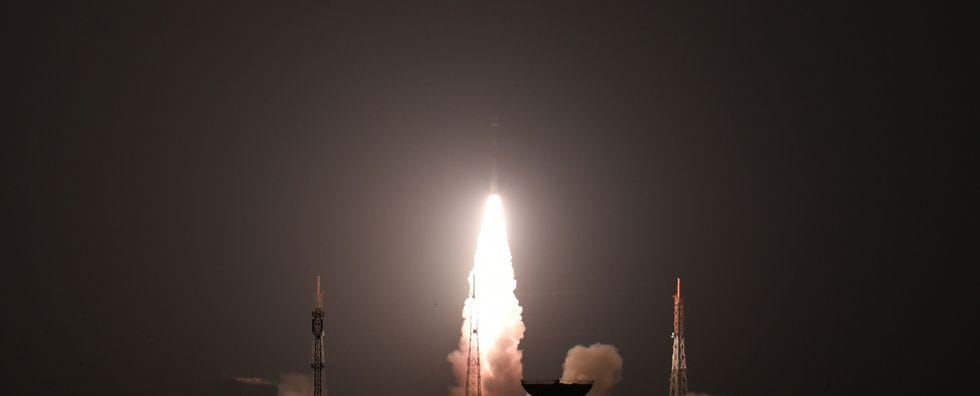

The next decade in space exploration is shaping up like a cosmic group project where everyone actually did the homework: NASA, ESA, JAXA, ISRO, China, private companies, and a growing fleet of robots with better travel plans than most humans. From astronauts returning to the Moon to spacecraft sniffing Venus, sampling Mars, chasing asteroids, and listening for gravitational waves, the 2026–2036 window could become one of the most important eras in modern spaceflight.
The biggest space missions of the next decade are not just about planting flags or taking glamorous selfies with craters. They are about building infrastructure, protecting Earth, searching for life, opening new commercial destinations, and asking the universe extremely rude questions like, “Are we alone?” and “What exactly happened after the Big Bang?” Below are 20 missions and mission campaigns that could define the next chapter of human and robotic exploration.
Why the Next Decade Matters for Space Exploration
For decades, space exploration often felt like a series of spectacular one-off achievements: a rover lands, a telescope launches, a probe flies past a planet, everyone cheers, then we wait. The next decade looks different. The big story is continuity. Lunar missions are becoming infrastructure projects. Space telescopes are becoming survey machines. Asteroid missions are becoming planetary defense tools. Mars sample plans are becoming a global race. In other words, space is moving from “Look what we did once” to “Look what we can keep doing.”
The 20 Biggest Space Missions of the Next Decade
1. Artemis Lunar Landing Campaign
NASA’s Artemis program remains the headline act of the next decade. Its goal is not simply to repeat Apollo with better cameras and more hashtags. Artemis aims to return astronauts to the lunar surface, especially near the Moon’s south pole, where water ice may support future exploration. The mission campaign depends on Orion, the Space Launch System, commercial lunar landers, spacesuits, and surface systems working together. That is a lot of moving parts, but if successful, Artemis could restart human deep-space exploration for the long haul.
2. Gateway Lunar Space Station
Gateway is planned as a small lunar-orbiting station that can support future Artemis missions. Think of it as a spaceport, science lab, rest stop, and cosmic waiting room rolled into one. Its assembly is tied to later Artemis flights and would allow astronauts to operate near the Moon for longer periods. Gateway also matters because it tests systems that could support future Mars missions, including deep-space habitats, power systems, international operations, and logistics far from Earth.
3. NASA’s Commercial Lunar Payload Services Missions
The Commercial Lunar Payload Services program, better known as CLPS, is NASA’s effort to send science instruments and technology demonstrations to the Moon using private landers. This is where the Moon starts getting regular deliveries, like an extremely dusty neighborhood on a very difficult shipping route. CLPS missions will test landing technologies, study lunar geology, measure radiation, scout resources, and support Artemis planning. Some payloads may fail, because space is rude, but the overall campaign could make lunar delivery routine.
4. NASA Lunar Terrain Vehicles and Moon Base Technologies
A sustainable Moon presence needs more than astronauts politely hopping around in slow motion. It needs rovers, power, communications, navigation, cargo systems, and eventually habitats. NASA’s lunar terrain vehicle plans and surface technology missions are designed to make the Moon usable, not just visitable. These systems could help astronauts travel farther, carry more equipment, and explore scientifically rich regions around the south pole. This is the unglamorous but essential plumbing of the future lunar economy.
5. China’s Crewed Lunar Landing Program
China is targeting a crewed Moon landing around 2030, backed by new spacecraft, lander systems, and heavy-lift rocket development. If achieved, it would make China only the second nation to land humans on the Moon. The mission is also part of a larger plan that includes robotic scouts, lunar infrastructure, and the International Lunar Research Station concept. This is one of the clearest signs that the next decade may feature not just exploration, but a serious geopolitical race around lunar capability.
6. Chang’e 7 and Chang’e 8 Lunar South Pole Missions
China’s Chang’e 7 and Chang’e 8 missions are expected to focus on the lunar south pole, water ice, surface resources, and technologies that could support future lunar bases. Chang’e 7 is designed to scout the region, while Chang’e 8 is expected to test resource-use technologies. These missions matter because they are not random Moon visits; they are preparation steps. If the Moon becomes a working destination, these robotic explorers may be remembered as the surveyors that helped pick the neighborhood.
7. India’s Gaganyaan Human Spaceflight Mission
Gaganyaan is India’s plan to send astronauts into low Earth orbit using an Indian spacecraft and launch system. The mission would be a major national milestone and a big step for India’s growing space program. ISRO has already shown impressive capability with lunar and solar missions, but human spaceflight adds another level of complexity: life support, abort systems, recovery operations, and crew safety. A successful Gaganyaan flight would make India a stronger player in crewed space exploration.
8. Commercial Space Stations After the ISS
The International Space Station is expected to retire around 2030, and NASA wants low Earth orbit research to continue through commercial space stations. Companies are developing private destinations that could host astronauts, scientists, manufacturers, and possibly space tourists with very strong stomachs. This transition is enormous. If it works, government agencies will become customers instead of sole operators. If it stumbles, there could be a gap in human research platforms just when microgravity science is becoming more commercially interesting.
9. International Space Station Deorbit Mission
The ISS has been one of humanity’s greatest engineering achievements, but even legends need retirement plans. NASA selected SpaceX to develop a U.S. Deorbit Vehicle to safely guide the station out of orbit at the end of its operational life. This mission will not be cheerful in the usual “new spacecraft goes up” sense, but it is historically important. Safely disposing of a structure the size of a football field is a spaceflight challenge worthy of respect.
10. Mars Sample Return Efforts
Returning samples from Mars remains one of planetary science’s biggest dreams and biggest headaches. NASA and ESA’s earlier Mars Sample Return architecture has faced cost, schedule, and political pressure, while China’s Tianwen-3 aims to launch a Mars sample return mission in the late 2020s and potentially bring material back in the early 2030s. The scientific prize is enormous: laboratory analysis of Martian rocks could help answer whether Mars ever hosted microbial life. The engineering prize is also enormous, because Mars is not exactly offering curbside pickup.
11. JAXA’s MMX Phobos Sample Return Mission
Japan’s Martian Moons eXploration mission, or MMX, plans to visit Mars’s moons Phobos and Deimos and return a sample from Phobos to Earth. This mission could help solve a long-running mystery: are the Martian moons captured asteroids, or did they form from debris after a giant impact? MMX also builds on Japan’s strong sample-return heritage from the Hayabusa missions. If all goes well, a small piece of Phobos could tell a very large story about the early solar system.
12. Europa Clipper
NASA’s Europa Clipper is already on its way to Jupiter and is expected to arrive in 2030. Its target, Europa, is one of the most exciting ocean worlds in the solar system. Beneath its icy crust may be a global saltwater ocean, making it a top candidate in the search for habitable environments beyond Earth. Clipper will not land or drill through the ice, but its dozens of flybys will study the moon’s surface, chemistry, ice shell, and interior.
13. ESA’s JUICE Mission
ESA’s Jupiter Icy Moons Explorer, known as JUICE, is also headed for the Jupiter system and is scheduled to arrive in 2031. Its focus includes Ganymede, Callisto, and Europa, with special attention on Ganymede, the largest moon in the solar system. JUICE and Europa Clipper together create a powerful one-two punch for ocean-world science. One spacecraft studies Europa in detail; the other broadens the view across Jupiter’s icy moons. That is not redundancy. That is teamwork with solar panels.
14. Dragonfly to Titan
Dragonfly may be the coolest mission name that also describes the mission perfectly. NASA plans to send a rotorcraft lander to Titan, Saturn’s largest moon, where it will fly from site to site through a thick atmosphere. Titan has lakes and seas of methane and ethane, organic chemistry, and conditions that may resemble early Earth in strange ways. Dragonfly is scheduled to launch in the late 2020s and arrive in the mid-2030s, bringing drone exploration to another world.
15. Psyche Asteroid Mission
NASA’s Psyche spacecraft is headed to a metal-rich asteroid also named Psyche, with arrival expected in 2029. Scientists think the asteroid may reveal clues about the metallic cores of early planetary building blocks. Since Earth’s core is inconveniently buried under thousands of miles of rock, Psyche offers a rare chance to study core-like material directly. The mission also uses solar electric propulsion, making it an important technology demonstration as well as a planetary science adventure.
16. OSIRIS-APEX at Apophis
After successfully delivering asteroid Bennu samples to Earth, the OSIRIS spacecraft was given a new mission and a new name: OSIRIS-APEX. Its target is Apophis, an asteroid that will make an exceptionally close flyby of Earth in 2029. The spacecraft will study how Earth’s gravity affects Apophis during that encounter. This is planetary science with a planetary defense flavor. It helps scientists understand asteroid structure, surface changes, and how small worlds behave when Earth gives them a gravitational nudge.
17. NEO Surveyor
NEO Surveyor is NASA’s planned infrared space telescope for finding near-Earth asteroids and comets, especially those that are difficult to detect in visible light. Planetary defense is one of those topics that sounds dramatic because it is dramatic. The mission will look for objects that could pose future hazards and improve our understanding of near-Earth object populations. In plain English: it is a space telescope designed to help Earth avoid unpleasant surprise visitors.
18. Nancy Grace Roman Space Telescope
The Nancy Grace Roman Space Telescope is NASA’s next major space observatory and could transform wide-field astronomy. Its field of view is far larger than Hubble’s, allowing it to survey huge portions of the sky with sharp infrared vision. Roman will study dark energy, galaxies, exoplanets, and the structure of the universe. It will also carry a coronagraph technology demonstration that could help future telescopes directly image planets around other stars. Roman is basically a cosmic census taker with excellent eyesight.
19. PLATO and Ariel Exoplanet Missions
ESA’s PLATO and Ariel missions will attack the exoplanet mystery from different angles. PLATO is designed to find and characterize planets around bright stars, especially rocky worlds in or near habitable zones. Ariel will study the atmospheres of many known exoplanets, helping scientists understand their chemistry, clouds, formation, and weather. Together, they move the field beyond “We found another planet” toward “What is that planet actually like?” That is a huge upgrade for alien-world curiosity.
20. LISA, DAVINCI, and VERITAS
Three missions near the end of the next decade show how diverse space science is becoming. LISA, led by ESA with NASA participation, is planned as the first space-based gravitational wave observatory, listening for ripples in spacetime from massive cosmic events. DAVINCI will send a probe through Venus’s atmosphere, while VERITAS will map Venus from orbit. One mission listens to black holes; two investigate why Venus became a planetary pressure cooker. Space science clearly refuses to stay in one lane.
What These Missions Tell Us About the Future
The 20 biggest space missions of the next decade point toward three major trends. First, the Moon is becoming a destination for infrastructure, not just footprints. Second, planetary science is getting more ambitious, with sample returns, ocean-world flybys, atmospheric probes, and asteroid investigations. Third, space astronomy is entering a survey age, where telescopes will gather vast datasets instead of only taking occasional deep looks.
There is also a quieter but important theme: international competition and cooperation are happening at the same time. NASA partners with ESA. JAXA works with multiple agencies. China moves forward with its own lunar and Mars plans. Commercial companies are building hardware that used to be the exclusive domain of governments. The future of space exploration will not be one story. It will be many stories happening at once, occasionally cooperating, occasionally competing, and frequently rescheduling.
Experience Notes: What Following These Missions Will Feel Like
Watching the next decade of space missions unfold will feel less like following a single blockbuster movie and more like keeping up with a giant streaming universe where every episode drops on a different platform. One month, a lunar lander may attempt touchdown near the Moon’s south pole. Another month, a telescope may open its eye at the Sun-Earth L2 point. Then a spacecraft may swing past Earth, steal a little gravity, and head toward Jupiter like it just found a shortcut in a video game.
For space fans, the experience will be thrilling and occasionally nerve-wracking. Launch days are easy to love: the countdown, the engines, the bright plume, the dramatic silence after liftoff when everyone waits for the next callout. But the real emotional roller coaster often happens later. A spacecraft may spend years cruising before its big moment. Europa Clipper and JUICE will require patience. Dragonfly will require even more patience. Following these missions teaches the rare modern skill of delayed gratification, which is basically the opposite of scrolling for snacks at midnight.
The Moon missions will feel different because they are closer, more visible, and more political. Every Artemis milestone, every Chinese lunar update, and every commercial lander attempt will be compared, analyzed, celebrated, and criticized. Some missions will succeed beautifully. Some will partially succeed. Some may fail in public, because spaceflight is not a gentle hobby. Yet even failures can teach engineers what to fix next. The Moon is becoming a proving ground where hardware, strategy, and national ambition all meet in one dusty arena.
The science missions will offer a quieter kind of excitement. Roman may change how we understand dark energy. NEO Surveyor may find asteroids that ground-based telescopes miss. DAVINCI may send back data from Venus’s atmosphere during a dramatic descent. Psyche may reveal whether a metal-rich asteroid preserves clues from the birth of planets. These missions do not always create instant viral moments, but they change textbooks. That is the deeper thrill: realizing that today’s telemetry can become tomorrow’s chapter heading.
For regular readers, students, and curious people, the best way to experience the next decade is to treat space exploration as a living story. Timelines will shift. Budgets will change. Rockets will wait on weather, hardware, politics, and the occasional tiny valve with main-character energy. But the direction is clear: humanity is building a more permanent presence beyond Earth while sending smarter robots farther into the solar system. The next decade will not answer every cosmic question, but it will make the universe feel a little less unreachable.
Conclusion
The next decade of space exploration could be remembered as the era when space became more connected, more competitive, and more practical. The biggest space missions of the next decade will not only explore distant worlds; they will build systems that make future exploration easier. Artemis and China’s lunar program may shape the future of Moon settlement. Mars and Phobos sample-return missions may rewrite planetary history. Europa Clipper, JUICE, and Dragonfly may push the search for life into ocean worlds and organic-rich moons. Roman, PLATO, Ariel, and LISA may expand our view of the universe itself.
Space will still be hard. Schedules will move. Budgets will groan. Engineers will lose sleep over parts most of us cannot pronounce. But the direction is unmistakable: the next decade is not just about visiting space. It is about learning how to operate there, return from there, study from there, and maybe one day live there without acting surprised every time dust gets everywhere.