
Buying a ladder sounds simple until you are standing in the aisle staring at aluminum, fiberglass, telescoping, multi-position, Type I, Type IA, Type IAA, step ladders, extension ladders, and one mysterious model that looks like it could either clean your gutters or launch a satellite. The truth is, the best ladder is not always the tallest, the heaviest, or the one your neighbor insists is “basically indestructible.” The best ladder is the one that fits your home, your projects, your storage space, and your comfort level.
For 2024, the ladder market is full of practical choices for homeowners: sturdy 8-foot step ladders for painting and ceiling work, compact step stools for kitchen and closet tasks, multi-position ladders for people who want one tool to do five jobs, and extension-style options for gutters, siding, and outdoor maintenance. This guide reviews six of the best ladders for 2024 based on real specifications, common homeowner use cases, safety features, weight ratings, portability, and overall value.
Before we climb into the list, a quick reminder: ladders are useful, but they are not magic staircases. Choose the right height, respect the duty rating, keep your feet on approved steps, and never turn “I can probably reach that” into a family legend told at urgent care.
Quick Comparison: Best Ladders for 2024
| Ladder | Best For | Type | Approx. Capacity |
|---|---|---|---|
| Werner 8-Foot Aluminum Step Ladder | Best overall household ladder | Step ladder | 250 lbs |
| Werner NXT1A 8-Foot Fiberglass Step Ladder | Best fiberglass ladder | Step ladder | 300 lbs |
| Little Giant Velocity M22 | Best multi-position ladder | Multi-position | 300 lbs |
| Louisville FS1508 Fiberglass Step Ladder | Best heavy-duty step ladder | Fiberglass step ladder | 300 lbs |
| HBTower Folding 3-Step Ladder | Best compact indoor ladder | Folding step ladder | Up to 500 lbs listed |
| Rubbermaid 3-Step Ultra-Light Aluminum Step Stool | Best lightweight step stool | Step stool | 225 lbs |
How We Chose the Best Ladders
The best ladder reviews should not be based on vibes alone, even if “this one feels beefy” is a surprisingly common shopping method. For this guide, the picks were evaluated by ladder type, material, duty rating, reach height, portability, storage convenience, stability features, and usefulness for common homeowner projects.
We focused on ladders that make sense for American homes: changing light fixtures, painting rooms, reaching upper cabinets, cleaning low gutters, hanging holiday lights, installing curtains, accessing garage storage, and handling occasional DIY repairs. Professional contractors may need more specialized models, but most homeowners need reliable, safe, easy-to-store ladders that do not require a forklift and a pep talk to move.
1. Werner 8-Foot Aluminum Step Ladder – Best Overall
Why it stands out
The Werner 8-foot aluminum step ladder is a classic for a reason. It is tall enough for many indoor and light outdoor tasks, light enough for most homeowners to carry, and simple enough that you do not need a training video, a second cousin, and a torque wrench to set it up.
With an 8-foot ladder height and an approximate 12-foot reach height, this ladder is well suited for painting walls, reaching ceiling fixtures, cleaning high windows, and handling lower exterior tasks around a single-story home. Its aluminum construction keeps the weight manageable, which matters more than people think. A ladder that is too heavy often stays in the garage while you make questionable decisions with a dining chair. Do not be that person.
Best uses
This ladder is ideal for general household work: painting, changing bulbs, installing smoke detectors, reaching shelves, and light garage projects. It is also a smart choice for homeowners who want one dependable ladder without spending contractor-level money.
Pros
- Lightweight compared with many fiberglass ladders
- Good height for everyday home projects
- Usually more affordable than heavy-duty fiberglass options
- Tool tray features make small projects easier
Cons
- Aluminum conducts electricity, so it is not the best choice near electrical work
- Lower duty rating than 300-pound Type IA models
- Not designed for heavy commercial use
Bottom line: If you want one practical ladder for everyday homeowner tasks, this Werner model is a strong first choice. It is not fancy, but neither is a hammerand both get invited to every project.
2. Werner NXT1A 8-Foot Fiberglass Step Ladder – Best Fiberglass Ladder
Why it stands out
The Werner NXT1A 8-foot fiberglass step ladder is built for homeowners and pros who want more strength, more stability, and more confidence underfoot. Its Type IA rating supports up to 300 pounds, and the fiberglass rails make it a better choice than aluminum when projects may involve electrical fixtures or wiring.
This ladder also leans into convenience. Features such as a multi-functional top, tool slots, and oversized feet are not glamorous, but they become lovable after your third trip up and down because you forgot the screwdriver. The NXT1A feels like a ladder designed by someone who has actually painted a room and muttered, “Where did I put the tape measure?” at least six times.
Best uses
Choose this ladder for ceiling fan installation, light electrical work, painting, garage storage, and heavier DIY projects. It is especially good for homeowners who prefer a more planted feel and do not mind the extra weight of fiberglass.
Pros
- 300-pound Type IA duty rating
- Fiberglass rails are preferred around electrical work
- Stable, sturdy feel for frequent use
- Useful top tray and tool organization features
Cons
- Heavier than aluminum step ladders
- Typically more expensive than basic homeowner ladders
- May be more ladder than casual users need
Bottom line: The Werner NXT1A is one of the best ladders for homeowners who value stability and safety over featherweight portability. It is a serious ladder, but not so serious that it refuses to help hang curtains.
3. Little Giant Velocity M22 – Best Multi-Position Ladder
Why it stands out
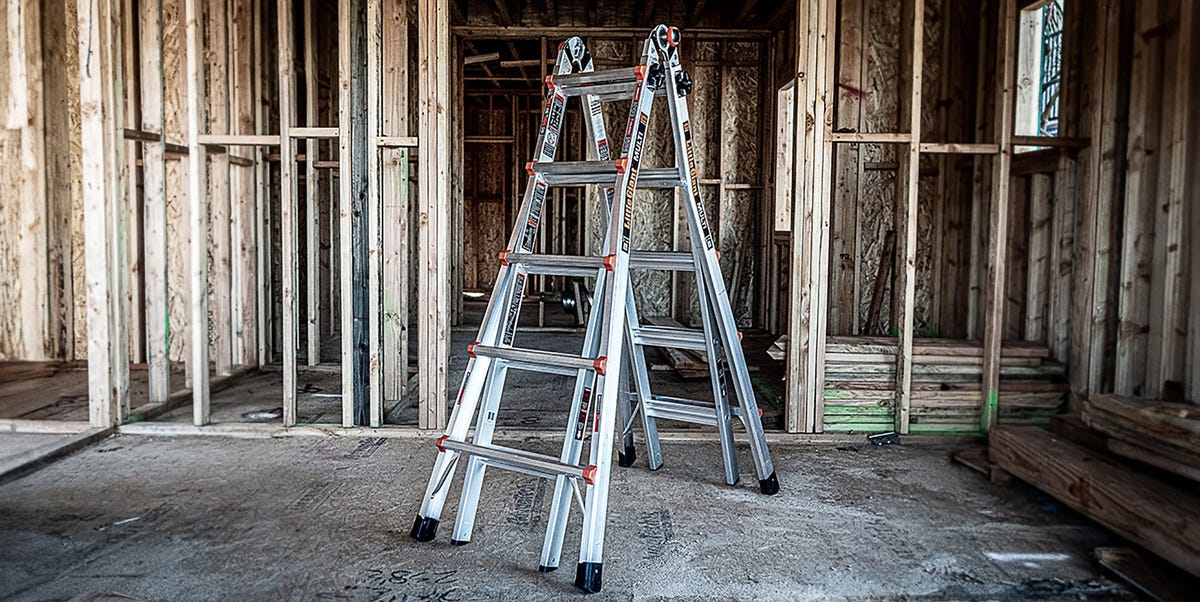
The Little Giant Velocity M22 is the Swiss Army knife of ladders, except much larger and less likely to fit in your pocket. It can work as an A-frame ladder, extension ladder, staircase ladder, 90-degree ladder, and scaffold-style support when used with the proper accessories. For homeowners with limited storage space, that versatility is the big attraction.
Instead of owning a step ladder and an extension ladder, many people can use a multi-position ladder like the Velocity M22 for a wide range of projects. It is especially useful for awkward spaces such as staircases, sloped floors, and tight interior corners. The Type IA rating gives it a 300-pound capacity, and the adjustable design makes it more flexible than a standard step ladder.
Best uses
This ladder is best for homeowners who tackle varied projects: stairwell painting, gutter access, garage work, exterior trim, light renovation tasks, and rooms with uneven surfaces. It is also a good fit for people who want one ladder to cover many jobs.
Pros
- Multiple configurations for different projects
- 300-pound Type IA duty rating
- Good for stairs and uneven work areas
- Can reduce the need to own multiple ladders
Cons
- Heavier than simple step ladders
- Adjustment mechanisms take practice
- Overkill if you only need a ladder for changing light bulbs
Bottom line: The Little Giant Velocity M22 is the best ladder for homeowners who want maximum flexibility. It is not the lightest option, but it earns its garage space by doing several jobs well.
4. Louisville FS1508 8-Foot Fiberglass Step Ladder – Best Heavy-Duty Step Ladder
Why it stands out
The Louisville FS1508 is an 8-foot fiberglass step ladder with a Type IA 300-pound rating, making it a strong pick for serious DIYers. It uses non-conductive fiberglass rails, wide bracing, double-rivet step construction, and slip-resistant feet. In normal-person language: it is built to feel steady when you are up there wondering why ceilings are always higher than they look from the floor.
One of the best features is the top cap design, which includes tool slots and a magnet. That sounds small, but small features matter when you are balancing a paintbrush, fasteners, tape, and your dignity. The ladder’s heavier construction also gives it a planted feel that many users prefer for longer tasks.
Best uses
This ladder is excellent for painting, electrical fixture work, garage organization, trim installation, and repeated DIY use. It is also a good option for users who want a durable fiberglass ladder without jumping into specialty commercial models.
Pros
- 300-pound Type IA load capacity
- Fiberglass construction for safer use around electrical tasks
- Tool-friendly top with slots and magnet
- Strong bracing and slip-resistant footing
Cons
- Heavier than aluminum alternatives
- Requires more storage space than compact ladders
- Not ideal for quick kitchen or closet tasks
Bottom line: The Louisville FS1508 is a sturdy, no-nonsense fiberglass ladder for homeowners who want durability, reach, and confidence. It is the ladder equivalent of a reliable pickup truck.
5. HBTower Folding 3-Step Ladder – Best Compact Indoor Ladder
Why it stands out
The HBTower Folding 3-Step Ladder is made for everyday indoor life: reaching cabinets, changing bulbs, organizing closets, hanging pictures, dusting shelves, and rescuing that one mixing bowl that somehow migrates to the top cabinet every week. It is compact, foldable, and easier to store than a full-size step ladder.
Many HBTower 3-step models feature wide anti-slip steps, rubber feet, and a locking design. Some versions list a high weight capacity, though buyers should always check the exact model specifications before purchasing because product variations can differ. For many apartments, condos, kitchens, laundry rooms, and home offices, this type of ladder is more useful than a full-size model.
Best uses
This is the ladder for indoor chores: pantry shelves, closet storage, curtains, small decor projects, and light cleaning. It is also a good option for people who dislike the wobble of tiny step stools but do not want to drag out an 8-foot ladder every time a light bulb gives up on life.
Pros
- Compact and easy to store
- Wide steps feel more comfortable than narrow rungs
- Good for kitchens, closets, and apartments
- Often more affordable than full-size ladders
Cons
- Not tall enough for major ceiling or exterior work
- Not a replacement for a full-size ladder
- Model specifications vary, so check the exact listing
Bottom line: The HBTower 3-step ladder is one of the best compact ladders for indoor convenience. It is not built for gutters, but it is fantastic for cabinets, closets, and quick household jobs.
6. Rubbermaid 3-Step Ultra-Light Aluminum Step Stool – Best Lightweight Step Stool
Why it stands out
The Rubbermaid 3-Step Ultra-Light Aluminum Step Stool is perfect for people who want a light, foldable, easy-to-move option for small home tasks. It is not trying to be a contractor ladder. It is trying to help you reach the top shelf without involving a chair, a prayer, and questionable physics.
With a Type II 225-pound duty rating, a project tray, and a fold-flat design, this step stool works well for casual household use. It is especially helpful in laundry rooms, kitchens, closets, craft spaces, and garages where a few extra feet of reach can solve most problems.
Best uses
Use this ladder for quick tasks: changing standard bulbs, reaching pantry shelves, hanging small frames, cleaning cabinet tops, and doing light craft or repair work. It is also a great companion ladder for homeowners who already own a larger ladder but want something easier for daily use.
Pros
- Very lightweight and easy to carry
- Folds flat for simple storage
- Project tray adds convenience
- Great for apartments and small homes
Cons
- 225-pound duty rating is lower than heavy-duty ladders
- Not suitable for outdoor height work
- Less stable than heavier full-size ladders for long projects
Bottom line: The Rubbermaid 3-step stool is a smart buy for light household tasks. It is easy to store, easy to carry, and far better than standing on a rolling office chair, which is not a ladder no matter how brave you feel.
What to Consider Before Buying a Ladder
1. Ladder type
A step ladder is best for indoor and self-supported work. An extension ladder is better for exterior walls, roofs, and gutters. A telescoping ladder saves storage space but may feel less rigid than a traditional extension ladder. A multi-position ladder gives you flexibility, though it usually weighs more and takes longer to adjust.
2. Material
Aluminum ladders are lightweight and affordable, which makes them popular for homeowners. Fiberglass ladders are heavier but more stable and better suited around electrical tasks because fiberglass is non-conductive. Steel ladders are strong but often too heavy for casual home use and can conduct electricity.
3. Duty rating
The duty rating includes your body weight plus tools, clothing, paint, hardware, and anything else you carry. Type II ladders are often rated for 225 pounds, Type I for 250 pounds, Type IA for 300 pounds, and Type IAA for 375 pounds. When in doubt, choose more capacity than you think you need.
4. Reach height
Do not buy based on ladder height alone. A ladder’s safe reach depends on its type and how it is used. For a step ladder, many manufacturers estimate reach height at roughly four feet above the ladder height. For extension ladders, some height is lost because the ladder leans at an angle. Always check the manufacturer’s stated reach height.
5. Storage and weight
The best ladder in the world becomes annoying if you cannot store it or move it. Before buying, measure your garage wall, closet, shed, or utility room. A heavy multi-position ladder may be worth it if it replaces two ladders, but a lightweight step stool may be more useful for daily chores.
Ladder Safety Tips Every Homeowner Should Know
Safety is where ladder ownership gets serious. Inspect the ladder before use. Look for bent rails, cracked fiberglass, missing feet, loose fasteners, damaged rungs, or sticky locks. If a ladder looks damaged, retire it. This is not the moment for sentimental attachment.
For extension ladders, use the 4-to-1 rule: for every four feet of ladder height against the wall, place the base about one foot away from the wall. Keep three points of contact while climbing. Do not overreach sideways. Move the ladder instead, even if moving it feels like a personal insult.
Never stand on the top cap of a step ladder unless the manufacturer specifically designs and labels it as a standing platform. Keep tools in a tray or belt, not scattered on steps. Use ladders on firm, level ground, and avoid climbing in wet, windy, or poorly lit conditions. Your ladder should help finish the project, not become the project.
of Real-World Ladder Experience: What Actually Matters After You Buy One
After using ladders for the ordinary chaos of home life, one lesson becomes clear: the ladder you use most is usually the one that is easiest to grab. A huge, heavy-duty ladder may be impressive, but if it lives behind five storage bins and a bicycle with a flat tire, you will avoid it. That is why many homeowners eventually end up with two ladders: one compact step stool for quick indoor tasks and one taller ladder for serious jobs.
For everyday use, comfort matters more than people expect. Wide steps are easier on your feet than narrow rungs, especially when you are painting trim or adjusting curtain rods for more than five minutes. Tool trays also matter. A top tray that holds screws, tape, a drill, or a paint cup saves time and reduces the temptation to balance supplies on a step. The moment a screw rolls off a ladder and disappears into another dimension, you understand the value of storage slots.
Weight is another practical detail. A fiberglass 8-foot ladder may feel rock solid, but it can be awkward to carry through tight hallways or around furniture. Aluminum ladders are much easier to move, but they are not suitable around electrical work. Multi-position ladders are wonderfully versatile, yet they can be heavy and slightly fussy to adjust until you get used to the locking mechanisms. The best approach is to match the ladder to the project, not force one ladder to be perfect at everything.
Storage also changes how satisfied you feel with a purchase. A folding 3-step ladder can slide beside a refrigerator, hang in a laundry room, or tuck into a closet. A full-size step ladder needs wall space. An extension ladder needs even more planning. Before buying, measure first. Future you will be grateful, especially when the garage does not become a ladder-themed obstacle course.
Finally, confidence matters. A good ladder should feel stable, not bouncy, slippery, or mysterious. If you feel nervous every time you climb, the ladder may be too short, too light-duty, too narrow, or wrong for the job. The right ladder lets you work calmly and safely. It will not make painting fun exactly, but it can make painting less like a circus audition.
Final Verdict: Which Ladder Should You Buy?
For most homeowners, the Werner 8-foot aluminum step ladder is the best overall starting point because it balances reach, weight, price, and everyday usefulness. If you want a sturdier fiberglass option, the Werner NXT1A or Louisville FS1508 are better choices, especially around electrical tasks. If you need one ladder that can handle stairs, exterior work, and multiple positions, the Little Giant Velocity M22 is the most versatile pick. For small spaces and indoor chores, the HBTower 3-step ladder and Rubbermaid 3-step stool are convenient, compact, and easy to live with.
The best ladder for 2024 is not simply the tallest or most expensive one. It is the ladder that matches your projects, fits your storage space, supports your weight and tools, and helps you work safely. Choose wisely, climb carefully, and remember: the ladder is supposed to elevate your project, not your medical bills.