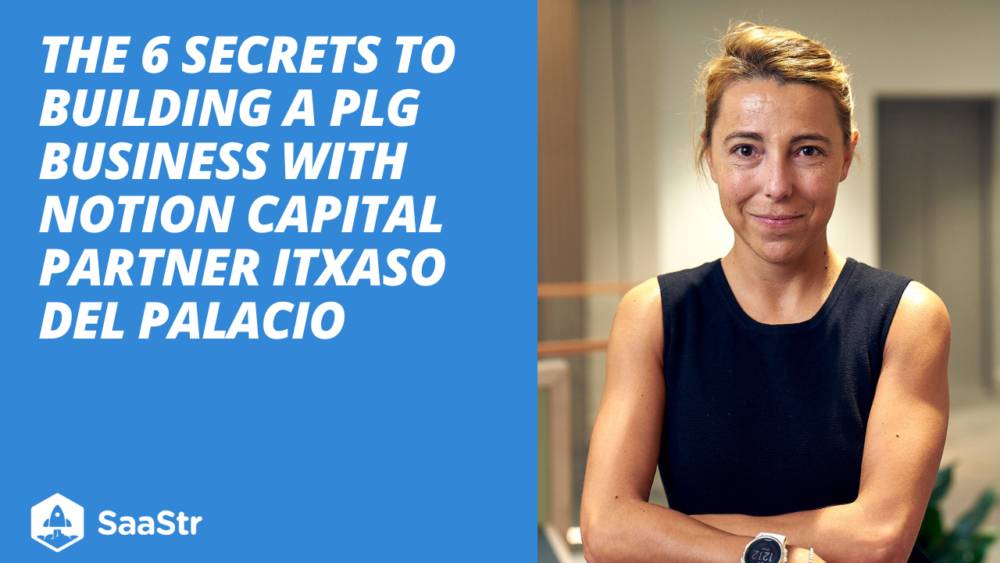
The 6 Secrets to Building a PLG Business with Notion Capital Partner Itxaso Del Palacio (Video)

Product-led growth sounds wonderfully simple: build a great product, let people try it, watch the revenue roll in, and casually pretend you planned the hockey-stick graph all along. In real life, of course, PLG is not a magic button hidden somewhere between “free trial” and “book a demo.” It is a company-wide operating system where the product becomes the main engine for acquisition, activation, conversion, retention, and expansion.
That is the heart of the message behind “The 6 Secrets to Building a PLG Business with Notion Capital Partner Itxaso Del Palacio.” The video and related discussion focus on what separates genuine product-led companies from businesses that simply slap a free plan on the pricing page and call it innovation. Spoiler: your product cannot be product-led if users need three onboarding calls, a PDF manual, a group therapy session, and a heroic customer success manager named Brenda before they see value.
Itxaso del Palacio, a partner at Notion Capital, has studied and invested in software companies that use the product itself to drive growth. Her six secrets are practical, slightly uncomfortable, and extremely useful for founders, SaaS marketers, product leaders, and growth teams trying to build a PLG business that does more than attract curious free users who disappear faster than office snacks on a Friday.
What Is a PLG Business?
A PLG business, or product-led growth business, uses the product as the primary driver of growth. Instead of relying only on salespeople, advertising, or long enterprise buying cycles, PLG companies let users experience value directly. The product handles much of the persuasion by being easy to access, quick to understand, and useful enough that users invite others, upgrade, expand usage, and stay.
Classic PLG examples include companies such as Dropbox, Slack, Canva, Airtable, and Notion. Their growth was not only powered by clever marketing. Their products naturally encouraged adoption. A user joined, created something, shared it, invited teammates, and suddenly the product had walked into a company wearing sneakers instead of a sales suit.
But PLG is not the same as freemium. It is not the same as having a self-serve signup form. It is not the same as offering a free trial and hoping for the best. Real product-led growth requires product design, pricing, data, onboarding, collaboration, expansion mechanics, and organizational discipline to work together.
Secret #1: PLG Companies Are Usually Born, Not Made
Del Palacio’s first secret is blunt: the strongest PLG companies are usually born product-led. That does not mean a sales-led company can never add a PLG motion. It can. But it is difficult because product-led growth requires a different muscle memory from day one.
In a sales-led business, the customer journey often depends on human explanation. The salesperson educates the buyer. The implementation team handles setup. The customer success team drives adoption. That can work beautifully for complex enterprise software, but it creates problems when a company suddenly wants users to onboard themselves.
In a PLG business, the product must explain itself. The interface must reduce friction. The onboarding flow must guide users toward the “aha moment” quickly. Product teams must care not only about features but also about revenue, conversion, expansion, and retention. In other words, the product team cannot throw a feature over the wall and say, “Good luck, growth department.” There is no wall. Everyone is in the same very crowded room.
Why Sales-Led Companies Struggle to Become PLG
Sales-led companies often struggle with PLG because their products were not designed for self-service adoption. The setup may be too complex. The user experience may assume training. The pricing may require negotiation. The value may appear only after a long implementation. That is like inviting someone to try your restaurant but making them assemble the oven first.
Successful PLG requires short time-to-value. A user should sign up and experience something useful quickly. If the first session feels like tax paperwork with buttons, activation will suffer. The product must create momentum before the user’s attention wanders to email, Slack, or a suspiciously urgent desire to reorganize their desk.
Secret #2: Value-Based Pricing Beats “Free for Everyone Forever”
The second secret is pricing. Many founders confuse PLG with freemium, but the two are not identical. Freemium is a packaging model. PLG is a growth strategy. A PLG company may use freemium, a free trial, reverse trials, usage-based pricing, seat-based pricing, or hybrid pricing. The key is that pricing should align with customer value.
Del Palacio highlights the importance of value-based pricing. The best pricing model charges customers in a way that reflects the value they receive. For example, if a hiring platform helps companies test candidates, charging per assessment may make more sense than charging only per user. A small recruiting team could create huge value if it runs hundreds of candidate tests. Charging only by seat might leave money on the table and create a mismatch between usage and revenue.
Usage-based pricing has become especially important in SaaS because it allows revenue to grow as customer success grows. When customers use more, process more, store more, analyze more, or automate more, the vendor captures a share of that expanded value. Done well, this feels fair. Done poorly, it feels like being charged for breathing near the dashboard.
Good PLG Pricing Should Be Easy to Understand
Value-based pricing should not require a PhD in spreadsheet archaeology. Users should understand what they get, what triggers payment, and how costs scale. Pricing that is too confusing creates fear. Pricing that is too generous may attract users who never convert. Pricing that is too restrictive may block activation before users see value.
A strong PLG pricing strategy answers three questions: What value does the user experience first? What usage signal indicates serious intent? What expansion path feels natural as the customer grows? When those answers are clear, pricing becomes part of the product experience instead of a surprise invoice goblin hiding under the bed.
Secret #3: PLG Is Not Just for Acquisition; It Also Drives NRR
Many people think product-led growth is mainly about acquiring new users cheaply. That is only half the story. Great PLG businesses also use the product to expand existing accounts and improve net revenue retention, often called NRR.
NRR measures how much revenue a company keeps and expands from existing customers after accounting for churn, downgrades, and upgrades. In a healthy PLG model, the product encourages customers to use more features, invite more teammates, adopt more workflows, and expand into additional departments.
Think about a collaboration tool. One person signs up to manage a project. Then they invite two teammates. Then another team copies the workflow. Then the company connects the tool to Slack, Google Drive, Salesforce, or another system. The product spreads because usage creates visible value. That is PLG expansion in action.
Expansion Should Feel Like Progress, Not Pressure
The best PLG expansion does not feel like a salesperson jumping out of a bush shouting, “Upgrade now!” It feels like a natural next step. The user hits a usage limit because they are succeeding. A team needs admin controls because adoption is spreading. A company wants better analytics because the product has become important. Expansion works best when the product earns the right to ask for more revenue.
This is why product data matters. PLG companies should know which behaviors predict conversion, retention, and expansion. Product-qualified leads, or PQLs, are users or accounts that have taken meaningful actions inside the product. These signals are often more useful than a generic form fill because they show real intent. Someone who used a key feature five times and invited three teammates is usually warmer than someone who downloaded an ebook titled “The Future of Productivity” and then vanished into the internet mist.
Secret #4: Build Stickiness Before Churn Builds a Vacation Home
PLG products are often easy to start using. That is good. Unfortunately, they can also be easy to leave. If adoption is low-friction, replacement may be low-friction too. This is why Del Palacio emphasizes product stickiness.
Stickiness means the product becomes part of the user’s routine, workflow, data layer, or collaboration system. A sticky product is not merely useful once. It becomes increasingly valuable as people use it more. It stores important information, connects to other tools, supports team habits, or becomes the place where work actually happens.
Airtable is a useful example. Its value grows when teams create databases, share views, build workflows, and collaborate around structured information. The more a team builds inside Airtable, the harder it becomes to casually replace it with a blank spreadsheet named “final_final_v7_really_final.xlsx.”
Ways to Increase Product Stickiness
There are several ways to make a PLG product stickier. Collaboration is one. When users invite teammates, the product becomes social and organizational, not just individual. Integrations are another. When a product connects with critical tools, it becomes embedded in the customer’s workflow. Data accumulation also matters. If the product becomes a system of record, switching costs rise because leaving means losing context, history, and operational memory.
However, stickiness should come from genuine value, not hostage tactics. Making it hard to export data may reduce churn temporarily, but it also reduces trust. Great PLG companies build stickiness by becoming indispensable, not by hiding the exit door behind seven confusing menus and a support ticket.
Secret #5: Personalization Makes the Product Feel Built for the User
Personalization is another major PLG advantage. In a crowded SaaS market, users are constantly testing tools. If every product starts with the same empty dashboard, generic checklist, and “Welcome, valued user” message, differentiation becomes difficult.
Personalization helps users feel that the product understands their situation. This can be as simple as pre-populating a dashboard with company information, suggesting templates based on role, showing relevant integrations, or tailoring onboarding questions to the user’s job-to-be-done.
The challenge is balance. Ask too many questions during signup, and users abandon the flow. Ask too few, and the product feels generic. The best PLG onboarding collects just enough information to personalize the experience while still getting users to value quickly.
Personalization Should Shorten Time-to-Value
Personalization is not decoration. It should help the user reach value faster. A project management tool might suggest templates for marketing teams, engineering teams, or agencies. A data product might connect to a user’s website and automatically create a relevant starting dashboard. A design tool might ask what the user wants to create and then offer a ready-made format.
The goal is simple: reduce the blank-page problem. Nobody wants to open a new product and stare into the digital void. Personalization gives users a starting point, and starting points are powerful. They turn “What now?” into “Oh, I can use this.” That small emotional shift is where activation begins.
Secret #6: Real PLG Means Letting the Product Do the Work
The final secret may be the hardest: if you want to build a real PLG business, you must let the product do the work. That means resisting the urge to manually guide every user, force every signup into a demo, or rely on human intervention to create value.
This does not mean sales and customer success are bad. In fact, many successful PLG companies eventually add sales teams, especially for larger accounts. The point is that the first experience should not depend on a human explaining the product. The user should be able to discover value independently.
Real PLG demands honesty. If users cannot activate without help, the onboarding needs work. If free users never convert, the packaging needs work. If customers leave after one use, the core value needs work. Product-led growth reveals product truth very quickly, which is wonderful unless the truth walks in wearing muddy boots.
Product-Led Sales Can Support PLG Without Replacing It
As companies scale, many PLG businesses add product-led sales. This model uses product data to help sales teams prioritize the right accounts at the right moment. Sales does not interrupt random users. Instead, it supports accounts showing meaningful usage, team expansion, security needs, procurement signals, or enterprise intent.
This hybrid approach is often powerful. The product creates demand and usage. Sales helps larger customers navigate complexity, compliance, contracts, and organization-wide rollout. The trick is to make sales additive, not obstructive. If every interested user is forced through a demo before seeing the product, the company has drifted away from PLG and back into the old lobby with the uncomfortable chairs.
How the Six Secrets Work Together
Each secret matters on its own, but the real power comes from combining them. A company born product-led designs for self-service from the beginning. Value-based pricing captures revenue as usage grows. Product-driven expansion improves NRR. Stickiness reduces churn. Personalization accelerates activation. Real PLG keeps the company honest by making the product responsible for delivering value.
When these elements work together, growth becomes more efficient. Marketing brings people to the product. The product activates them. Usage data identifies serious accounts. Pricing converts value into revenue. Collaboration spreads adoption. Sales assists the right customers at the right time. Customer success focuses on deeper outcomes rather than basic hand-holding.
That is the dream. The reality is messier. PLG companies still need positioning, demand generation, customer support, analytics, experimentation, security, and operational discipline. A great product is the foundation, not the entire skyscraper. But without that foundation, the skyscraper becomes a very expensive leaning tower of churn.
Practical Examples for Founders and Growth Teams
Imagine a founder building a new AI meeting assistant. A weak PLG motion would offer a free trial but require users to book a setup call, manually configure ten settings, and wait two days before seeing a transcript. A strong PLG motion would let users connect their calendar, record a meeting, receive a useful summary, and share it with teammates within minutes.
Now imagine a cybersecurity product. Pure self-service might be hard because security buyers need trust, compliance, and technical validation. In that case, PLG may begin with a free scanner, diagnostic report, or limited self-serve workflow. The product creates value and identifies intent, while sales supports enterprise conversion. That is still product-led if the product creates the initial pull.
For a design collaboration tool, PLG might depend on templates, sharing, comments, and team workspaces. For a developer tool, it might depend on fast setup, clear documentation, generous sandbox usage, and usage-based pricing. For a data platform, it might depend on sample datasets, automated integrations, and dashboards that show value before the user has to build everything from scratch.
Common PLG Mistakes to Avoid
The first mistake is believing that PLG means “no sales.” Many PLG companies eventually need sales, especially as they move upmarket. The second mistake is using freemium without a conversion strategy. Free users are wonderful, but if they never activate, invite, expand, or pay, the business has built a charity with a login page.
The third mistake is measuring vanity metrics. Signups matter, but activation matters more. Page views matter less than meaningful product behavior. A thousand users who do nothing are less valuable than fifty users who reach the aha moment, invite teammates, and return every week.
The fourth mistake is ignoring onboarding. Onboarding is not a cute welcome tour with tooltips popping up like overcaffeinated meerkats. It is the bridge between curiosity and value. The fifth mistake is treating pricing as an afterthought. Pricing is part of the product experience, and in PLG, it must support adoption, conversion, and expansion without creating confusion.
Experience-Based Insights: What Building Around PLG Really Feels Like
In practice, building a PLG business feels less like launching a rocket and more like tuning a musical instrument while the audience is already in the room. You make a change to onboarding, and activation improves. You add a usage limit, and conversion rises but complaints increase. You simplify pricing, and sales cycles shorten. You remove one required field from signup, and suddenly more users reach the product. Small details matter because PLG is built inside the user journey, not above it.
One of the most important lessons is that users do not care about your internal categories. They do not care whether a feature belongs to product, growth, marketing, or customer success. They care whether the product solves their problem. If it does, they keep going. If it does not, they leave. This makes PLG both humbling and useful. The product becomes a daily referendum on whether the company is creating value.
Another experience many PLG teams share is the tension between simplicity and monetization. Founders want to show value quickly, but they also need to capture revenue. Give away too much, and users may never upgrade. Gate too much, and users may never understand why they should pay. The sweet spot is usually found through testing, segmentation, and a deep understanding of the user’s job-to-be-done.
PLG also changes the role of marketing. Instead of only generating leads, marketing must help users understand use cases, adopt workflows, compare plans, and succeed inside the product. Content becomes more practical. Messaging becomes more specific. SEO supports not just awareness but activation. A blog post, template library, tutorial, comparison page, or use-case guide can become part of the product-led journey.
Sales also changes. In a PLG business, the best sales conversations often start after the customer has already experienced value. The rep can see usage signals, understand the account’s behavior, and focus on expansion or organizational rollout. This is much better than beginning a call with, “So, what does your company do?” which is a sentence that should probably be retired to a museum.
Customer success becomes more proactive and data-driven. Instead of waiting for customers to complain, teams can watch product usage patterns. Are users adopting core features? Are teams inviting collaborators? Are admins setting up integrations? Are accounts reaching usage thresholds that indicate expansion potential? Product data helps teams intervene intelligently rather than sending generic “just checking in” emails that everyone politely ignores.
The final experience-based lesson is that PLG requires patience. It is tempting to patch every problem with people. If onboarding is weak, add calls. If activation is low, add more emails. If conversion is slow, add discounts. Sometimes those moves help, but they can also hide product problems. Real PLG teams keep returning to the product experience and asking: How can the product deliver value more clearly, quickly, and repeatedly?
That mindset is what makes Del Palacio’s six secrets so useful. They are not hacks. They are principles. Build product-led from the start when possible. Price around value. Use the product for expansion. Create stickiness through workflow and collaboration. Personalize the journey. Stay honest about whether users can succeed without hand-holding. Do those things well, and PLG becomes more than a trendy acronym. It becomes a durable growth engine.
Conclusion
The six secrets to building a PLG business are simple to understand but challenging to execute. A true product-led company is not created by adding a free plan, copying a competitor’s pricing page, or putting “self-serve” in a board deck. It is built through product discipline, user empathy, data-driven experimentation, and a willingness to let the product carry real responsibility for growth.
Itxaso del Palacio’s framework is valuable because it cuts through the noise. PLG companies are often born with product-led DNA. They price according to value. They expand accounts through usage. They build stickiness. They personalize the experience. Most importantly, they stay true to real PLG by allowing users to experience the product directly.
For founders and SaaS leaders, the takeaway is clear: do not build a product that needs constant explanation. Build one that creates momentum. Give users a fast path to value. Let their behavior guide your growth strategy. Then, when the product starts selling itself, resist the urge to interrupt it. Sometimes the best thing a company can do is step aside and let the product speak.
Note: This article is written as original, publication-ready SEO content based on real PLG concepts, the SaaStr/Notion Capital video topic, and widely accepted SaaS growth practices. No source links or unnecessary citation placeholders are included in the article body.