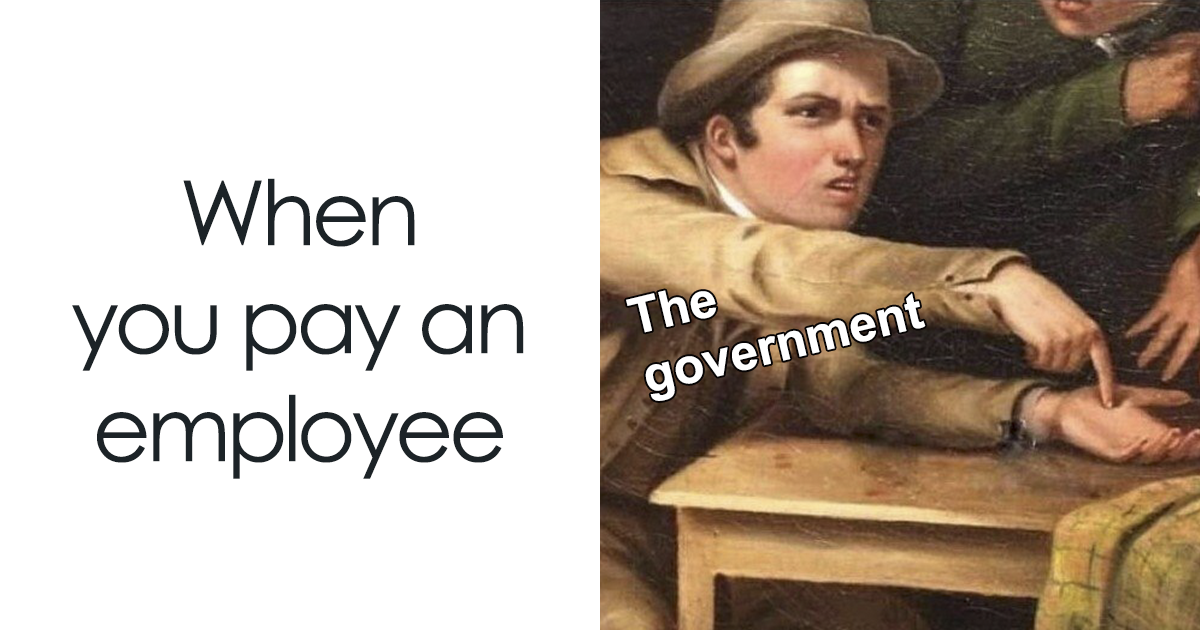

There’s a meme about how the government tax system works, and like most good memes, it succeeds because it takes something painfully complicated and turns it into one awkward little punchline. Taxes are the annual group project nobody remembers signing up for, yet somehow everyone gets graded. Your paycheck shrinks, your forms multiply, your refund becomes a personality trait, and somewhere in the distance, a calculator starts crying.
But behind the joke is a serious question: how does the U.S. tax system actually work? Is it a giant mystery box? A financial escape room? A spreadsheet wearing a trench coat? The truth is less dramatic but still confusing enough to deserve its own sitcom. The American tax system is built around income, payroll, consumption, property, deductions, credits, withholding, refunds, and public spending. It is not one tax. It is a whole tax ecosystem, complete with rules, exceptions, deadlines, and enough acronyms to make alphabet soup feel underqualified.
This article breaks down the meme-worthy reality of government taxes in plain English: why taxes exist, how federal income tax brackets work, why refunds are not free money, how deductions and credits change the bill, where tax revenue goes, and why the system feels so much more complicated than “send government money, receive pothole repair.”
Why Tax Memes Hit So Hard
Tax memes are popular because they expose a shared feeling: most people know taxes matter, but the process can feel strangely backward. You earn money, taxes come out, then months later you file a return to prove what already happened. If you paid too much, you may get a refund. If you paid too little, you owe more. It feels like buying concert tickets, paying a service fee, then receiving homework from the venue.
The humor usually comes from three frustrations. First, many taxpayers do not fully understand the difference between gross income, taxable income, and take-home pay. Second, the tax code contains deductions, credits, phaseouts, and filing statuses that can change outcomes dramatically. Third, public conversation about taxes is often reduced to slogans, even though the real system has more layers than a suspiciously tall lasagna.
In other words, the meme works because taxes are both ordinary and intimidating. Everyone deals with them, but few people casually say, “I had a relaxing evening reading IRS guidance.” That sentence alone sounds like a cry for snacks.
The Basic Idea: Taxes Fund Government Services
At the simplest level, taxes are the way governments collect money to pay for public needs. Federal taxes help fund national defense, Social Security, Medicare, Medicaid, veterans’ programs, interest on federal debt, courts, agencies, infrastructure programs, and many other services. State and local taxes can support schools, roads, police and fire departments, public health, libraries, parks, transportation, and local administration.
That does not mean every taxpayer agrees with every spending decision. Taxes are not a restaurant bill where you can cross out the side dish you did not order. They are part of a democratic budgeting process in which elected officials set tax laws and spending priorities. This is why tax debates become political so quickly: people are not only arguing about money; they are arguing about what society should pay for together.
Federal Income Tax: The Star of the Meme
When people joke about “the tax system,” they usually mean federal income tax. This is the tax many Americans file each year using a Form 1040. It applies to taxable income, which is not the same as total income. Taxable income is what remains after certain adjustments and deductions are applied.
The United States uses a progressive federal income tax system. That means higher portions of income are taxed at higher rates. The important phrase is “portions of income.” A common misunderstanding is that entering a higher tax bracket means all your income is taxed at that higher rate. That is not how marginal tax brackets work.
Marginal Tax Rates Explained Without Causing a Nap
Think of federal tax brackets like buckets. The first bucket gets taxed at the first rate. The next bucket gets taxed at the next rate. Only the income that spills into a higher bucket gets taxed at the higher rate. So if someone earns one extra dollar that pushes them into a new bracket, only that extra slice is taxed at the new rate. The government does not suddenly grab the entire paycheck like a cartoon raccoon.
For example, if a single filer has taxable income that reaches the 22% bracket, that does not mean every dollar is taxed at 22%. The lower slices are still taxed at lower rates. This is why refusing a raise because “it will put me in a higher tax bracket” is usually a financial myth. A raise can increase taxes, but it generally still leaves you with more money after tax.
Withholding: Why Your Paycheck Arrives Pre-Shrunk
For many employees, taxes are withheld from every paycheck. Federal income tax withholding is based on the information provided on Form W-4, along with wages and payroll details. The goal is to collect tax throughout the year rather than asking everyone to pay the full bill at once in April. Imagine the national scream if every worker had to write one giant check after spring break.
Withholding is also why tax refunds happen. A refund usually means the taxpayer paid more during the year than they ultimately owed. It feels like a bonus, but it is really a return of your own overpaid money. That does not make it useless; many people like refunds because they act like forced savings. Still, calling a refund a government gift is like thanking your couch for returning the coins you dropped into it.
Payroll Taxes: The Quiet Co-Star
Payroll taxes are another major part of the U.S. tax system. Employees and employers pay taxes that fund Social Security and Medicare. These taxes are separate from federal income tax. That is why a paycheck may show several different tax lines: federal income tax, Social Security tax, Medicare tax, and possibly state or local taxes.
Payroll taxes can feel less visible in public debates, but they matter a lot. For many workers, payroll taxes are one of the biggest tax costs they experience. They are also tied to specific social insurance programs rather than the general federal budget. In meme language, income tax is the loud character waving papers around, while payroll tax is the quiet one already sitting in your paycheck before the episode starts.
Deductions: The “Subtract Before You Panic” Tool
Deductions reduce taxable income. The standard deduction is a fixed amount based on filing status, while itemized deductions are specific eligible expenses a taxpayer lists individually. Most taxpayers use the standard deduction because it is simpler and often more valuable than itemizing.
Here is the clean version: if you make $60,000, you are not automatically taxed on all $60,000 for federal income tax purposes. Deductions can reduce the amount of income subject to tax. That is one reason two people with the same salary can owe different amounts. Filing status, dependents, deductible expenses, retirement contributions, student loan interest, and other factors may affect the final result.
This is also where the tax system starts to feel like a video game with hidden levels. Some deductions are available broadly. Others depend on income limits, specific expenses, or whether you itemize. The result is a system that rewards documentation, patience, and the ability to find one very important form under a pile of mail.
Credits: Better Than Deductions, Usually
Tax credits reduce the actual tax bill. That generally makes credits more powerful than deductions of the same dollar amount. A $1,000 deduction reduces taxable income by $1,000. A $1,000 credit may reduce tax owed by $1,000. Big difference. One is a coupon for the taxable-income aisle; the other walks directly to the register.
Common credits may relate to children, education, earned income, energy improvements, or other policy goals. Some credits are refundable, meaning they can produce a refund even if the credit is larger than the tax owed. Others are nonrefundable, meaning they can reduce tax to zero but not below zero.
Credits are one reason the tax code is more than a revenue machine. It is also used to encourage or support certain behaviors: work, education, family support, home energy upgrades, business investment, retirement saving, and more. Whether that is elegant policy or bureaucratic origami depends on whom you ask.
Why Taxable Income Is Not the Same as Take-Home Pay
One of the biggest sources of tax confusion is the difference between several types of income. Gross income is the broad amount earned before many reductions. Adjusted gross income includes certain adjustments. Taxable income is what remains after deductions. Take-home pay is what lands in your bank account after withholding, payroll taxes, benefits, retirement contributions, insurance premiums, and other paycheck deductions.
So when someone says, “I make $70,000,” that number does not tell the whole tax story. Are they single or married? Do they have dependents? Do they contribute to a traditional retirement plan? Do they live in a state with income tax? Do they have self-employment income? Did they claim credits? Did they receive investment income? Tax math loves context. Unfortunately, context rarely fits neatly into a meme caption.
Self-Employment Taxes: Surprise, You Are Payroll Now
Self-employed people often experience taxes differently from regular employees. When someone works as an employee, the employer withholds taxes and pays part of Social Security and Medicare taxes. A self-employed worker may need to pay estimated taxes and cover self-employment tax, which includes both the employee and employer portions of Social Security and Medicare taxes.
This is why freelancers, gig workers, creators, contractors, and small business owners can get surprised at tax time. Money arrives without withholding, which feels wonderful until the tax bill enters the room wearing steel-toed boots. Setting aside money throughout the year is not glamorous, but neither is discovering that your “extra income” had a silent business partner named quarterly estimated payments.
State and Local Taxes: The Plot Twist Depends on Your Address
The federal tax system is only part of the story. States and local governments may impose income taxes, sales taxes, property taxes, excise taxes, business taxes, and fees. Some states have no state income tax, but that does not mean residents pay no taxes. Revenue may come from sales taxes, property taxes, tourism taxes, energy taxes, or other sources.
This creates huge differences in tax experiences across the country. A homeowner in one state may feel property taxes most strongly. A renter in another state may notice sales tax more. A high earner in a state with progressive income tax may have a different burden than someone earning the same salary in a no-income-tax state with high housing costs and local fees. The meme says “the government,” but in real life, there are many governments, and they do not all use the same receipt printer.
Where the Money Goes
Federal tax revenue goes into a budget system that includes mandatory spending, discretionary spending, and interest on debt. Mandatory spending includes programs generally set by existing law, such as Social Security and Medicare. Discretionary spending is approved through annual appropriations and includes defense and many non-defense programs. Interest payments cover the cost of borrowing from previous deficits.
This matters because tax debates often focus only on what people pay, not what the money supports. The government tax system is both a collection system and a spending system. If taxes are reduced without spending changes, deficits may rise. If spending increases without revenue increases, deficits may also rise. If both are adjusted, the effects depend on the details. Public finance is basically a household budget, if the household had 330 million people, aircraft carriers, health programs, bond markets, and Thanksgiving arguments.
The Tax Gap: When Owed Taxes Are Not Collected
The tax gap is the difference between taxes legally owed and taxes paid on time. It can happen because of underreporting income, underpaying tax, or not filing required returns. Some noncompliance is intentional, while some comes from mistakes. Either way, the tax gap matters because unpaid taxes can increase pressure on compliant taxpayers, reduce revenue, and create enforcement challenges.
Tax compliance is easier when income is reported by third parties, such as wages on Form W-2. It is harder when income is less visible, such as certain business income or cash transactions. That is why tax administration is not just about rates. It is also about information, reporting systems, audits, technology, taxpayer service, and whether people can understand the rules without needing a PhD in form archaeology.
Why the Tax Code Is So Complicated
The tax code is complicated because it has many jobs. It raises revenue, supports social programs, encourages certain behaviors, discourages others, provides relief for certain households, defines business rules, interacts with state systems, and changes when Congress changes policy. Every deduction, credit, exclusion, and special rule may have a purpose, but together they create a maze.
Complexity also comes from fairness debates. Should families with children pay less? Should homeowners receive special treatment? Should retirement savings get tax advantages? Should capital gains be taxed differently from wages? Should low-income workers receive refundable credits? Each question creates policy choices. Each policy choice creates rules. Each rule creates forms. Each form creates a meme.
The Meme Version vs. the Real Version
The meme version says: “The government takes your money, makes you calculate how much it took, and punishes you if you get it wrong.” That is funny because there is a grain of truth in it. Taxpayers do have to report income, claim deductions and credits, and reconcile withholding with actual tax owed.
The real version is more nuanced. Employers, banks, brokers, and other institutions send tax forms. Tax software can import data and do calculations. The IRS receives many information returns and uses them to match reported income. Many people have relatively simple returns, especially if they have one job, no business income, and take the standard deduction. But for people with multiple jobs, side income, investments, dependents, education costs, moving life circumstances, or small businesses, the return can become more complicated quickly.
So yes, the meme is exaggerated. But like a good exaggerated cartoon, it points toward something real: the system often asks ordinary people to interact with rules that were not written like ordinary conversation.
Common Myths About the Government Tax System
Myth 1: “A Raise Can Make You Take Home Less Because of Tax Brackets”
Usually false. Because federal income tax brackets are marginal, only the income inside each bracket is taxed at that bracket’s rate. A raise can reduce certain income-based benefits or credits in some cases, but the basic bracket fear is widely misunderstood.
Myth 2: “A Big Refund Means You Beat the System”
Not exactly. A big refund often means too much tax was withheld during the year. Some people like that because it creates a lump sum, but it also means they had smaller paychecks throughout the year.
Myth 3: “No State Income Tax Means Low Taxes”
Not always. States without income tax may rely more heavily on sales tax, property tax, fees, tourism-related taxes, or other revenue sources. The total tax burden depends on the full mix.
Myth 4: “Deductions Give You Back the Full Amount”
Nope. Deductions reduce taxable income, not tax dollar-for-dollar. Credits are the ones that directly reduce the tax bill.
Practical Ways to Make Taxes Less Meme-Worthy
First, understand your paycheck. Look at withholding, Social Security, Medicare, retirement contributions, insurance deductions, and any state or local taxes. The paycheck stub is not thrilling literature, but it tells the story of where your gross pay went.
Second, update withholding when life changes. Marriage, divorce, a second job, a new child, self-employment income, or major income changes can affect tax results. Ignoring withholding is like ignoring a weird sound from your car: maybe fine, maybe expensive.
Third, keep records during the year. Tax season is much easier when forms, receipts, donation records, business expenses, and income documents are organized before panic season begins.
Fourth, learn the difference between deductions and credits. This one concept can make tax articles, software prompts, and financial planning much less confusing.
Finally, know when to get help. A simple return may be manageable with free filing tools or standard software. A more complex return involving business income, rental property, stock sales, multi-state income, or major life changes may justify a qualified tax professional.
Experiences Related to “There’s A Meme About How The Government Tax System Works”
One of the most relatable tax experiences is opening a first paycheck and discovering that the advertised hourly wage and the actual deposit are not identical twins. A teenager working a summer job, a college student starting part-time work, or a new employee entering a first full-time role may look at the pay stub and think, “Who invited all these deductions?” That moment is often the first personal introduction to withholding, payroll taxes, and the difference between gross pay and net pay. It is also the moment many people begin to understand why tax memes have such a strong fan base.
Another common experience is the refund roller coaster. Someone files a return, sees a refund estimate, and immediately starts mentally spending it on bills, repairs, savings, or something fun enough to make budgeting briefly glamorous. Then they learn that the refund was not a magical bonus from Washington, D.C.; it was mostly their own overpayment coming back. That realization can feel both disappointing and empowering. Disappointing because the “free money” balloon pops. Empowering because adjusting withholding can sometimes give a person more money in each paycheck instead of waiting for a refund.
Side hustle income creates another classic tax story. A person sells handmade products, drives for an app, edits videos, tutors, designs logos, or does freelance work. At first, the income feels beautifully simple: client pays, money arrives, confidence increases. Then tax season appears with a clipboard. Unlike wages from a regular job, side income may not have withholding. That means the taxpayer may need to track expenses, understand self-employment tax, and possibly make estimated payments. The meme version is “I made extra money, so naturally I was punished with forms.” The real version is that business income has different reporting rules, and planning ahead can prevent a nasty surprise.
Moving between states can also turn tax confusion into a full theatrical production. Someone who moves for school, work, family, or lower rent may discover that state income tax rules differ widely. A person may need to file part-year resident returns or deal with income earned in one state while living in another. Suddenly, “where do you live?” becomes more than small talk. It becomes a tax question with paperwork attached.
Families often experience the tax system through credits and filing status changes. A new child, a dependent, education expenses, childcare costs, or marriage can change the final tax result. Two households with the same income may owe different amounts because their lives are structured differently. That is one reason the tax system feels personal: it does not only ask how much money came in; it asks what kind of household earned it, how it was earned, and which rules apply.
Small business owners have perhaps the most meme-ready experience of all. They may track income, expenses, mileage, equipment, payment platforms, estimated taxes, payroll, and records while also trying to run the actual business. The government tax system, from their perspective, can feel like a second business that sells nothing but deadlines. Yet good bookkeeping can turn chaos into clarity. The tax system may never become fun, exactly, but it can become less terrifying when handled throughout the year instead of treated like an April emergency.
The lesson behind these experiences is simple: tax confusion usually gets worse when people only think about taxes once a year. The more someone understands withholding, brackets, deductions, credits, and records, the less the system feels like a meme and the more it feels like a set of rules that can be managed. Still annoying? Absolutely. But manageable. Like assembling furniture with instructions written by a committee, but at least the screws are labeled.
Conclusion: The Meme Is Funny Because the System Is Real
There’s a meme about how the government tax system works because taxes sit at the strange intersection of money, law, public services, personal responsibility, and collective frustration. The U.S. tax system is not just one bill. It includes federal income tax, payroll taxes, state and local taxes, deductions, credits, withholding, refunds, compliance rules, and public spending decisions.
The system can be confusing, but it is not pure chaos. Marginal tax brackets tax slices of income. Deductions reduce taxable income. Credits reduce tax owed. Refunds usually mean too much was paid during the year. Payroll taxes fund Social Security and Medicare. State tax experiences depend heavily on location. And yes, tax forms will probably continue to inspire memes until the end of civilization, or at least until someone invents a W-2 that explains itself with snacks.
Note: This article is for general educational and editorial purposes only. It is not tax, legal, or financial advice. Tax rules can change, and individual situations vary, so readers should verify details with official tax resources or a qualified tax professional.